



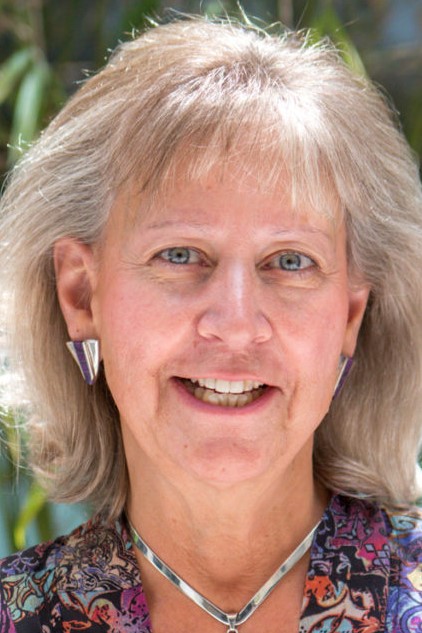
Today we’d like to introduce you to Janet Humphryes.
Hi Janet, it’s an honor to have you on the platform. Thanks for taking the time to share your story with us – to start maybe you can share some of your backstory with our readers?
My son entered my life just after my 17th birthday and shortly thereafter I began a search for education systems to support his authentic learning. This led me to Montessori, which he started at age 3 and went through 6th grade, and I started training in 1976 and teaching in 1978. I made connections with those leading state licensing when I directed the largest child care center in CO and that led to being the voice for Montessori in the state. After stabilizing Family Star into Early Head Start, I was hired by the #1 advocate for children in CO, Anna Jo Haynes, and became the Director of Education for the then 18 low-income child care and Head Start centers in Denver with Mile High Child Care. As I started there, I was also president of the CO Association for the Education of Young Children, which Ms. Haynes mentored me through learning how to advocate for and testify in favor of the rights of children and families in the legislature. I then moved into a Federal contractor position of Child Development Specialist at the Region 8 Denver office, traveling to and supporting 100 Head Start/Early Head Start programs in ND, SD, MT, WY, UT ad CO. 8 years later I shifted to work as the Early Childhood Specialist and then Manager of 14 Specialists with the Region 11 American Indian Alaskan Native, traveling to and supporting 150 Tribal Head Start/Early Head Start programs across the country. I followed that with a short 2 year stint as the Early Head Start Child Care Partnership Specialist position at the National Center for Program Management and Fiscal Operations through UMASS. I shifted to nearly full time with my own business, now Coaching Potentials, instructing early childhood professionals on coaching skills, and providing consulting to Tribal programs. Throughout all this, I completed a B.A. in Behavioral Sciences at Metropolitan State University and a M.A. in Early Childhood Education at UC Denver where I won a Who’s Who in American Colleges and Universities award. Once I completed my M.A. in 1996, I was invited into the Community College system where I instructed about 60 courses in early childhood at all 5 metro Denver community colleges over the years, including creating the Mentoring courses at Red Rocks CC. In 2007, I was asked to join a group that created the CO Coaching Consortium and have been on it’s Steering Committee ever since, guiding quality coaching for CO. In that role, I led the creation of 3 3-credit (grad & undergrad) courses in coaching offered through UC Denver since 2001. It is these courses, now updated, that I offer through my business Coaching Potentials on Zoom to participants throughout the U.S., including several from NW AK, HI, and PR.
Would you say it’s been a smooth road, and if not what are some of the biggest challenges you’ve faced along the way?
The #1 struggle was being a single parent living in poverty raising my son and supporting us both in Montessori school for him, which was not free, and in training and then starting out as a teacher for me. My son’s friend contacted me when he had a son and asked me what the secret was to raising such an amazing person as my son. My answer was to live with those impoverished, which is with many cultures struggling together, and send him to Montessori school with those in wealth, to be a well-rounded human. I would do it all again because the learning could not be replicated anywhere. When I found myself in Head Start working with financially impoverished communities all over the country, I could relate. When I found myself working with the Tribes, though white by culture, I had a vague understanding of boarding schools having been raised in Catholic schools in the 60’s.
The #2 struggle has been having high integrity around what people need to be successful. This has led to the end of numerous roles when I realized the minds and hearts of leadership were closed to doing what everyone needed to thrive, not just some. I work so hard on behalf of the people that gets me so close to them; leaving them is heart-wrenching. In 2002 when I left one such position without another job to go to, I was crying and pondering what I needed to do next, all while a car in front of me kept going in the direction I needed to. Finally at a red light, I saw its license plate that said “Inspire”. It was then I heard what so many had said to me; that my gift was to inspire. So future positions were focused specifically on doing just that!
The #3 struggle has been working so hard bringing to light how committed most early childhood professionals are to the children in their care. They give so much of themselves to those children, in most cases hold 2-3 jobs in addition to their role as a parent, and struggle financially as the least paid of all professions in the U.S. They were not honored as the “First Responders” during the pandemic, despite the fact that the medical profession would not have been able to be the “first responders’ had it not been for the child care professionals that risked their lives and the lives of their families, caring for and educating these children. Pathetic. When these professionals, many with degrees or at least some college credits, are treated so disrespectfully, it is difficult for them to model for children anything but the life challenges they experience. This ‘insecurity’ is likely the reason for our society having the mental health challenges it does.
Great, so let’s talk business. Can you tell our readers more about what you do and what you think sets you apart from others?
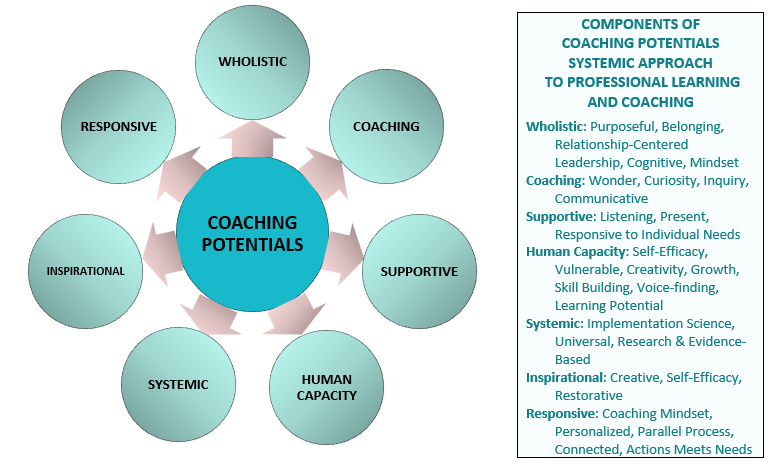
Coaching Potentials aims to highlight and activate individuals’ capacity to be whole, including understanding their identity, recognizing their contributions, and identifying their purpose in supporting humanity. The organization supports individuals in reaching their highest potential so that they can, in turn, support others. This is achieved through a Coaching Certificate Program and consulting work.
I, the founder, serve as the business manager, coach, instructor, and consultant for Coaching Potentials.
I specialize in human development, learning practices, Montessori, coaching, and leadership, and am recognized nationally in these fields.
Coaching Potentials is distinguished by its commitment to meeting all children’s needs, in a relational (social and emotional) context. I have chosen not to pursue higher career positions in order to remain connected with the current realities faced by children across the country. This is done by maintaining connections with educators and administrators in early childhood programs and communicating collected data to those in authority to inspire necessary support for children.
What sets Coaching Potentials apart is its responsive and humanistic approach to helping others reach their potential. The coaching program is structured into three parts: Part 1 focuses on learning coaching skills, Part 2 emphasizes responsiveness to oneself and others to promote sustainable change, and Part 3 harmonizes the “way of being” as a coach with a coaching mindset, applicable to systems and change management to enhance overall program quality.
My education and deep connections have led to a Montessori (humanistic and transformational) approach to coaching in the early childhood profession.
While some readings focus on early childhood development, the coaching program emphasizes the benefits of human development coaching for anyone. It involves having thinking partners to creatively discover solutions to challenges. Part 2 addresses the coach’s preparation, working on personal triggers with support from coaching partners. The systemic approach co-produces effective coaches who are present and focused on supporting their partners. Classes are held via Zoom every other Thursday night from 4-6:30 pm in a year-long program. Metropolitan State University offers up to 9 credits for successful completion of the program for a slight fee.
What do you like best about our city? What do you like least?
What I like best is the rich diversity and support for the many people of many cultures that create the Denver culture.
What I like least is the expense of living and even visiting there!
Contact Info:
- Website: https://www.coachingpotentials.org/
- LinkedIn: https://www.linkedin.com/in/janet-humphryes-78736823



Popular
-

The Trailblazers: Rewriting the Narrative
-

Celebrating the Spotlight: Kaytee Shashore Turns Milestones Into Momentum
-

Humanity in the Machine: Alexander Raye Pimentel’s Cyborg Recall Questions the Cost of a Data‑Driven World
-

Raemi Anderson on Courage, Caution, and Answering the Call of the Landscape
-

Hidden Gems: Local Businesses & Creatives You Should Know


