



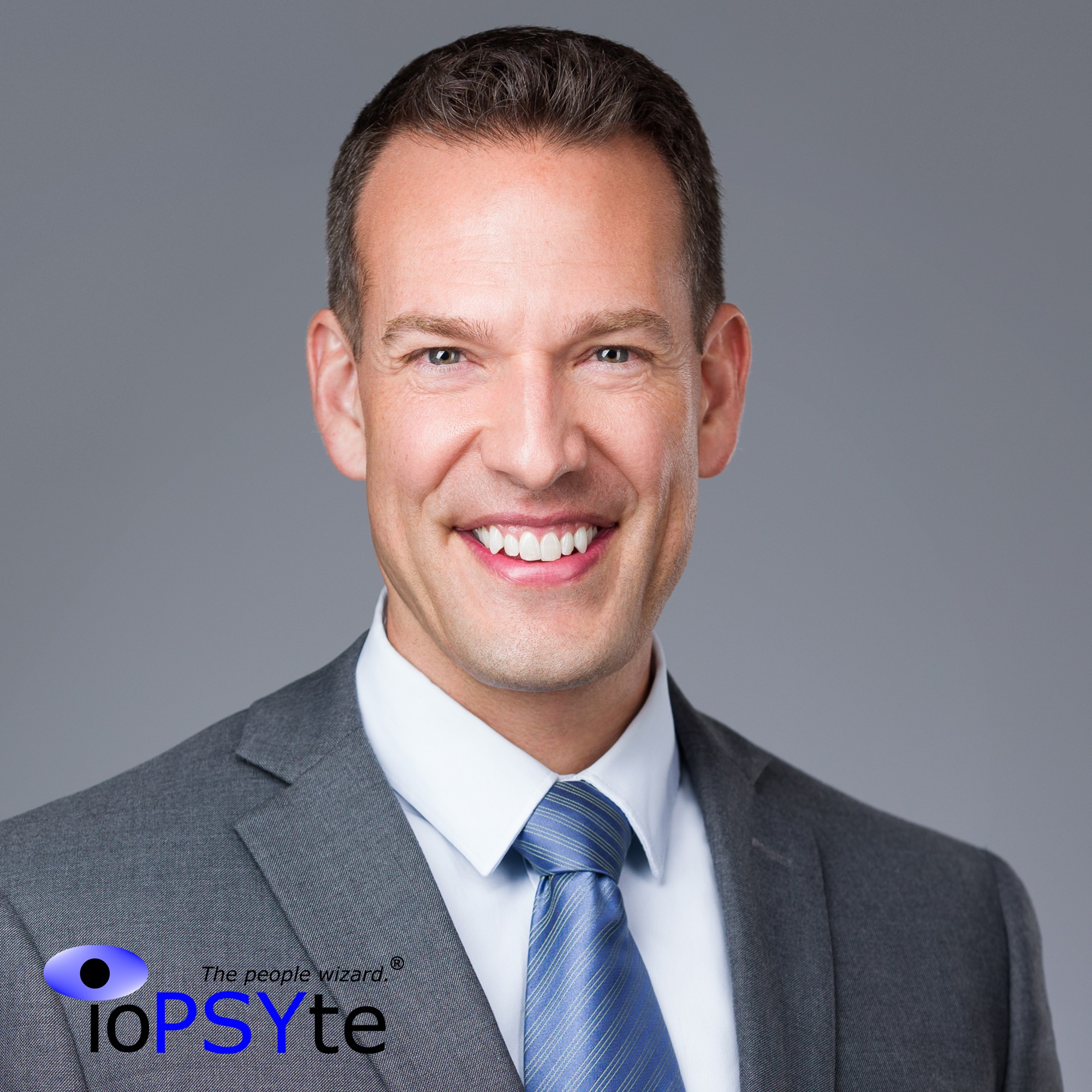
Today we’d like to introduce you to Dr. Quinn Denny
Hi Dr. Quinn, we’re thrilled to have a chance to learn your story today. So, before we get into specifics, maybe you can briefly walk us through how you got to where you are today?
I have read statistics that the average person will change careers two to three times within their working years. This is my second career; I have been at it since 2016. I guess I have been enterprising since I was young. My first job was a paper route for the Rocky Mountain News, I was 13 years old. After that, as a teenager I worked for a friend’s parents’ catering company at the Parade of Homes, threw papers for the Denver Post, installed ERA Realty signs, worked in lumber, and worked as support in a college computer lab. At one point, I worked construction on the side when ioPSYte® needed additional cash flow. My primary two careers have been IT and now, work psychology. Eight years into my IT business I realized I was burning out with the work and eventually mustered the courage to make a career change and return to my original passion, psychology. After years in IT and business, work psychology (industrial organizational psychology) proved to be a great fit. Having consulted hundreds of businesses in the IT world, I was very accustomed to project management and systematic ways of thinking and implementing technology, procedures, and policies within the workforce. The nature of industrial organizational psychology with its evidence-based approach to individuals, teams and organizational structures suited me well and I found that with my enterprising nature it was natural for me to create and implement practical ways to integrate the science of work psychology for the benefit of businesses. That is how I got here today. I also have the privilege of teaching as an adjunct professor for a university out of SoCal, where I serve students with developing competency in talent assessment. When I look back on my work history, many of the roles that I had afforded me autonomy and innovation. I think that is probably the most attractive thing to me about owning a business, it aligns with my personality.
I’m sure it wasn’t obstacle-free, but would you say the journey has been fairly smooth so far?
I had an economics teacher in high school who had a saying, “TINSTAAFL”, “There is no such thing as a free lunch”, I understand now that the saying is based on Cranes Law, a concept that one does not get something for nothing. Such has been true in my work journey. There have been challenges from market shifts, physical injuries, life circumstances with family and friends, and moments of fatigue and doubt. My experience has been that anything worth pursuing comes at a price, there is a certain amount of effort and mental discipline, perseverance required to acquisition one’s goals. I have a friend, who is also extremely driven, we often refer to this as the price to be paid. It is the intensity, sacrifice, and doggedness required to see a process through.
Thanks for sharing that. So, maybe next you can tell us a bit more about your business?
ioPSYte® is a work psychology firm. Our entire purpose is to increase job satisfaction (work happiness) and job performance helping to drive down inner conflict within organizations. I have a passion for those who are brokenhearted in their work. At its greatest, work can be a joy, one’s art. For many, work is a chore and at its worst a nightmare for some. We help individuals, teams and organizations by applying evidence-based research in practical ways through the creation of procedures and policies, analysis, and training designed to facilitate positive transformation. Because we are rooted in science versus ad hoc or fad-based materials we have experienced many successes with clients. Our tagline, “The People Wizard”, was something we incorporated because a client gave us that nickname.
One of the most challenging aspects of being an Industrial Organizational Psychologist was learning to articulate what a work psychologist can do. Industrial Organizational Psychologists go through a rigorous set of education which encompasses both the people aspects of psychology, task-based aspects of efficiency, and scientific methods which are coupled with statistical prowess. For fun I composed this list of available tasks we can do:
• Job Design, Job Task Analysis, Job Crafting
• Change Management, Change Models, Change Communication Plans, Change Implementation
• Training design, development, and validation
• Training Trainers
• SOP design, refinement, and evaluation
• Team and Individual Coaching
• Survey/Test construction, validation, and analyses
• Procedure and Task creation, refinement, and evaluation
• Quantitative and Qualitative statistical analyses on varied data
• Experimental Design
• Performance Management System design, refinement, evaluation, and implementation
• Time Studies
• Conflict Arbitration
• Talent, Culture, and Performance assessments
• Talent Acquisition
• Personality Inventories and practical uses
• Message formulation, refinement, and analysis
• Research and Research Dissemination
• Competency Modeling
• Support in Mergers and Acquisitions
• Cost-Benefit Analysis
• SWOT analysis
• Making most things measurable!
Often, I just say, “If it’s people or process or both, we can help.”
Can you talk to us a bit about the role of luck?
What a challenging question. I suppose as a scientist I should say that I don’t believe in luck. I think I know what we mean here though, there are so many things that can happen in life and business. As example, I color code my calendar to classify events so I can study how efficient I am. I know, it’s excessive right? I think it’s a work psychologist thing. Anyway, one of the color codes I have is a light purple color and is labeled, “Life Circumstances”. It is a category that allows me to give myself some tenderness, some forgiveness when I don’t always achieve objectives in the timeframe I aimed for. It tells me, “Hey, you couldn’t do anything about this, it’s just life”. I guess one great example of tough luck was that I started my business shortly before the Covid pandemic. Considering good luck at the time, I was fortunate to have a client who wanted our services, and we were so thankful to weather that time of uncertainty and volatile economy. I think so much of any kind of challenge, whether perceived as beneficial or bad is the way we frame things. We call this cognitive appraisal. As example, when I was pursuing my PhD, we had a myriad of hardships which I should’ve written down. There were so many things that we endured and overcame in a period of several years. A few of which were three instances of cancer in close family members, one was my mom, and she passed away from it. I had a back injury that put me in a wheelchair for a period of time. These are just a few of the things which were of paramount difficulty. The thing is, it wasn’t pleasant going through those things, but I wouldn’t give them up or undo them if I could. That “bad luck” so to speak created in me a fiery resilience and I find that some of the things that used to rattle me, are now things I frame as opportunities. Sometimes our difficulties are like the down moment in a movie, and we have to see ourselves and those close to us at a later part in the movie, standing resilient and confident.
Pricing:
- Premium Membership (Includes Consulting and Training) $375/Team Member/Month
- 29% Hourly Discount for Members ($150/Hour billed in 15-minute increments)
- $210/Hour Flat Rate (Billed in 15-minute increments)
Contact Info:
- Website: https://www.iopsyte.com/
- Instagram: https://www.instagram.com/iopsyte/
- Facebook: https://iopsyte.com/facebook.com/iopsyte
- LinkedIn: https://www.linkedin.com/in/dr-quinn-denny-8baaa1165/
- Youtube: https://www.youtube.com/@iopsyte


Image Credits
Lisa Christianson
Aaron Sager
Popular
-

The Trailblazers: Rewriting the Narrative
-

Celebrating the Spotlight: Kaytee Shashore Turns Milestones Into Momentum
-

Humanity in the Machine: Alexander Raye Pimentel’s Cyborg Recall Questions the Cost of a Data‑Driven World
-

Raemi Anderson on Courage, Caution, and Answering the Call of the Landscape
-

Hidden Gems: Local Businesses & Creatives You Should Know


