
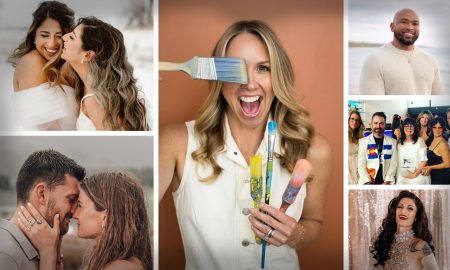


 Today we’d like to introduce you to Katrina Martin.
Hi Katrina, please kick things off for us with an introduction to yourself and your story.
When I was five, I told people I wanted to be a teacher and a writer. Now, more than 40 years later, those are the two things I do professionally.
I got bachelor’s degrees in Journalism and English from CU-Boulder in the ‘90s and worked as a journalist for a couple of years at newspapers. It wasn’t a good fit, so I switched gears toward education.
I received an Elementary Education certificate from CU-Denver and discovered that one-to-one instruction suits me best. I’ve been an educator for 23 years and I have my own business, Katrina Dreamer Tutoring, LLC. I work primarily with students with learning disabilities, and I’m an Orton-Gillingham specialist who does individualized phonics instruction. I also coach students with autism, ADHD, and other types of neurodivergence.
Although my main gig is teaching, I also write freelance articles. Most recently, I’ve written for Tripadvisor and Endometriosis.net. Other writing projects include a memoir, several children’s picture book manuscripts, and a comic manuscript, and I am currently seeking representation. I’ve co-edited a zine called The Covid Logs that is coming out in November; it is a collection of art and stories from disabled and chronically ill folks about what it’s been like to navigate the ongoing pandemic.
I took a detour in the early 2000s and got a Master’s degree in Consciousness and Transformative Studies, which is as cool as it sounds: a mixture of psychology, religious studies, quantum science, and philosophy. My area of specialty was dream studies, and now I am a dream worker who studies my dreams and helps others understand their dreams. I also write articles and co-host a podcast called Dreaming Back to the Earth. Studying consciousness and psychology has deeply informed my work with students, as I work with the whole student, rather than focusing on one or two aspects of their life.
This year, I’ve added co-running a mutual aid group to my list of activities. I’m high risk for Covid and haven’t yet contracted it as far as I know. Once the public health emergency ended in May, I noticed that immunocompromised, chronically ill, and disabled people were sharing how they struggled even more to access public spaces because universal masking had been dropped. I’ve teamed up with four other Coloradoans to create Covid Safe Colorado. Our group provides high-quality masks to help folks be able to continue to participate in society and remain relatively safe.
So far, we’ve distributed nearly 1,500 masks to people up and down the Front Range and hosted an in-person, masked gathering. We hope to expand our efforts in the coming months and begin taking donations.
Can you talk to us about the challenges and lessons you’ve learned along the way? Looking back, would you say it’s been easy or smooth in retrospect?
I’ve dealt with chronic illness since my teens, but I didn’t have names for my illnesses until my early 30s. I missed many days of work and didn’t understand why I couldn’t keep up with my peers who could work all day and go out multiple nights a week to socialize or hike long distances on the weekends.
I was diagnosed with endometriosis at 32. I’d had incredibly painful menstruation for more than 15 years at that point, but none of my doctors had ever mentioned endo. It’s a poorly understood and under-researched illness that affects mainly women and people assigned female at birth (I’m nonbinary) and there is no cure. The interventions are surgery and medication, and for some people, neither of those things works for long. I’ve had four surgeries so far and I went into surgical menopause after my last surgery because they had to remove my ovaries. Before my last surgery, I’d lost a significant amount of my mobility and had debilitating daily pain. I’m in a better spot with Endo now, but I have other illnesses I navigate daily that greatly impact my life.
In 2021, after a friend recommended I see a particular doctor in Vermont (where I lived until last year), I was diagnosed with mast cell activation syndrome. While it is a challenging diagnosis to receive, it helped answer why so many things had been happening to me. In basic terms, mast cell activation syndrome causes you to have allergic reactions to almost everything you can think of. I have to avoid chemicals and fragrances, many foods, temperatures over 75, humidity, and even some medications. It also gives me fatigue, flushing, headaches, and stomach issues. It’s a real picnic.
A couple of years later, I was diagnosed with dysautonomia, which affects your ability to regulate your temperature, your blood sugar, your heartbeat, and your balance, among other things. Because of the MCAS and dysautonomia, I also have migraine attacks. Most of these things are managed okay, but it has taken me a couple of years and many doctors to get to this place. In the meantime, I’m still running my business and writing, and last year I moved cross-country.
In March, I had a concussion that led to post-concussion syndrome. This has had the most impact on me this year…I’m still experiencing symptoms when I push myself too hard, so it’s meant I’ve had to scale back on a lot of things that bring me joy like hiking and birding. However, it’s also taught me a lot about pacing, asking for help, and having compassion for folks with traumatic brain injuries and conditions that lead to brain fog.
Even though I’m managing a lot regarding my chronic illnesses and disabilities, I’ve taken everything I’ve learned about managing chronic illness and put it into advocacy work. That’s been rewarding, and I’ve made some excellent friends through that work.
Great, so let’s talk business. Can you tell our readers more about what you do and what you think sets you apart from others?
In 2008, I started dreaming and planning for how I could start a full-time tutoring business (I had been doing it part-time for eight years at that point). I took an intensive business course and launched Katrina Dreamer Tutoring as my sole means of income in 2015. Eight years later, I can say that was one of the best decisions I’ve ever made.
While I am not unique in offering Orton-Gillingham instruction for dyslexic students and academic coaching for students who need executive function support, my tutoring style is different from most tutors. Therefore, I wanted more autonomy. I incorporate a lot of social/emotional skills and I work with the whole student, not just what they need academically. It’s essentially a mix of tutoring and coaching. Many parents say that this approach is why they hire me and it’s also why they stay as clients for multiple years.
I take time to get to know my students and find out their likes, dislikes, and what makes them tick. I always tailor lessons to include things they enjoy; for instance, I might slip in a Roblox or Pokemon reference in the sentences they need to read. My writing students get to write about things that interest them so they stay motivated.
I mainly work with students with learning disabilities, so I want to find out how they feel about school and their disability and meet them in that space. It’s not just about imparting wisdom and teaching them how to read or write; it’s also about helping them navigate their feelings about disability and confronting their internalized ableism so they can see that there is nothing wrong with them. Rather, it’s the systems they encounter that are flawed. Our school system is not set up to help disabled students succeed, so I teach my students how to advocate for themselves, how to better understand their disability, and how to mine their strengths so they feel more empowered.
This year, I have started offering coaching, especially for autistic students. I help them work through autistic burnout and rejection-sensitive dysphoria, and I assist them in setting up systems that work for them, helping them navigate sensory sensitivities, and advocating for themselves. It’s been really rewarding so far.
Is there something surprising that you feel even people who know you might not know about?
The first (and only) time I ever rappelled, I did so off of a 70-foot cliff in Belgium. It was terrifying and exciting.
My friend was with me and he took a picture of me hanging from the rope. I still go back to look at that photo when I feel like I can’t do something hard. It reminds me that I stepped backward off of a tiny ledge and hung from a rope 70 feet up in the air, so I could do other things that scare me!
Contact Info:
- Website: www.katrinadreamertutoring.com
- Instagram: @katrinadreamer
- Linkedin: https://www.linkedin.com/in/katrinadreamer/
- SoundCloud: https://soundcloud.com/dreamingbacktotheearth
- Other: www.katrinadreamer.com


Image Credits
Michelle Hoxie
Carmen Numme
Popular
-

The Trailblazers: Rewriting the Narrative
-

Celebrating the Spotlight: Kaytee Shashore Turns Milestones Into Momentum
-
Humanity in the Machine: Alexander Raye Pimentel’s Cyborg Recall Questions the Cost of a Data‑Driven World
-
Raemi Anderson on Courage, Caution, and Answering the Call of the Landscape
-

Hidden Gems: Local Businesses & Creatives You Should Know


