



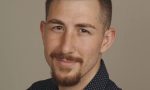
Today we’d like to introduce you to Kelly Elise Ulmer.
Hi Kelly Elise, thanks for joining us today. We’d love for you to start by introducing yourself.
I never planned to be an eating disorder therapist. And to be honest, if I had been told in high school that this is where I’d end up, I wouldn’t have believed it. In fact, as I reflect back on my education and career path, most of the decisions that have led me to where I am now were not part of the plan.
Originally, I went to college to study environmental science, however, the sudden realization of my own mental health struggles and an undiagnosed eating disorder led to a lot of unpredicted life changes. Consequently, my college years were filled with countless hours of therapy as I began my personal journey in eating disorder recovery. Being in therapy was a crazy experience for me—someone who had previously been incredibly private about my inner struggles. The level of authenticity, rawness, and vulnerability I was able to access in the safe space my therapist created was so new and so special. The incredible (and difficult) experiences I had in both therapy and eating disorder recovery ultimately led to my curiosity about counseling as a career path—specifically within the field of eating disorder treatment.
After a newfound love of food, which led to a brief stint working as a professional baker, I ultimately graduated with dual graduate degrees in counselor education and mental health counseling. Soon after, I landed my first job working as a therapist within an intensive outpatient program for eating disorder recovery. Over the next few years, I worked in various eating disorder clinics and treatment settings before opening a private practice here in Fort Collins, Colorado—yet another decision I sort of fell into without intending to.
While the independence and flexibility of working in private practice were great, I found that I truly missed the experience of working within a team of caring professionals and colleagues. Additionally, working in the field of eating disorders is not something many professional counselors choose. In fact, most individuals who find themselves working with eating disorders have been pulled into this work by their heart and soul, and through personal connection. Unfortunately, I’ve found that Fort Collins is a bit of a desert with regard to eating disorder treatment and support options for those in recovery. This realization, along with a deep longing for community connection in my work, led me to create and found Bloom Counseling & Nutrition, a group practice that provides integrative and specialized eating disorder treatment and holistic therapy for food, body, movement, and health concerns.
I never thought that I had “what it takes” to be a business owner and leader, but I am finding that I truly love the process of learning, leaning into risk, and creating a resource that can support the broader community.
Would you say it’s been a smooth road, and if not, what are some of the biggest challenges you’ve faced along the way?
The road has definitely been bumpy, and I’ve found the journey of traveling over those bumps to be much easier as I learn to embrace them and the lessons, they provide me with. Bloom is only about a year old, and there have already been so many unexpected twists and turns in that time. Learning to accept that hard things will happen and that I have the resources within myself and my community to get through hardship and unexpected struggles, has been monumental in the growth of Bloom and myself as a business owner.
When I think of my business, I think of the four distinct yet connected pieces of it that I must always tend to with equal energy and intention: (1) the clients of Bloom, (2) my team of wonderful employees, (3) the business itself, and (4) myself as a leader—if any one of these pieces is neglected, Bloom as a whole crumbles. This is probably the greatest learning I’ve taken away over the past year.
As a recovering people pleaser, I have had to set boundaries in order to make sure I am prioritizing Bloom as a business and myself as a leader, as my innate tendency is to want to bend over backward for Bloom’s clients and my employees. However, I have learned that in order to care for both of them, I must also be caring for my own well-being as well as the business (from a financial perspective).
Great, so let’s talk business. Can you tell our readers more about what you do and what you think sets you apart from others?
Bloom Counseling & Nutrition provides a safe space and supportive therapy services for EVERY body. We specialize in eating disorder treatment as well as holistic health support for concerns related to food, body, movement, and chronic health struggles. Both as a whole and as individual clinicians, we work from the principles of Health at Every Size— an inclusive movement and approach to health that encourages a shift away from focusing on weight loss, and instead, supports individuals of all shapes and sizes in adopting holistically healthy behaviors. This includes not only physical health but also mental, emotional, relational, social, occupational, spiritual, and any other component of our health as a whole.
From this foundation, we at Bloom are dedicated to challenging fatphobic systems and creating a safer world for bodies of all shapes and sizes. Unfortunately, many healthcare environments—even eating disorder treatment settings—can reinforce shame-based weight stigma and unhealthy practices, which is why changing the notion of what an eating disorder “looks” like is essential to our practice. At Bloom, we aim to provide a compassionate and inclusive haven for folx who feel that they have been failed by healthcare systems. In providing ethical and effective care, we believe that it is our job as healthcare professionals to work toward advancing the causes of social justice and understanding the impact social oppression has on marginalized bodies—particularly the impact of racism and fatphobia on health and wellbeing.
Additionally, our mission is to meet our clients exactly where they’re at and embrace the belief that the individual is the expert in themselves. As clinicians, our intention is to serve as a guide, supporting individuals to connect to their inherent body wisdom that’s been there all along but can get lost amongst all the “health” information spewed at us daily.
Many folx find us due to their curiosity about Intuitive Eating—an approach to nutrition that seems to be getting more and more public attention. While we provide Intuitive Eating counseling services (I’m a Certified Intuitive Eating Counselor), many individuals who begin the journey of Intuitive Eating typically soon discover how deep that work truly goes and how much more it entails than a sole focus on our food habits. Consequently, we provide various services in order to match what would best support the individual. Whether individual, family, or group therapy, we’ve got it covered. We are also excited to soon be expanding into more creative and experiential offerings like culinary arts workshops, meal support groups, and support for loved ones of those in recovery.
Lastly, as I said earlier, the original intention behind Bloom was to provide a valuable resource for the community—even those who are not and may not ever be clients of Bloom. For this reason, we are constantly working on growing resources available to all on our website as well as donating our time to community events, advancing treatment accessibility, and providing psychoeducation to others.
In terms of your work and the industry, what are some of the changes you are expecting to see over the next five to ten years?
Over the next 5 to 10 years, I truly hope that the healthcare industry realizes the need to become more inclusive and compassionate and that healthcare professionals develop a deeper understanding of the role of oppression in health outcomes. I dream that more individuals and systems come to learn that health is primarily driven by social, economic, and environmental factors, and thus, we must intervene on social and political levels in order to ensure everyone has access to the healthcare they deserve. I have no idea whether or not this will happen, but I know that I will continue to do everything that I can to be a part of the shift toward the change we need. I am grateful to see more conversations of this nature occurring in our society and I am hopeful that we can create momentum through this awareness.
Within eating disorder treatment spaces specifically, I hope that we can broaden the narrow definition and image of what an eating disorder “looks like”. A statistic that not many people are aware of, but that is so important, is that fewer than 6% of people with eating disorders are medically underweight. Additionally, the idea that only white women suffer from disordered eating contributes to so many folx of various gender identities, ethnicities, and races not receiving appropriate care and support. As a Certified Eating Disorder Specialist who provides supervision to clinicians, I aim to increase awareness of the harm done to clients when we invalidate through not listening accurately to their lived experiences and instead make assumptions.
Pricing:
- Individual Therapy – $125
- Group Therapy – $50
- Insurance accepted: BCBS, Cigna, RMHP
- Reduced fee & pro bono spots for Project HEAL recipients
Contact Info:
- Email: info@bloomcounselingandnutrition.com
- Website: www.bloomcounselingandnutrition.com
- Instagram: https://www.instagram.com/bloomcounselingnutrition/
- Facebook: https://www.facebook.com/bloomcounselingnutrition/


Image Credits:
Allie Coldiron
Popular
-

The Trailblazers: Rewriting the Narrative
-

Celebrating the Spotlight: Kaytee Shashore Turns Milestones Into Momentum
-
Humanity in the Machine: Alexander Raye Pimentel’s Cyborg Recall Questions the Cost of a Data‑Driven World
-

Raemi Anderson on Courage, Caution, and Answering the Call of the Landscape
-

Hidden Gems: Local Businesses & Creatives You Should Know


