
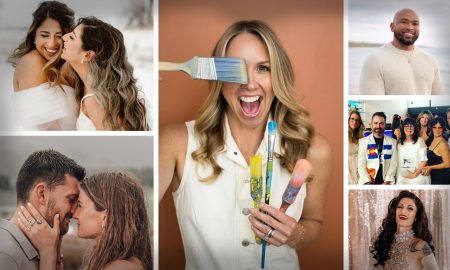


Today we’d like to introduce you to Lora Bird.
Hi Lora, please kick things off for us with an introduction to yourself and your story.
I have had a long and weird road to tattooing. I started working at age 15 in food service- every fast-food joint you can think of. When I moved from my hometown to Fort Collins to go to CSU, I landed a job in the catering department at their student center while I worked on my degree. After I graduated and got a job (teaching elementary school music) I kept that catering job on the side because the pay was so abysmal. Those two years I spent teaching were the most miserable I’ve ever been. I worked 365 days a year for two years straight and way barely scraping by, it quickly became apparent that I needed a change. I ended up back in food service, this time at the Alamo Drafthouse, where I began my second short career in movie theatres. I bounced from managing at the Alamo to the Denver Film Society, and then over to Harkins Theatres to avoid the non-profit life of DFS. They do amazing work over there, but nonprofit is its own game and not the one for me. The movies are weird place, and I adored my time in them, but I’m glad to be two steps away now. My partner (who I met at Alamo) still works for DFS and it’s awesome.
During my time at Harkins, I had a friend who was a tattooer that was giving me a piece while I was lamenting about my weird corporate life and wondering if I was ever going to be happy at a job, or if capitalism is just that much of a soul suck. I lucked out that she was just staring her shop and had room to take a chance on a friend. I had a brief apprenticeship and worked so hard- serving in the daytime and tattooing in the evenings- to make sure I couldn’t let this flop. If you had told 9-year-old me that tattooing was a job that was allowed, she never would have believed you, let alone even dreamed that it could be a reality.
Since then, my anxious nature led me to be alone in a 116 square foot studio during covid, and once things started to look up in the summer, I started to bring my dream to life. Nest. I place where all bodies are welcome and safe to get tattooed.
Can you talk to us a bit about the challenges and lessons you’ve learned along the way? Looking back would you say it’s been easy or smooth in retrospect?
Of course not, has anyone had an easy trip? Working myself to the bone and having two or more jobs at any given time over the course of 15 years will really wear you down. Financially, going to college was such a huge mistake that is still haunting me. Mentally, teaching put me in my lowest state of all time and I seriously questioned if life was even worth living. I honestly don’t know how teachers do it, they’re the strongest people I know,
Tattooing itself is hard in that starting when you’re “older” (i.e., not a teenager), breaking old stereotypes and traditions, and inhabiting an AFAB body are all things that I still struggle with in the industry. I am striving every day to break those ideals down and make a space that’s a haven for artists that have traditionally been pushed to the side. It’s not easy, but it’s so so worth it.
As you know, we’re big fans of Nest Art Collective. For our readers who might not be as familiar what can you tell them about the brand?
So, to explain Nest, we need to understand a few things about traditional tattoo shop culture that I wanted to change. First and foremost, I’ve never seen another shop that does not have an open floor plan. Most shops are kind of open, the tables are set up throughout one big room, and anywhere from 2 – 20 artists are all in a big space working on clients concurrently. Even before the risks of covid, I hated this concept. I’ve been in shops that made me feel like a piece of meat on the table. Other artists and clients swinging by to check me out while I was getting my ribs tattooed at 18. It was gross honestly, and most of my clients have a similar story. Shop culture can be really toxic toward women, and even if the shop is all-female, the client often still feels exposed physically or emotionally while they’re in such a vulnerable state. Nest has 7 fully closed-off, private booths with closing doors so that clients with any sort of trauma can feel safe with their artist.
Every artist is trained and continually working on offering trauma-informed tattooing. This is kind of a new concept in the traditional world of tough guys. The “suck it up buttercup” approach to tattooing is really frustrating to me. There are so many ways we can make a client more comfortable, but each client has a right to a clean, safe experience, starting with the privacy aspect, and moving into the actual appointment, we ensure that every client gives us consent. And not just consent on paper, but they know exactly where and when we will be touching their body, they know they are allowed to take as many breaks as needed, they know they can ask any questions no matter how small, and they know their artist is as clean and professional as possible. These may seem like basic and common-sense things, but toxic tattooing culture has been ingrained with this weird machismo mindset that your artist knows your body better than you do, which is obviously just not true. You know your pain level, design ideas, and budget better than your artist.
In addition to trying to change the tattoo game, I am also trying my best to make other arts more easily available as well. Our retail space hosts well over 15 vendors that are all local, small makers that offer up jewelry, pottery, clothing, bath products, paintings, prints, pins, and more. It’s so hard to be a maker and get your stuff into a physical space. Some galleries take more than 50% of a sale from the artist. I set it up so that literally all I take is enough to keep the lights on. I’m trying really hard to empower makers of all kinds so they can move through the cogs of capitalism and retain their creative flow.
Nest has become a haven, and I love seeing all the artists treat each other with such kindness and joy. I am so fortunate to have gathered such a diverse group of artists that are also just wonderful people. We’d love to see you stop by and feel the good vibes!
What do you think about luck?
I don’t really believe in luck. I feel I have worked extremely hard through good times and bad to make something for myself and others. I am extremely fortunate to have met these people, but I believe we attract what we are asking for and luck isn’t really a part of it.
Contact Info:
- Email: NestArtCollective@gmail.com
- Instagram: instagram.com/nest.art.co
- Facebook: https://www.facebook.com/NestArtCollective


Popular
-

The Trailblazers: Rewriting the Narrative
-

Celebrating the Spotlight: Kaytee Shashore Turns Milestones Into Momentum
-

Humanity in the Machine: Alexander Raye Pimentel’s Cyborg Recall Questions the Cost of a Data‑Driven World
-

Raemi Anderson on Courage, Caution, and Answering the Call of the Landscape
-

Hidden Gems: Local Businesses & Creatives You Should Know


