


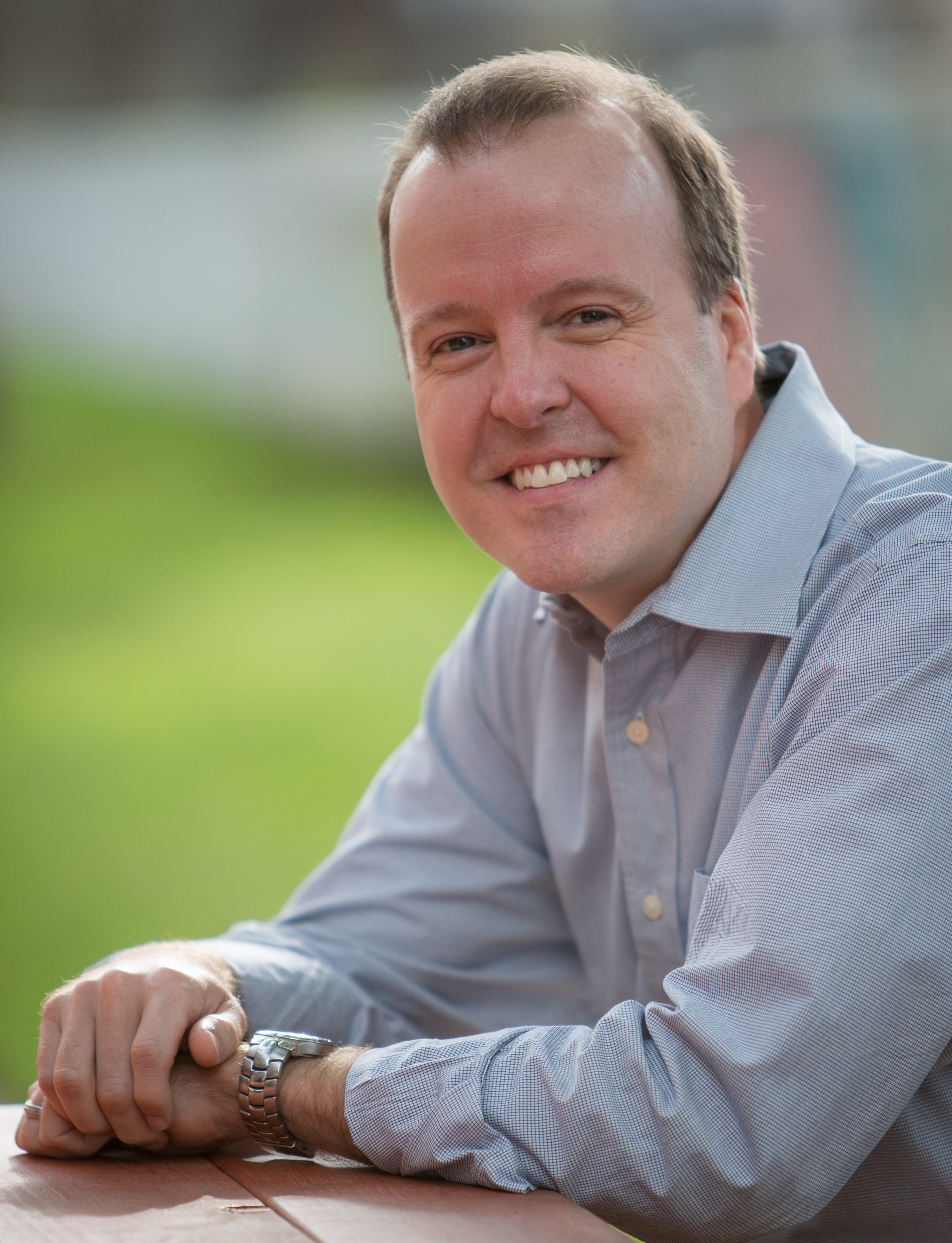
Today we’d like to introduce you to Thomas Welch, PsyD.
Hi Thomas, we’d love for you to start by introducing yourself.
My career makes much more sense looking backward than it probably did while I was living it.
I’m a child and family psychologist, and for most of my career I’ve worked with neurodivergent adolescents and young adults, particularly those with ADHD, dyslexia, autism, executive-function challenges, anxiety, and twice-exceptional profiles.
There is a personal connection to that work.
I grew up with undiagnosed ADHD and dyslexia and was later recognized as twice-exceptional. I knew what it was like to be capable and still struggle with things that seemed to come much more easily to other people. I don’t think I had the language for that experience when I was younger. I just knew there were things I could do remarkably well and other things that required far more effort than anyone around me seemed to understand.
Looking back, I think that experience shaped the psychologist, educator, and writer I eventually became.
During my undergraduate years, I studied psychology and business at Texas A&M. I later earned a master’s degree in psychology at Mississippi State before earning my doctorate in clinical psychology at the California School of Professional Psychology. My training led me into work with children and families, and over time I found myself increasingly drawn to a particular group of young people: bright, capable students who didn’t always fit neatly into traditional educational environments.
They weren’t necessarily the students causing problems. In fact, many were polite, thoughtful, and doing just well enough that people assumed they were fine. But underneath, they were often working extraordinarily hard just to keep up. By the time families found me, many of these kids were exhausted, anxious, shutting down, or beginning to believe something was fundamentally wrong with them.
I recognized something in them.
Not necessarily my own story, but something familiar: the experience of being capable while finding parts of the world much harder to navigate than other people seemed to understand.
That observation eventually became a major theme in my career.
It also led me to Humanex Academy, a small independent middle and high school in Englewood, Colorado, where I have been able to help develop our specialized program. Humanex serves neurodivergent students who often need something different from a traditional school environment—not lower expectations, but a better fit. We start from the belief that ability and readiness aren’t always the same thing, and that young people develop best when challenge is matched with the conditions that allow them to participate successfully.
The same ideas eventually found their way into my writing.
My first book, The Breakaway, explored the complicated transition toward independence and what happens as parents and young people begin renegotiating their roles with one another.
That work has now grown into The Art of Becoming Series, three books that follow a developmental story from adolescence into young adulthood.
The Inbetweeners begins with the capable students we often miss—the ones who appear fine while quietly becoming depleted underneath.
The In-Between Years follows them beyond high school, when much of the structure that once supported them disappears and development doesn’t always proceed according to the timetable everyone expected.
And Stuck, Not Lazy turns toward the question parents eventually ask: once we see and understand what is happening, how do we help create the conditions for growth?
The three books will begin releasing soon, and together they probably represent the clearest expression of what I’ve learned from young people and families over the course of my career.
One of those lessons is that development is rarely a straight line.
That’s true for the young people I work with, but when I look back, I realize it has been true for me too.
I didn’t set out with a plan to become a psychologist who owned a school, taught future psychologists, worked with families, and wrote books about neurodivergent development. One experience led to another. The students and families I worked with kept teaching me. Questions I couldn’t quite answer kept pulling me forward.
Eventually, what had looked like separate parts of my career began to look like the same work.
Whether I’m sitting with a family, walking through Humanex, teaching graduate students, or writing a book, I’m usually trying to do the same thing:
Help people see a young person more clearly.
Because I’ve learned that when we see someone differently, we often respond differently.
And sometimes, that changes what becomes possible.
Alright, so let’s dig a little deeper into the story – has it been an easy path overall and if not, what were the challenges you’ve had to overcome?
Definitely not.
Some of the struggles have actually helped shape the way I think about development today.
Growing up with ADHD and dyslexia meant that I often experienced a strange contradiction: I knew I was capable, but there were things I simply couldn’t do as easily or consistently as other people seemed to. When you’re young, it’s very easy to interpret that discrepancy as a character flaw.
You start wondering, Why can I do this but not that? Why do I have to work so hard at something that seems easy for everyone else?
That experience has stayed with me.
Professionally, there have been plenty of uncertain moments as well. Owning a small school is not easy. Independent schools operate on thin margins, and serving students who need highly individualized support makes the economics even more challenging. There are much easier business models than intentionally keeping classes small and building a school around individual students.
But I’ve also learned that difficulty isn’t necessarily evidence that you’re on the wrong path.
Sometimes it means you’ve chosen work that matters enough to be difficult.
I’ve watched students arrive at Humanex believing they were failures because they couldn’t succeed in an environment that wasn’t built for the way they learned. Then, slowly, something changes. They begin participating. They find friends. They take risks. They start seeing strengths in themselves that had been buried underneath years of frustration.
Those experiences have changed me too.
One of the ideas I write about frequently is that progress is often quieter than we expect. I think that’s true of careers as well as young people. Looking back, my own path wasn’t a straight line toward some carefully designed destination. It was a series of experiences that gradually began making sense together.
Thanks – so what else should our readers know about Humanex Academy?
Humanex Academy is a small independent middle and high school in Englewood designed primarily for neurodivergent students.
Many of our students are bright and capable but have struggled in traditional schools because of ADHD, autism, dyslexia, dysgraphia, executive-function challenges, anxiety, or twice-exceptional profiles.
What makes Humanex different is that we don’t begin by asking, “How do we make this student function more like everyone else?”
We begin by asking, “Under what conditions does this student learn, participate, and grow?”
That sounds like a small distinction, but it changes almost everything.
Our classes are intentionally small. The environment is quieter. Students can work at an appropriate pace. Accommodations aren’t something students have to repeatedly earn or explain; they’re incorporated into how we teach. Relationships matter enormously.
We also recognize that academic development and emotional development aren’t separate processes.
A student who spends the entire day regulating anxiety, masking differences, or trying not to make a mistake may technically be sitting in a classroom, but that doesn’t necessarily mean much learning is taking place.
We want students to experience challenge. But challenge has to occur within a level of capacity that still allows participation.
One phrase we use is “momentum over speed.”
I’d rather see a student moving forward sustainably than racing toward a milestone they’re not ready to maintain.
That’s especially important as students approach graduation. Our junior and senior transition work isn’t simply about getting someone accepted to college. We spend time thinking about readiness, executive functioning, self-advocacy, work, community participation, and what kind of next step actually fits the individual student.
I’m probably most proud that Humanex is a place where students who once felt fundamentally unsuccessful can begin seeing themselves differently.
That matters to me more than any particular program or statistic.
I’m not sure I naturally think of what I do as a “brand.”
I think of it more as a point of view.
Whether I’m sitting with a family in my psychology practice, walking through Humanex, teaching graduate psychology students, or writing a book, I keep returning to many of the same questions:
What are we seeing?
What might we be missing?
Are we confusing ability with readiness?
Are we interpreting overwhelm as a lack of motivation?
Are we measuring development against the individual – or against a timetable someone else created?
That’s probably the thread connecting everything I do.
And increasingly, writing has become a way for me to bring those conversations beyond my office and school.
The Breakaway was the beginning of that.
My new project, The Art of Becoming Series takes the ideas much further. Across three books, The Inbetweeners, The In-Between Years, and Stuck, Not Lazy, I’m trying to describe a developmental pathway I think many families recognize but haven’t always had language for.
The adolescent who appears fine at school but collapses at home.
The capable graduate who suddenly stalls when the structure of school disappears.
The young adult who wants a life but can’t seem to begin building one.
And the parent who keeps asking, “What am I supposed to do?”
I don’t write books that promise a five-step solution.
I’m much more interested in helping people ask better questions.
If readers finish one of my books and say, “I see my child differently now,” that’s probably the response that means the most to me.
Risk taking is a topic that people have widely differing views on – we’d love to hear your thoughts.
I have an interesting relationship with risk.
I don’t think of myself as particularly reckless, but looking back, I’ve apparently made several decisions that a reasonable person might describe as risky.
Helping to run a small independent school would probably qualify.
Writing books and putting ideas you’ve spent a career developing into the world certainly feels risky.
And building a professional life around young people who don’t always fit neatly into existing systems means you’re often choosing a less obvious path.
But I’ve come to think that we sometimes ask the wrong question about risk.
We ask:
“What happens if I try this and it doesn’t work?”
That’s important.
But I’ve learned to ask another question too:
“What happens if I don’t?”
Sometimes staying where we are carries its own risk.
That’s something I see with young people all the time. We understandably want to protect them from failure, so we can become hesitant about letting them try something uncertain. But growth requires some amount of risk.
The key, in my view, is not eliminating risk.
It’s making risk developmentally appropriate and recoverable.
Can I try this without the entire future depending on it?
Can I learn something if it doesn’t work?
Can I change direction?
Can I come back?
I think adults need that same permission.
Some of the most important decisions in my life didn’t come with certainty. They came with enough information to take the next step.
That idea has become central to both my work and my writing.
You don’t always need to see the entire path.
Sometimes you just need to see the next step clearly enough to take it.
And then you learn from what happens next.
Contact Info:
- Website: https://thomaswelchpsyd.com & https://humanexacademy.org
- Instagram: https://www.instagram.com/twelchpsyd
- LinkedIn: https://www.linkedin.com/in/thomas-welch-psyd/
- Other: https://substack.com/@thomaswelchpsyd