
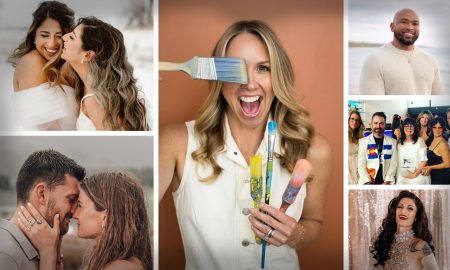


Today we’d like to introduce you to Krista Bratvold.
Hi Krista, we’d love for you to start by introducing yourself.
Founded in September of 2022 by two complete strangers who met through the internet– the collective’s origin story is a tale of serendipity, shared dreams, and a commitment to creating a safe and inclusive space in an industry often plagued by exclusivity and outdated practices.
Krista Bratvold and Maddi Studer, the co-owners of Witch of the West, first met in August 2022, just a month before opening Witch of the West. Little did they anticipate that a brief 30-minute dialogue, delving into their shared vision of creating a queer and women-owned tattoo studio (along with their mutual passion for whitewater rafting), would cement their partnership for the foreseeable future.
With a newly signed lease in hand to an old, run-down therapist’s office, the two recruited all the help they could muster to renovate and open Witch of the West. Maddi even brought on a former client who was looking to break into the industry with the promise of mentorship– a move that would later unveil the remarkable talent of Kenzie, known as @folkandfern.
After several long, grueling days of work with help from family, friends, partners, and some perfect strangers– Witch of the West was created in a short month and a half.
It has since blossomed into a vibrant and bustling space, housing six full-time tattoo artists and hosting artwork from several artists all over the Front Range. The Witches have become known for being one of the most comfortable and positive tattoo experiences in Fort Collins and the Northern Colorado area, attracting visitors from all over the US and even gaining viral attention across social media.
Witch of the West has put together two local art markets, with over 25 different artist vendors, as well as partnered with New Belgium to create flash tattoo events at their flagship brewery.
In 2024, Witch of the West was voted Best Tattoo Studio in the Coloradoan’s “Best of Fort Collins Community Choice Awards”, just two years after opening.
In 2025, after outgrowing the original location, Witch of the West renovated and moved into a new, larger location.
The six resident artists at Witch of the West are:
Maddi – @dadditatts
Krista – @sunhoundink
Kenzie – @folkandfernink
Ariel – @ariel.tats
Thavy – @thavydoestats
Hannah – @sufficetattoo
Can you talk to us a bit about the challenges and lessons you’ve learned along the way. Looking back would you say it’s been easy or smooth in retrospect?
Becoming a tattoo artist comes with its own unique set of challenges—some of which are deeply ingrained in the culture of the industry. First and foremost, the tattoo industry, despite its growth and diversification in recent years, is still very much male-dominated. Historically, it’s been a space where women, queer, and disabled people were marginalized or outright excluded, and in many ways, that culture is still present.
Each one of our artists has a unique background, and many of us have become tattoo artists through “non-traditional” routes. Tattoo apprenticeships, while vital for gaining the skills and experience needed to become a professional artist, can sometimes be environments where abuse—whether emotional, physical, or sexual—occurs, especially for women and queer individuals. In many traditional apprenticeship models, the power dynamics are skewed, with apprentices often having little control over their work conditions, wages, or treatment. Some apprenticeships can be highly exploitative, where artists or studio owners take advantage of the apprentice’s desire to learn and build a career. Because of this, many of our artists are self-taught, or have used other resources and avenues to learn how to tattoo.
As a studio, we’ve also found it difficult to find a commercial property that will rent to us. In many cases, when we’ve approached landlords about renting a space for a tattoo studio, the response has been outright refusal based on these antiquated views. Often, it’s not a matter of the property being unsuitable for a tattoo business—it’s more about the perception that tattoo shops are somehow “dirty,” “loud,” or “unprofessional.” These stereotypes result in property owners who are hesitant to lease their spaces to tattoo artists, especially if they’re unfamiliar with the industry or have never considered that a tattoo studio could be a clean, safe, and well-regulated business. For women, queer artists, and other marginalized groups, these barriers can feel even more daunting. The lack of available rental spaces becomes a much bigger obstacle when you’re already fighting against discrimination and limited opportunities in the industry. Finding a welcoming, non-discriminatory space that supports diversity and creativity in tattooing can feel like a constant battle.
For us, it’s about challenging and dismantling a culture that has kept a lot of us on the outside. But the more diverse voices that enter the industry, the more we change the conversation, and that gives me hope for the future.
Thanks – so what else should our readers know about Witch of the West Tattoo?
Witch of the West is a women and queer owned tattoo collective dedicated to creating a safe and accessible tattoo experience for “Every Body”. We’re on a mission to shatter traditional norms and redefine the tattoo industry narrative.
We understand that getting a tattoo is often a personal and significant experience, and we are here to make it memorable for all the right reasons. This vulnerability makes the tattooing process an incredibly intimate one, and it’s essential for the artist to understand and respect that. The studio needs to be a safe space, one that fosters trust and comfort, where the client feels seen and heard, especially because getting a tattoo often comes with a mix of excitement, nerves, and sometimes even fear. For some, it can also be an act of reclaiming their body.
Tattooing is a practice that requires a high level of empathy. Artists should approach every client with respect and professionalism, acknowledging the significance of the moment for them. This includes taking the time to listen to the client’s ideas, offering advice when asked, and ensuring they feel at ease throughout the entire process. A safe environment is not just about the physical cleanliness of the studio, but about fostering emotional and psychological safety as well.
Unfortunately, not all tattoo studios foster this sense of safety, and for some people—especially those from marginalized groups—getting a tattoo can be an intimidating or even traumatic experience if they are met with discrimination, inappropriate comments, or a lack of understanding. That’s why it’s so important for tattoo artists to be aware of the impact their behavior, language, and approach can have on their clients.
What does success mean to you?
For me, success as a tattoo artist means creating a lasting legacy and finding meaning in the work I do. Tattooing, for me, is a way of connecting with people, telling their stories, and leaving something tangible behind that carries personal significance for them. The most profound aspect of being a tattoo artist to me is knowing that the piece of artwork I create will be with someone for the rest of their life.
As a tattoo artist, I’m creating something that will grow old with someone, that will be a part of their physical and emotional landscape for their entire life. It’s an intimate bond between the wearer and the artwork, one that isn’t easily forgotten or replaced. It’s incredibly rewarding to know that my art has a lasting impact—not just in the moment, but in a way that will carry on long after I’ve finished the tattoo.
Contact Info:
- Website: https://www.witchofthewesttattoo.com
- Instagram: https://www.instagram.com/witchofthewesttattoo/?hl=en


Image Credits
Rachel Kobernik Photography
Popular
-

The Trailblazers: Rewriting the Narrative
-

Celebrating the Spotlight: Kaytee Shashore Turns Milestones Into Momentum
-

Humanity in the Machine: Alexander Raye Pimentel’s Cyborg Recall Questions the Cost of a Data‑Driven World
-

Raemi Anderson on Courage, Caution, and Answering the Call of the Landscape
-

Hidden Gems: Local Businesses & Creatives You Should Know


