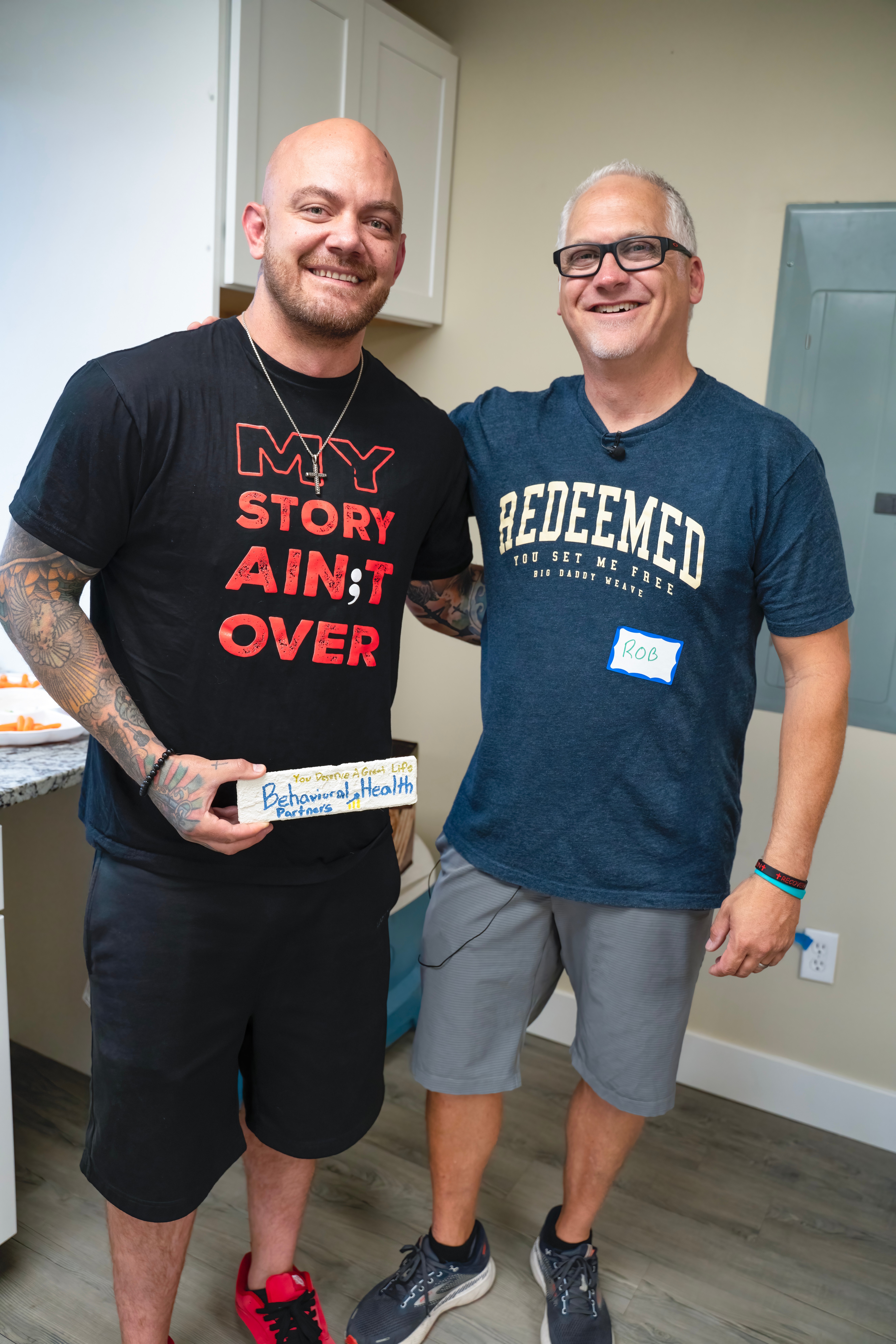


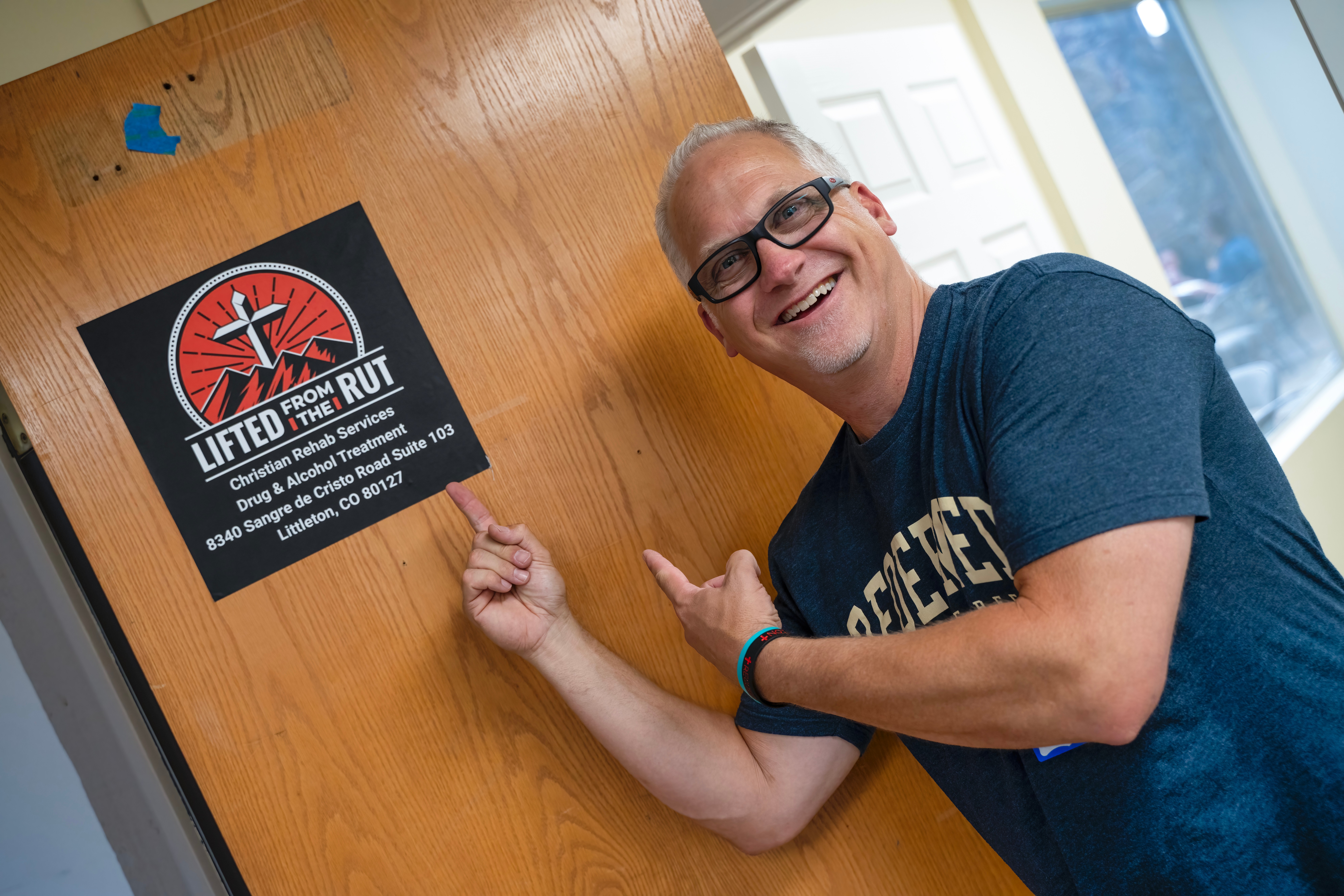
Today we’d like to introduce you to Rob Lohman.
Hi Rob, we’re thrilled to have a chance to learn your story today. So, before we get into specifics, maybe you can briefly walk us through how you got to where you are today?
If you looked at my résumé over the years, “founder of a Christ-centered addiction treatment program” probably wouldn’t have been the obvious ending.
My background was business. I earned an MBA, worked in sales, became an entrepreneur, and have always been someone who loves people, ideas, communication, and building things. I wasn’t trained from the beginning for a career in addiction treatment.
Then life experience started changing the direction of my career.
I found sobriety on June 8, 2001. Initially, recovery was simply personal. I was trying to learn how to live differently and move forward with my own life.
But over the years, people started calling me when addiction hit their families.
A parent would call because their son or daughter was spiraling. A spouse didn’t know what to do anymore. A family needed help finding treatment. Sometimes everyone involved loved the person desperately but had completely different ideas about what “helping” actually looked like.
I found that I was comfortable stepping into those uncomfortable situations.
Eventually, that led me to professional intervention work. I became trained in the field and began working nationally with families affected by addiction.
Interestingly, God didn’t discard my previous business experience when He redirected my career. He used it.
Sales taught me how to listen and communicate. Entrepreneurship taught me how to solve problems when there wasn’t an obvious answer. Leadership taught me how to bring people together. My own recovery gave me empathy for the person struggling with addiction. And working with families taught me that addiction is rarely an individual problem—the entire family system is impacted.
From there, opportunities continued opening. I began speaking and coaching, wrote two best-selling books, and launched the Addiction, Freedom & Faith podcast, which has reached people around the world.
Eventually, another idea kept tugging at me.
I kept meeting people who wanted professional addiction treatment but also wanted the freedom to talk openly about Jesus Christ.
I wondered why those two things so often seemed separated.
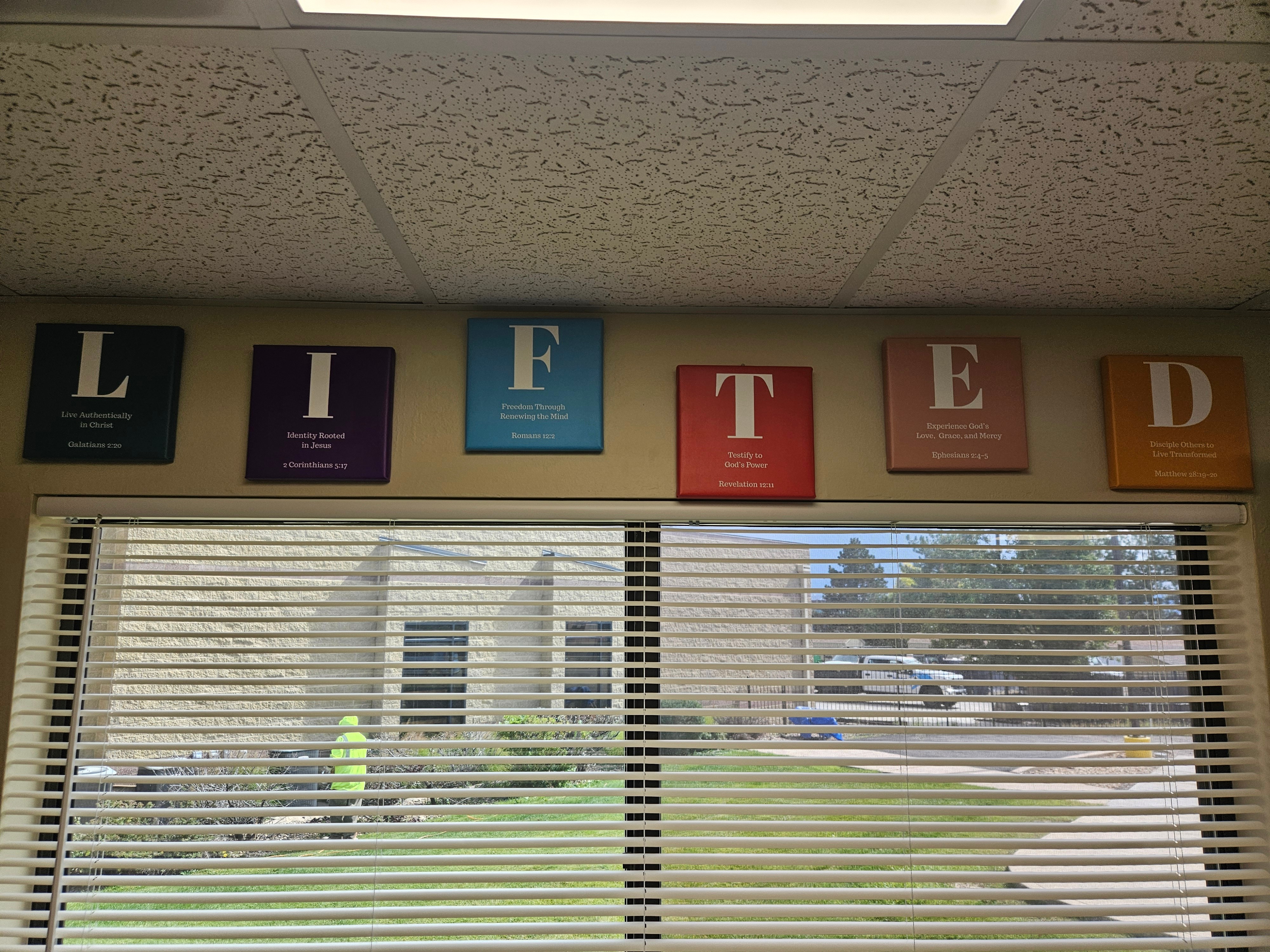
That question ultimately led to Lifted From The Rut Christ-Centered Recovery Services in Littleton, Colorado.
Today, I get to combine things that once seemed completely unrelated: entrepreneurship, communication, intervention work, clinical addiction treatment, family support, and my faith.
Looking backward, I can see God connecting dots that I couldn’t see while I was living them.
That’s probably the best description of my career.
It hasn’t been a perfectly executed business plan.
It’s been a calling I’ve gradually learned to recognize.
Would you say it’s been a smooth road, and if not what are some of the biggest challenges you’ve faced along the way?
Smooth? Not even close.
My life has included addiction, business failures, financial pressure, gambling, a mental and emotional breakdown, incarceration, separation from my family, rebuilding relationships, and plenty of moments when the future looked nothing like I thought it would.
One thing recovery taught me the hard way is that sobriety doesn’t automatically mean you’ve learned how to handle life.
I stopped drinking in 2001. Five years later, I met the woman who would become my wife. She never knew the drinking Rob—but she definitely married the dopamine-seeking, impulsive Rob!
And I say that with both humor and tremendous gratitude.
Years into my recovery, I began drifting away from some of the very things that had helped keep me grounded. Recovery groups became less important. Bible studies disappeared. Men’s groups disappeared. Meanwhile, I was trying to be a husband, raise two young children, and keep a struggling business alive.
Instead of asking for help, I isolated.
Gambling became an escape, and eventually the pressure, my choices, and my inability to manage everything culminated in a mental and emotional breakdown with devastating consequences. I ultimately spent two years incarcerated and away from my family.
There is no way for me to talk about that chapter without talking about my wife.
She was left dealing with consequences she didn’t create while raising our children and trying to figure out what the future looked like.
She had her own journey with God.
She sought Him for answers. She wrestled with her pain, her questions, our marriage, and what she was supposed to do next. Ultimately, she chose to trust that God knew the plan for our lives even when neither one of us could see it.
And she stayed.
I will never treat that as a footnote in my story.
God was working on me, but He was also working in her. Our marriage has required forgiveness, boundaries, difficult conversations, rebuilding trust, perseverance, grace, laughter, tears, and a whole lot of Jesus.
I’m incredibly grateful for her.
Those experiences also changed the way I understand recovery. I learned that alcohol wasn’t my only problem. Removing a substance didn’t automatically remove impulsivity, unhealthy coping mechanisms, isolation, pride, or my desire to escape discomfort.
I needed transformation, not simply abstinence.
And that transformation is still happening.
Starting Lifted From The Rut has brought its own challenges—financial risk, licensing, regulations, staffing, building programs, developing referral relationships, and figuring things out as we grow.
But my perspective on obstacles is very different today.
I don’t automatically interpret a difficult season as evidence that God has abandoned the plan.
Sometimes He’s doing His deepest work in the parts of the story I would never have chosen.
I wouldn’t want to repeat many chapters of my life.
But I also wouldn’t waste them.
God has used them to make me a better husband, father, interventionist, leader, and advocate for families walking through addiction.
As you know, we’re big fans of Lifted From The Rut Christ Centered Recovery Services. For our readers who might not be as familiar what can you tell them about the brand?
There is a sentence that probably explains Lifted From The Rut better than anything else:
People shouldn’t have to choose between excellent addiction treatment and their faith in Jesus Christ.
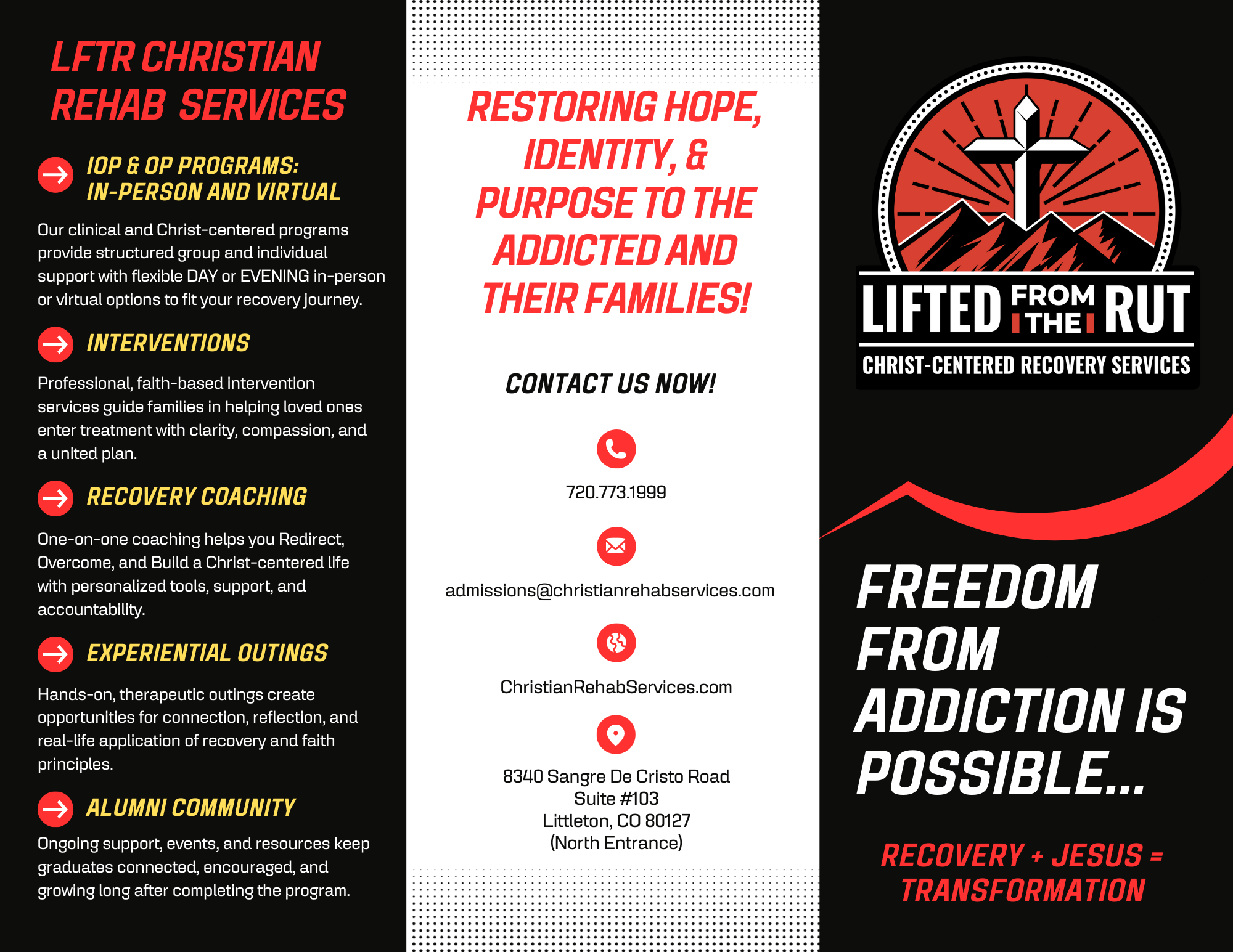
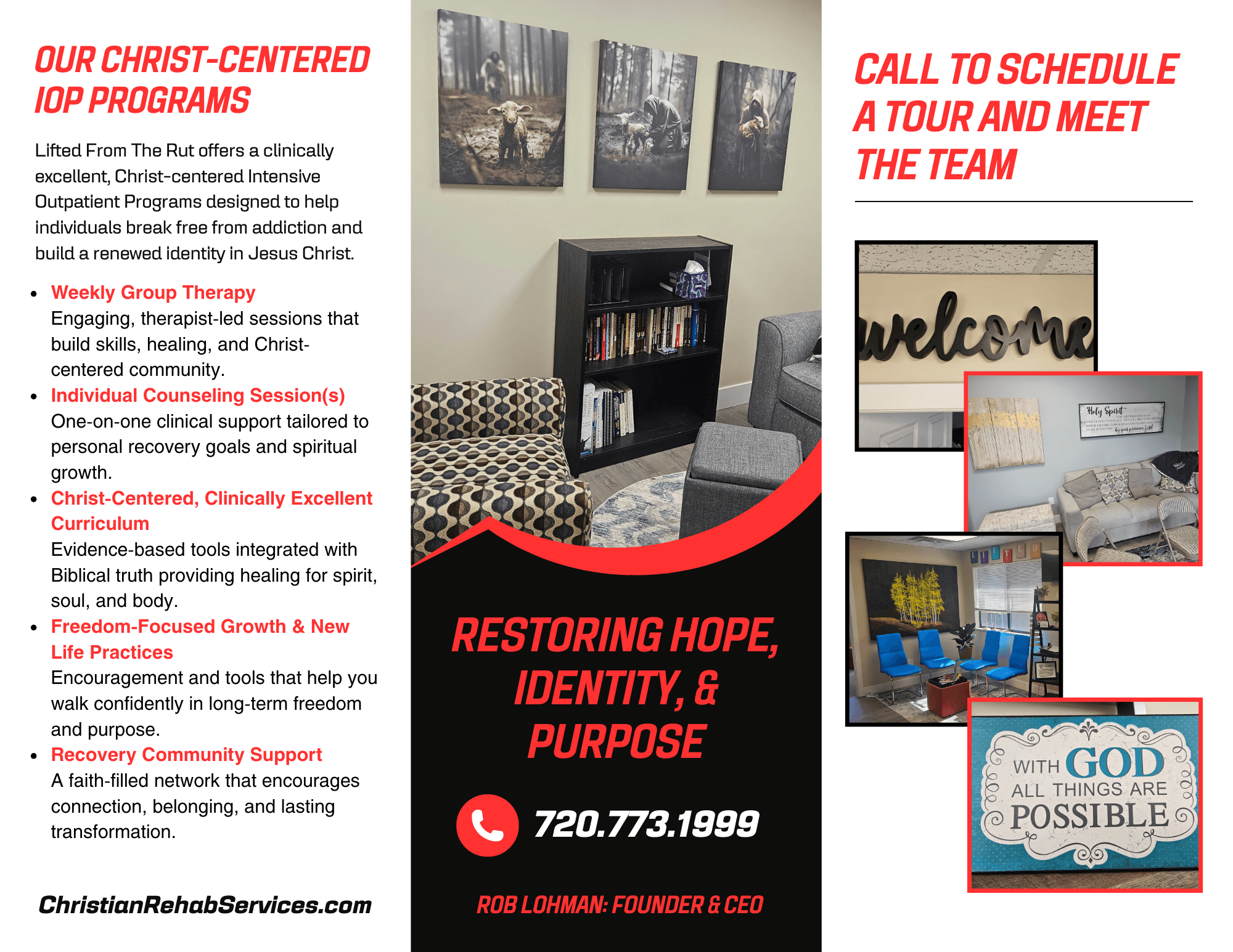
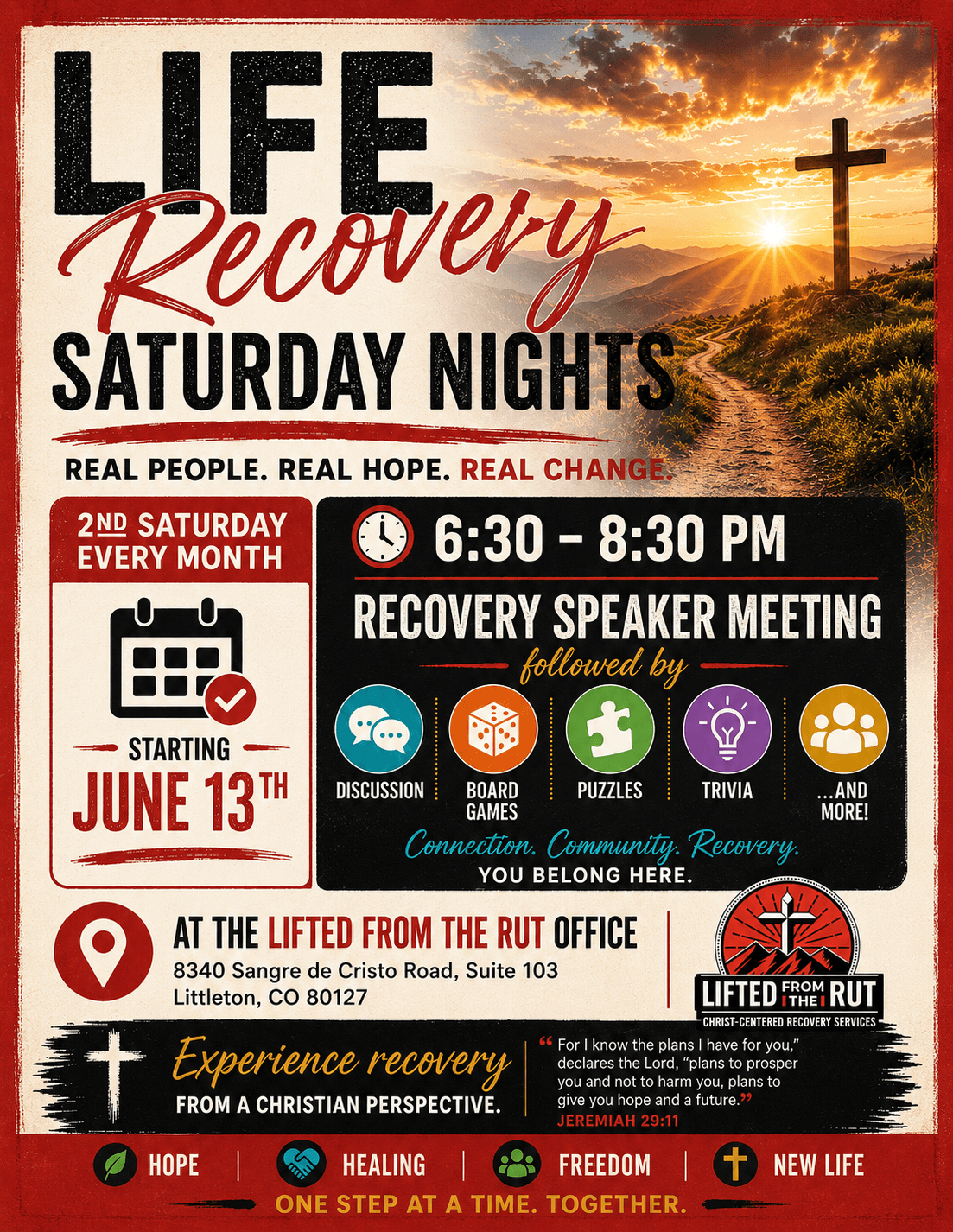
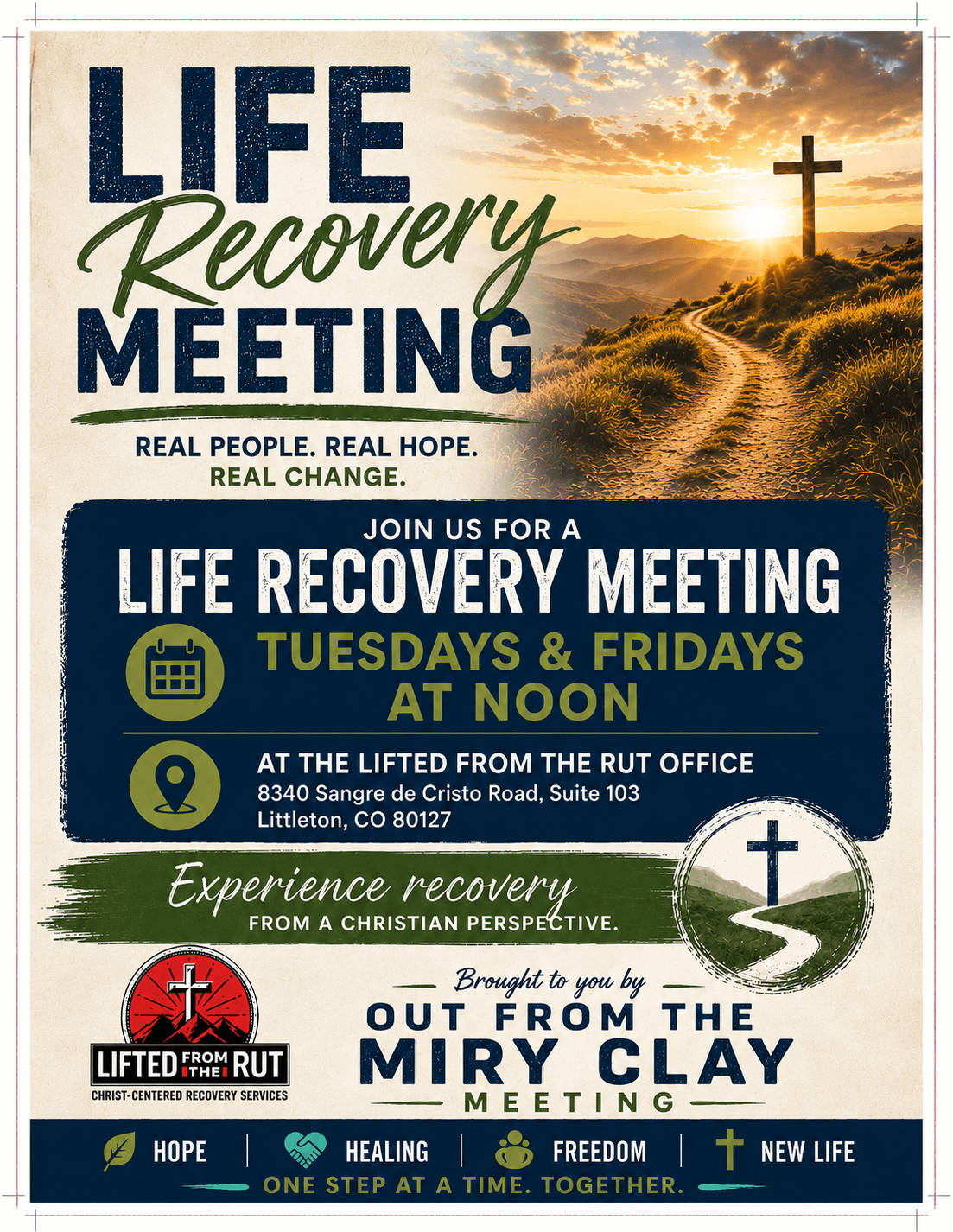
Lifted From The Rut Christ-Centered Recovery Services is based in Littleton, Colorado. We provide Intensive Outpatient and Outpatient addiction treatment, individual counseling, family support, recovery resources, and opportunities for Christian community. I also work nationally with families as an addiction interventionist.
What makes our program different is that we aren’t trying to bolt Christianity onto a traditional treatment model after the fact.
Christ is foundational to what we’re doing.
At the same time, we’re not trying to turn treatment into a three-hour Bible study.
We believe strongly in professional clinical care. Our clients work with licensed clinicians using evidence-based approaches to address substance use, thinking patterns, behaviors, relationships, emotional health, triggers, relapse risks, and the practical realities of building a sustainable life in recovery.
Alongside that, we intentionally create space for biblical truth, pastoral and chaplain support, prayer, Christian community, and conversations about identity in Christ.
I sometimes describe it this way:
Recovery + Jesus = Transformation.
One area I’m especially passionate about is identity.
The addiction world can sometimes unintentionally teach people to build their entire identity around the thing they’re trying to overcome.
I don’t believe someone’s worst season deserves naming rights over the rest of their life.
Second Corinthians 5:17 (NASB) says, “Therefore if anyone is in Christ, this person is a new creation; the old things passed away; behold, new things have come.”
That doesn’t mean we ignore addiction, consequences, accountability, clinical treatment, or the hard work of recovery.
Quite the opposite.
We deal with those things honestly while also asking a bigger question:
Who does God say you are?
We’re also intentionally building community around treatment. Isolation is one of the most dangerous places for someone struggling with addiction, and I know that personally. We want people connected to healthy relationships and Christian community long after formal treatment ends.
And we want families involved in the healing process.
Parents, spouses, siblings, and children can spend years living inside the chaos of someone else’s addiction. They need education, boundaries, support, healing, and hope as well.
If people remember one thing about Lifted From The Rut, I hope it’s that we are unapologetically Christ-centered and uncompromising about clinical excellence.
Those aren’t competing ideas for us.
They’re the foundation of what we’re building.
How do you define success?
My definition of success has changed dramatically.
Earlier in my life, I probably would have measured it by income, businesses, accomplishments, recognition, or whatever goal I was chasing next.
Today, I measure it in transformed lives.
If someone breaks a generational cycle of addiction, that’s success.
If a husband or wife begins rebuilding trust with their family, that’s success.
If someone who arrived believing they were hopeless begins to see themselves differently, that’s success.
If someone discovers that their identity isn’t “addict,” “failure,” “felon,” “broken,” or whatever label they’ve been carrying—and instead begins understanding their identity in Christ—that’s success.
And if that transformed person eventually turns around and helps someone else find freedom, that’s really exciting to me.
I’ve also changed the way I think about business ownership.
I believe God owns Lifted From The Rut.
I’m the steward.
That changes the scoreboard.
Do I want the business to grow? Absolutely. I want full programs. I want a phenomenal team. I want financial strength. I want to create jobs, expand our services, reach more families, and eventually bring Christ-centered addiction treatment to far more people.
But growth isn’t the mission.
Growth gives us greater capacity to fulfill the mission.
My responsibility is to steward the people, money, opportunities, reputation, and vision God has entrusted to me and continually ask, “God, what do You want me to do with this?”
I’m an entrepreneur, so I’ll probably always have another idea. Sometimes several before breakfast.
The challenge for me isn’t coming up with ideas.
It’s surrendering them.
It’s learning that not every good opportunity is a God opportunity.
At the end of my career, I don’t think I’m going to care very much about how impressive the organization looked on paper.
I want to know that we helped people break the cycles of addiction.
I want to know that families experienced healing.
I want to know that people discovered Hope, Identity, and Purpose.
I want to know that we pointed people toward Jesus.
If I’ve faithfully stewarded what God placed in my hands and people’s lives are different because of it, I’ll call that success.
Pricing:
- Program costs vary based on the level of care and individual treatment needs.
Contact Info:
- Website: https://christianrehabservices.com/
- Instagram: https://www.instagram.com/roblohman_lifted/
- Facebook: https://www.facebook.com/RobLohmanLiftedFromTheRut
- LinkedIn: https://www.linkedin.com/in/robertlohman/
- Youtube: https://www.youtube.com/@lftrchristianrehabservices
- Other: https://glptransformation.orygn.co/