



Today we’d like to introduce you to Jerry Wingren. They and their team shared their story with us below:
Born in 1939, Jerry Wingren was raised in a small port town on an island in southeastern Alaska, whose population was split about evenly between Norwegian immigrants and Tlingit natives. As a child, he was surrounded by nature, by resource industries (fishing, canning, logging), and also by the native totem poles, whose influence on his work did not show up until much later.
Wingren entered the University of Washington in 1959 to study Scandinavian and German language and literature and began spending a lot of time at the university art school. He was awarded a Fulbright scholarship to study German drama at the University of Bremen. Before he left he began carving an abstract eye out of a piece of timber, and admitted to a friend that he didn’t want to write a dissertation, but instead wanted “to carve and carve and carve.”
In Bremen, he befriended two master sculptors, Otto Almstadt and Moritz Bohrmann, and began an apprenticeship in stone sculpture with them. For two years he worked in sculptural “actions” with the group Kontakt Kunst, who “performed” live sculpting all over Germany.
In Heidelberg, Wingren studied Origami with Hiromi Hoshiko. On his return to the United States, he began creating large three-dimensional works in steel–influenced by Origami’s method of turning a two-dimensional plane into three dimensions by folding.
He worked in aluminum and faceted marble, investigating mathematical equations and the I Ching. He was inspired by the mathematics in nature, creating apertures in blocks of granite and marble that allow light to pass through on the solstice or equinox, days of special importance in northern regions.
In the mid-eighties, Wingren represented the United States at the International Stone Sculptors Symposium in Bremen, and made his first visit to the renowned black granite quarries in Sweden, near the native village of his ancestors. He has since spent part of every year making sculptures there.
In the late eighties, he began making totems, accentuating the beauty of cedar in abstract forms. A sabbatical trip to Japan in 1996 introduced him to Zen gardens, leading him to “downsize,” creating small totems and his “Little Houses” made of steatite.
In recent years, Wingren has continued to incorporate elements of his northwest and Scandinavian heritage with Japanese aesthetics. He has exhibited widely in the U.S. and Europe in private galleries and art museums, including the Atlanta Sculptural Arts Museum, the Denver Art Museum, and the Kleine Orangerie in Berlin. His works are found in private and public collections in the U.S., Germany, Norway, Sweden, Italy, Spain, and Japan.
Alright, so let’s dig a little deeper into the story – has it been an easy path overall and if not, what were the challenges you’ve had to overcome?
It definitely hasn’t been a smooth road; most of the struggle is financial like it is for many artists. It took years of practice before really found my voice.
Can you tell our readers more about what you do and what you think sets you apart from others?
Most proud of — I have no favorites. I work in granite, marble, steatite, wood, and steel. I used to be known for my Cut and Fold series, which are large outdoor sculptures of folded steel (“Cut and Fold”, “Origami”). Now I’m more known for Swedish Black Granite Resting Stones.
Networking and finding a mentor can have a positive impact on one’s life and career. Any advice?
My mentors have found me.
Contact Info:
- Website: https://wingrensculpture.com/
- Instagram: @jerrywingren
- Facebook: https://www.facebook.com/wingrenstudio


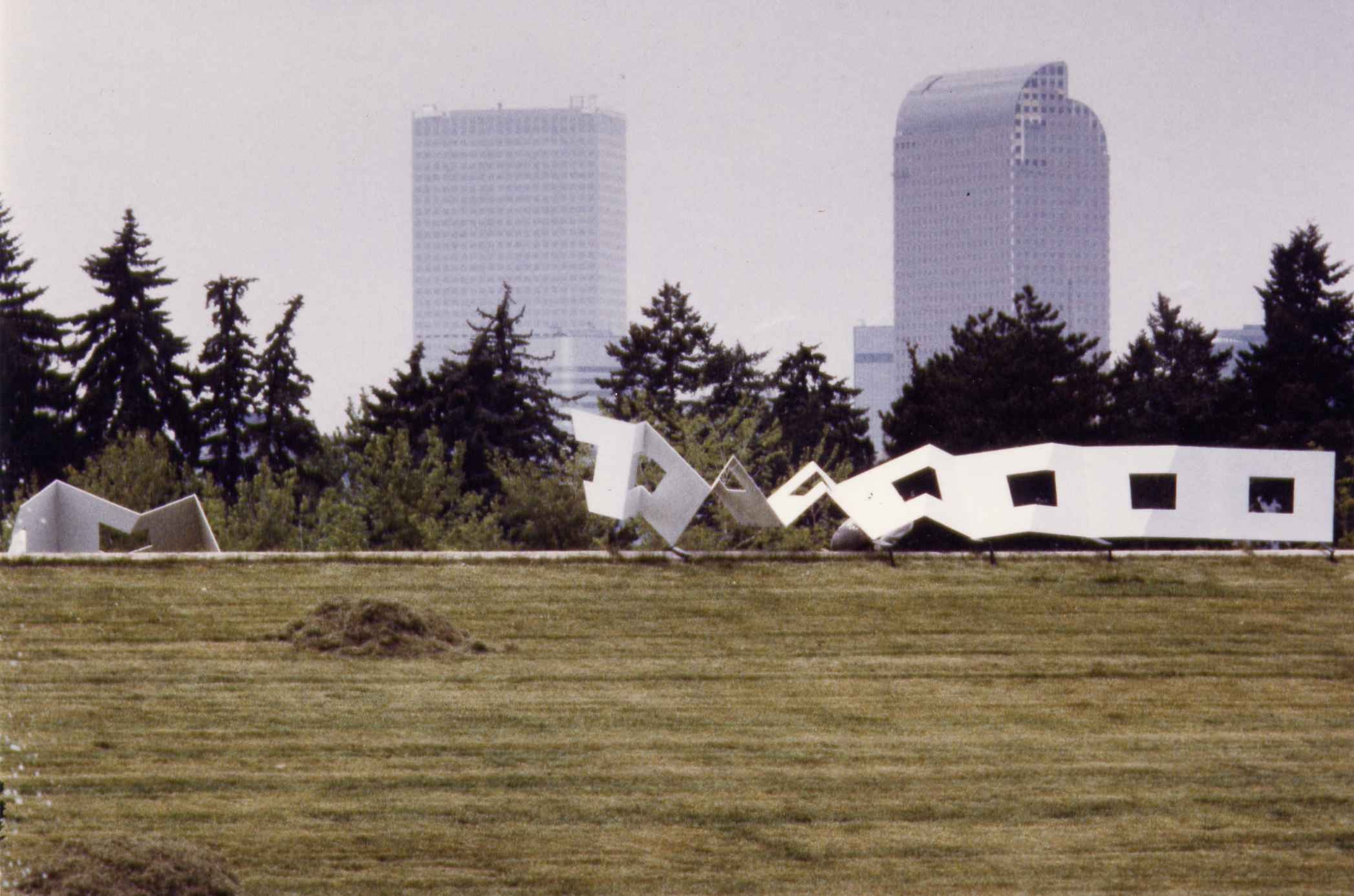
 Image Credits
Brooks Freehill, Dillon McNamara, and Mimi Lunde
Popular
-

The Trailblazers: Rewriting the Narrative
-

Celebrating the Spotlight: Kaytee Shashore Turns Milestones Into Momentum
-

Humanity in the Machine: Alexander Raye Pimentel’s Cyborg Recall Questions the Cost of a Data‑Driven World
-

Raemi Anderson on Courage, Caution, and Answering the Call of the Landscape
-

Hidden Gems: Local Businesses & Creatives You Should Know


