


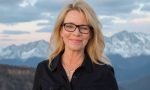
Today, we’d like to introduce you to Suzanne Frazier.
Hi Suzanne, we’d love for you to start by introducing yourself.
I will share the “artist” part of my life since that is where I am focusing my attention these days… as an artist.
At age 40, I left my management position at Frontier Airlines and signed up for art school. I intentionally made a major life change by selling my condo and moving into an apartment, selling my expensive car for a more modest car, and registering for a life drawing class during the summer at Denver University. Halfway through the summer session, the Director of the University of Denver Art Department accepted me for the fall semester. I was delighted that my new direction in life was manifesting.
After a year at DU, I transferred to the University of Colorado in Boulder to complete my course requirements for a BA in Studio Arts. At that time, CU offered a Visiting Artist program, where we spent time with professional working artists, mostly from New York. Since I was closer in age to the Master’s Program students, I easily infiltrated their sessions with the visiting artists.
In January 1990, after graduating with a BA in Studio Arts, I rented my first studio in North Boulder in a warehouse space where I planned to create. Six months later, a friend asked me to be her art teacher. And much to my surprise, I found myself saying “yes.” I had no ambition towards teaching art. However, I taught her a four-week class. After that, I thought I was done with teaching and that I could get back to creating full-time.
However, she recommended me to some of her friends, and the entire situation snowballed into me teaching several classes a week. I found out that I enjoy sharing what I know about art making and introducing individuals to my perspective on creating.
At the same time, I was asked to give a “Contemplative Art” retreat for Contemplative Outreach of Boulder at the Abbey of St Walburga. At the first art retreat, I had 24 participants. I had no idea what I was doing; however, everyone enjoyed my presentations and the opportunity to create an oil pastel drawing for each session. After that, I taught at Contemplative Art Retreats at least twice a year.
In 1994, I moved to Crestone, Colorado, and lived in the community for 14 years. I taught art classes, created paintings, and traveled to the Front Range to teach art retreats. I was a member of the Crestone Artisans Gallery, exhibiting my paintings.
In 2008, I relocated to Longmont, Colorado, to begin a new episode of my life. I found a studio in Prospect and joined Prospect Art Association, Arts Longmont, East Boulder County Artists, Firehouse Art Gallery, and Boulder Art Association. I restarted my life and began participating full-time in art exhibitions and studio tours.
In 2019, I became a Founding Member of D’art Gallery in the Art District of Santa Fe. I retired in 2023. Starting in 2023, I am participating in the Boulder County Open Studios Tour, opening my studio for people to view my work and sign up for classes in October each year.
It’s been 34 years since I started “sharing my love for art making,” and I have loved every minute of it. In summary, I am an example of a person choosing to change their life in mid-life and creating themselves into the person they truly are. It is never too late to change your life path.
One other point: you are never too old to make art!
We all face challenges, but looking back, would you describe it as a relatively smooth road?
By the time I began creating and exhibiting art, I had had so many major life experiences that I could handle the rejections and struggles along the way toward establishing myself as a professional artist.
I was fortunate to have worked in public relations, promotions, and writing press releases, articles, and grants. Fortunately, I had the skills prior to becoming an artist. I think that made my journey much easier.
As an artist moving towards a professional career exhibiting and teaching, one needs to know how to write an artist statement, set up a resume, create a website, and establish a social media presence. That can be overwhelming.
Fortunately, I could take all this one step at a time. I knew from my experiences in public relations how to write an artist statement and set up a resume. I established my first website in 2003, when artists began creating websites to take advantage of the “web”.
As more social media sites were added to the internet, I learned how to use them to promote my artwork, classes, and exhibitions. I am still taking on new social media as it becomes available.
Since I started exhibiting my work in 1987, the art promotion scene has changed tremendously. In the late 1980s, an artist depended on gallery owners to accept their work or exhibited their artwork in art association group shows. There weren’t too many other options besides these.
Now, artists can ignore galleries and group exhibitions and sell their artwork directly to art purchasers through the internet. Also, studio tours are another advancement in giving artists a one-on-one opportunity to meet art appreciators.
Can you tell our readers more about what you do and what you think sets you apart from others?
Since 1990, I have been selling my oil paintings, teaching art classes in my studio, and hosting Contemplative Art Retreats at retreat centers.
I believe that Art is a vehicle for exploring the exterior and interior landscape of our existence on this planet.
Viewing the world from a meditative practice, I call myself a Contemplative Artist. To me, contemplative art is the product of creative expression arising from the pure joy of creating, grounded in a meditative connection to the radiance and perfection of spirit known only through one’s experience of being fully human.
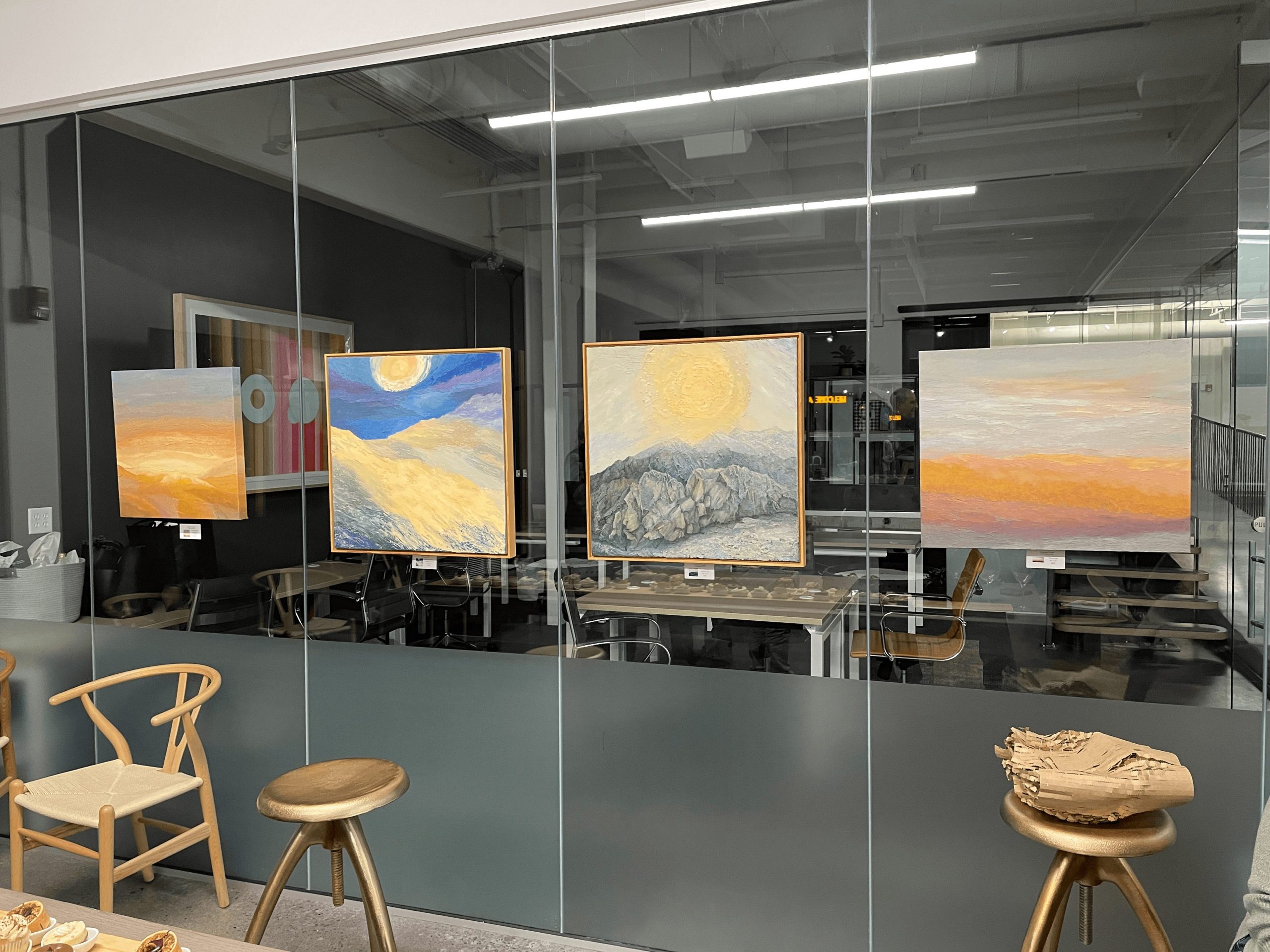
During a contemplative experience one does not observe anything specific but rather a feeling emerges from the meditation. Likewise, I choose to create work that does not refer to any specific location or time. Instead, I choose to invite the viewer into my meditation on my collected emotional responses from residing in Colorado since 1972.
Each painting lives in its own place and time. It breathes on its own, free from a particular association, reflecting back to the viewer a new way of seeing. The painting changes as the viewer breathes in detail, subtleties of shape, and nuance of color. Then, the painting breathes back to the viewer. A relationship ensues.
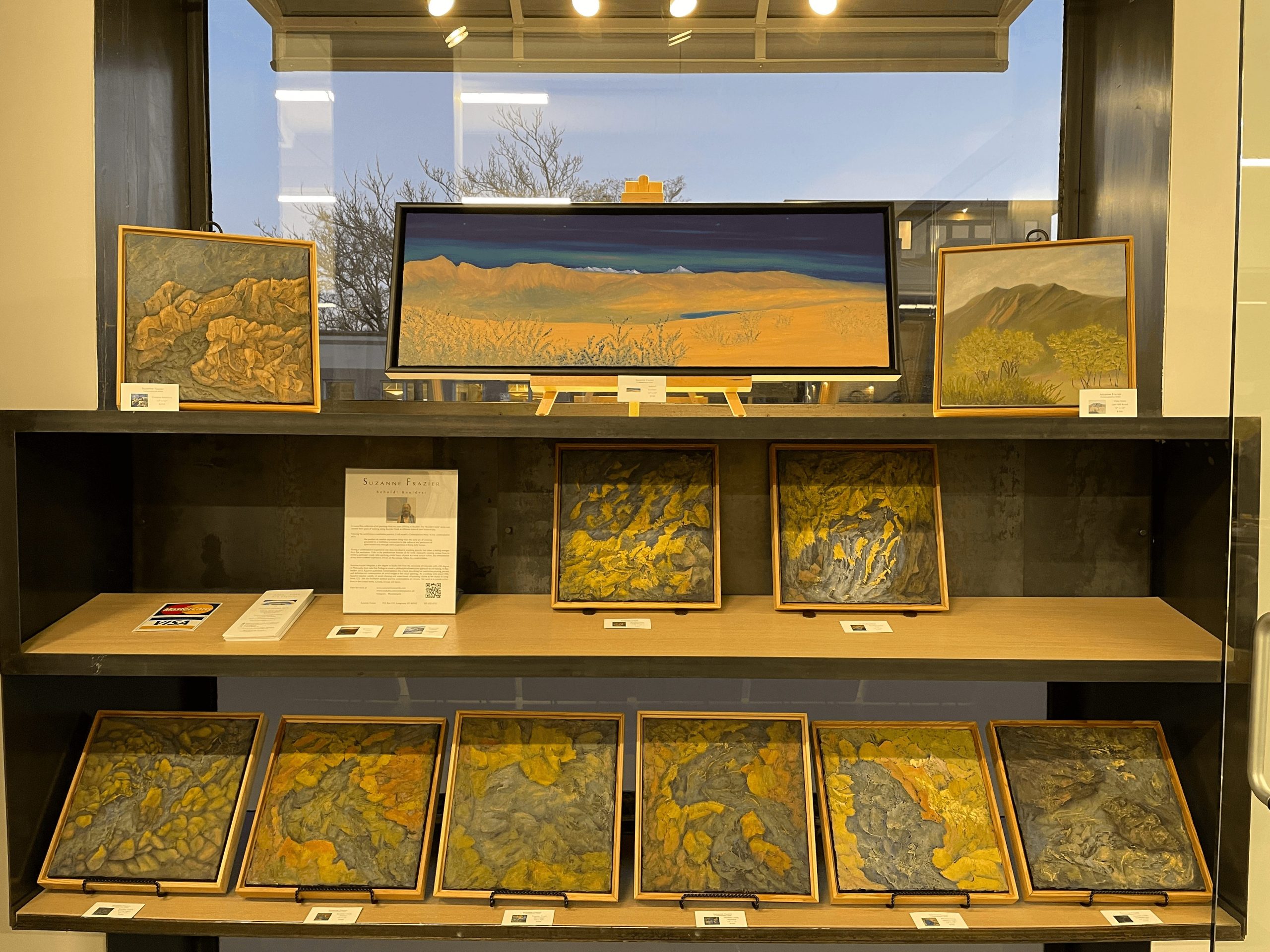
The painting process sometimes begins with a heavy application of oil paint with a pallet knife to create texture. After the layer of thick paint dries and hardens, I begin the next layer, painting the contemplated image. Other times, I paint with a pallet knife that leaves little or no texture.
Color is the predominant feature of my work, especially when creating unique hues to reveal a particular mood. After applying untold layers of paint to create unique colors, my interpretation of my heart-centered experience arrives on the canvas.
I share my contemplation.
Suzanne Frazier integrates a BFA degree in Studio Arts from the University of Colorado with a BA degree in Philosophy from Lake Erie College to create a philosophical/meditative approach to art making. In September 2015, Suzanne published “Contemplative Art,” a book describing her meditative painting process and definition of contemplative art amid images of her cloud paintings.
As a working artist since 1990, Suzanne teaches weekly oil pastel drawing and water-based oil-painting classes at her studio in Longmont, CO. She also facilitates spiritual journey contemplative art retreats.
Her work is in private collections in the United States, Canada, Europe, and Japan. The Colorado Women’s Art Museum recently purchased an oil painting for the museum’s collection. She was a founding member of D’art Gallery in the Denver Art District in Santa Fe from 2019-2023. She participates in the Open Studios Tour in Boulder County.
Since 1986, Suzanne has created over 500 pieces of art and sold over 260 pieces, including oil pastel drawings, paintings, and ceramic sculptures.
We’d love to hear what you think about risk-taking.
I am a natural risk taker. Taking risks has been part of my lifestyle all my life. I don’t know anything else.
This attitude has benefited me greatly in the business world. In the 1970s and 1980s, moving through management positions was risk-taking at its best. Most of the men I worked with didn’t like having women in the same management position, and they worked hard to create difficult situations. But how else does one learn by meeting these difficult situations and overcoming the resistance from fellow employees?
In 1982, I was promoted to a management position where I managed 125 men. Of course, I was moved into the position without any training. I was told I could “learn on the job.” That was a difficult position to be in, but I wanted to break the “glass ceiling.” So, I took the risk and succeeded.
Leaving my job in 1986 to become an artist was a big risk on many levels: lifestyle, financial, social, and security.
I’m glad I took the risk. It was worth it. The one thing I can say about “risk” in the professional world is that one never fails. But one learns a lot. Now, about taking the risk of jumping out of an airplane or ice climbing a fourteener mountain, I am not one to take that kind of risk. The other kinds of risk… yes!
Contact Info:
- Website: https://www.suzannefrazierartist.com
- Instagram: https://www.instagram.com/contemplativeart/
- Facebook: https://www.facebook.com/ContemplativeArt
- Linkedin: https://www.linkedin.com/in/contemplativeartist/
- Twitter: https://x.com/ContempArt
- Youtube: https://www.youtube.com/c/SuzannefrazierContemplativeArtist
- Other: https://contemplativeart.blogspot.com, https://www.pinterest.com/contempart/, https://www.artunknownstore.com/collections/suzanne-frazier



Popular
-

The Trailblazers: Rewriting the Narrative
-

Celebrating the Spotlight: Kaytee Shashore Turns Milestones Into Momentum
-
Humanity in the Machine: Alexander Raye Pimentel’s Cyborg Recall Questions the Cost of a Data‑Driven World
-
Raemi Anderson on Courage, Caution, and Answering the Call of the Landscape
-

Hidden Gems: Local Businesses & Creatives You Should Know


