



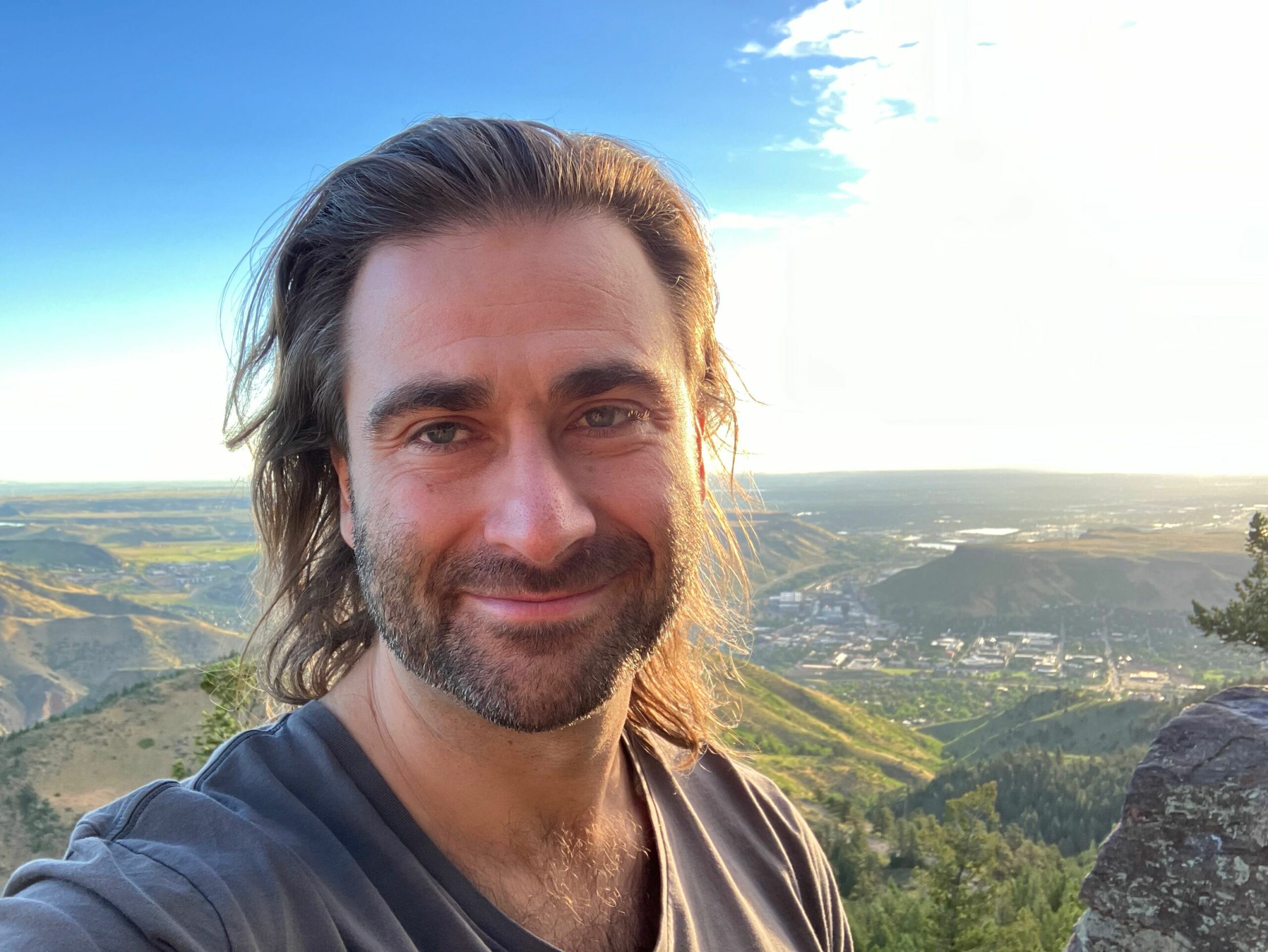
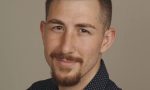
Today we’d like to introduce you to Adam Harvey.
Hi Adam, can you start by introducing yourself? We’d love to learn more about how you got to where you are today?
I often describe how I came to this work as following the golden thread—the compass inside that keeps pointing toward what is meaningful, alive, and aligned, even when the direction doesn’t immediately make sense.
My background is in neuroscience and engineering. I did my undergraduate work at the University of Denver, and completed my Master’s in Engineering Management at CU Boulder. Prior to my current work, which is truly a calling, my corporate career focused on medical device development and commercialization for technologies that use light, electricity, or magnetism to replace pharmaceuticals. I was driven by the question: How do we create the most good in places where complexity feels overwhelming? And years later, I realized that what I was most interested in was working with the most powerful but largely unseen forces that surround us to tap into for healing.
I worked on technologies used in intensive care units and other specialties for patients facing severe and life-threatening diseases. Eventually, I managed a device used for high-end stem cell collection for transplants and emerging cancer immunotherapies. It was literally designed to pull out the most essential cells—the CD34+ stem cells that can repair and save lives.
I loved the mission and knew the work mattered. But over time, something deeper called to me. I had a very clear ten-year career plan in neurotechnology and therapeutic devices, but the further I went, the more I felt an inner shift. There was another layer of purpose I couldn’t ignore.
In a breathwork session—sober, but in an expanded state—I received a clear message: support people at the end of life.
It didn’t align with any plan on paper, but I listened. And life made room for that choice.
From that experience, I left the medical device industry to bridge to the patient side. I joined the hospice team at TRU Community Care and spent years with people in the most tender threshold of their lives. Being with families and witnessing how the entire system reorganizes around loss taught me something that no engineering curriculum covered: sometimes the most important thing isn’t cure—it’s what still matters.
For some, at the end of their lives, what matters most might be a conversation they still need to have. A song they need to hear. A last bite of ice cream. Some thread they want to complete before they leave the Earthly plane.
That experience shaped how I now approach transformation. It taught me to begin not with fixing, but with the question: What matters most to you right now?
In 2020, I joined my first Family Constellation. I knew in my bones: this is meaningful. This is mine to follow. Family Constellation work is about revealing hidden dynamics in a family or lineage so unresolved patterns, loyalties, or burdens can come to light and release. It’s a systemic healing method that helps a person see their place in the larger system with clarity, restoring flow, belonging, and order.
I was utterly inspired and completed facilitator training in 2022 to be trained in this exact thing, family and systemic constellations. I’ve since then spent much of the last few years finding the best facilitators in the world to study with – both online and traveling often and internationally to attend and assist in trainings and retreats. As of today, I have been facilitating for about three years and building Awakening Ancestry as a practice for roughly two and a half.
I support individuals, couples, groups, and organizations through significant relational and systemic change—work that still lives at the core of life and identity.
When I look back, the through line is clear: In medical devices, I worked to bring people back from the edge. In hospice, I sat at the edge with them. In constellation work, I help reveal and resolve the hidden dynamics that keep our systems and families on edge in the first place.
Across all of it, what guides me is presence with the truth of what matters. And helping people reclaim the parts of their lives, their ancestry, and their belonging that enable healing at the deepest level.
Can you talk to us a bit about the challenges and lessons you’ve learned along the way. Looking back would you say it’s been easy or smooth in retrospect?
Looking back now, I can see just how supported I’ve been—from the universe, from my family and friends, from community, clients, teachers, mentors, and guides. There has always been support. And still, it has not always been smooth!
My initiation into death work happened through the loss of three of the closest people in my life, all within six weeks of each other. I had just left the corporate world, thinking I would take a few weeks before applying to startups again. Instead, I spent six months traveling and being with these people as they were dying. It was a very up-close experience of death—real, raw, and deeply formative. And this was in 2020 and 2021, when the pandemic made everything about death and connection even more complicated.
I’ve also had to let go of a very strong identity around work and achievement. I had checked the boxes: bought a home in my 20s, had the dream job, the relationship I wanted, traveled internationally, skied often, and had the lifestyle I thought a “happy” life was made of. And yet, after reaching the goals I’d set, I didn’t feel fulfilled. I felt a longing—what I can now recognize as my soul coming through, saying: There is more for you here.
Following intuition when it didn’t make rational sense was often challenging, as it is for most people, and especially when coming from such a strong basis in science and rationality. It required a kind of surrender that people familiar with death work tend to understand: surrendering certainty and surrendering identity.
My career had been my primary identity. The job was prestigious, well-paid, clearly valued by society, and helped save lives. Letting go of the expectations I had built around my future—this ten-year plan I had been diligently pursuing—was its own dark night of the soul.
But that surrender created space for something more aligned. Trusting the unknown, even when it didn’t make sense, was the only way through.
In hospice, I spent time with people in the mysterious, sacred, and liminal space between life and death—a space where the usual rules don’t apply. Now, in constellation work, I get to be with people in similarly liminal territory: the threshold moments where life, identity, and lineage are transforming.
Constellation work starts from the understanding that we cannot think our way to the root of certain issues. If you already know what’s wrong and need help with what to do, psychotherapy is likely a good place to go. But when there’s a pattern that won’t shift—something you’ve tried to work on for years, maybe something that runs through your family line—that’s where constellations are profoundly effective. They’re very good at finding and unwinding the deeper threads to allow our systems to come into more coherence.
And there we enter the mystery. And that’s where I fell into my passion for constellation work.
For those new to constellations, a constellation typically has a focus client and individuals representing the people or elements of their system (most often, family systems). Those representatives allow the energy of those roles to speak—not the story the mind knows, but from the deeper truth the system has been carrying. These are conversations that couldn’t be had during someone’s lifetime. The apologies someone’s ego would never allow. The acknowledgment of those who died early, or were excluded, or exiled from the family line. The secrets that keep the family system stuck.
Harmful or maladaptive behaviors often show up as a way that the family system tries to remember someone who has been forgotten. Patterns repeat until they are seen – and constellations bring what’s been missing to the surface, so it can be consciously integrated.
When we include what has been excluded, the system becomes more coherent, and love, resource, and communication begin to flow more freely. And the stuck, inherited patterns that once felt inevitable finally have a way forward.
This work goes to the root—so that individuals, families, and entire lineages can move toward a better way of being with one another.
If this doesn’t necessarily “make sense” or it’s the first time you’ve heard about something like this, I’m always happy to educate people further and will have resources on my website to learn more.
Alright, so let’s switch gears a bit and talk business. What should we know?
Awakening Ancestry is the practice I run, offering family and systemic constellations as a trained facilitator and hosting other teachers and facilitators from around the world. The organization holds two connected meanings for me:
The first is about awakening through our lineage—healing intergenerational and ancestral trauma. That’s the core of constellation work. While family constellations with the family of origin are the most well-known and remain the traditional form (and most people have plenty of material to work with there), any system can be constellated. A soul lineage, a community, a company, an organization…constellations allow us to work with the living dynamics of any system we belong to.
The second meaning is about becoming the ancestors of the future we long for. The decisions we make don’t just impact us; they shape the generations that follow. If we look around and see a world that isn’t what we know is possible, then we have the opportunity—and responsibility—to do something about that. To make choices on the timescale of legacy.
Constellations are most famous for working with our family of origin (“Family Constellations”), and most of us have plenty of material to work with, between our own childhood and family experiences and those of our parents and more distant ancestors, whom we might not even know the name of.
And, the technology of Constellation work, with an appropriately trained practitioner, can access and resolve imprints more on our soul level, including past lives, soul agreements / contracts, curse unraveling, compassionate depossession, and soul retrieval. When I facilitate these kinds of sessions, it’s a blend of Constellations and Shamanic training, tailored specifically for that client.
For one-on-one work, I meet with clients either in person or over Zoom—and I work with people all over the world. In these sessions, we may do a constellation, or somatics, or shamanic work. I call them sessions rather than labeling them too specifically, because we don’t always know what’s needed until we’re in the field together, present with what’s alive in the moment.
Some clients come for a single transformative session—during a major life change or with a pattern they’ve tried to work with but can’t make progress on. Many others work with me over a series of sessions as their life continues to unfold.
With organizations, I work with a co-facilitator, and we usually work with a founder or executive team. We’re often brought in during a big transition: a founder stepping back, a shift in leadership, a crisis, or a movement into a new product or way of doing business.
But, the principles of constellations remain the same—the system reveals what’s been missing or unseen—and we use a framework suited for organizational structures. Personal history still influences how businesses form and operate; the founder’s shadows often show up in the company culture. But the work isn’t usually about personal healing—it’s about how the organization can work together more coherently, so there is greater flow, clarity, and abundance throughout the system.
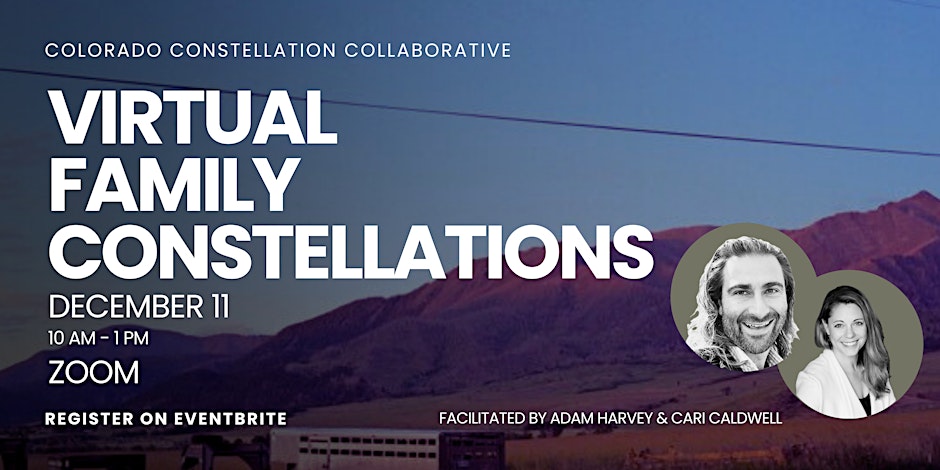
Additionally, Awakening Ancestry collaborates often. This includes supporting a group of local facilitators (the Colorado Constellation Collaborative) who host 1-2 workshops a month to help make this work more accessible to the community, which I’ve helped lead the past 3 years. I also work with therapists, coaches, and physicians (especially functional and integrative medicine physicians, including psychiatrists) to support when a different or deeper layer of support is needed than more traditional modalities may offer.
We also host retreats and training, to bring in world-class facilitators to work with groups in a deep and focused way—stepping out of daily life, immersing fully in the process, and giving the material the attention it needs. These retreats allow for profound group transformation in a contained and supported environment.
I’m always taking new clients and opportunities. If this work calls to you or can support you in your healing journey, don’t hesitate to reach out! I absolutely love what I do.
What do you like best about our city? What do you like least?
Two things really stand out for me about why I love Boulder so much: the land and the people.
I love these mountains. I feel a real connection and calling to this particular place, which is the reason I’m here and that I keep my work here. I feel supported…wanted here, even. There’s a sense of belonging that comes from my relationship with the earth in this landscape. I’m really grateful that I get to feel that in such a tangible way.
And the other is people and the community here in Boulder—the people who choose to stay and build their lives here tend to be oriented around finding more effective and loving ways of being in the world. There’s a fundamental recognition among many here that we are souls first.
It gives just a glimpse into a life a little closer to living through the soul. If we lived in a culture that saw everyone as a soul first, then, I believe, love would come first. And given how our society has evolved and is evolving, there’s a lot that we get to question: how we show up; how we communicate; how our relational patterns shape the world we’re building.
I find that people here are willing to experiment—to do the deep transformative work of looking within, understanding themselves, and letting go of outdated versions of who they are, so that more of the soul can actually come through.
This work—constellation work, and any work that is truly transformative—begins with the body connection. Connecting with the land helps us do that. Letting the body lead allows the mind to integrate rather than dominate. And Boulder is an incredible place for this kind of work because embodiment is woven into the culture—dance, movement, yoga, meditation, and practices that bring us into deeper presence.
As we heal trauma and meet the most vulnerable, tender experiences of being human, we don’t exclude anything. We include the full spectrum—the messy and the joyful, the difficult and the ecstatic. To do that well, we must listen to the body. That’s where intuition, knowing, and the imprint of our lived experience reside. I get to live a life centered around this because of the unique culture in Boulder.
I’ll also say—I really appreciate the sunshine and the fact that Boulder sits between two very different academic environments: CU Boulder and Naropa. I get to work with and mentor Naropa students, and for the past few years, I’ve guest lectured in the Engineering Management Program at CU. Two completely different worldviews—one research-driven and analytical, one contemplative and embodied—and I get to stay in relationship with both.
It’s a special mix here in Boulder. A place where science and soul are not at odds, and where the land itself seems to support transformation.
Pricing:
- $400 per first time focus client session w/ group
- $225 per 90 minute 1:1 session
- Retreats (variable price)
- $30 to act as a representative in a constellation
- $200-275 sliding scale in Colorado Constellation Collaborative events
Contact Info:
- Website: https://www.awakeningancestry.com
- Instagram: https://www.instagram.com/awakeningancestry/
- Facebook: https://www.facebook.com/AwakeningAncestry
- LinkedIn: https://www.linkedin.com/in/timothyharvey/

Popular
-

The Trailblazers: Rewriting the Narrative
-

Celebrating the Spotlight: Kaytee Shashore Turns Milestones Into Momentum
-
Humanity in the Machine: Alexander Raye Pimentel’s Cyborg Recall Questions the Cost of a Data‑Driven World
-

Raemi Anderson on Courage, Caution, and Answering the Call of the Landscape
-

Hidden Gems: Local Businesses & Creatives You Should Know


