
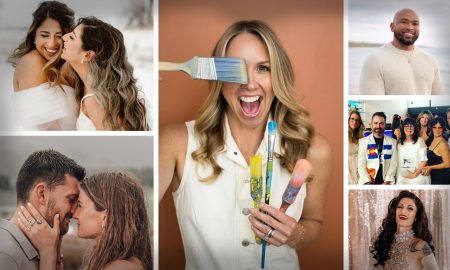


Today we’d like to introduce you to Francine Bejarano
Hi Francine, can you start by introducing yourself? We’d love to learn more about how you got to where you are today?
My story began the day after Thanksgiving in 2011, when my then-boyfriend was driving my car, and the engine blew. That day, I made a parallel connection between my car breaking down and the end of my relationship. My mother had recently moved to a small mountain town in Colorado after remarrying. My sister and I had visited her a few months before, and as my relationship ended, I decided it was time for a change. Within six months, I had taken on a second job, sold most of my belongings, and moved to Boulder, Colorado, to start a new chapter of my life.
I would spend the next 18 months in Boulder getting to know the area, taking road trips all over the state, hiking the trailheads close to my place, figuring out how to make friends and create a home. I had been working for the same company at this time for 5 years, they were flexible in allowing me to remain with the company and work from home (something unheard of back then!). Through my exploration and lots of alone time, I began to realize it wasn’t just the move I needed to start a new chapter of life, I needed to change my job as well. I wanted to do more with my life. I decided to go to college.
I attended a prestigious high school in Omaha, where many of my classmates went on to top colleges. Being the daughter of two immigrants who earned their degrees before coming to America had its challenges. They weren’t familiar with the ins and outs of the U.S. education system, and after they divorced, most of the money they had saved for college was depleted. I honestly thought I wouldn’t be able to attend college and would have to work for the rest of my life.
At 28, I was surprised to discover that I could borrow money from the government to pay for college, which motivated me to apply. Without anyone else to support me, I maintained a full-time job throughout my undergraduate studies. I started at a community college to ease my way back into school, then transferred to the University of Colorado-Boulder once I had completed all of the core classes. At CU-Boulder, I became more involved in research, working within a department focused on helping parents discuss emotions with their children. This experience, along with meeting a special someone, inspired me to pursue a Ph.D. in clinical psychology after graduation.
In the fall of 2019, I applied to several clinical psychology programs and decided to apply to counseling programs as well, as they would also allow me to work with the population I was passionate about. While I wasn’t surprised when I didn’t get accepted into any clinical psychology programs—though it was disappointing—I was thrilled to be accepted into the counseling program at the University of Colorado-Denver, which remains a highly sought-after program in the community.
The next 3.5 years of my life would be some of the most intense personal work I will have come across in lifetime. I had and still continue to have a wonderful boyfriend who supported me financially throughout my graduate program, something I don’t think I would have been able to do without overextending myself in some way. I initially wanted to work with children & families within the foster care system. Through classes, networking, trainings and internship opportunities I realized that my passion lies within relationships. I love working with couples, in all forms (monogamous, poly-amorous), families, siblings, and individuals who are having troubles within their own relationships.
After ten years of schooling and a year post-grad, I’ve launched my own private practice, Palette of Hope Counseling. This practice blends my love of art and painting with my passion for helping people connect with themselves and others. I aim to work with interracial couples, BIPOC individuals, really anyone who has a marginalized identity. My goal is to grow this endeavor into something even bigger.
Finding my place in the counseling community has been challenging. As a woman of color who came from very modest beginnings, I haven’t had some of the privileges that many of my colleagues possess. I aim to become a supervisor for marriage and family therapist candidates, especially those from the BIPOC community. My hope is to offer relatable guidance and a safe space for discussing difficult topics while supporting these candidates in their work within BIPOC communities.
Would you say it’s been a smooth road, and if not what are some of the biggest challenges you’ve faced along the way?
One of the biggest challenges I’ve faced began during my first semester of graduate school in a multicultural class, where we were asked, “How do you identify yourself?” I had always known I was Latina—I knew my parents were immigrants, and I recognized that I had been treated differently in various settings. Yet no one had ever talked to me about what being Latina really meant. My parents both assimilated into American culture to “fit in.” I remember when they were told to speak to me only in English when I started kindergarten, as speaking Spanish might hinder my learning. From then on, they spoke Spanish only during arguments or when they didn’t want me to understand.
Throughout my youth, people would ask, “Where are you from?” “What are you?” and “Is this your natural hair?” I was called racial slurs in elementary school that I didn’t even realize were slurs until much later. So when I was asked, “How do you identify yourself?” I found myself at a loss. I wanted to say Latina, but I felt a deep shame in claiming that identity when I hadn’t embraced the culture or language.
This question spurred a journey of reflection, helping me understand how I have carried myself in the world and how others with similar identities are affected by systemic racism and societal expectations. It forced me to confront why it had been so challenging for me to get to this point, while others with more privilege seemed to move forward effortlessly.
As I approached graduation, I began seeking out other BIPOC clinicians in the Marriage and Family Therapy field to connect with, consult, and build a sense of community. I hoped to find a BIPOC supervisor who could help me explore how my identity shapes my role as a therapist. While I have connected with a few clinicians, I have yet to find a supervisor who shares a similar marginalized identity and works with the populations I hope to serve. This lack of representation has fueled my desire to become what I needed during my journey to becoming a therapist.
Thanks – so what else should our readers know about Palette of Hope Counseling?
My passion is working with people in relationships, whether that’s within couples—monogamous or polyamorous—or within family dynamics. I strive to help those who have grown disconnected and distant rediscover their bonds and reconnect on a deeper level. I also work with families who are struggling to function as a cohesive unit, helping them identify and address challenges both within and outside the home. My goal is to foster understanding and create a space where every individual feels heard and valued, so that families and partners can thrive together.
In my journey to becoming a therapist, I’ve made it a priority to offer my services to people who look like me—those with marginalized identities who are seeking someone who truly understands their lived experiences. I am especially dedicated to working with BIPOC couples and families who need support within their relationships. I strive to create a safe and compassionate space where they feel seen, valued, and understood, as they navigate the unique challenges they face.
What sets me apart from other clinicians is my deeply personal and intentional approach to supporting marginalized communities, particularly BIPOC individuals, couples, and families. With Palette of Hope Counseling, I blend my love for art with my passion for helping people, creating a space that encourages both self-expression and personal growth.
My journey gives me a unique perspective: as someone who has navigated the complexities of identity and cultural assimilation, I bring an authentic understanding of what it means to face systemic barriers. This lived experience fuels my drive to provide compassionate, culturally attuned care to clients who may struggle to find therapists who truly relate to their experiences. I’m dedicated to helping those with marginalized identities reconnect within their relationships—whether as couples, in polyamorous dynamics, or as families—and I understand how important these interpersonal connections and family cohesion are.
Additionally, I have a vision to become a supervisor for BIPOC marriage and family therapy candidates, as I’m passionate about making a lasting impact beyond my individual client sessions. I’m not only providing therapy; I’m also actively contributing to a more inclusive counseling community by offering guidance and support to the next generation of BIPOC therapists.
We’d love to hear about any fond memories you have from when you were growing up?
It’s hard to choose just one favorite childhood memory and it’s quite a bittersweet one that stands out. Every year from ages 6 to 11, our whole family would come together—my aunt from Virginia with her two kids, my other aunt from Panama with her child—and we’d travel to a new destination to spend two weeks together. My favorite trip was to Sarasota, Florida. I was around 10 or 11 years old, and it was one of the last trips we took as a complete family. I remember spending almost every day in the ocean, sitting on the beach to watch the sunsets, and spending quality time with my cousins, who I was incredibly close to. My parents divorced the following year and those trips were no more. While it was my favorite trip, sadly it was the last time it really felt like I had a family.
Contact Info:


Image Credits
Professional headshot by Lynette Marie Photography
Website images by Canva AI
Popular
-

The Trailblazers: Rewriting the Narrative
-

Celebrating the Spotlight: Kaytee Shashore Turns Milestones Into Momentum
-
Humanity in the Machine: Alexander Raye Pimentel’s Cyborg Recall Questions the Cost of a Data‑Driven World
-

Raemi Anderson on Courage, Caution, and Answering the Call of the Landscape
-

Hidden Gems: Local Businesses & Creatives You Should Know


