

Today we’d like to introduce you to Harriette Tsosie.
Hi Harriette, can you start by introducing yourself? We’d love to learn more about how you got to where you are today?
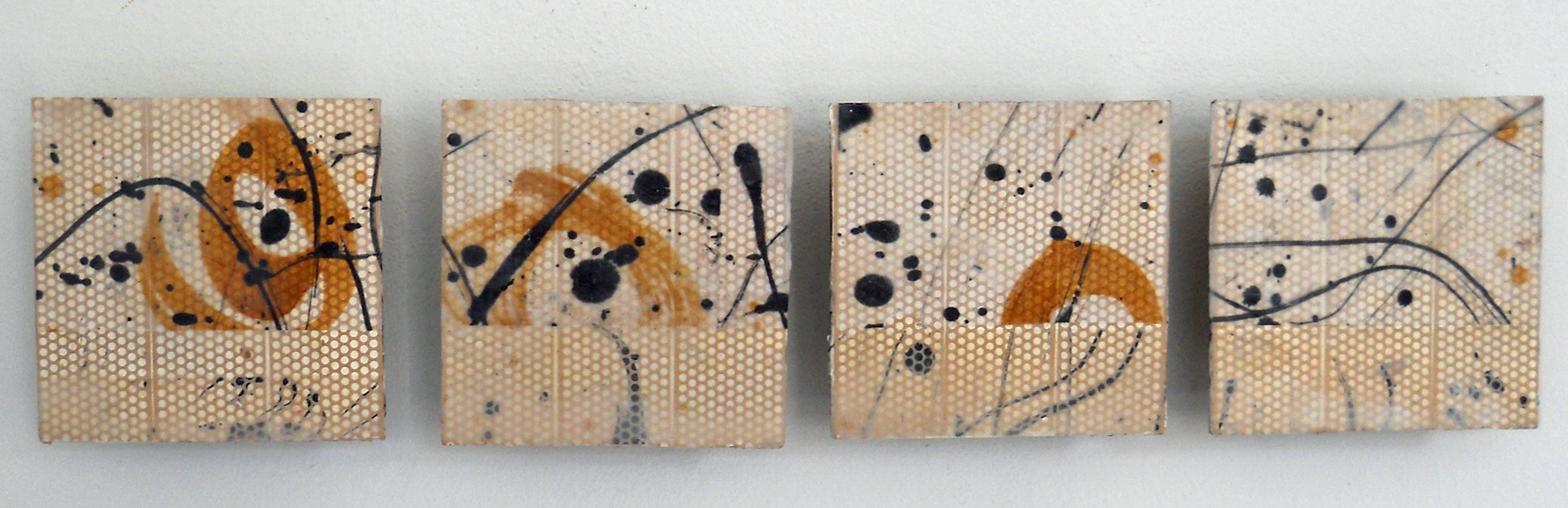
I was born in New York City, raised in upstate New York and lived briefly in Cincinnati, OH and Charlottesville, VA when young. My family moved frequently as my Father’s electronics engineering career followed the industry’s consolidation after World War II. I graduated from a small Michigan liberal arts college (Kalamazoo) with a major in English and minor in art. I married my college boyfriend and moved to Texas where we both entered graduate school at Baylor University. I discontinued graduate study after the birth of two of my three children. My then-husband completed his PhD in Chemistry and accepted a teaching position at Drake University in Des Moines, Iowa. As a faculty wife, I had a opprotunity to study painting with Jules Kirschenbaum, a renowned New York painter. I enrolled repeatedly in his acrylic painting courses. When my marriage ended and my children graduated from college, I moved to New Mexico. Here I studied encaustic (pigmented wax) painting with master artists Ellen Koment and Paula Roland. In 2004, I married Carl “Cat” Tsosie, Jr. (Pueblo, Diné) and moved to his reservation, Picuris Pueblo, in northern New Mexico. He built me a studio looking out on the mountains and the tribe’s buffalo herd. I continued painting with encaustic for a number of years. I loved the way you could freeze motion with encaustic painting. By quickly removing the propane torch as its flame moved the molten wax across a panel, the wax would cool and preserve the motion the torch had created. To me, encaustic is still the most beautiful painting technique. The light hits the surface of the encaustic panel and refracts off the pigment particles suspended in the wax: it makes the painting look like it is lit from within. To connect with other encaustic artists and increase our opportunities to exhibit our work, I founded New Mexico Wax, later merging the group with the Encaustic Art Institute and becoming the Institute’s first President. I donated most of my encaustic work to the Museum of Encaustic Art once I returned to working with acrylic. In 2009, my husband and I relocated to Albuquerque.
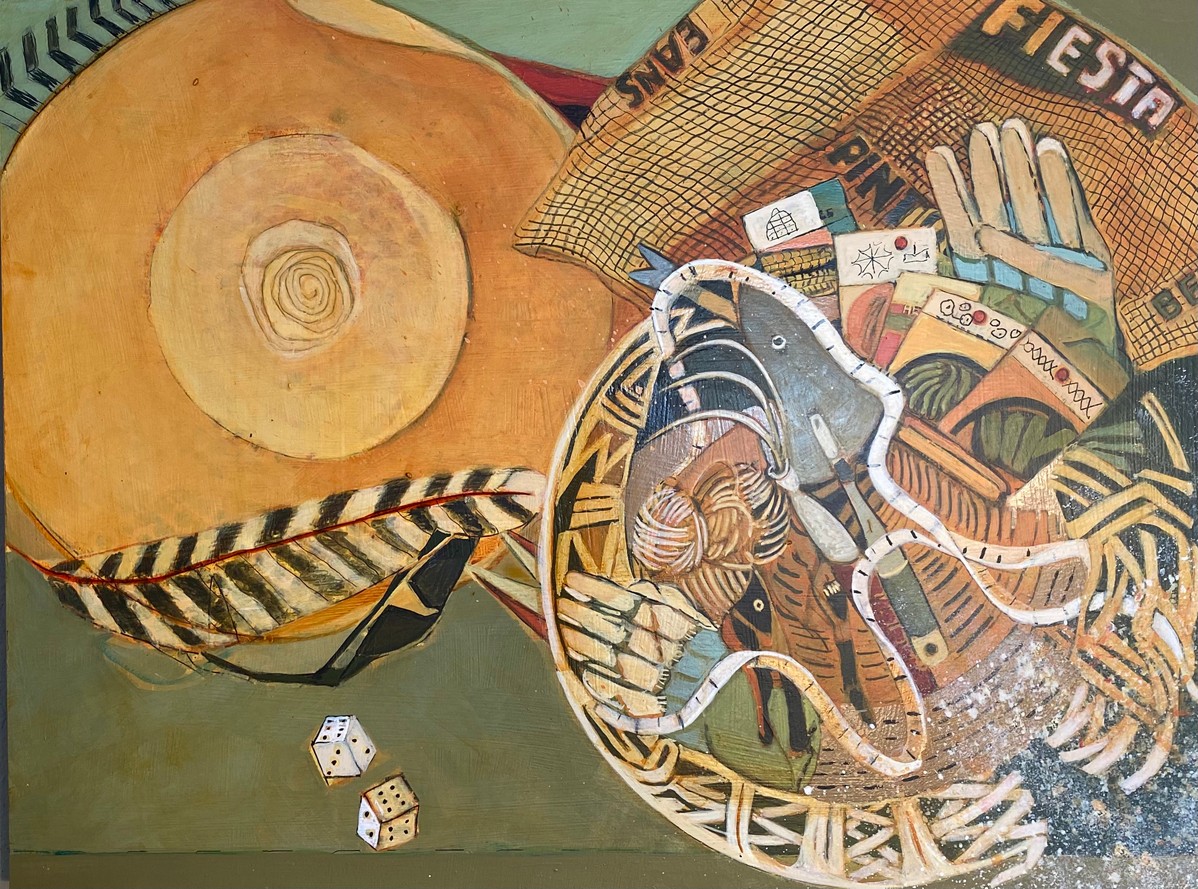
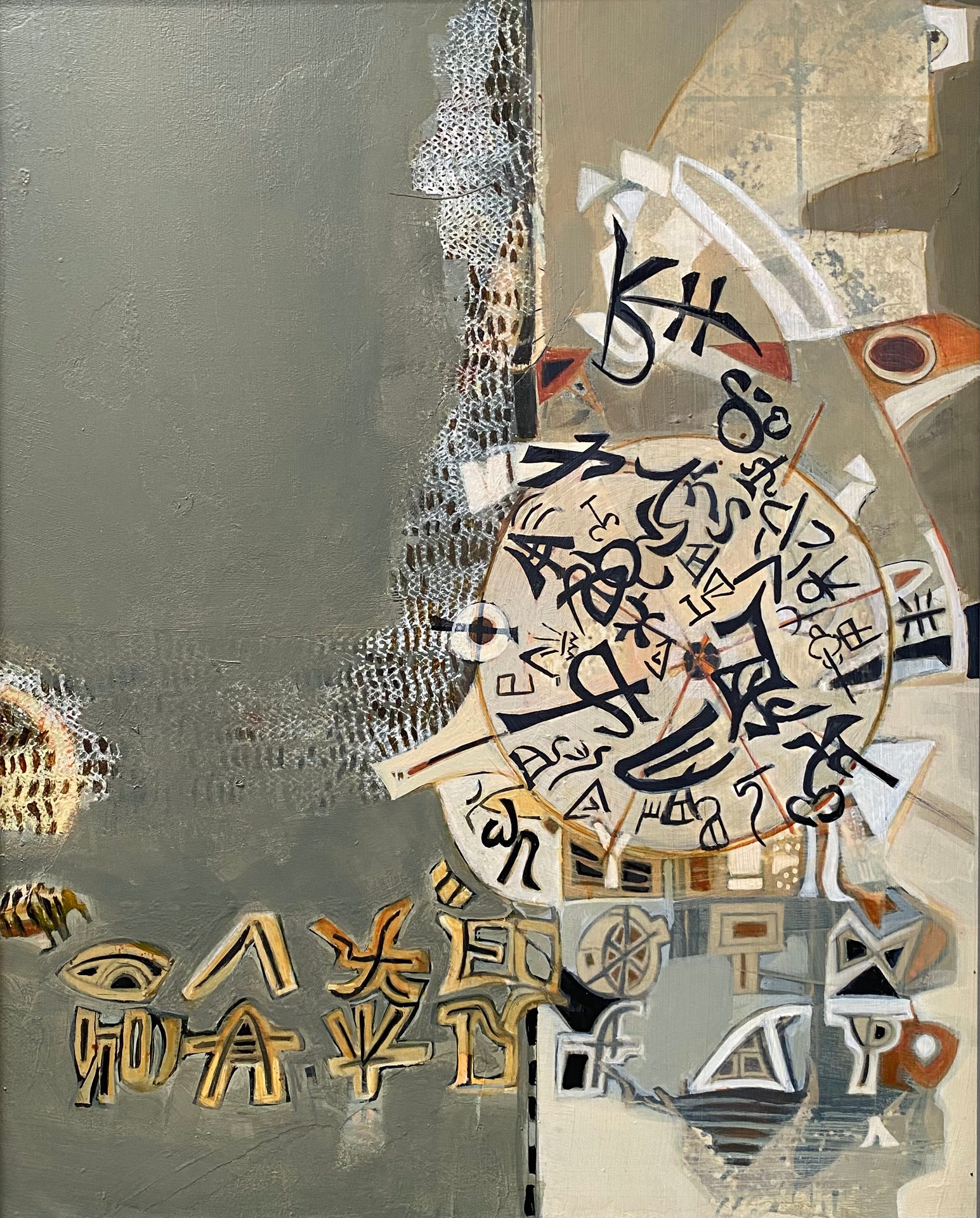
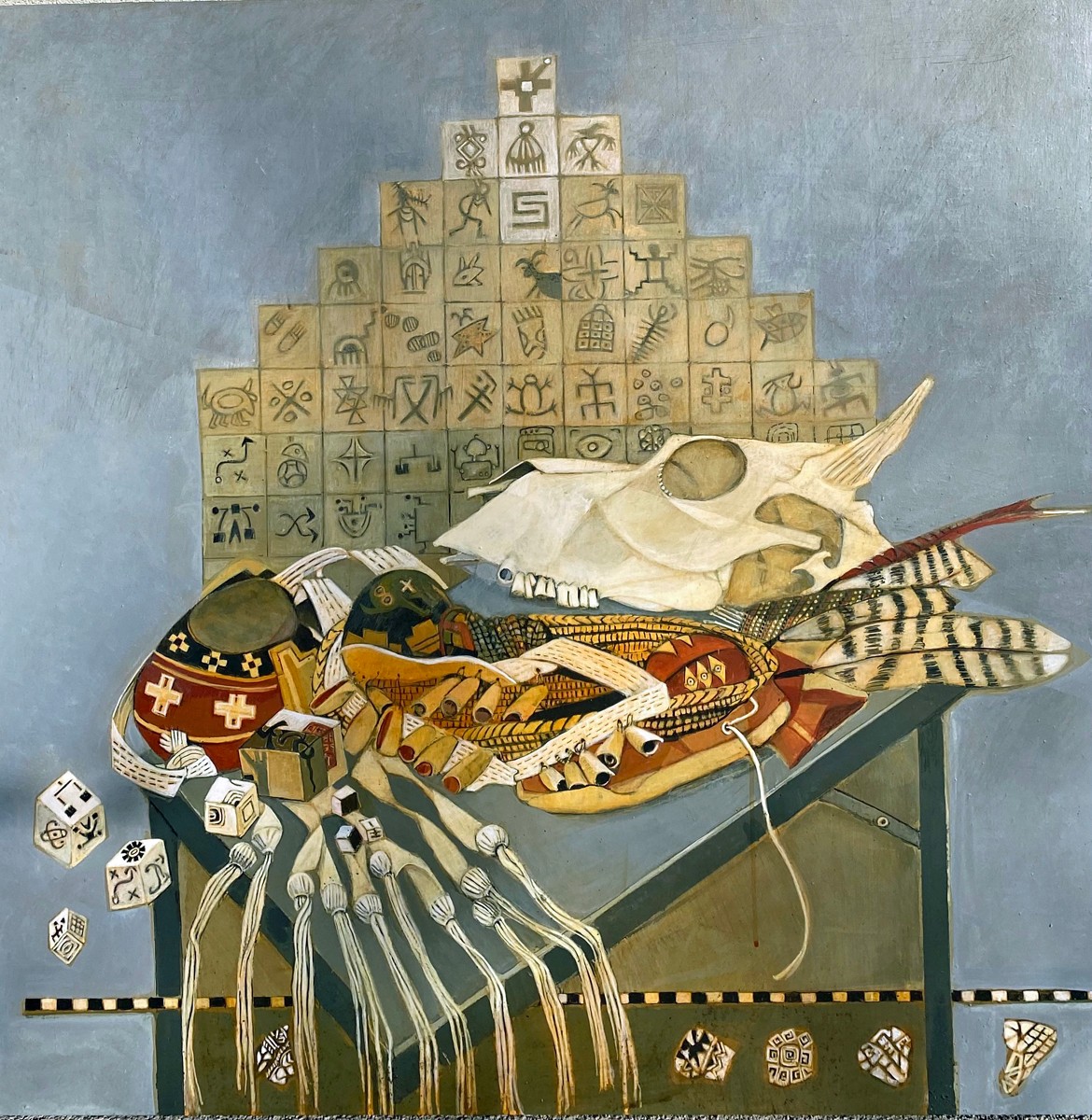
I feel that the geographical upheavals in my life led me to explore identity, which has been the main subject of my work for the past 20 years. I see identity as shaped mainly by genetics, language and place. While visiting and helping care for my elderly Father, my sisters and I discovered his parents’ love letters (1906-1911) and his mother’s diaries (1900-1968), tossed in a box in his garage. I brought them to New Mexico and began transcribing the history they contained. The diaries sparked my interest in my ancestry and became the basis for the genetic aspect of my identity work. I trace my love of language to high school and college studies of Latin, English, French and Spanish, but mostly I incorporate extinct languages, Asian and African calligraphy, Asemic writing and symbols as the language aspect of my work. Moving to New Mexico made me keenly aware of the importance of both language and place as an aspect of identity. Most of the tribes here–including my husband’s–are just beginning to create a written language. For generations, they have relied on storytelling to transmit knowledge. Both the Spanish settlers-through the land grants awarded them by the King of Spain- and the Native American tribes-who first lived in this area-have a keen appreciation of place as a factor in creating identity. Here, the past is ever present in the ruins of prior settlements and in the traditions of both cultures.
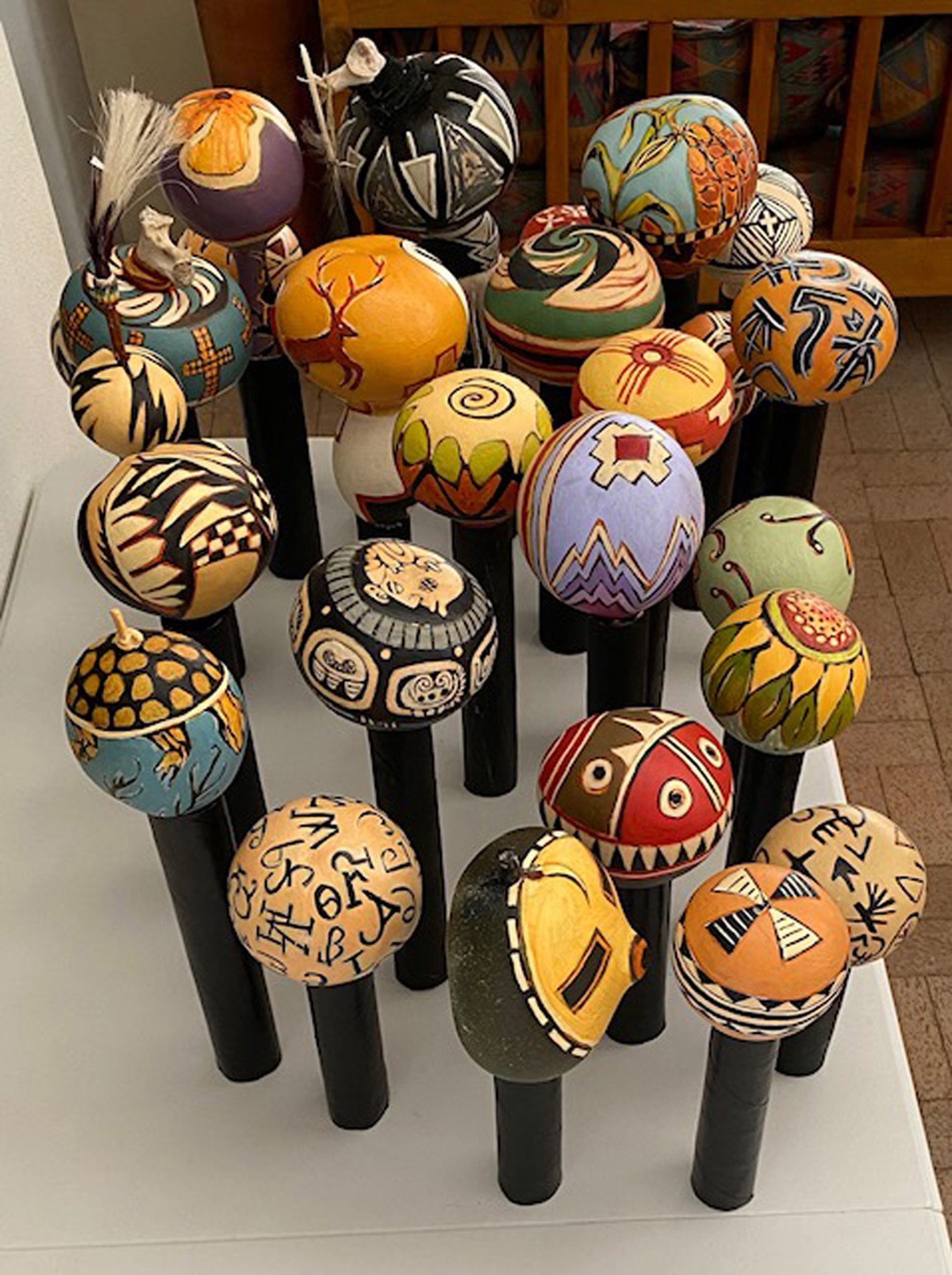
Since moving to Albuquerque, I have continued painting in acrylic. My husband, who is an initiated gourd dancer, grows gourds and we design, paint, and sell them for ceremonial use and as aesthetic objects. My paintings are included in Bernalillo County’s Art in Public Places collection, the Museum of Encaustic Art’s permanent collection, and the holdings of private collectors. My encaustic work is featured in Encaustic Art in the Twenty-First Century (2016), and numerous art exhibition catalogs. My husband and I have self published three books. Most recently (2023), our “Gourd Rattles” book won first place in the crafts category of the Arizona/New Mexico Book Awards.
I’m sure it wasn’t obstacle-free, but would you say the journey has been fairly smooth so far?
No. It is difficult for women to succeed professionally as artists. I remember my college art professor telling a female student: “If you get married, you will never paint again.” And she gave up. I took a lot of time out once I had children, although I will never regret having them. Once they were grown and educated it was a different situation. I was earning my own living and could spend the money as I pleased. As I neared retirement, I moved to New Mexico and lived briefly in Santa Fe, an historic art community. I was able to purchase property with a studio building. After retirement, I could finally paint full time.
To achieve any kind of fame or financial success, women artists still face institutional barriers. Museum collections favor male artists. Collectors purchase the work of male artists for much higher prices than the work of female artists. It is changing, but the bias is still there. For me, that is actually a blessing in disguise. It forces me to value the process more than the outcome. It allows me to control the content of my work and to experiment. That is a particular kind of freedom.
Thanks – so what else should our readers know about your work and what you’re currently focused on?
I basically incorporated most of this information in the first question.
I am most proud of my perserverance.
What sets me apart from others is the content of my work, which is drawn from life experience. Also my technique, which seeks to make my work harmonious within itself by a special glazing technique I employ to unify the surface. Further, I love detail. Why create something minimal when you can give the viewer the opportunity for endless exploration by painting something complex?
What were you like growing up?
I was a middle child, so more outgoing than my older sister. I was a tomboy, loved being outdoors, climbing trees, exploring nature. My younger sister and both had horses and loved to ride when we lived in the country.
In school, I was an outsider because we moved so much due to my father changing jobs about every five years. My family even moved during my senior year of high school. I hated being the new kid and coming into a school full of established cliques. I was a loner and usually had a best friend but was not in the mainstream. Things improved in college where there was more of a level playing field.
I was interested in art. I played tennis.
Pricing:
- I usually price by size since that is what buyers expect. But I also factor in the time it takes to make a painting
- For the rattles, size always determines the price. They range from $95 – $225.
Contact Info:
- Website: https://nmveteransart.com/artist/harriette-f-tsosie/
- Instagram: https://www.instagram.com/harriettetsosie
- Facebook: https://facebook.com/harriette.tsosie.5