


Today we’d like to introduce you to Kara Wilson.
Alright, so thank you so much for sharing your story and insight with our readers. To kick things off, can you tell us a bit about how you got started?
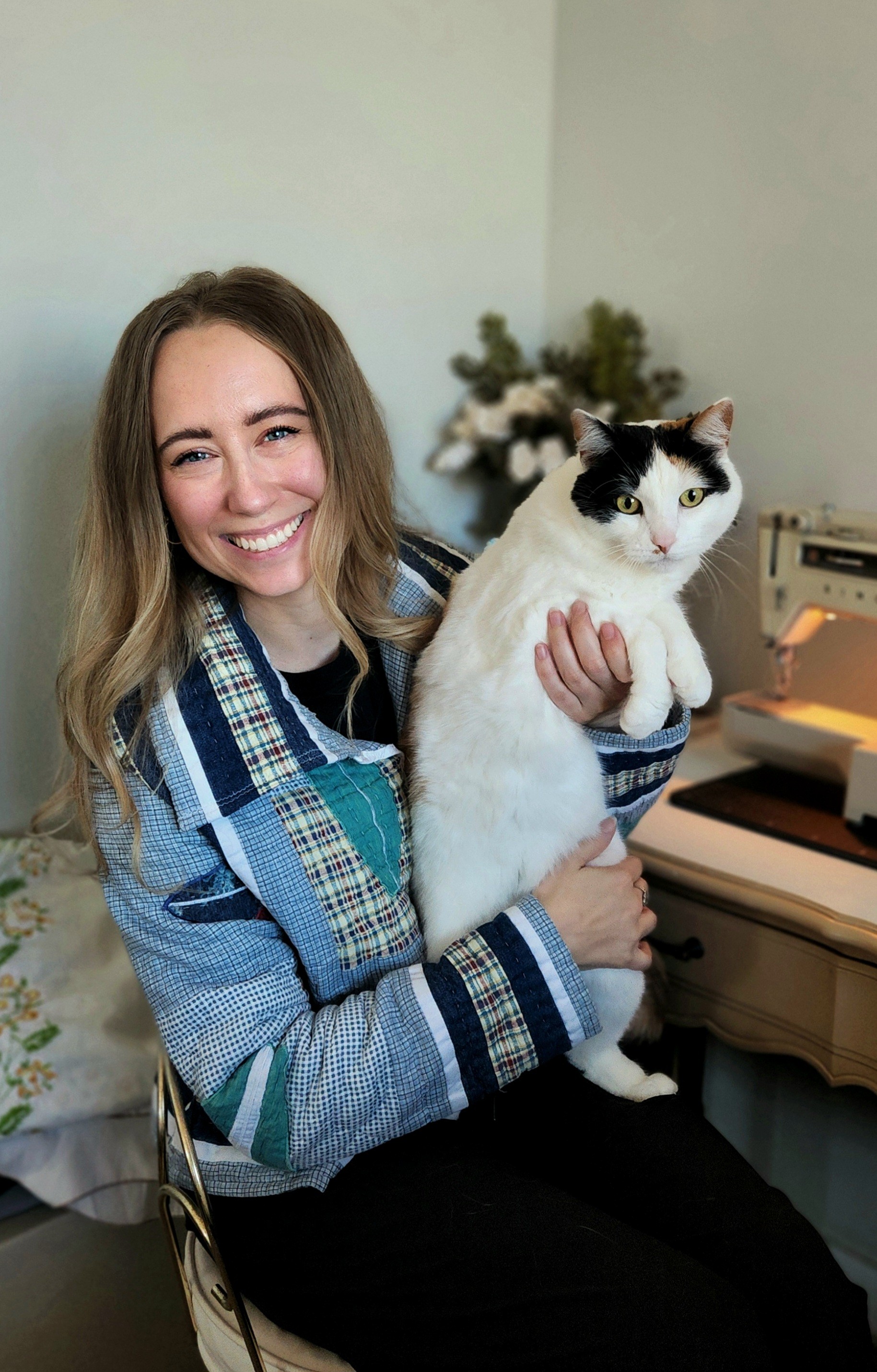
I grew up in a family where creating, fixing, and problem solving were and are a part of everyday life. My grandparents, who came of age during World War II, were shaped by the machines and innovations of their time, and that same mechanical curiosity flowed through generations. As a child, I was included in my family’s projects, from learning to operate tractors and heavy equipment, to threading a sewing machine, to playing with power tools among the construction of my fathers business. Those moments taught me more than how to operate machines, they showed me how patience, curiosity, and care can connect people through the act of making.
That love for tactile learning and creativity led me into art and teaching. I simultaneously earned a Bachelor of Science in Art Education and a Bachelor of Fine Arts from Edinboro University of Pennsylvania. On the day I graduated, I was offered a high school visual arts teaching position in Colorado, where I have been teaching and creating since 2014. Over the years, I’ve explored many forms of art making ranging from jewelry, crocheting, clothes design to mixed media artwork that blends traditional and digital processes.
I’m currently pursuing my Master’s in Art & Design through the University of Northern Colorado. Earning an MA allows me to grow as both an artist and educator, expanding my creative practice while inspiring students to find their own voice through drawing, painting, mixed media or any other hands on, creative explorations.
Would you say it’s been a smooth road, and if not what are some of the biggest challenges you’ve faced along the way?
My journey has unfolded more like a winding road than a straight line, full of challenges, learning, and unexpected opportunities. While it hasn’t always been easy, I feel incredibly privileged for the experiences I’ve had. There have been seasons when balancing teaching, art making, and personal growth left me feeling stretched thin, unsure if I could give enough to both my students and my own creative work. Yet each challenge offered something valuable whether it was patience, resilience, or a new point of view. I’m grateful for the opportunities to attend college, help young people discover their creative voices, travel, and continue pursuing my passion for making and learning. The road has been twisty, but it’s also been meaningful, full of good people, and absolutely worth it.
Alright, so let’s switch gears a bit and talk business. What should we know about your work?
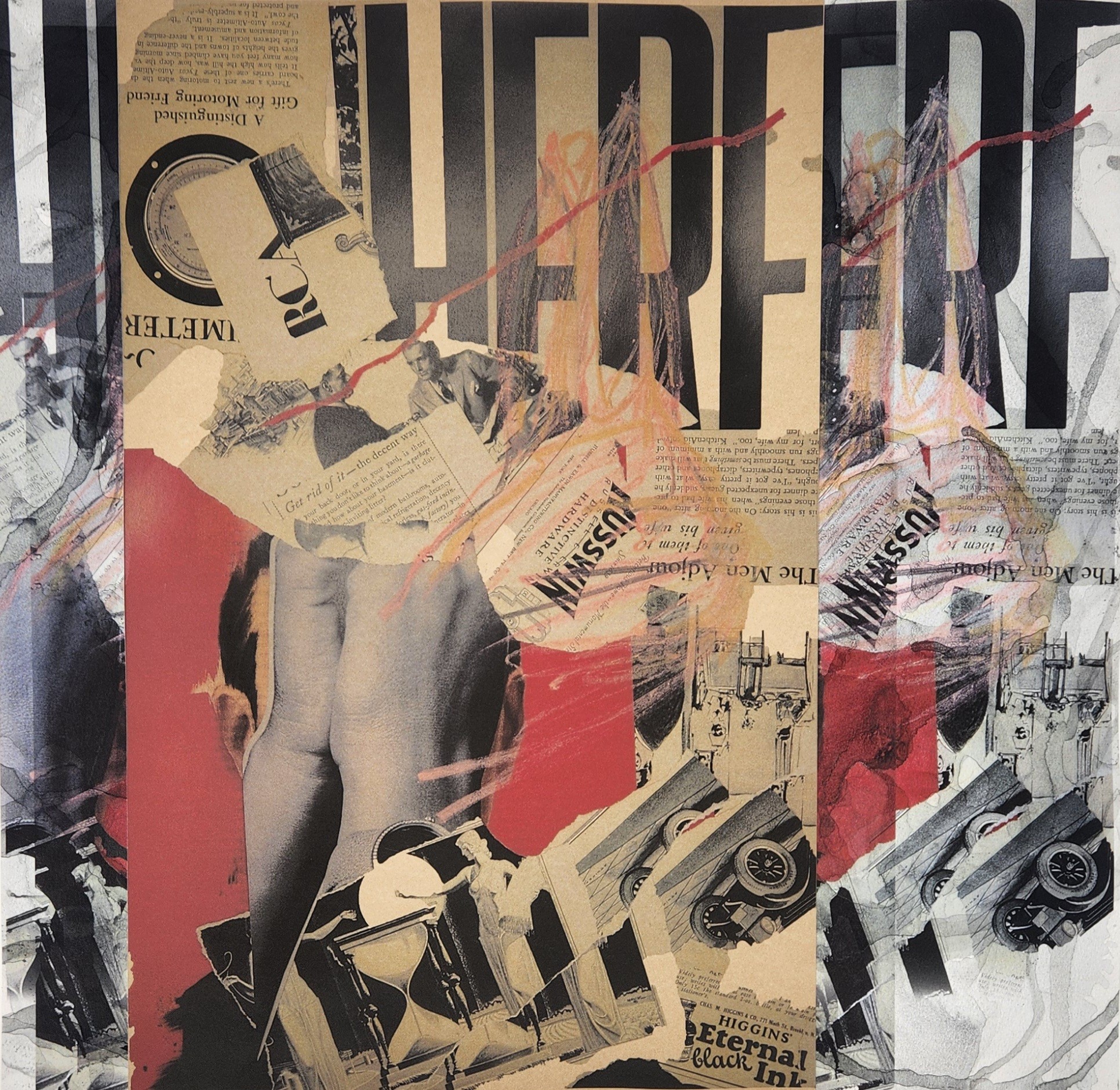
I graduated with a Bachelor of Fine Arts in painting, where my focus was primarily on abstract work with oil paint. Over the years, my practice has evolved into mixed media, incorporating a variety of paints and materials including watercolor, acrylics, and inks.
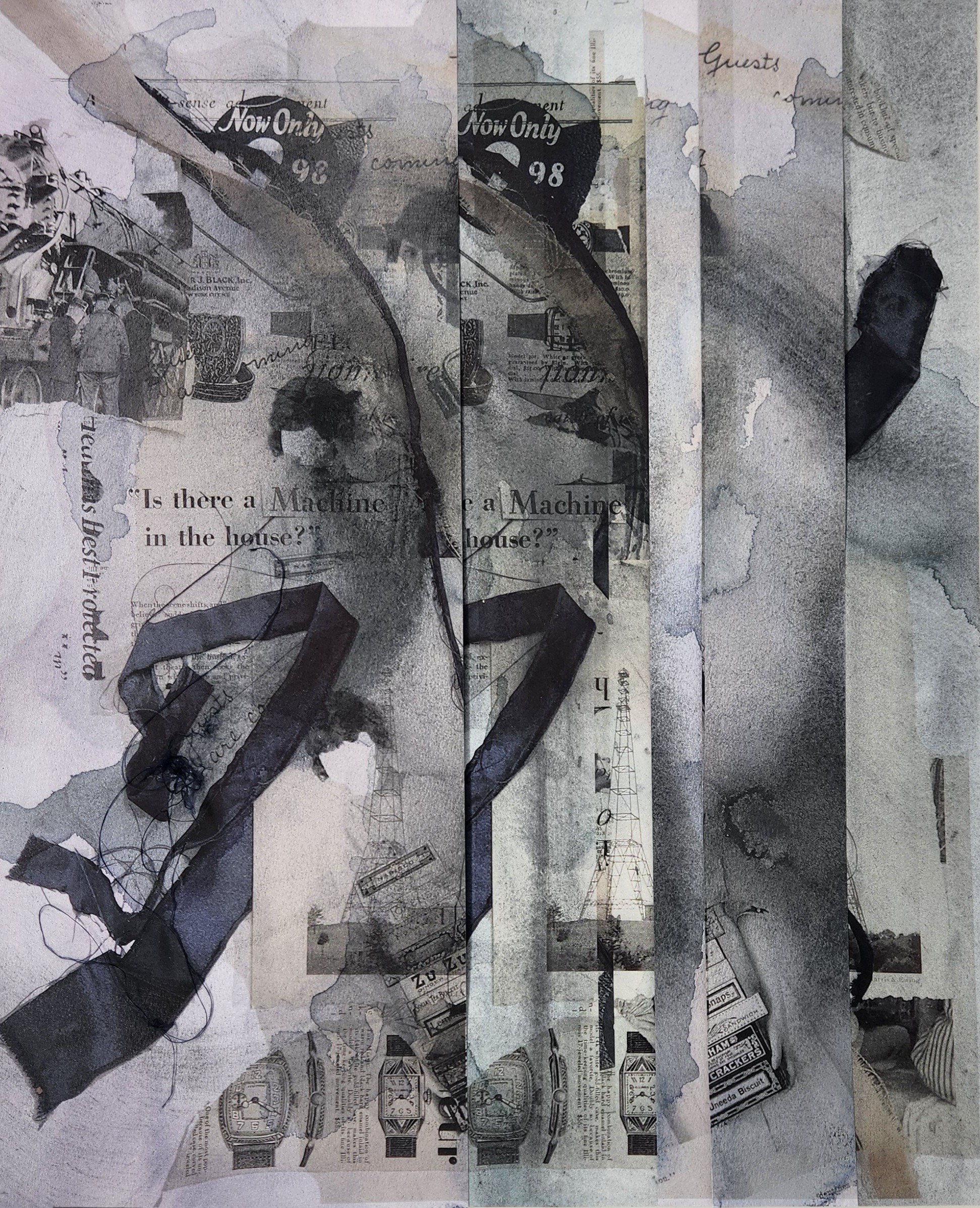
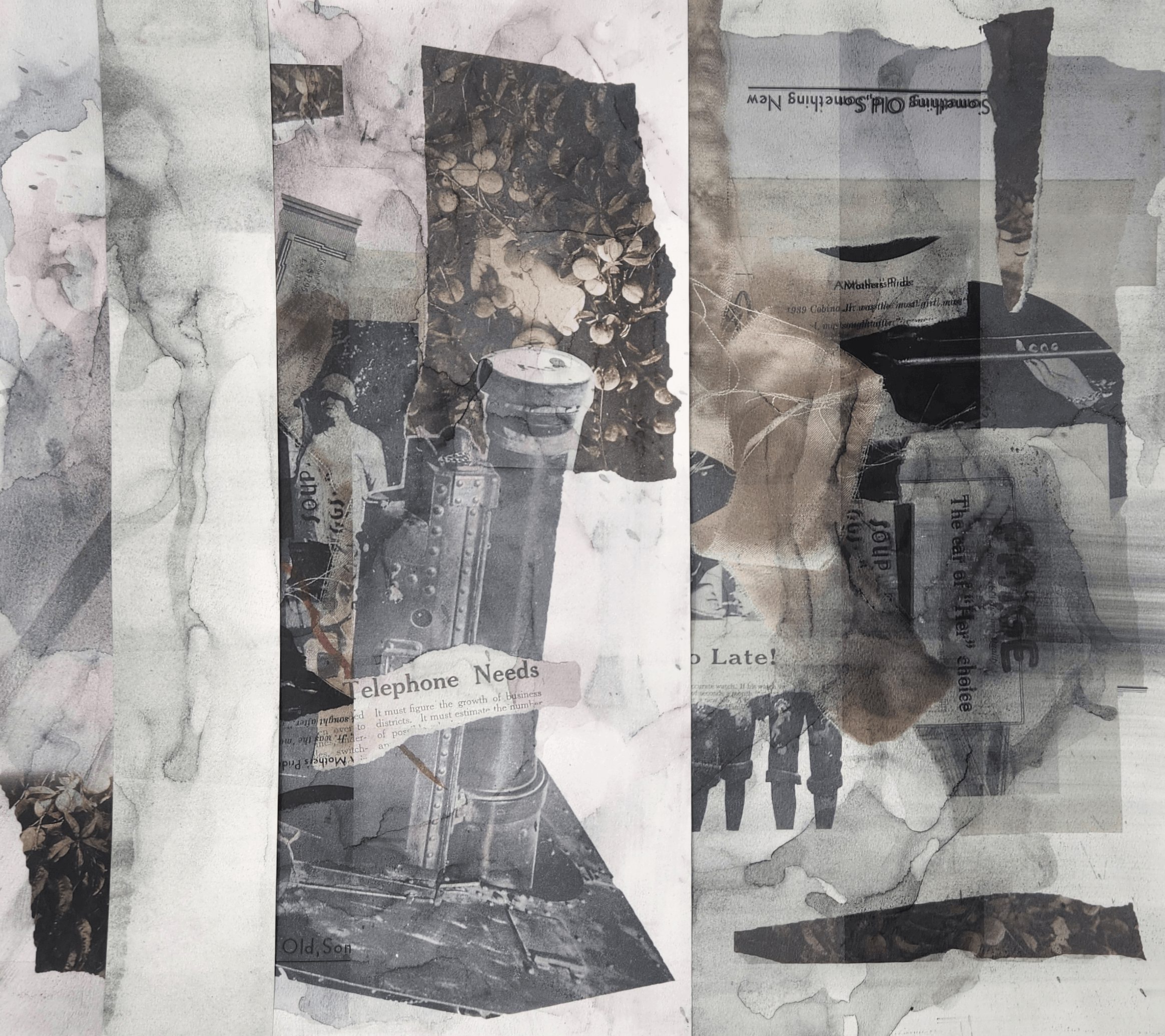
My current work combines a layered process of collaging, scanning, painting, and printing, often integrating fiber to add texture and depth. I focus on blending traditional and contemporary techniques, layering materials and meaning, and creating pieces that are tactile, ethereal, and conceptually charged. The fibers in my work serve as both a literal and metaphorical thread, connecting ideas of memory, materials, and intergenerational knowledge, while contrasting physical making to the digital dependency of today.
I am particularly proud of how my work reflects my personal journey and exploration of memory and use of materials. I aim to have viewers engage with broader themes of connection, dependency, and the communication of tool knowledge throughout time.
What were you like growing up?
As a young child, I was curious and always asking how and why things worked, often figuring out ways to bend their use or repurpose them. I loved building and creating whether it was constructing a treehouse with neighbors at an elementary age or experimenting with materials my parents’ business made available to me. Sitting still and being idle was a challenge. I was happiest when my hands and mind were busy exploring materials and the woods around my parents house. Personality wise, I was naturally shy and slow to warm up, needing time to observe people and situations before becoming more outgoing and gregarious. That curiosity, creativity, and thoughtful observation shaped both my childhood and the way I approach art and problem-solving today.
Contact Info:

Popular
-

The Trailblazers: Rewriting the Narrative
-

Celebrating the Spotlight: Kaytee Shashore Turns Milestones Into Momentum
-

Humanity in the Machine: Alexander Raye Pimentel’s Cyborg Recall Questions the Cost of a Data‑Driven World
-

Raemi Anderson on Courage, Caution, and Answering the Call of the Landscape
-

Hidden Gems: Local Businesses & Creatives You Should Know


