
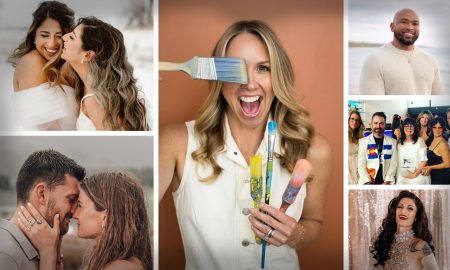


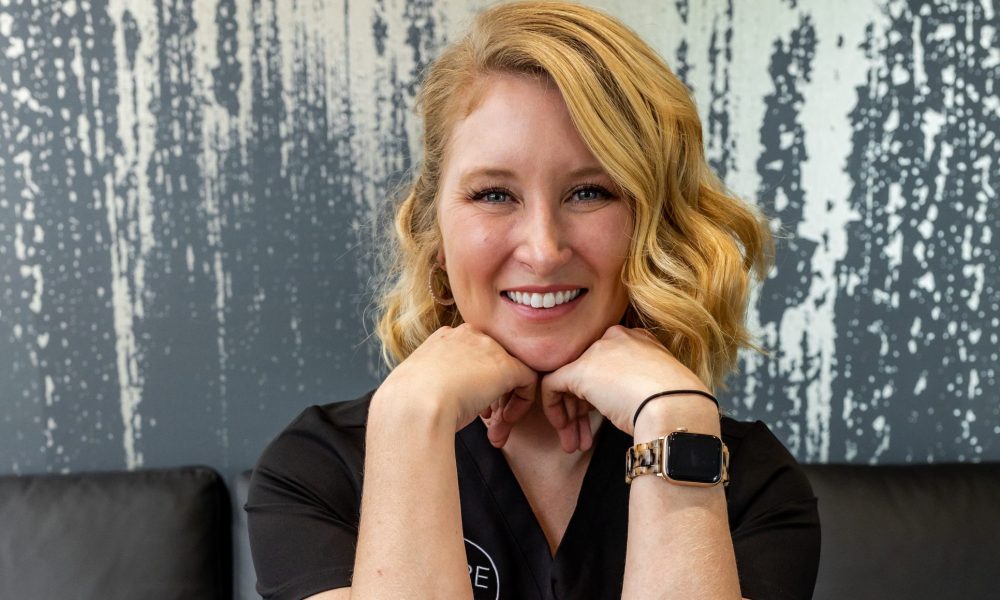
Today we’d like to introduce you to Lauren Voss Mitschrich PA-C, DMSc.
Hi Lauren, thanks for joining us today. We’d love for you to start by introducing yourself.
Greetings, I’m Lauren, a Board Certified Physician Associate based in Denver, specializing in aesthetic medicine with a decade of rich experience. My journey commenced in California after graduating from PA school. In my pursuit of a job, having relocated from the southeast, I faced challenges; after sending out 300 resumes, I secured only two interviews. One of them led me to a position as a surgical first assistant with a plastic surgeon in the Marin area, north of San Francisco.
In those early days, the practice primarily focused on surgical procedures, offering limited non-surgical services. Recognizing an opportunity for growth, I proposed a transformative shift. I pledged to acquire the skills needed to introduce non-surgical services if they allowed me to pivot my role. With their approval, I immersed myself in a six-month journey of education, delving into the intricacies of aesthetics. I even took laser physics courses to gain insights into energy-based devices. A year later, our med spa was born—a pioneering venture at a time when such transitions were becoming a trend, yet comprehensive education in the field was still scarce.
Subsequently, a dermatologist approached me with a vision to replicate our success and open a second location. Embracing the opportunity, we partnered and successfully launched the new venture. My career path then led me to Manhattan, where I joined a sophisticated practice in Union Square, only to face the challenges posed by the onset of COVID-19. This prompted my husband and me to make the pivotal decision to relocate to Denver.
Since settling in Denver four years ago, I’ve been practicing alongside Dr. Gregory Buford, a distinguished plastic surgeon based in the Lone Tree area. Our collaboration has been transformative, shaping the way I approach aesthetic medicine today.
About three years ago, Dr. Buford and I embarked on a new venture—launching a training company that would eventually become the Core Aesthetic Training Institute. Completing our trio was Keeley, an MBA with a background in marketing. In April 2021, we successfully launched our inaugural course, which garnered overwhelming interest and sold out promptly. Since that pivotal moment, our training institute has witnessed unprecedented growth, with four new courses and additional ventures introduced in just three years.
While Dr. Buford and I continue to practice in Lone Tree, our commitment to education and innovation has driven the evolution of our training company. The journey of learning aesthetics across different corners of the country has uniquely shaped my perspective, contributing to the dynamic and impactful way we approach our practice.
In summary, my story is one of continuous growth, adaptation, and a relentless pursuit of excellence in the ever-evolving field of aesthetic medicine.
We all face challenges, but looking back, would you describe it as a relatively smooth road?
Navigating the path in the field of aesthetic medicine has been both rewarding and challenging. Unfortunately, the industry’s perception often doesn’t align with the principles of traditional medicine, leading to a shift in focus from patient care to financial gains. The prevailing incentive structures within businesses prioritize monetary success over less quantifiable benchmarks like optimal patient outcomes. This shift has contributed to a significant decline in the standards of the industry over the past decade.
The challenges extend to the education space within aesthetic medicine. A proliferation of training courses launched by practitioners, often with limited experience, has diluted the educational landscape. It appears that the emphasis on the essence of medicine is often overshadowed by the pursuit of financial gains.
Our vision at Core Aesthetic Training Institute is to counter this trend and bring aesthetics back to its roots in medicine. However, the journey feels like an uphill battle at times, with the industry seemingly moving in the wrong direction at a rapid pace. Despite our commitment to elevating standards and emphasizing the medical aspect of aesthetics, the prevailing currents in the field sometimes make it challenging to steer our mission in the desired direction. Nonetheless, our dedication to this vision remains unwavering, and we persist in our efforts to reshape the narrative and restore the integrity of aesthetic medicine.
Thanks for sharing that. So, maybe next you can tell us a bit more about your work?
In my practice as a PA specializing in aesthetic medicine, I have garnered national recognition for my commitment to delivering “natural-looking” outcomes. This emphasis on achieving results that enhance rather than alter one’s appearance has become a hallmark of my work, setting me apart both locally in Denver and on a broader scale.
One unique aspect of practicing in Colorado is the distinctive regulatory landscape that allows individuals without a medical degree to perform aesthetic procedures. Recognizing the potential risks associated with this lenient entry barrier, I strategically positioned my practice to combat this trend. My marketing efforts centered around the promise of qualified and quality results, a commitment that resonated with patients seeking trustworthy and skilled practitioners. This approach has not only allowed me to build a substantial and loyal patient base but has also contributed to my continuous growth both locally and nationally.
As a trainer in the field, I am distinguished by my unwavering focus on the scientific foundation of aesthetics. While many practitioners may overlook the importance of literature and research in the field, I am dedicated to bringing aesthetic medicine back to its “medical” roots by placing a heavy emphasis on evidence-based practices. My unique approach involves delving into high-quality clinical studies, embracing peer-reviewed research, and leveraging my four-year doctoral journey in clinical research focused on complication management. This dedication to extracting insights from the literature sets me apart from other educators in the aesthetic medicine space.
What I am most proud of is not just the recognition of natural-looking outcomes in my practice but also the impact of my educational approach. By championing a commitment to scientific rigor, I strive to elevate the standards of the industry, ensuring that practitioners are well-informed and equipped to deliver optimal patient outcomes.
Where do you see things going in the next 5-10 years?
Firstly, the growing trend of private equity (PE) involvement is already in motion, with practices across the nation being consolidated into quota-driven entities. This shift towards a more profit-centric approach has the potential to impact the quality of care, as providers may prioritize quotas over the delivery of high-quality patient care. The industry is likely to witness changes in price competition, making it more challenging for practitioners focused on maintaining high standards to navigate this evolving environment. While this transition may be gradual, there’s hope that consumers will discern the implications of PE involvement, ultimately valuing quality over brand development.
Secondly, as the industry experiences an influx of individuals seeking to enter the field, there may be a subsequent rise in complications. This surge could prompt legislative changes aimed at safeguarding patients from unqualified providers and adverse outcomes. Such regulatory adjustments have the potential to elevate the standards of aesthetic practice, fostering a rebuilding of patient trust.
Lastly, a noteworthy shift is expected in aesthetic preferences. Over the past decade, there has been a trend towards exaggerated features, characterized by big lips, buttocks, and other enhancements. However, consumer preferences seem to be evolving towards a return to a more “natural” aesthetic. This shift signifies a move away from overt transformations towards subtler, more balanced enhancements. Achieving this natural elegance is a complex art that demands a higher level of skill from practitioners. The industry may see a shift towards practitioners who excel in this art, as consumers increasingly value results that appear almost imperceptible, questioning whether any work has been done at all.
In essence, the evolving landscape of the aesthetic medicine industry appears to be heading towards a recalibration of priorities, with a potential emphasis on quality of care, patient safety, and a return to a more nuanced and natural aesthetic. The journey ahead may pose challenges, but for practitioners committed to the true art of the specialty, it holds the promise of enduring success.
Moreover, the evolution of education in the aesthetic medicine field is expected to mirror these industry trends. Currently, there is a surge in the availability of educational options, creating a rapidly expanding marketplace. However, history suggests that, over time, the highest quality tends to prevail. At Core Aesthetic Training Institute (CATI), our objective is to establish the gold standard for quality education.
The very name CATI, derived from an acronym, encapsulates our commitment: CORE stands for concise, objective, real-world education. Our mission is to impart essential knowledge to practitioners in an objective, research-based manner while equipping them with the practical tools necessary to thrive in the real-world challenges of aesthetic practice. We envision CATI as not just a training institute but a beacon of excellence that sets the bar for the highest standards in aesthetic education.
Pricing:
- Level 1 Course = 2250
- Level 1 + Ready, Set, Go = 3495
- Anatomy, Cadaver, Ultrasound = 2750
- Aesthetic Fellowship = 6000
- Business Development = 1650
Contact Info:
- Website: www.CoreAestheticsTraining.com
- Instagram: @theskinscholar | @coreaestheticstraining
- Other: www.theskinscholar.com


 Image Credits
Dustin Moon Visuals (@dustinmoonvisuals)
Popular
-

The Trailblazers: Rewriting the Narrative
-

Celebrating the Spotlight: Kaytee Shashore Turns Milestones Into Momentum
-
Humanity in the Machine: Alexander Raye Pimentel’s Cyborg Recall Questions the Cost of a Data‑Driven World
-

Raemi Anderson on Courage, Caution, and Answering the Call of the Landscape
-

Hidden Gems: Local Businesses & Creatives You Should Know


