
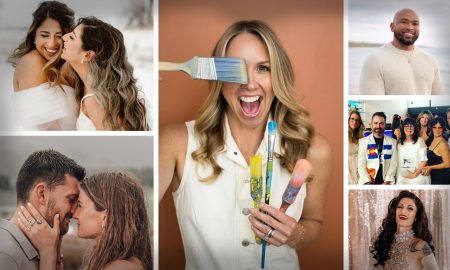


Today we’d like to introduce you to Natasha McCann.
Hi Natasha, so excited to have you on the platform. So before we get into questions about your work life, maybe you can bring our readers up to speed on your story and how you got to where you are today.
Before I set foot in the sports medicine field, I was simply a working ranch hand. I rode colts for an outfit that ran Hereford Beef Cattle for many years, and after that, I began to travel a lot and would day work on ranches wherever I was, including Wyoming, Montana, California, Oregon, and Idaho.
After many years day working, I realized I needed some sort of formal education to make more money to one day afford an outfit of my own. I knew I was never going to be an office job type gal, and I always loved sports and helping people so I started by attending EMT school, and eventually working on an ambulance. From there, I became a Certified Personal Trainer, and then a Licensed Massage Therapist.
The field never really interested me, but I had a wonderful mentor who showed me that massage was much more than an ethereal, relaxed, fluffy profession. With my background in Emergency Medicine and Training, I could use massage as a tool for the rehabilitation of injuries in sports. I decided to pursue some more certifications and was able to obtain a very rare Dual Board Certification in Clinical Rehabilitation and Orthopedic Manual Therapy.
I have since dedicated my career to helping a population of people that is underserved and more than deserving – the Western industry. Rodeo is lightyears behind every other professional sport when it comes to sports medicine, which is due in large part to difficulty with accessibility. Every sport has a home field, court, training camp, etc., but rodeo athletes do not, nor do they have a staff waiting with nearly every intervention under the sun.
So that’s where I come in. Rodeo athletes travel more than any other sport, and if I want to be part of the change and make sure these athletes are being treated consistently with up-to-date medicine, then I have to travel as well.
I also have a soft spot for Western athletes because of experiences I had with injuries, and the advice I received afterward. I was in a wreck on a colt in 2020 that resulted in 6 spine fractures, a bruised kidney, and a significant head injury. After I was diagnosed, my doctor told me to never ride again, and that I should probably stop working out as well.
What this doctor failed to understand was that riding colts and ranching wasn’t just something I do for work, it’s a part of who I am. It’s not just a hobby for people like me, our life revolves around it. And the thought of that being stripped away from me in an instant was unbearable. I think of that moment every single day, and my goal is to make sure no one I work with ever feels the way I felt at that moment.
While I do have a physical office, rarely, I am there. Most of the year, I pack up my pickup with portable tables and all my equipment and hit the road. On average I’ll be on the road over 200 days a year, all across the country. I typically set up at PRCA rodeos, but I also work PBR events, Bullfighting events, Barrel Races, Futurities, and more. I want to be wherever athletes need me to be.
When I’m not treating athletes at rodeos, a lot of times you will find me in the back pens working for a stock contractor. I still day work as often as I can, and I coach at a local CrossFit gym.
Additionally, I am a coach for Champion Living Fitness (offering online coaching and workouts specific for rodeo athletes), a Wellness Provider for the Western Sports Foundation (a non-profit that is dedicated to enhancing the lives of rodeo athletes on and off the dirt by providing free industry-leading resources for all levels of competitors), and a Coach for War Party Ranch (non-profit empowering female survivors of abuse by providing fundamental horsemanship skills necessary to working int he agricultural industry).
Alright, so let’s dig a little deeper into the story – has it been an easy path overall, and if not, what were the challenges you’ve had to overcome?
While it has been nowhere near a smooth road, I like to think that it will make for great stories and an even sweeter result in the end. Being self-employed and completely self-funded, there are always bumps in the road. Sometimes I end up at events where I had 7 or 8 athletes book with me and 5 will cancel last minute. Other times it’s car trouble leaving me stuck in a small town nowhere near my destination.
Sometimes, the biggest battle is just winning the confidence and trust of athletes. Many of them have the same mindset I used to – that massage is just for relaxing and you burn candles and listen to gongs chiming in the background – which can take a while to get someone to understand that my approach is rooted in orthopedics and science. There isn’t anything I’m doing for clients that I can’t explain what it is or the benefit of it, supported by research.
Appreciate you sharing that. What should we know about McCann Athletic Therapy/McCann’s Rodeo Athlete Care Team?
McCann Athletic Therapy specializes in rehabilitation for injuries in sports. With my background in Emergency Medicine and Personal Training, I can incorporate hands-on therapeutic techniques along with corrective/rehabilitative exercises to make sure my clients are receiving total care for their injuries.
I am known for specializing in rodeo and treating rodeo athletes. Rodeo athletes are unique in how we manage their injuries. Unlike other professional sports where a PCL tear would sideline them immediately, rodeo athletes may compete with this type of injury (or worse) for months, before they decide to have any surgical interventions.
I am most proud that my brand is 100% self-made. I am the sole owner of my company, and I have worked tirelessly to expand my client base and help as many athletes as possible.
What would you say has been one of the most important lessons you’ve learned?
An important lesson I’ve learned along the way is patience.
I always expect a lot of myself and of my business, so when things don’t happen as fast as I want them to I can get down on myself and feel like I’m failing.
But I have learned that patience is my friend, and just because the progress is slower than I want or expect, it doesn’t mean the progress isn’t there.
Contact Info:
- Instagram: @mccannathletictherapy


 Image Credits
Aaron Anderson and Emily Hilton
Popular
-

The Trailblazers: Rewriting the Narrative
-
Celebrating the Spotlight: Kaytee Shashore Turns Milestones Into Momentum
-
Humanity in the Machine: Alexander Raye Pimentel’s Cyborg Recall Questions the Cost of a Data‑Driven World
-
Raemi Anderson on Courage, Caution, and Answering the Call of the Landscape
-

Hidden Gems: Local Businesses & Creatives You Should Know


