



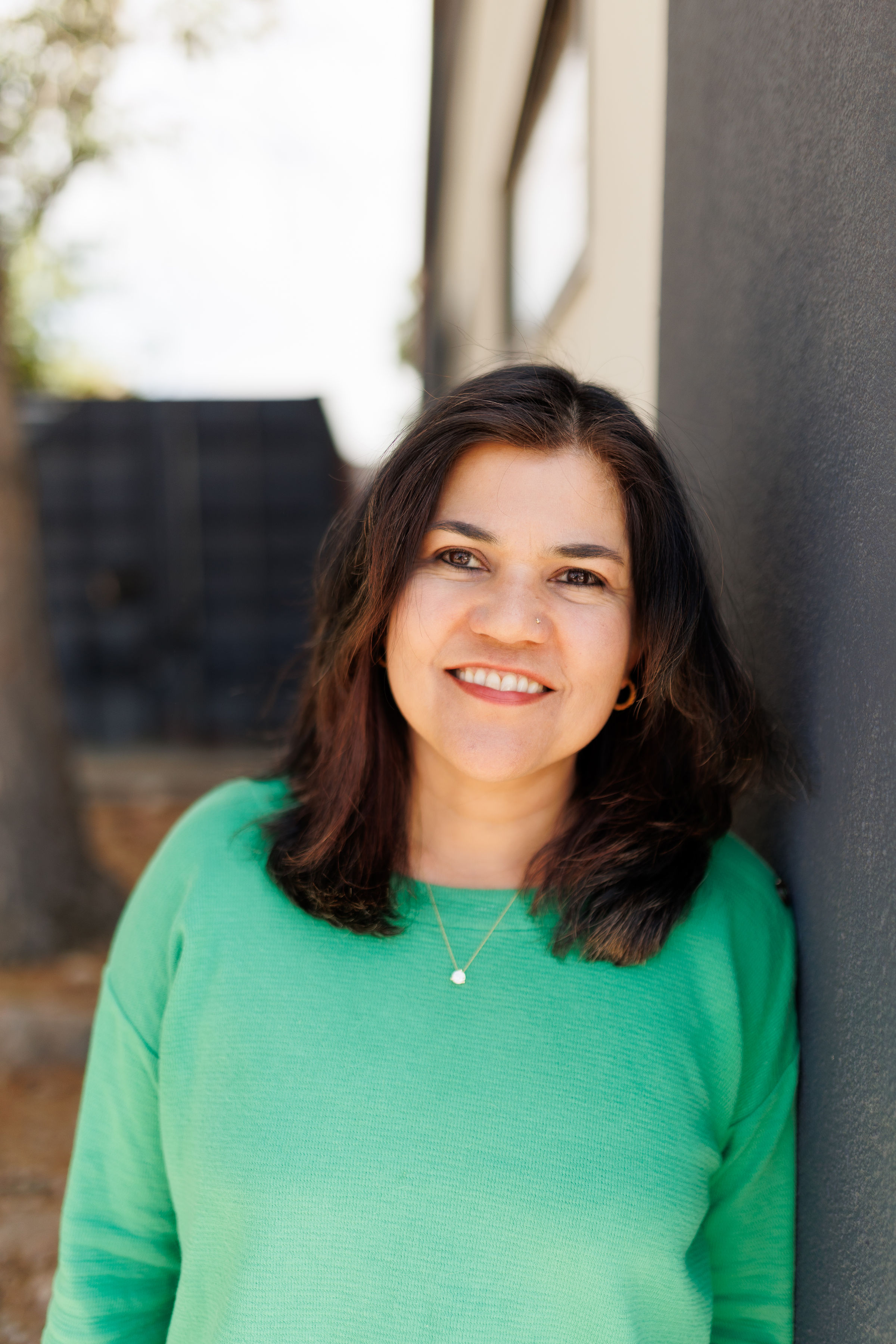
Today we’d like to introduce you to Polly Banerjee.
Hi Polly, so excited to have you with us today. What can you tell us about your story?
I was born in Myanmar to Indian parents and moved to the United States in 1979. My path into the healing arts has been a winding one, shaped as much by personal experience as by professional calling. From a young age, I was drawn to the inner world—to understanding suffering, both my own and others’. That curiosity eventually led me to major in psychology and earn a Master’s in Counseling from the University of Colorado in Colorado Springs.
After becoming a Licensed Professional Counselor in 1999, I began working with individuals navigating extreme states of mind. Over the years, my approach deepened through contemplative practices, especially after moving to Boulder, Colorado, where I encountered a Buddhist teacher who introduced me to the discipline of self-reflection. That encounter was pivotal—it helped me begin to see healing not just as symptom reduction, but as a return to wholeness, rooted in presence and compassion.
My work now integrates over two decades of clinical experience with mindfulness-based cognitive therapy and trauma-informed care. I help individuals struggling with anxiety, depression, grief, and chronic pain find a gentler, more compassionate relationship with themselves. At the heart of what I do is the belief that healing happens in safe, attuned relationship—and I feel deeply honored to walk alongside others on that journey.
I’m sure it wasn’t obstacle-free, but would you say the journey has been fairly smooth so far?
It hasn’t always been a smooth road—and I don’t think it’s meant to be. The path that brought me here has included moments of deep uncertainty, grief, and questioning. As an immigrant child of Indian parents raised in Myanmar and then the U.S., I often felt caught between worlds. That experience of in-between-ness shaped me. It gave me a deep sensitivity to what it means to not quite belong—and to the quiet suffering that so many people carry beneath the surface.
In my professional life, I’ve worked in settings where people were in intense emotional pain, and it was humbling. I had to learn early on that I couldn’t “fix” others, but I could accompany them. I’ve also faced the challenge of finding my own voice as a therapist—especially in a profession that doesn’t always make space for contemplative, culturally attuned approaches.
But every struggle has shaped my practice in some meaningful way. They’ve made me more spacious, more compassionate, and more trusting of the healing process—however non-linear it may be.
Alright, so let’s switch gears a bit and talk business. What should we know about your work?
I often think of my professional life as a weaving—a tapestry made from threads of psychology, contemplative practice, cultural identity, and lived experience. Each client I’ve worked with brings a new hue to the fabric. Over the years, I’ve come to see therapy as an art form as much as a science. It’s an ongoing creative process: one that asks me to be present, to listen deeply, and to respond not just with knowledge, but with intuition and heart.
Creativity shows up in the space between words, in silence, in the way I might offer a metaphor or invite someone to pause and feel their breath. It’s in the ability to attune—to sense what’s needed in a moment without imposing. My work has been shaped by contemplative traditions, where healing isn’t about fixing but about remembering what’s already whole within us. That perspective brings spaciousness into the room. It allows for humor, for grief, for stillness, for surprise.
At this stage in my career, I feel like I’m continually refining the balance between structure and spaciousness, knowledge and not-knowing. Whether I’m working with someone navigating chronic pain, cultural disconnection, or deep loss, I see each session as a co-created moment—one that asks both of us to show up with openness and sincerity
At the heart of my work is the intention to create a safe and compassionate space for people to explore what hurts—and what heals. I’m a licensed professional counselor with over two decades of experience, and I specialize in working with individuals who are navigating grief, anxiety, trauma, and chronic pain. My approach weaves together mindfulness-based cognitive therapy, trauma-informed care, and contemplative practices rooted in both Western psychology and Eastern wisdom.
I’m known for meeting people where they are, gently guiding them to connect more deeply with themselves. Many of my clients come from culturally diverse backgrounds or carry complex, intergenerational stories of loss, silence, or displacement. I hold those narratives with care, knowing that healing looks different for each person—and that it often begins with being truly seen and heard.
I believe in the quiet power of presence and the profound transformation that can arise when we make space for the full range of our human experience—including sorrow, joy, anger, and uncertainty. I feel deeply grateful for the clients who allow me to accompany them through some of the most tender and vulnerable moments of their lives. Each person brings a unique gift, and I receive it with openness and humility.
Can you share something surprising about yourself?
Something that often surprises people is that English is actually my third language—I didn’t begin learning it until I was about 10 years old. I grew up in surrounded by a blend of languages, cultures, and traditions. My early years were shaped by Bengali and Burmese, and learning English later gave me a deep appreciation for the subtle layers of communication—not just in what is spoken, but in tone, rhythm, and what is left unsaid.
To keep my connection to my roots—and to keep my language skills alive—I still often think in Bengali. It’s something that grounds me and reminds me of where I come from. I believe this multilingual, multicultural foundation is part of what allows me to sit with complexity and to listen beyond words. In my work as a therapist, that sensitivity helps me attune not only to what a person says, but to what they may not yet have language for.
Contact Info:
- Website: https://pollybanerjee.com


Popular
-

The Trailblazers: Rewriting the Narrative
-

Celebrating the Spotlight: Kaytee Shashore Turns Milestones Into Momentum
-
Humanity in the Machine: Alexander Raye Pimentel’s Cyborg Recall Questions the Cost of a Data‑Driven World
-
Raemi Anderson on Courage, Caution, and Answering the Call of the Landscape
-

Hidden Gems: Local Businesses & Creatives You Should Know


