



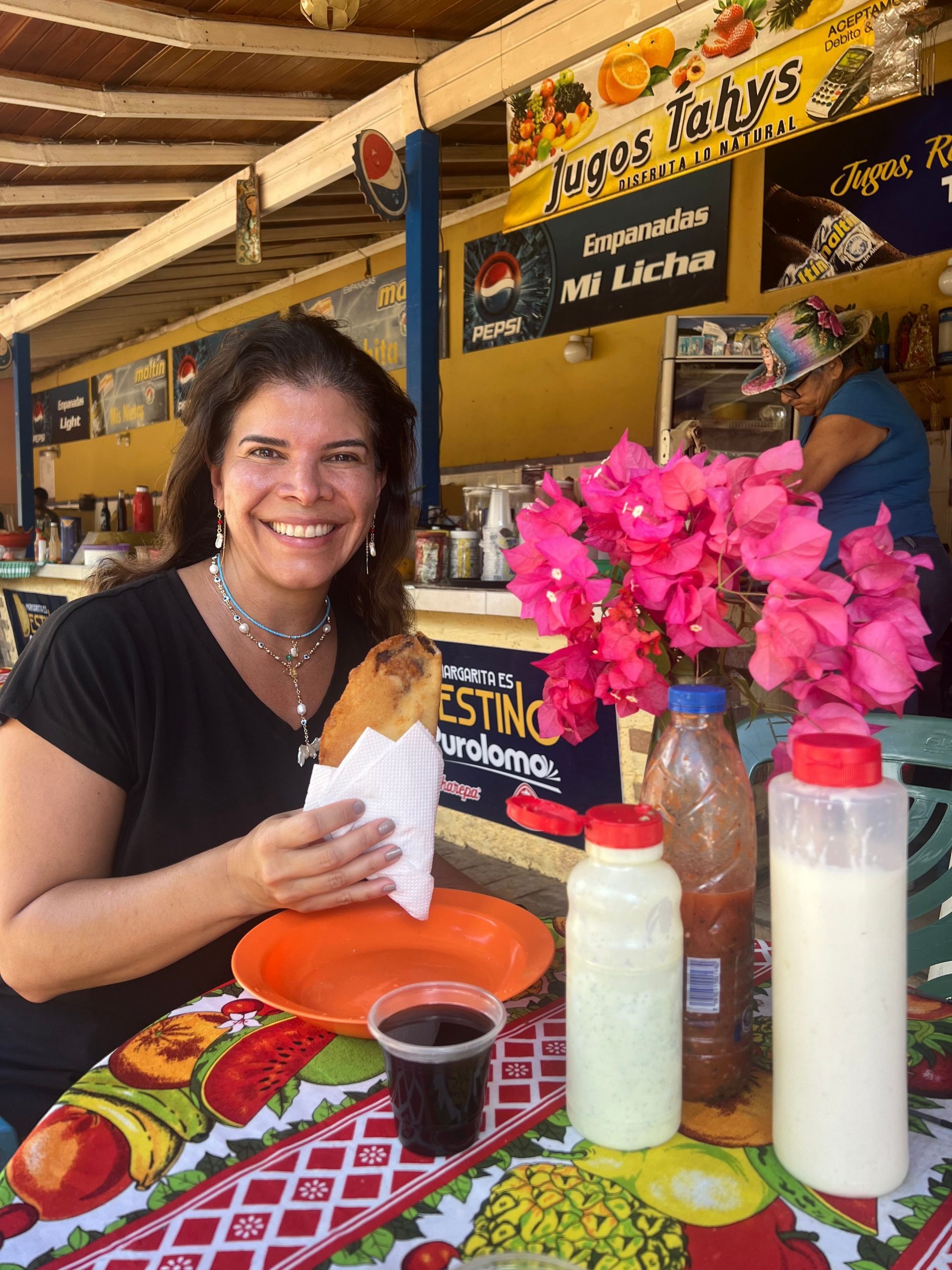
Today we’d like to introduce you to Veronica Figoli
Hi Veronica, we’re thrilled to have a chance to learn your story today. So, before we get into specifics, maybe you can briefly walk us through how you got to where you are today?
I was born in Venezuela into a middle-class family. My parents instilled in me perseverance and hard work. My mother was deeply committed to community service and our church. My father, whom I would describe as a borderline workaholic, always encouraged me to believe in my abilities, while my mother demonstrated how to turn those beliefs into action. They were my primary role models, though not the only ones.
As the youngest of five siblings, I learned a great deal from them and from the close-knit community – our village – that watched over us all. This sense of collective responsibility often influences my problem-solving approach, as I consider how solutions might impact future generations. I often wonder what our society would be like if we consistently made decisions with the well-being of our children in mind.
This year marks a significant milestone for me—50 years split between Venezuela and the United States. I initially came to the U.S. to get an education and learn English with the intention of returning to Venezuela. However, leaving my home country taught me to embrace uncertainty and continuously seek growth, a mindset that has shaped my journey and influenced my decision to stay.
While completing my undergraduate degree, I was a fellow for the United Nations Children’s Fund (UNICEF), where I became captivated by the work we did to ensure a better future for children around the globe. Seeing the way the nonprofit and community development organizations were addressing gaps in the social safety net inspired me to pursue studies in public policy. I would instead, however, follow my father’s advice to study business administration. He told me that the nonprofit world would also need the business acumen to succeed. Reflecting on this now, I agree with him. I actually believe the term “nonprofit” might be misleading. Nonprofits most often generate substantial value, revenue, and economic impact, perhaps even more so than some large for-profit companies.
I went on to work with other companies in Atlanta, Georgia and Baltimore, Maryland and would eventually marry my husband and move to Denver. I knew no one but found a welcoming community through networking and community building that helped me forge both personal and professional connections that I still have today. Motivated by this support, I launched a multicultural consulting practice. I advised clients—from nonprofits to for-profits, both locally and globally—on developing effective community outreach strategies, particularly for historically marginalized groups to access the resources they need to have a level and equitable playing field. This work led me to the Piton Foundation (today Gary Community Ventures) and eventually to Denver Public Schools, where I dedicated nearly a decade to ensuring every child had the opportunity to succeed.
I was seeking to trek on new grounds and looking for a new opportunity to learn when I discovered Accion Opportunity Fund, the nation’s leading community development financial institution lending to small business owners. At AOF (for short), our mission is to advance economic mobility for underserved entrepreneurs and communities through policy advocacy, research, and direct services and support. We provide affordable small business loans and free one-on-one coaching, cohort-based programming, and digital courses and resources. What I find most fulfilling about this work is hearing the personal journeys and stories of resilience from entrepreneurs who are not only creating new jobs but also strengthening our communities by addressing gaps in services and support networks.
Oso Adventure Meals and Reunion Bread are two inspiring local gems that I know personally and are also AOF-backed small businesses. They have both participated in signature food business accelerator programs and received a small business grant from Accion Opportunity Fund to help expand their businesses.
Oso Adventure Meals was created to address the lack of culturally authentic dehydrated meals in the outdoor market. Specializing in dry food for adventurers, they offer a range of Latino-inspired dishes such as enchilada bowls, huevos rancheros, and veggie enchilada bowls. Their innovative approach disrupts the typical cuisine you’ll find in the outdoor food market. And Ismael is the owner of Reunion Bread, a small-batch bakery that crafts artisan bread, pastries, pies, tarts, and coffee. He created a program to pass his craftsmanship to others and help immigrants from Venezuela create their own paths in the United States through breadmaking like he did. Both Oso Adventure Meals and Reunion Bread highlight the powerful synergies between entrepreneurship, lived experience, hard work, innovation, and passion to positively impact your community.
Would you say it’s been a smooth road, and if not what are some of the biggest challenges you’ve faced along the way?
I would say being away from my family has certainly been challenging, particularly in finding my sense of belonging, or what I refer to as my “tierra”—my land. The difficulty is compounded by witnessing the ongoing suffering and resilience in Venezuela. The lessons I’ve learned from this experience are clear: there’s no obstacle that cannot be conquered by remaining true to who we are, by doing what we do best, and asking for help when we need it.
As a native Spanish speaker, I have often faced obstacles in communicating or have been treated unfairly because of my accent. I don’t know if I would categorize it as a cultural or language barrier or a lack of compassion, empathy, or cultural competence. I was once told in an official business setting that I was probably smart but they could barely understand me and if I was in Venezuela I would probably be a president of the organization. It is hard to believe that the person who said that actually thought it was a compliment. This made me really self-conscious of public speaking, I knew the way some of the words came off my tongue often sounded as if I was mispronouncing them. I worked hard to improve my English and accent and I am proud of my accent now, but having the self-confidence to say that has taken a lot of time. My hope is that no one else has to endure similar challenges. As we work towards a more inclusive and diverse society, it’s crucial that leaders are equipped with the sensitivity training needed to create safe and supportive working environments for everyone.
Can you share something surprising about yourself?
Most people don’t know that I actually played rugby in college and I was part of the 1st women’s rugby team in the Venezuela. To be honest, the first time I played I was highly influenced by the handsome men (well they were boys then) that were hosting the tournament. I remember during my first game, I got the ball, I scored and I kept running, even though I was supposed to stop.
I am tiny but give me a ball and I will run with it!
Follow my personal photo journey on instagram, @verofcaracas
Contact Info:
- Website: https://aofund.org/
- Youtube: https://www.youtube.com/@AccionOpportunityFund


Popular
-

The Trailblazers: Rewriting the Narrative
-

Celebrating the Spotlight: Kaytee Shashore Turns Milestones Into Momentum
-

Humanity in the Machine: Alexander Raye Pimentel’s Cyborg Recall Questions the Cost of a Data‑Driven World
-

Raemi Anderson on Courage, Caution, and Answering the Call of the Landscape
-

Hidden Gems: Local Businesses & Creatives You Should Know


