



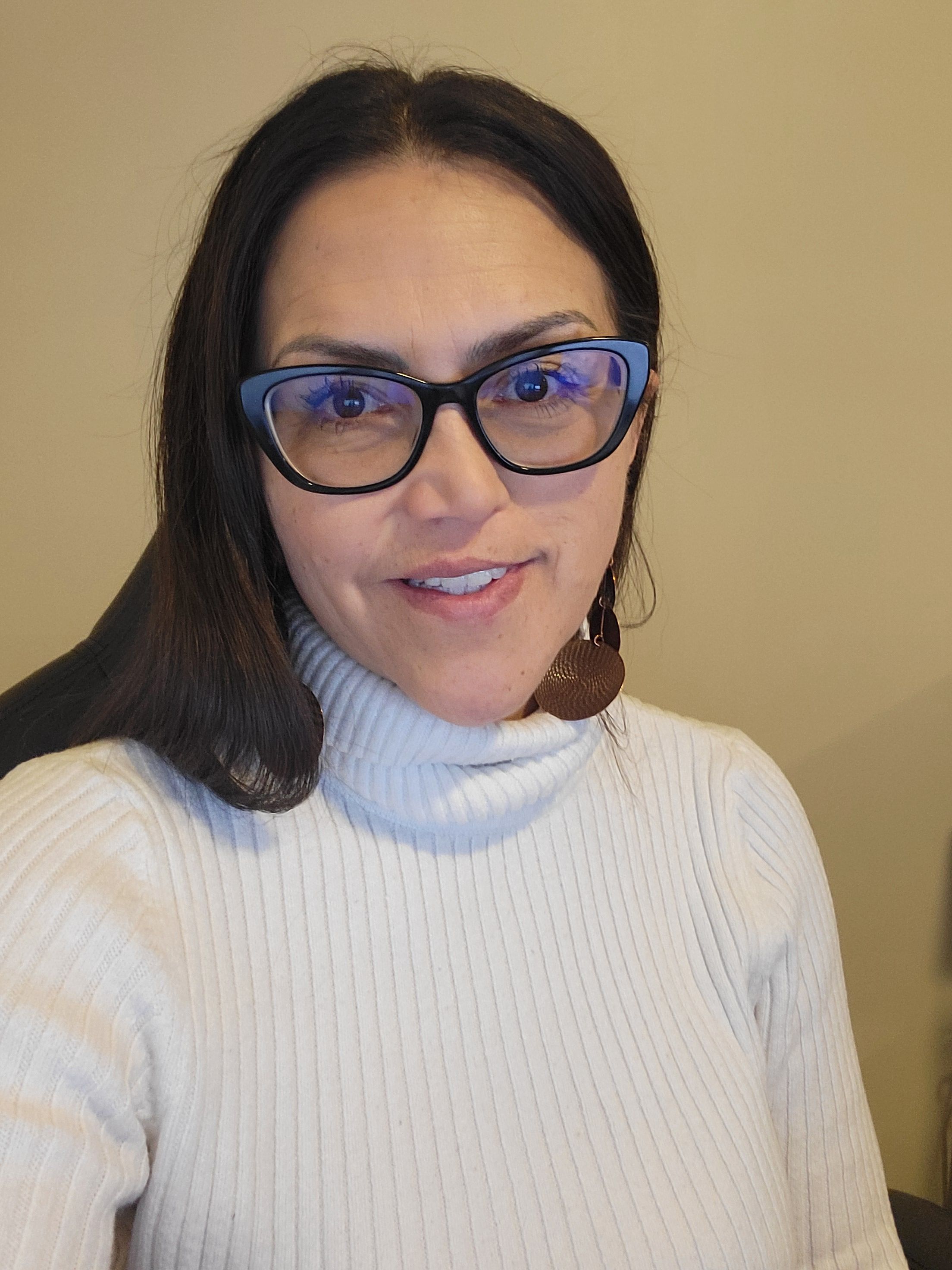
Today we’d like to introduce you to Alece Montez.
Hi Alece, we’re thrilled to have a chance to learn your story today. So, before we get into specifics, maybe you can briefly walk us through how you got to where you are today?
I grew up in Lafayette, CO, not too long ago but when it was still a small town. My home used to be the old town jail and with it being over 100 years old, we were sure it was haunted. We regularly dug up railroad ties from the old mine shaft that used to be near our backyard. We lived on the east side of Main Street where alcohol was not to be sold, per the wife of the town founder, but in a house rampant with alcoholism and the slew of trauma that comes with that experience. Also, a place where the local public pool had to be closed and concreted over because Mexicans were not allowed to swim where white people also went swimming. I never got to swim there but race and racism was alive and well when I grew up there. I grew up in poverty, where a full meal was often only found at school, and was second of five children to my single mom. Although Swedish Mexican, I’ve never been mistaken for being white. By 16, I was pregnant and had my first child in high school; he was 3 when I graduated and he still remembers the big event. This son has experienced three of my graduations all the way up to my Masters. I’ll never forget being told my life was over because I was a teen mom and the pressure I received from high school admininstrators that I needed to go to Fairview to finish school or to adopy my child to one of my teacher’s friends. I chose not to. I chose to stay at Centaurus to get a full four years of high school, so I could be prepared to carve a path for my son. I chose to keep my son and raise him in the face of disdain for me attending school there. I went to CU Boulder, where, despite being very smart, with good grades, and tons of scholarships, I was told several times I was there only because of affirmative action. I didn’t care. I was there to figuratively borrow some books, get the paper I needed to be in the room to make decisions. I know many people say that college isn’t the path for everyone, and coincidentally, the people being told that are people like me. But I can’t remember the last time I sat in a room of decision-makers without degrees. I’m the first in my family to go to college which was a cultural and socioeconomic challenge. Not because I didn’t have the money but being low income working class, many in my family didn’t understand or support my drive to finish school and keep going.
I survived cancer three times, twice as a young child, and wasn’t expected to be able to have children, but I have four amazing babies and a beautiful grandbaby. Raised in a home where boycotting and protesting were as normal as breathing and sleeping, at 5 I was stuffing envelopes with my mom for the Nuclear Freeze Voters and protesting at Rocky Flats by 7. We marched the streets of Denver for immigrant rights, boycotted Nike, didn’t eat grapes, steered clear of Coors beer, didn’t shop at Walmart, and so much more.
I say all of this because against all odds, I bring my living experience (not “lived” because I’m still alive and all the -isms I’ve experienced are still part of my reality) to a career in philanthropy where I hold on to my roots deeply and bring historically and systemically erased and made invisible voices to the center. After a career in city and county planning, where I constantly tried to bring community voice and decisions into government decisions, I sort of fell into a career in philanthropy, where I worked alongside community members from all over the US to create the Community Heart & Soul (H&S). H&S is a storytelling and listening approach to hearing from everyone (not just those proximate to power and privilege) to identify what’s important to a place, so all people are heard, actions are collective, and a sense of healing can begin. I went to work for Denver Public Schools leading the family and community engagement efforts to help the district heal the harms they’d created over decades of wronging communities of color. Superintendent Cordova tasked me with building trust so the district and families were one rather than at odds with each other. Then Covid. Everyone on my team pivoted to trying to survive and helping families survive. We organized for food deliveries to families, Covid testing, and so much more. We personally felt the heartbreak of so much loss in community while we witnessed and experienced the jarring inequality of the pandemic. Being what some people at the district called “too community facing” I never got to begin my work to help create healing between the district and families.
I’m back in philanthropy at the AJL Foundation, a place where my living experience is valued. There’s something about turning 50, being a cancer survivor, and being marginalized my whole life that makes me unrelentingly fierce. Yes, there’s a place for diplomacy, but not when people’s lives and livelihoods are at stake. I’ve found my pocket of co-consipirators willing and already running toward a present and future that is more just for all.
Would you say it’s been a smooth road, and if not what are some of the biggest challenges you’ve faced along the way?
Racism, classism, sexism, cultural divides, knowing when to code switch and when not to, paternalism, white supremacy culture, power, unearned privilege, silos in the sector, history of philanthropy, and harms that money creates even when it intends to do well.
As you know, we’re big fans of you and your work. For our readers who might not be as familiar what can you tell them about what you do?
I have a tendency to use what should be or what would be considered a barrier to fuel my passion and energy to succeed.
Also, it depends on who we mean by “others”. For others who view single Hispanic teen moms as throw away society, I stand out as being successful. But to other single Hispanic teen moms, I say opportunity is needed and a deep belief that their future matters.
I’m proud to have been to college, bought several homes, etc. not because it’s a finanical status symbol, but because they are things I was told I would never achieve.
In the philanthropic sector, I can be seen as being vocal, calling in or out the sector for equity washing, green washing, and more but I also work at a place where I’m protected and can speak out.
Like so many others, I’ve won many awards, been acknowledged nationally and publicly, asked to present at and speak at conferences and events, but my story shouldn’t be seen as extraordinary. There are extraodinary people everywhere all around us, they just haven’t been able to be center stage yet.
My most proud accomplishement is raising 4 kind, amazing human beings.
What makes you happy?
On a very big level, what makes me happy is when I see that suffering has ended. When nature, including humans, is valued and no longer exploited. On a more simple every everyday sense I look for happiness in all things around me, i.e. sunrises and sunsets, the smell of lilacs, hearing my children laugh, watching animals play, the wind blow through the leaves, sunshine on a cool day. Happiness is when I see someone else, plant/animal/people, succeed in breaking barriers.
Contact Info:
- Website: https://www.ajlfoundation.org/about-0
- Instagram: @alecemontez
- Facebook: /alece.montez
- LinkedIn: https://www.linkedin.com/in/alece-montez/

Popular
-

The Trailblazers: Rewriting the Narrative
-

Celebrating the Spotlight: Kaytee Shashore Turns Milestones Into Momentum
-
Humanity in the Machine: Alexander Raye Pimentel’s Cyborg Recall Questions the Cost of a Data‑Driven World
-

Raemi Anderson on Courage, Caution, and Answering the Call of the Landscape
-

Hidden Gems: Local Businesses & Creatives You Should Know


