
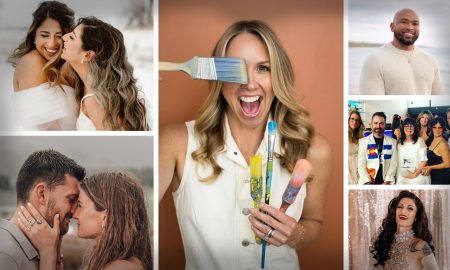


Today we’d like to introduce you to Anna Brand.
Anna, we appreciate you taking the time to share your story with us today. Where does your story begin?
I went to college for art at SUNY Purchase. I started as a painter but fell in love with sculpture and eventually graduated with a BFA. I became very fascinated by learning many mediums, and materials. Everyone always told me it was impossible to live as a working artist, so I felt like the more versatile my tool bag was, the more unstoppable I would be. I took classes in welding, carpentry, ceramics, 3D modeling, CNC routing, robotics, and game design. In the middle of my college career, my side hustle was selling oil paintings. However, the requests were very infrequent, and then one day, my mom got a tattoo. That’s when I connected the dots of a potential route to becoming a full time artist. I already knew how to draw I just needed to transfer the skills to a tattoo machine. So I gathered my portfolio from drawing and painting class and went about seeking an apprenticeship.
I’m sure it wasn’t obstacle-free, but would you say the journey has been fairly smooth so far?
Apprenticeships are challenging to get. I’ve talked with about thirty different shops in order to find one. I started counting how many no’s I could collect as a game to relieve being discouraged. I’ve had two different apprenticeships, and I didn’t like either of them. Not because they were challenging, but because I felt taken advantage of. My first mentor was creepy, put me in uncomfortable situations and I left after about a month. My second apprenticeship was in an unprofessional environment, and my time was mostly wasted.
This became clear to me when I began meeting artists outside of my shops. While shadowing them, I saw gaps in my training and felt as though I was being strung along. For example, I had been at my apprenticeship for 6 months. Another older, established tattoo artist invited me to tattoo a small, simple design on him. He was shocked when I didn’t even know how to export a jpg file to our printer from the app we do all our drawings in. This is the first step to making a stencil and doing a tattoo.
While at my apprenticeship, I had been working on two drawings for potential clients. One of the artists walked up to me and said, “Go pick up my weed.” I asked her if she was busy tattooing or if she was working on upcoming projects. She said,” No.” So I said, “I am busy and will not go get it.” She threw her hands up and yelled a bunch of things. The manager came over to me, and I lost my “privilege” to tattoo those designs I was working on. I apologized to her later that day, and she said, “You’re lucky you don’t work at another shop, where they would’ve pulled you out to the parking lot by your hair and beat you up.”
Because I couldn’t tattoo, I couldn’t make money, and I needed a second job. I got one working as a welder for this incredible sculpture company called Demiurge Design. They do large-scale metal fabrication projects. So I started working there 40 hours a week and just did my apprenticeship on the weekends. But one week, the owner of the shop took my machines and told me I wasn’t there enough and that I would again lose my privilege to tattoo. The next day, I left and got hired on the spot by my current studio, BLK Sheep Studios. Learning to tattoo is the hardest artistic skill I have sought to master, never mind the bullshit culture of the shops I worked in. Finding a shop with artists who are growth minded, willing to help one another, not dramatic or egotistical is essential and hard to come by. I am very grateful to have found a home in my current studio. From that point on, my challenges would be technical and artistic which are exactly the kinds of problems I like to solve.
To me learning how to tattoo meant I would be invincible and so while that earlier period of my career was really painful my desire to secure my dream job was more powerful. Now every day I get to create art that lasts a lifetime. I get to sit down with strangers and tell stories. I have dreams to travel and do guest spots and conventions in other states and countries. What I love the most about it is that I see myself being a life long student of the craft. There are so many ways to get better, techniques to learn, styles to develop, subjects to take on. It’s abundant.
Thanks for sharing that. So, maybe next you can tell us a bit more about your work?
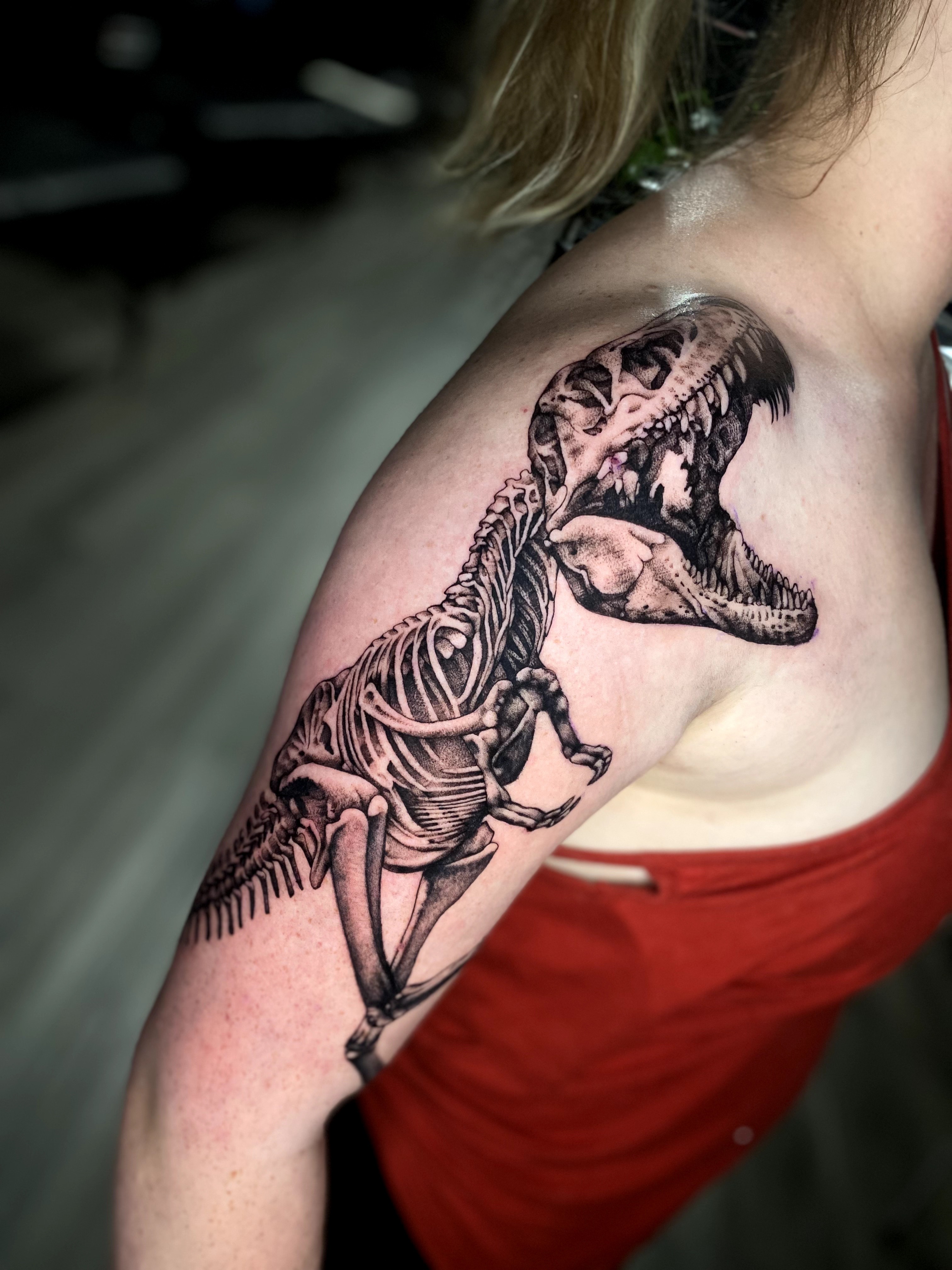
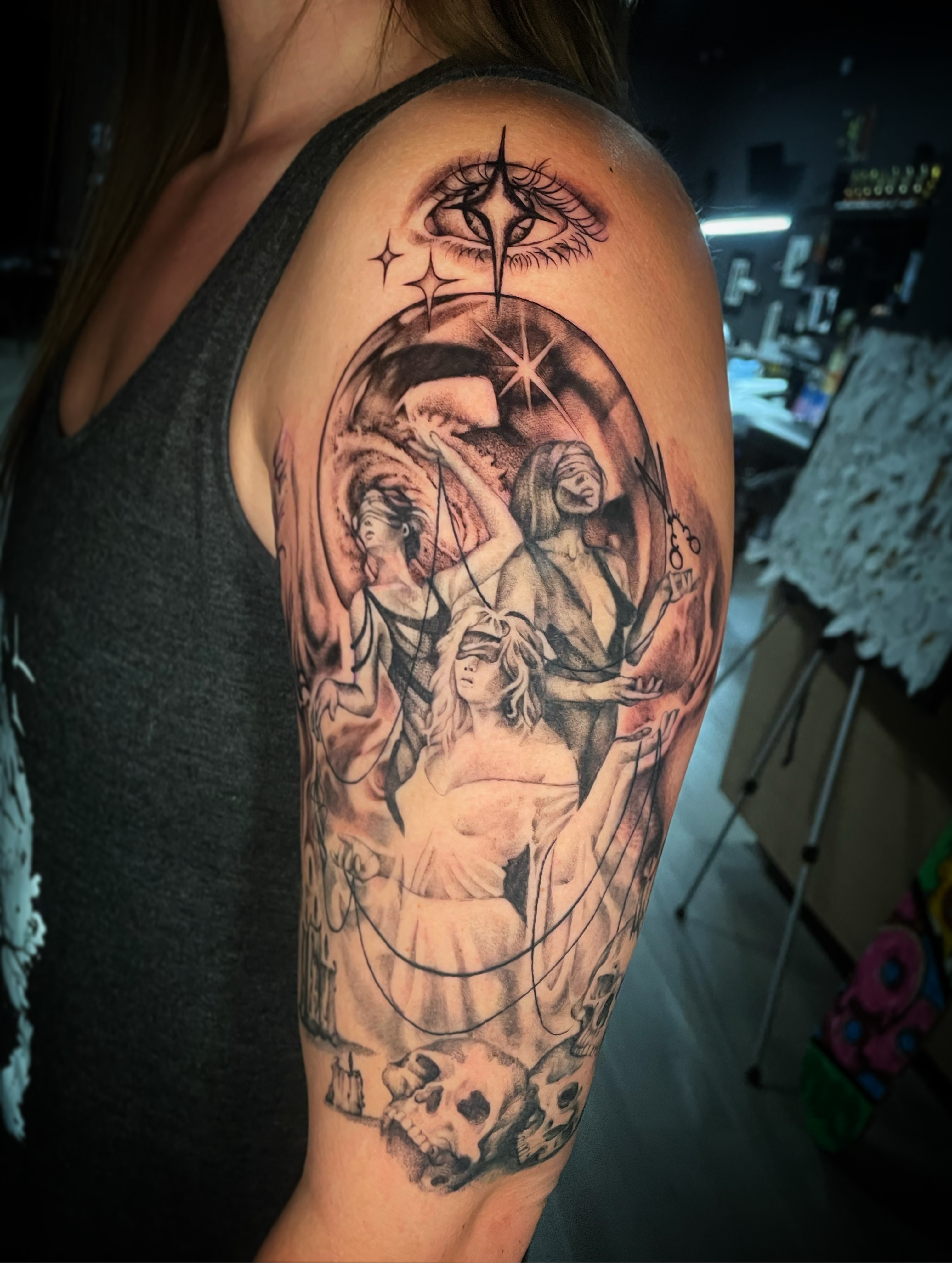
My tattoo practice is very versatile. I tattoo everything from traditional to fine line, realism to illustrative. I love how every project that brings me into the studio is vastly different from the day before. It tickles my brain in a new way. I find that by working in many styles it strengthens my skills and makes me a well rounded artist.
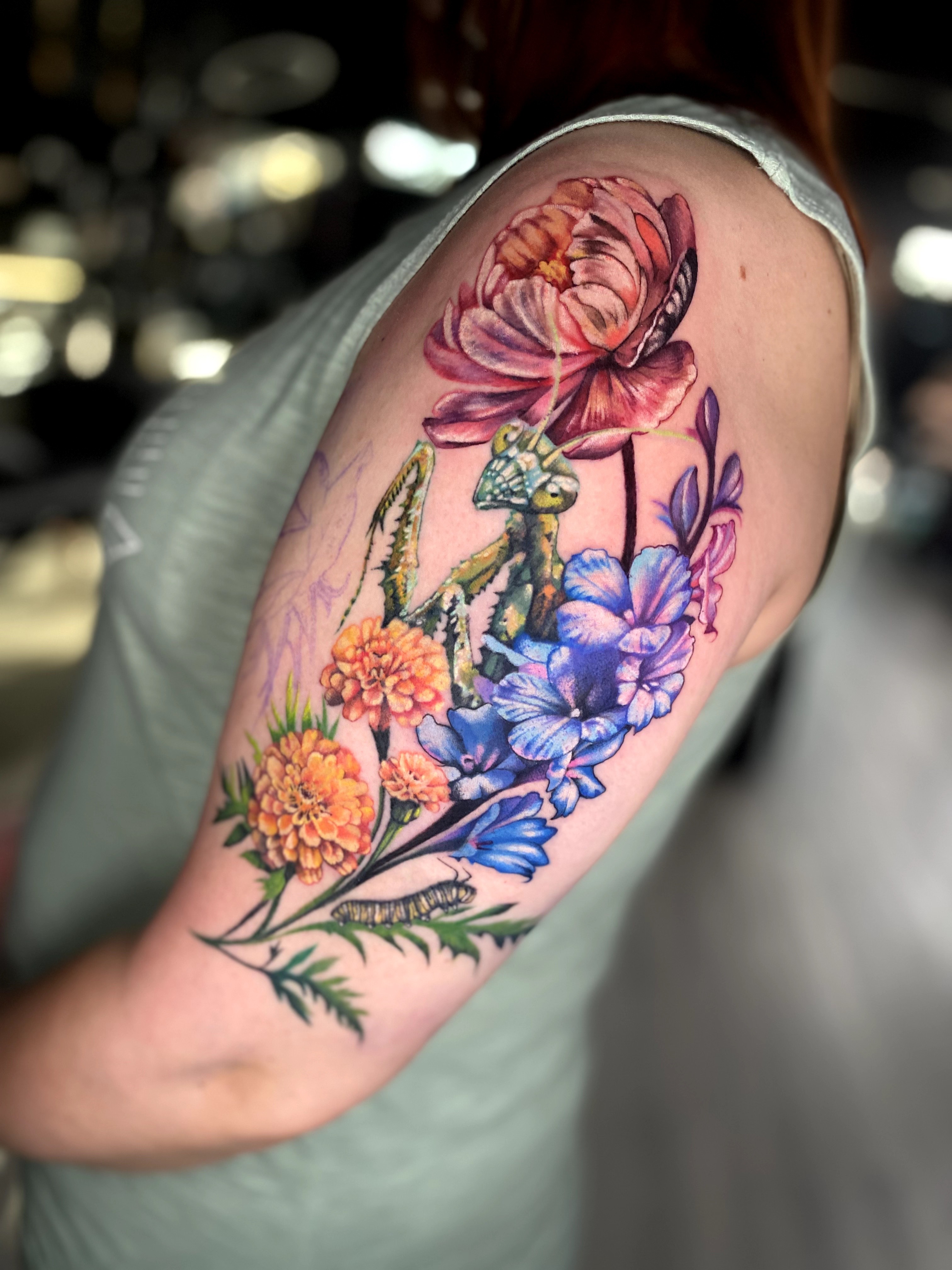
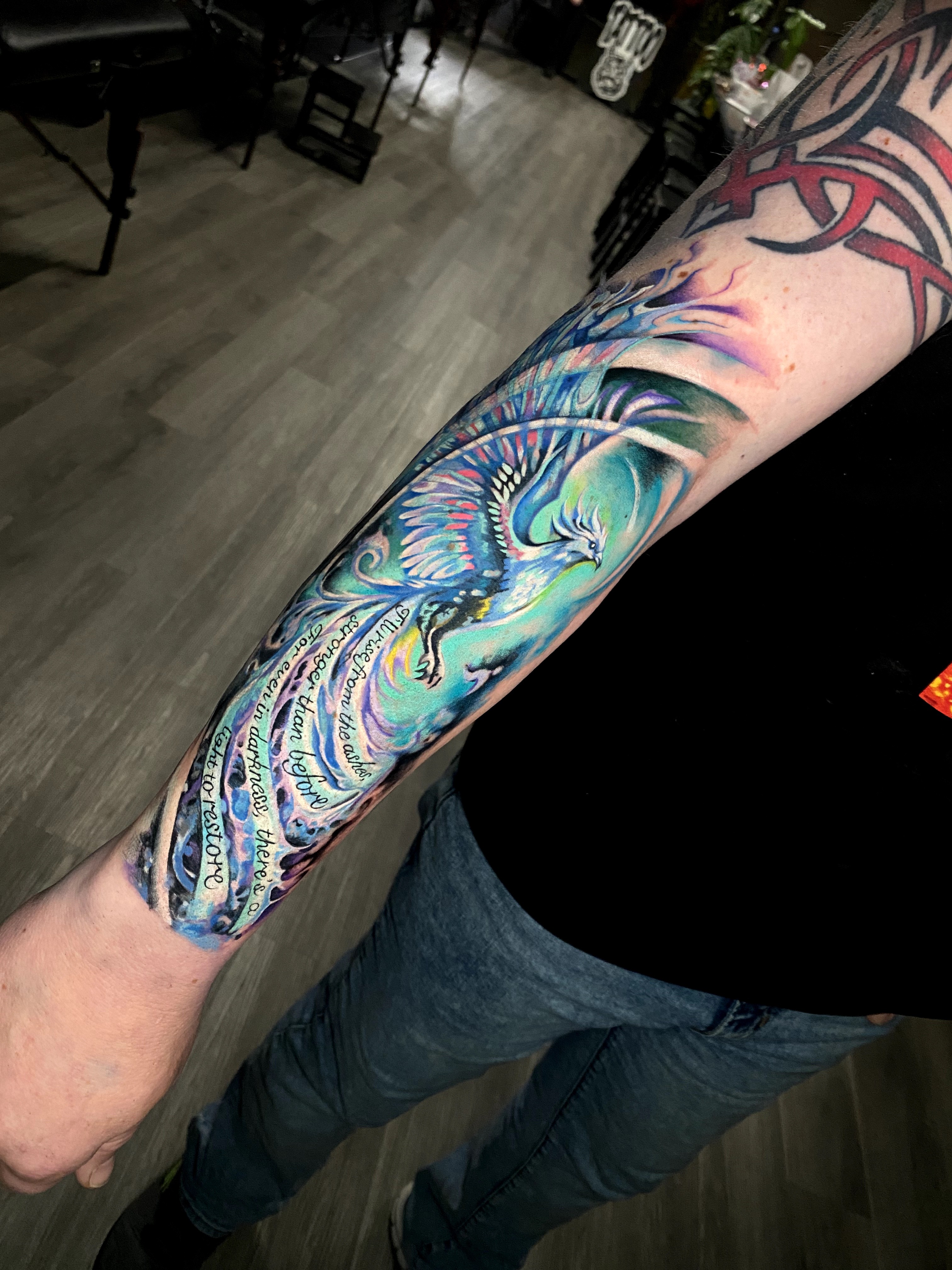
I specialize in realism, and it is my favorite style to work in. Specific subjects I enjoy tattooing the most are fantasy, nature, and sci-fi related. I love creating art that is uncanny or that I haven’t seen before. That otherworldly type shit. Subjects such as creatures, monsters, fairies, witchy imagery, warriors, botanicals, ornamental/sacred geometries.
I am well known for my color work, as I am fantastic at saturating and blending vibrant palettes. My tattoos are known for having a balance between being bold and having high contrast, while also being feminine and whimsical.
I am most proud of the experience I am able to offer my clients and the rapport that I build with them. Tattooing is not just creating a piece of art for someone; it’s an energetic exchange, and a memory that they will have for the rest of their life. The process is permanent, painful, deeply meaningful, and at times emotional. Many of my clients tell me that the tattoo they are getting is one they’ve been thinking of for anywhere between 2-10 years. I know how special that is, and so I seek to understand and channel their inspiration into the piece. I treat each piece as a collaboration and pride myself on meeting and exceeding expectations. What sets me apart from others is my ability to create dynamic and compelling visual stories that fit the body and stand the test of time.
In terms of your work and the industry, what are some of the changes you are expecting to see over the next five to ten years?
I see more independence and creative freedom for the artists themselves. As tattoo artists have taken over social media, we are able to connect with a clientele that is more in alignment with our brand identities. That being said, I think we will see more artists producing the kind of work they want, simply because they can reach a larger audience. This will result in a greater diversity of styles as more artists discover and promote their niches.
The barriers to getting into the industry are becoming fewer. There are tons of shops in any given city. The amount of information on the internet is vast. This will result in more people entering the industry with more diverse backgrounds. It used to be that a town had one or two biker shops. Now you have all sorts of artists finding their way into tattoo spaces. Competition will only increase, and with that, the need to be a content creator as well. Artists will respond by deepening the uniqueness of their art, client experiences, and studios.
I think we will see the structure of apprenticeships change. There is a demand for safer, more professional, and efficient learning environments. Already, I have seen more and more artists coming together to educate one another through seminars, art nights, and online programs. I do think training to be a tattoo artist will eventually become more structured through some organization of artists. It is also possible that the structure of tattoo shops changes. The best shops will want their artists to focus on what they are great at, making art. They will delegate their team so that they have content creators, videographers, advertisement and booking specialists taking over that side of the business.
There are some strange and playful possibilities for our industry. German scientists are testing the possibility that tattoo ink could be used as a biomarker to monitor chronic disease. They are developing an ink that changes colors in response to fluctuating glucose, albumin, and pH levels. I’ve seen silly TikToks that imagine the possibility of robots taking over this job. While entertaining, I don’t think it’s realistic. How would the machine account for depth? If the client moved, how would the robot know what spot to pick up at? Would it be able to mimic the fine motor controls of a human hand? While I don’t think a robot is possible, I do think we will see great advancements in our tattoo machines. It would be incredible to have a machine that gave its user real time feedback, such as correct depth, hand speed, stroke (how hard the machine is hitting), and saturation.
Pricing:
- Its so specific to the project. I charge hourly. Each piece is quoted based on size, detail, color vs black and gray, location, and style.
Contact Info:
- Website: https://www.annabrandtattoos.com
- Instagram: https://www.instagram.com/annabrandtattoos?igsh=MWo2aG5zeHhrY2U5aQ==


Popular
-

The Trailblazers: Rewriting the Narrative
-

Celebrating the Spotlight: Kaytee Shashore Turns Milestones Into Momentum
-

Humanity in the Machine: Alexander Raye Pimentel’s Cyborg Recall Questions the Cost of a Data‑Driven World
-

Raemi Anderson on Courage, Caution, and Answering the Call of the Landscape
-

Hidden Gems: Local Businesses & Creatives You Should Know


