



Today we’d like to introduce you to Hashim Coates.
Hashim, we appreciate you taking the time to share your story with us today. Where does your story begin?
I was raised in a family where service was always important. My grandfather and my uncles were United States veterans. My grandmother was involved in politics. My mom was deeply involved in community work and even served as president of the Greater Park Hill Neighborhood Association. Service was nothing new to me.
I was raised in a Christian household, but it was the teachings of Christ that stood out more in our family than the dogma of religion. That emphasis on compassion, justice, and care for others struck a deep chord with my sense of empathy. Combined with three specific experiences, those values became the catalytic ingredients that set me on the path of advocacy and politics.
The first experience was attending the funeral of one of my second cousins. I was curious about his death, and people kept saying he died of cancer. I had never seen someone who died of cancer have black lesions on their skin. Later, I learned that based on those lesions and other information, my cousin most likely died from complications related to HIV.
The second experience occurred while I was working as a meal server at Denver General Hospital. There was one patient for whom we were always required to wear a face mask. I did not understand why until one day I overheard him on the phone discussing his viral load and T cell count. That was when I understood his condition. What I never understood was the gossip among some staff or why they treated him as if he were a horrible person or a leper in the community. He was always polite and always kind. There was no reason to avoid taking him his food or picking up his tray. I actually welcomed the opportunity. If he was not on my list, I would ask a coworker if they minded letting me take his tray. Not once was I told no.
The third experience was attending a symposium on HIV and AIDS. I was in the faith breakout group. About ten minutes in, the parent of one of my mom’s elementary school friends stood up and chastised the entire panel because none of them had yet said the words HIV or AIDS. After she sat down, the panel returned to business as usual. That moment struck me for two reasons. First, the world was suffering, and specifically the Black community was experiencing an epidemic, yet there was still a refusal to even say the words HIV or AIDS after being directly called out. Second was the dismissive and chauvinistic manner in which those men brushed off a Black woman who spoke truth to power. I have always hated bullies.
I stood up and made it clear that I would not allow the conversation to move in any direction except forward. It had to begin with acknowledging the virus and its impact on our community. I said I was willing to risk it all, just as so many had during the fight for civil rights. What I did not know at the time was that representatives from CDPHE, the Colorado Department of Public Health and Environment, were in the audience. Because of that moment, they later guided me into service on a Ryan White Care Act grant review committee.
From there, my advocacy expanded in both scope and impact. I was the first Denver organizer for One Colorado. I worked for POCCAA, the People of Color Consortium Against AIDS. I served as a community liaison and program director for Brothers Forever, a program focused on behavioral health modification to help prevent HIV and STDs in the Black community among men who have sex with men. I served on numerous local boards and commissions focused on equity, public health, and community accountability.
I am also a strong advocate for social and policy change as it relates to law enforcement accountability. I was intimately involved in advocacy surrounding the Aurora Police Department and the killing of unarmed community members. My work contributed to the public pressure, policy conversations, and organizing efforts that led to meaningful changes implemented in 2025. That work reinforced my belief that systems do not change on their own and that sustained community advocacy is required to force accountability and reform.
Eventually, I made the decision to transition into politics full time, recognizing that it is often more effective to elect people who hold power or have access to power and who align with your values. I have worked on city council and school board races, state House and state Senate races, congressional races, CU Regent races, and county commissioner races. I have also advised on ballot initiatives and referendums at both the local and statewide level.
I often reflect on those early experiences and see how each one shaped me. They taught me that silence causes harm, that dignity matters, and that community must always come before comfort. Those moments did not just introduce me to advocacy. They formed my understanding of responsibility, courage, and service. They are the reason I lead with empathy, why I challenge injustice when it shows up, and why I believe strategy must always be rooted in people. Those experiences are what shaped me into who I am today, a holistic strategist and community advocate committed to building power, protecting dignity, and moving our communities forward together.
Would you say it’s been a smooth road, and if not what are some of the biggest challenges you’ve faced along the way?
It has absolutely not been a smooth road. For the early part of my work, I did not have a degree. I had experience, passion, and intelligence, but no degree. As expected, many doors were simply not open to me. On top of that, America’s original sin played a significant role. I am a Black man who is richly melanated. I am opinionated, and I prioritize outcomes over comfort and societal norms. Respectability politics has never been easy for me to accept or perform.
Even within Democratic politics and within the LGBTQ community, racism is alive and well. It operates as a well oiled machine on this side of the aisle too, and in some ways it is even more dangerous. People often believe that their political affiliation or sexual orientation somehow exempts them from being just as harmful or problematic as those they oppose. I often say to people, check in with the honest Black person.
Another experience that caused significant struggle along the way occurred in 2016. I was involved in a situation where I went from being a victim seeking help from 911 to a defendant in district court. I was robbed and sought assistance from the police three separate times, each time being denied help. In a chaotic and unsafe situation, I attempted to recover my personal property, which included a recording of my grandmother’s funeral service. The situation escalated, and I ultimately had to use my legally licensed firearm to defend my life.
That moment allowed institutions I had long critiqued to turn around and use the situation against me, leveraging it to bring charges rather than protection. There are two things I regret deeply. The first is being so emotionally attached to the item that held the recording of my grandmother’s funeral. What truly mattered were the memories, the love, and the upbringing she gave me, and those could never be taken. That would have been enough. The second regret was trusting the system at any level. If I had to do it over again, I would have walked away from the situation entirely, or at the very least, I would not have trusted the system to act in good faith.
Appreciate you sharing that. What else should we know about what you do?
Beyond my work in politics, I have been building a consulting firm that I am transitioning into a broader community-focused practice. I originally launched my political consulting firm because I found it difficult to break into certain spaces, and I decided to create my own lane. In a relatively short time, I have been fortunate to be connected with more than 15 winning campaigns. But for me, this work has never been only about elections. I am a community advocate at heart. I care deeply about people who may not know how to navigate systems or who are hesitant to speak up, and I try to help bridge those gaps. My background and life experience have shaped a calling to advocate for marginalized communities and to support progressive leaders who want to move change forward in a real way. I am not afraid to bring truth to power, even within party politics, when something is inequitable or unjust. Ultimately, I want to help build a world where as many people as possible can live healthy, joyful, dignified lives without having to sacrifice their rights or humanity.
Outside of my work, I recharge by staying connected to joy and community. I love to love and I love to laugh. I enjoy people-watching and observing how people move through the world and show up for one another. Music, especially live music, keeps me grounded, and there is something beautifully healing about the sound of children laughing. I also love spending time with family and friends, watching horror, sci-fi, and fantasy films, and enjoying warm weather meals outdoors. And when I travel, the beach is my happy place, real ocean beaches, not sand sitting next to lakes or reservoirs. Those moments of joy keep me centered and remind me why I do the work I do.
Do you have recommendations for books, apps, blogs, etc?
My favorite podcasts include “Lurie Breaks It Down” by Lurie Daniel Favors, The Karen Hunter Show with Karen Hunter, All Things Joy-Ann Reid, and Van Lathan Jr.
My favorite books include The 1619 Project by Nikole Hannah-Jones, Stamped from the Beginning by Ibram X. Kendi, Black History AF by Michael Harriot, and The Grift by Clay Cane.
I also enjoy the novels of E. Lynn Harris and the literary works of James Baldwin, Nikki Giovanni, and Toni Morrison.
Contact Info:
- Website: https://HashimCoates.com
- Instagram: @thehashimcoates
- Facebook: HashimCoatesForThePeople


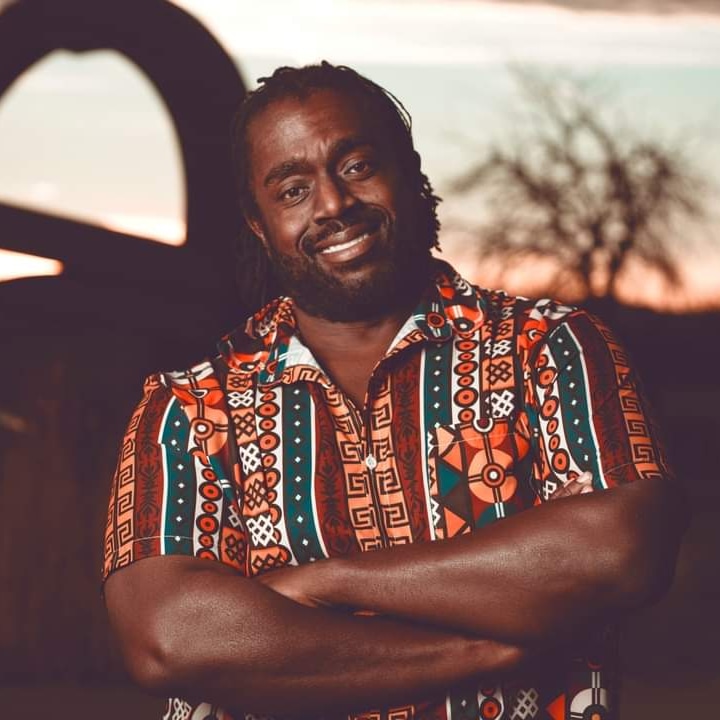

Image Credits
Easley Made Production, LLC
Popular
-

The Trailblazers: Rewriting the Narrative
-

Celebrating the Spotlight: Kaytee Shashore Turns Milestones Into Momentum
-

Humanity in the Machine: Alexander Raye Pimentel’s Cyborg Recall Questions the Cost of a Data‑Driven World
-

Raemi Anderson on Courage, Caution, and Answering the Call of the Landscape
-

Hidden Gems: Local Businesses & Creatives You Should Know


