


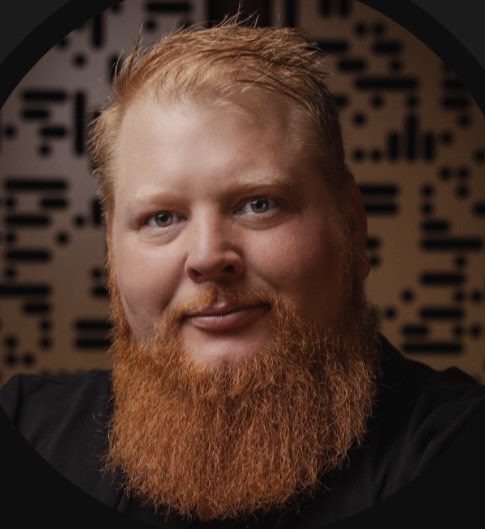
Today we’d like to introduce you to Jarrod Headley.
Alright, so thank you so much for sharing your story and insight with our readers. To kick things off, can you tell us a bit about how you got started?
I’ve been surrounded by music for as long as I can remember. I grew up in the South Bay Area of California and started playing piano and guitar at four years old. From that point on, music was never just a hobby—it became how I understood emotion, storytelling, and connection. Throughout my childhood and teenage years, I immersed myself in anything music-related: lessons, marching band, recording projects, and learning the technical side of production as early as I could.
In high school, I formed a rock band called Novice with close friends, and what began as a local project quickly grew into something much bigger. We signed a record deal, released multiple albums, and toured—all while I was still teaching drumline at my high school whenever time allowed. That experience gave me an early education not just in performance, but in discipline, collaboration, and the realities of the music business.
After that chapter ended, I transitioned into working as a session musician and producer, which opened the door to collaborating with incredibly talented artists, producers, and composers. I had the privilege of working alongside people like Grammy Award–winning composer Mark Mancina and Emmy Award–winning John Wineglass, among many others. Those years were formative—they sharpened my ears, raised my standards, and deepened my appreciation for how music supports story, especially in film and television.
Eventually, I moved to Colorado to continue my education, expand my career, and explore new creative directions. That move led to opening my own studio, North Park Studios, and fully committing to production, composition, and audio craftsmanship. Over time, my work naturally expanded into film and television, where I discovered a deep passion for scoring and post-production. I’ve since composed, engineered, and mixed for projects across networks including History, CBS, ESPN, and Spike, with work appearing on shows like Forged in Fire, Ink Master, UFC programming, and various documentary and sports projects.
That journey ultimately led to co-founding Dream Audio with my close friend and incredible engineer, Nate Jones. Today, our focus is building a world-class audio post-production environment that serves filmmakers, documentarians, and storytellers at the highest level. Dream Audio represents everything I’ve learned over nearly three decades in music—combining creative intuition with technical precision and a deep respect for story.
Today, I’m based in Colorado Springs with my wife, Natasha, and our one-year-old son, Benjamin. I continue to grow Dream Audio alongside Nate while working on films, documentaries, albums, audiobooks, and Dolby immersive audio projects. I also make time to give back through teaching and mentorship whenever possible. Looking back, every phase—from a kid at a piano bench to touring musician to studio owner—feels like it was preparing me for exactly what I’m doing now… telling stories.
We all face challenges, but looking back would you describe it as a relatively smooth road?
It definitely hasn’t been a smooth road. Like most creative careers, it’s been a series of leaps of faith, pivots, and long stretches of uncertainty. Early on, one of the biggest challenges was learning that talent alone isn’t enough—you also have to understand the business side, advocate for yourself, and be willing to take risks without guaranteed outcomes.
Transitioning from being a touring musician and session player into studio ownership and post-production came with its own set of challenges. Building a studio, investing in equipment, and creating a sustainable business takes time, patience, and a lot of problem-solving. There were moments where I had to balance creative passion with financial reality, often wearing many hats at once.
Another challenge has been adapting to a constantly evolving industry. Technology, workflows, and distribution platforms change quickly, especially in film and television audio. Staying relevant has meant continually learning, upgrading skills, and sometimes reinventing how we work—while still maintaining a high creative standard.
More recently, building Dream Audio has required a long-term mindset. Growth doesn’t happen overnight, and choosing to prioritize quality, relationships, and craft over shortcuts has meant slower, more intentional progress. But those challenges have been invaluable. They’ve shaped how I approach my work, how I collaborate with others, and how I define success today.
As you know, we’re big fans of you and your work. For our readers who might not be as familiar what can you tell them about what you do?
At the core of our work is storytelling through sound. I’m a composer, producer, and audio post-production specialist, and much of my focus today is on music, film, documentary, and long-form narrative projects.
I’m known for taking a very musical, story-first approach to audio. Because I come from a performance and composition background, I tend to think emotionally before technically—how the sound should feel, how it supports the story, and how it serves the audience. The technical precision matters, but it’s always in service of the “story.” Clients often come to me when they want audio that feels cinematic, intentional, and cohesive rather than just “clean.”
Through Dream Audio, we specialize in high-quality audio post-production for artists, filmmakers and storytellers who care deeply about their work. Being based in Colorado has been a huge part of our identity. There’s a strong, collaborative creative community here, and we’ve built Dream Audio to support local and regional filmmakers while also working with clients across the country. We’re particularly focused on projects where detail and emotional impact really matter.
What sets us apart is the combination of creative intuition and technical depth. We’re able to handle complex post-production and delivery requirements while still approaching every project like a piece of art. I think that balance—high-level craft without losing the human side—reflects both how we work and the creative culture we’ve found in Colorado.
What I’m most proud of is building something sustainable and community-driven. Dream Audio isn’t just a muti-room studio—it’s a place where creators feel supported, heard, and confident that their story is being treated with care. I’m proud of the relationships we’ve built within the Colorado creative scene and beyond. For me, success isn’t just about credits or formats—it’s about trust, collaboration, and consistently doing work that strengthens the creative community we’re a part of.
What matters most to you? Why?
What matters most to me is integrity—both in how I create and how I treat people. Whether I’m working on a podcast, film, an album, or building Dream Audio, I care deeply about doing things the right way: honoring the story, respecting the people involved, and never cutting corners just to move faster. Story and connection matter a lot to me. Sound has an incredible ability to shape emotion and memory, and I take that responsibility seriously. I want the work I’m involved in to feel intentional and human—to support the story in a way that resonates with audiences long after they’ve finished watching or listening.
I also value community and sustainability. Building a career and a studio in Colorado has reinforced the importance of relationships, collaboration, and contributing to something bigger than yourself. I want Dream Audio to be a place where creatives feel supported and where long-term trust matters more than short-term wins.
Finally, family matters more to me now than ever. Becoming a husband and a father has reshaped how I define success. I want to build something meaningful that I’m proud of. that my son can be proud of—not just creatively, but personally—and that balance influences every decision I make.
Contact Info:



Popular
-

The Trailblazers: Rewriting the Narrative
-

Celebrating the Spotlight: Kaytee Shashore Turns Milestones Into Momentum
-

Humanity in the Machine: Alexander Raye Pimentel’s Cyborg Recall Questions the Cost of a Data‑Driven World
-

Raemi Anderson on Courage, Caution, and Answering the Call of the Landscape
-

Hidden Gems: Local Businesses & Creatives You Should Know


