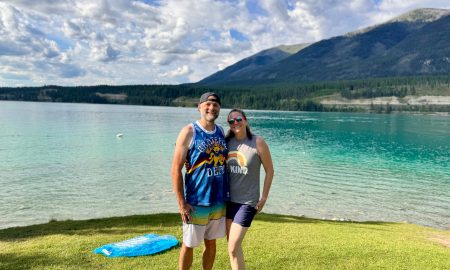


Today we’d like to introduce you to Michelle Muething.
Hi Michelle, thanks for joining us today. We’d love for you to start by introducing yourself.
I was one of those teens who always knew what I wanted to do. I always wanted to work in the field of psychology. I was hooked when I saw Alan Alda’s video of the split-brain procedure. I left graduate school with a degree in clinical psychology and I specialized in neuropsych. Right out of school, my first job was with a Rape Crisis Center and I knew crisis work was what I was made to do. After a year in South Carolina, I moved back to Chicago, then Indianapolis and spent nearly ten years teaching multiple courses at Indiana University School of Psychology on the IUPUI campus. I would teach during the day and work at Wishard Hospital at night as a crisis clinician. In December of 2009, I moved with my husband and twin boys to Aspen and began a new life in the mountains. If you talked to people in 2009 who lived in the Roaring Fork Valley, they would tell you that the area has had a high suicide rate for as long as they could remember. Some attributed this to the party lifestyle, others to cost of living, and others to the Ute curse that has been whispered about for decades.
In 2009 the Aspen Valley Medical Foundation made a valiant attempt to make a change. They commissioned the Colorado Depression Center to conduct a gap analysis on the mental health services in the area. Nearly nine months and 600 pages later, the research team presented their findings. With love for community and passion for mental health, a group of five individuals came together, and the Aspen Hope Center was born.
Pulling from the 50 recommendations outlined in the report, this group decided that, first and foremost, this would be an agency where the service of excellence was crisis work. Secondly, it would be an agency that filled gaps to serve those in need. Hence, the design was the following four pillars of service. Pillar I – a 24-hour crisis line. This line would be answered by experienced clinicians. Pillar II – a mobile crisis team. This team would meet individuals where they were in a time of crisis, no appointments, no insurance questions, or waiting lists. Pillar III – a stabilization program. This was designed to be an alternative to inpatient hospitalization where people could heal in their beautiful community. Pillar IV – a robust education and outreach program. The belief was that to reduce suicide and raise awareness. Education was key.
The agency took its first call on June 1, 2010. In the first six months, a large number of the calls were found to have come from law enforcement and local schools. Partnerships were formed and the first co-response protocols and collaborations began. Hope Center crisis clinicians started training with law enforcement and responding more frequently on the scene as law enforcement began to understand the skills of a crisis clinician and requested their presence. Transports to the emergency departments began to decrease as individuals were evaluated in their homes. Fewer and fewer transports were being made to Grand Junction or Denver, where the closest inpatient psychiatric hospitals are located, because people were entering in the Intensive Stabilization Program and avoiding inpatient stays.
In the spring of 2011, a partnership began with the RE 1 School District and the school-based health center. Over the summer of 2011, school-based mental health programs were researched, and little data could be found. Best practices were pulled, the school and culture taken into consideration, and in the fall of 2011, the first full-time school-based mental health clinician was placed in Basalt High School.
These two new partnerships essentially added two more pillars of crisis service, and to this day, these are the two programs that are most successful. The Aspen Hope Center was born and embraced whole-heartedly by so many in the community, and throughout the years, it has been the community that has kept the agency alive. Surviving on donations, contracts, and a few local grants, the Aspen Hope Center is the “Community’s Agency.”
In 2013 the Aspen Valley Medical Foundation closed its doors, but the Hope Center remained in place. Continually supported by the community, the services were requested more than ever, and more contracts were solidified to keep the doors open. Training businesses and students in suicide awareness, providing short-term counseling, and adding more crisis resource partners, the Aspen Hope Center soared.
In 2017, conversations began to spread outside the valley, and the Aspen Hope Center was asked to open its first satellite office in Eagle, Colorado. Supported mostly by the financial contributions from the first responder community, in September of 2018, the Eagle Hope Center opened and a mobile crisis team began to serve a new area. The school-based mental health program was also sought after, and two clinicians were hired that fall, with four more positions supported by the 1A marijuana tax dollars in January 2019. The agency proved that it could successfully replicate its crisis and school-based model, and a new community received high-quality mental health services with no wait times and no medical bills to pay.
As the landscape of mental health continued to shift, in July of 2019, the Aspen Hope Center became eligible for state dollars to help fund the already existing mobile crisis team and assist with expansion. Taking on Eagle and Garfield County, mobile crisis work spread into new corners of the Western Slope. New partnerships with law enforcement and EMS, new hospitals and schools are learning about the Hope Center’s work, and more people being served with no barriers, no waiting lists, and no emergency room visits.
Word continues to spread and now the Aspen Hope Center provides consulting services to other communities or county stakeholders who are interested in forming locally owned and operated mobile crisis, co-response, or school-based mental health teams. With a passion for helping people in their darkest times, keeping individuals in their homes when possible and not admitting them to a hospital, and growing relationships with community partners, the Aspen Hope Center consists of staff and a board that are proud of the last decade of work and vow to make the next ten years just as successful!
Alright, so let’s dig a little deeper into the story – has it been an easy path overall, and if not, what were the challenges you’ve had to overcome?
My 23-year career in the world of crisis has been nothing but amazing. From the clients, I meet and get to know to the students who honestly have taught me as much as I have taught them. I am a lifelong learner and every day is something new. After moving to Colorado, the clinical work began to give way to the administrative world as the Aspen Hope Center grew and this brought new challenges and new areas of personal growth. Overseeing and guiding a team of clinicians, forming partnerships in the valley, and growing programs has been very rewarding. The community has been an amazing source of support and has weathered some of the growing pains with us. Like all non-profits, sustainability is always the biggest hurdle. We make it through each year, and for this, I am eternally grateful to our donors and partners.
Appreciate you sharing that. What else should we know about what you do?
I am the Executive Director of a non-profit, and we specialize in mobile crisis and co-response work. I am personally known in the area for my work at the agency. I am not a typical Executive Director and I am told that is what makes me different. I sit at the top of the agency and write grants, meet with donors, organize events, and implement programs. However, I am also found in schools, homes, or sides of the road conducting crisis evaluations and training clinicians.
One of my favorite things to do it to teach about crisis work so I am also often teaching law enforcement CIT classes, suicide awareness classes, or Crisis De-escalation classes in the community, One of the things I am most proud of is the success of the Hope Center and the requests we are getting across the state and across the country for help with starting mobile crisis teams. We are known for the success with our work and our tight collaboration with law enforcement. Consulting has become a new service the agency provides, and I have found another way to serve others. Aside from being a wife and a mother of twin boys, my work at the Hope Center proves to be the second-best thing in life!
Can you tell us more about what you were like growing up?
Growing up, I was involved in dance and played the piano. For thirteen years, I took ballet, and that was my love. I was somewhat social and did well in school, but had only a few close friends for as long as I remember. I come from a close-knit family and my extended family is extremely large. I have always had a love for music that has never faded. Music is my outlet, and I listen to everything from Josh Groban and Lindsey Sterling, Hans Zimmer to Zac Brown, Dave Matthews to Jimmy Buffet. My music is my outlet.
My dad passed on his love of horses, and though I rode growing up, I bought two horses six years ago and found a new love. Trained in EGALA to help others, being with my horses is my own therapy as well. They are nothing short of magical creatures.
Contact Info:
- Email: michelle@aspenhopecenter.org
- Website: www.aspenhopecenter.org
- Facebook: AspenHopeCenter


Popular
-

The Trailblazers: Rewriting the Narrative
-

Celebrating the Spotlight: Kaytee Shashore Turns Milestones Into Momentum
-

Humanity in the Machine: Alexander Raye Pimentel’s Cyborg Recall Questions the Cost of a Data‑Driven World
-

Raemi Anderson on Courage, Caution, and Answering the Call of the Landscape
-

Hidden Gems: Local Businesses & Creatives You Should Know