



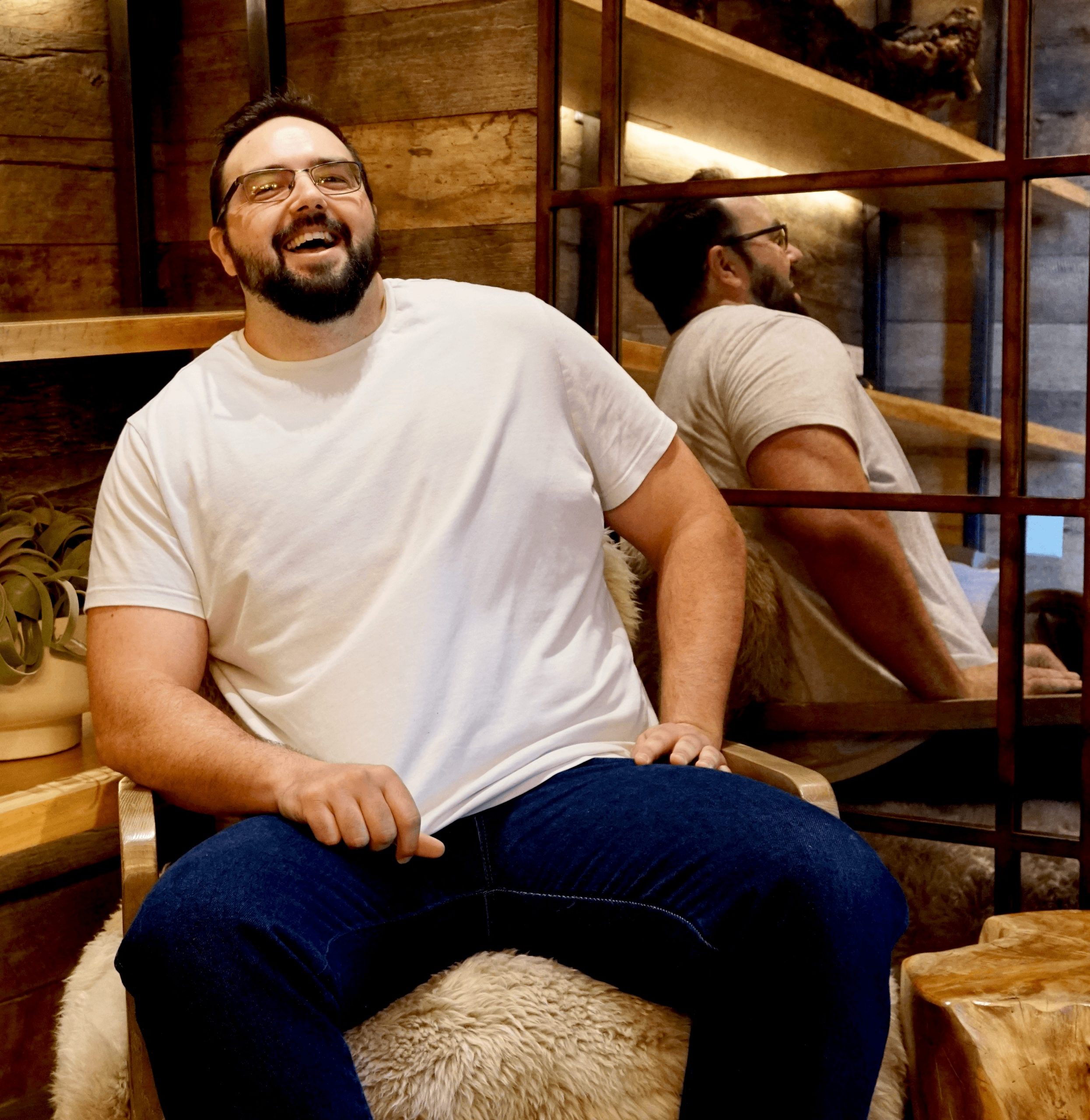
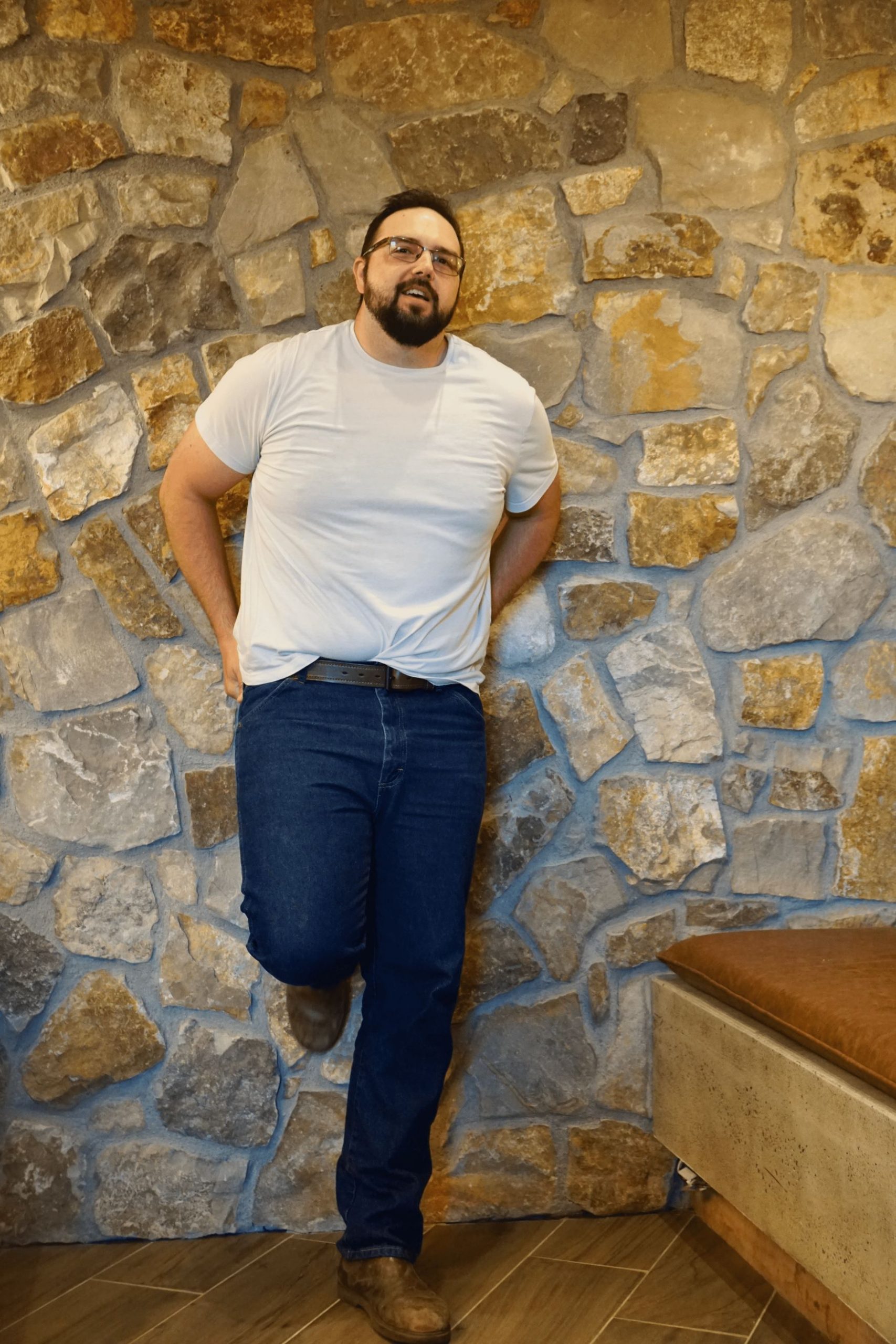
Today we’d like to introduce you to Nigel Knutzen.
Hi Nigel, thanks for joining us today. We’d love for you to start by introducing yourself.
To understand how I arrived you must first understand where I began.
I guess you could say my journey started when I was 9 years old. I was briskly walking down a black asphalt road, my school and the principal’s shouts fading away behind me as the sounds of sirens approached. A police SUV cut me off, I slipped through a fence into a wide open field of green grass. The robust officer with the handlebar mustache shouted after me, I watched him unclip his gun and rest his hand on the firearm at his hip. I kept walking. Soon more cops arrived turning into a foot chase. An office caught up and bear-hugged me from behind. I leaned forward and carried him several paces before more officers pilled on. They handcuffed me and placed me in the passenger seat of a police SUV alone. I wiggled out of the cuffs, jumped into the driver’s seat, put the car in reverse, and stretched my leg out for the gas pedal. The car door swung up and I was hurled from the SUV. Once again handcuffed, this time returned to the school and placed into a closet until my parents arrived. The first cop who tackled me ended up in the hospital for his back. There was a lot of talk about pressing charges against me but ultimately they decided against it.
There was a moment when I was in I was walking through the green fields, blue sky overhead, sun on my face, wind ripping through my shirt. In that moment I felt alive, I felt free, I felt like I could decide my own life. Ever since that day, I’ve lived a rather unconventional life.
After my 16th birthday, I began the pursuit of my only true passion at the time, martial arts. I earned a Black Belt in Kenpo Karate, and a Black Belt in Taekwondo, and have continued to train in various martial styles throughout my life. I did eventually find my way into college where I found two more passions Anthropology and Theatre. today I hold a Masters’ of Fine Arts in Theatre Performance, and a Masters’ of Research Anthropology: Art and Perception.
I’ve worked as a Ringmaster Crew Chief at a Circus. I’ve Backpacked from Edwardsville, IL to Boulder Colorado to attend my M.F.A program. I’ve worked as a forensic professional during COVID-19 as a member of New York City’s 2nd longest-running mass fatality unit. I lived in Scotland for a year attending University and working, where I got the great pleasure of assisting in the Scotties by the Sea project. Helping install dozens of Scottie dog sculptures for a public art walk. I’m a produced playwright, director, theatre producer, and Equity actor. I’ve done all this and much more, and somewhere between it all I’ve done a fair share of traveling. I currently reside in Colorado, where I work with various theatre companies and co-founded 10(23) Productions for producing theatre with my partner.
I can’t say where or what I will be tomorrow. All I can do is keep chasing that feeling I had when I was 9 years old running through that green field. The blue sky over my head, the sun on my face, and the wind rippling through my shirt. That feeling of being alive, of feeling free, of knowing that life is a series of choices and no one gets to decide them but me.
Would you say it’s been a smooth road, and if not what are some of the biggest challenges you’ve faced along the way?
My journey has been anything but a smooth ride. I faced housing insecurity more than once. When I first arrived in Boulder, CO, to attend graduate school back in 2018, I was homeless and sleeping outside. I was lucky to find work and a great deal of generosity in people I’d met, which allowed me to pull myself out of a tough situation. In 2022, members of my family also faced homelessness, which took a great deal of effort to resolve. Things are better now, but there are still struggles. Like many people in the world, the majority of my challenges stem from finances. Though by some metrics you could call me successful, I still have not found significant financial success. I certainly aspire to gain more financial security for myself and my family.
Additionally, I have faced some health issues over the last year. While living abroad in Scotland, I had to have emergency surgery to remove my gallbladder. It was a difficult time for me; it occurred in the middle of my dissertation work at the University of St. Andrews, and what was more challenging was that I was alone. I went through countless trips to the hospital before they decided to remove my gallbladder. I was often in significant pain, so I was relieved when the surgery finally took place, but recovering was challenging for me. Still, today, I am confronted with unknown health issues related to my gallbladder removal. I hope to be able to get more answers soon, as I was only recently able to get healthcare.
I do my best not to allow my financial or health issues to stand in the way of my ambitions. I am also very fortunate to have a supportive partner, without whom I’d certainly be far worse off than I am today.
Can you tell our readers more about what you do and what you think sets you apart from others?
Contemporary theatre strikingly spends much of its time living in the past, whether through the production of the same plays year after year, dated acting training, or the general lack of innovative storytelling. The theatre industry perpetuates novelties of the past, wrapping them in a facade of methodology to mask its creative shortcomings. When that fails to inspire audience attendance, the industry is quick to blame a lack of local and federal funding. The only significant innovations in theatre that have been developed are on the technical side. One of the most readily notable by the average person is the increased use of projection mapping in the industry, which can drastically improve the visual experience. There are, of course, other examples, but we don’t have the time to explore them all here.
What sets me apart in this industry is that, since I did not grow up within theatre, I am not beholden to its traditions in the same manner that other practitioners are. I am also not an “artist,” nor do I desire to ever identify as one. As I am not an artist, I have very little interest in artistic trainings in theatre, which are overly saturated with a focus on the “internal” world of the individual artist. As a result of this internal isolationism that has been instilled in several generations of theatre practitioners, there is a general lack of knowledge about theatre audiences. Theatre professionals put on shows for their own self-gratification rather than seeking to better understand the audiences they serve. This is where my particular interests lie. My study and work revolve around better understanding theatre audiences and the sociological and biological factors that influence and change their perception of theatre performances. There is a great deal of this type of research being conducted in other entertainment industries, such as film, video games, and sports. However, there is a significant lack of research within the theatre industry to understand people, which I find to be a rather striking anomaly in an industry that prides itself on the claim that it is a “reflection of humanity.”
For clarity, I am not saying that theatre today is “bad.” Rather, I believe the industry is relatively stagnant. My goals are to find ways to integrate more science into theatre, to investigate, explore, and push the industry forward in a manner that will, hopefully, inspire others to push even further. I think we need more boldness in the industry, more individuals willing to take risks, consequences be damned. So, what sets me apart? Well, I guess you could say that I demand more from theatre.
I am reminded of what the post-modernist Mary Overlie said to me at 2 a.m. after we had far too much wine together. I paraphrase here: “If you love everything about your profession, you’ll never make a difference because you’ll never ask it to change, never demand it to be more, never push it to be better.” I think of that conversation with her often and hope that one day my work will be some small part of that push forward.
If we knew you growing up, how would we have described you?
I guess you could say I was a bit of a handful, and though I am often called gregarious today, that certainly wasn’t me as a child. I preferred to spend a lot of my time alone or playing video games. I actually spent a great deal of my childhood playing massively multiplayer online role-playing games (MMORPGs). The one most people would readily recognize is World of Warcraft, which I still play off and on today.
I learned a surprising amount in my youth playing those games because they break down traditional societal borders such as age, ethnicity, socio-economics, and more. In the game, I was judged by my ability to play and my ability to work with others. In many of the games I played, I was elevated to high station within guilds of several hundred or sometimes thousands of people. I had the privilege at that time to learn from doctors, lawyers, moms, mechanics, and a host of people from all walks of life. Those social experiences, even though they were virtual, profoundly impacted my life and development.
Though I admit my parents were not thrilled with the amount of time I dedicated to games in my younger years, they have come to appreciate their impact on who I am today. In some way, I guess you could say my youth was spent in isolated study of humanity through MMORPGs, haha.
Contact Info:
- Linkedin: https://www.linkedin.com/in/nigel-knutzen
- Other: nqkcreativeworks@gmail.com


Popular
-

The Trailblazers: Rewriting the Narrative
-

Celebrating the Spotlight: Kaytee Shashore Turns Milestones Into Momentum
-

Humanity in the Machine: Alexander Raye Pimentel’s Cyborg Recall Questions the Cost of a Data‑Driven World
-

Raemi Anderson on Courage, Caution, and Answering the Call of the Landscape
-

Hidden Gems: Local Businesses & Creatives You Should Know


