



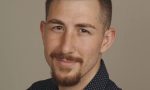
Today we’d like to introduce you to Todd Brossart.
Hi Todd, so excited to have you on the platform. So before we get into questions about your work life, maybe you can bring our readers up to speed on your story and how you got to where you are today.
Imagine the following scenario: For twelve years, you’re working at a job that provides you with many different experiences. In some ways, it’s rewarding, challenging, and educational. Yet it’s also mentally taxing and exhausting, and it prevents you from envisioning a future of your liking. As the years pass by, you remain compliant, inventing more reasons to stay at this good job.
That was me. A diligent, dutiful, unhappy rule-follower. I did all the things people do to survive at work. People-please. Keep the boat from rocking. Rush from one deadline (often arbitrary) to the next without question. I was afraid to take risks or stand out, and most of all, I was afraid to fail. That’s a small box to survive in. Then everything changed.
Rushing from a noontime meeting to the next urgent matter, I shoveled a few bites of lunch into my mouth. After a few chews, I swallowed. No luck. Last night’s leftovers didn’t want to go all the way down. Swallowing again, it still didn’t pass. I took a drink of water but suddenly began to vomit. The pain in my chest was immediate and sharp. Dropping to my knees, I called out for help.
So, what happened? The bites of food I gulped down became lodged at the base of my esophagus, puncturing a small hole in my esophageal wall. An emergency endoscopy was performed to remove the food. As a stopgap, a stent was inserted into my esophagus to seal the hole. But the wound had already caused a septic infection to develop. My left lung would soon collapse.
For several weeks, I was hooked up to multiple chest tubes in an attempt to drain the infection from my body. I wasn’t allowed to eat or drink for weeks. As the days wore on, my health worsened. I experienced a seizure. Then an acute kidney injury nearly required dialysis. The veins in my arms started to collapse from constant blood draws, eventually requiring a PICC line. Barely stable enough to walk, I required in-depth assistance to use the bathroom.
Meanwhile, the endless drip of fentanyl and other medications caused delirium and hallucinations. When I was lucid, I made a concerted effort to suppress my emotional experience. I had to be strong for others, though what I was really doing was denying the seriousness of my reality.
To hear a thoracic surgeon say, “If we don’t go in and do this surgery, your odds of leaving here are not good” was terrifying. Consenting to have my ribs surgically separated was the easiest and scariest decision I ever made. After seven hours of “scraping” the septic infection from my lung, my health eventually improved. One week later and forty pounds lighter, I miraculously walked out of the hospital.
While an inpatient, I had a lot of time to reflect. Before going into the hospital, some of my common worries sounded like, “I wonder if my coworkers think I’m capable?” or, “I wonder if I’m saving enough money for retirement?” Now I was thinking, “Why was I irrationally placing so much value on what others thought?” Additionally, I wasn’t worrying about the vacations or the hobbies I previously said I would enjoy more often. No, instead, I was face to face with, “If this is the end, are you proud of how you lived your life?” And, “How deep did your relationships go?” Lastly, “How will you be remembered by others, and for what did you stand for?”
It was apparent that a lot was missing from how I actually lived my life. About one month after leaving the hospital, I started to realize the extent of what I had just gone through. The grieving process was immense. According to Stoic Philosophy, there’s a concept about bonus time: remember that one day you will no longer live.
Today, when I get overly caught up in opinions and things that are unimportant and irrelevant, I remember what it’s like to feel alone. I remember what it’s like going weeks without physically being able to drink water. That desperate, soul-crushing desire for just one sip. Rest assured these realizations didn’t need to come down to such a life-or-death event.
It’s my experience that of all the known practices, mindfulness is the most forgiving to the human condition. It has guided my recovery after this traumatic experience. It has shown me how to accept pain and discomfort while finding joy through the process of grieving loss. It has helped me connect more deeply with others and hold more empathy for the struggles of our collective human experience.
I wholeheartedly believe that the work I get to do now is a privilege. Because I know what it’s like to feel confused and not know what matters. I know what it’s like to lose myself in the current of popular narratives and what-about-isms. I know what it’s like to give up on my goals in the name of comfort and fear. I know what it’s like to avoid taking action, and overly focusing on irrelevant distractions. Add all that up, and it equals the realization that I know what it feels like to almost lose it all.
I’m deeply grateful that I get to have a life. I’m grateful that I get to make more consciously informed choices that impact the direction I take my life. I’m grateful to be a husband, father, son, brother, uncle, in-law, friend, colleague, and provider. I’m grateful I get to wear a smile on my face.
I am now running my own private practice helping men improve their mental health. Additionally, I’ve created a measurement-based mindfulness education – Daily Mindfulness Lab – to help men think more flexibly and accurately about themselves and the world they are constantly in an exchange with.
Alright, so let’s dig a little deeper into the story – has it been an easy path overall and if not, what were the challenges you’ve had to overcome?
It has not been a smooth road over the past five years, but a road worth taking. It’s felt purposeful, exciting, and new, even though it’s simultaneously felt uncertain. Some of the biggest challenges have included the ongoing practice of patience, applying compassion for myself and others, and staying present during difficult times so that I don’t overreact.
What tends to be most challenging are the subtle distractions that attempt to influence me into making decisions that are not in alignment with my aims and values. Saying no to those, while difficult at first, tend to feel empowered afterward. Probably the biggest challenge is staying present as a husband and a father while managing a small business.
As you know, we’re big fans of you and your work. For our readers who might not be as familiar what can you tell them about what you do?
I am a Licensed Clinical Social Worker and psychotherapist with 16 years of post-master clinical experience. I specialize in men’s mental health, namely trauma, depression, anxiety, and difficult life transitions. Over the past 16 years, I’ve completed clinical training in several evidence-based mental health modalities such as Cognitive Behavior Therapy for Substance Use Disorders, Acceptance and Commitment Therapy, Mindfulness-Based Cognitive Therapy, Motivational Interviewing, and Social Skills Training for Psychotic Disorders. I also recently completed the Psychedelic Somatic Institute’s (PSI), year-long apprenticeship program.
This program enables me to integrate the therapeutic potential of psychedelics and somatic practices into my clinical work. What I’ve become known for is the nine-week, measurement-based mindfulness education called the Daily Mindfulness Lab. Often men reach out looking to improve their mental health and have no clue where to start, or the magnitude of the stressors happening in their life.
The Daily Mindfulness Lab helps men protect themselves from unhelpful thoughts and biases through daily mindfulness practice. We like to say in the curriculum: that without measurement, too many opinions are given equal weight leading to a crisis in confidence and feeling stuck.
We measure mindfulness, compassion, and cognitive flexibility pre and post-participation in the Lab. This education is ambitious but the results speak for themselves as measures have reliably improved with statistical significance. One achievement I’m proud of was receiving a national honor in 2010 from VA Department Secretary, Eric Shinseki – Secretary’s Award for Outstanding Achievement in Providing Mental Health Services to Homeless Veterans.
We’d love to hear about any fond memories you have from when you were growing up.
One of my favorite childhood memories was going to Detroit Lakes, MN in the summer for a week-long hockey camp. We would skate twice a day and spend most of the afternoons at the beach eating ice cream.
Contact Info:
- Website: www.dailymindfulnesslab.com
- Instagram: @dailymindfulnesslab
- Linkedin: https://www.linkedin.com/in/todd-brossart-46432038/

 Image Credits
Sam Banks
Popular
-

The Trailblazers: Rewriting the Narrative
-

Celebrating the Spotlight: Kaytee Shashore Turns Milestones Into Momentum
-
Humanity in the Machine: Alexander Raye Pimentel’s Cyborg Recall Questions the Cost of a Data‑Driven World
-

Raemi Anderson on Courage, Caution, and Answering the Call of the Landscape
-

Hidden Gems: Local Businesses & Creatives You Should Know


