


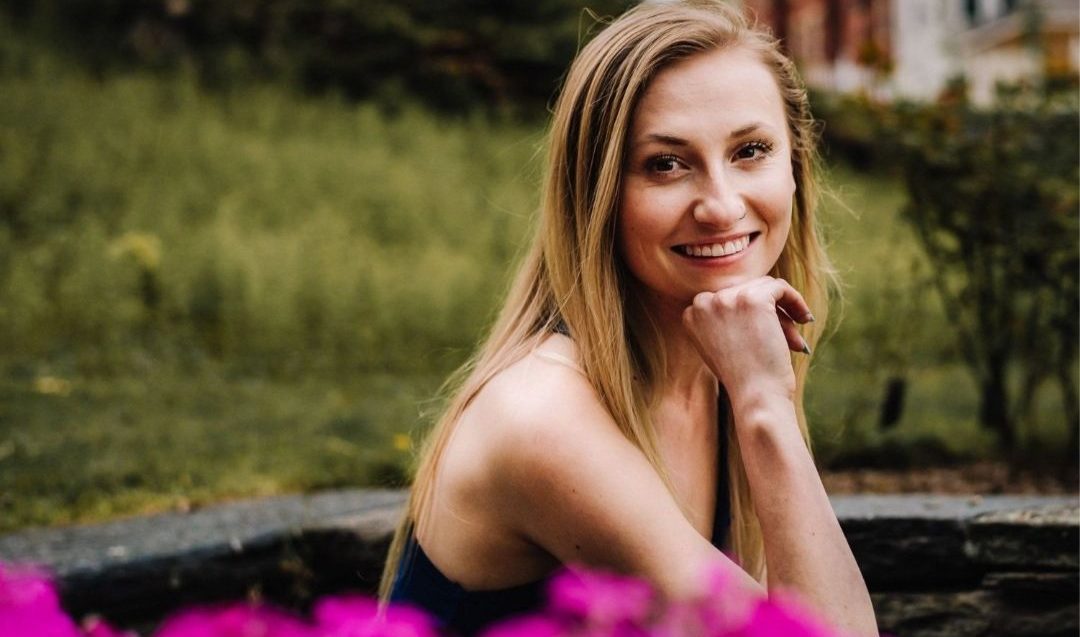
We’re looking forward to introducing you to Rachel Taylor. Check out our conversation below.
Rachel, we’re thrilled to have you with us today. Before we jump into your intro and the heart of the interview, let’s start with a bit of an ice breaker: What is a normal day like for you right now?
A normal day for me is a balance between being fully present for my clients and being intentional about my own life outside of session. I start my day with a bit of quiet planning, thinking through cases, the flow of the day, and what my business needs from me as a young practice owner. I spend a large part of the day with clients, listening deeply and thinking about the relational and unconscious dynamics shaping our work. Between sessions I complete notes, respond to emails, or attempt to figure out how to do accounting.
If I have longer breaks, I use them. I’ll take a walk, go to the gym, or step outside to ground myself so I can come back regulated and available. Private practice can be lonely so if I can find something social with peers, I’m game. Meals are non-negotiable for me, they’re essential to my functioning, so I always make time for real food and reset moments.
When I get home, I have a transition ritual (usually dunking my face in ice water) to help me shift out of work mode and back into my personal life. Evenings are for being intentional with my partner, family, or friends, and for giving myself space to think, plan, and continue learning what it means to be both a therapist and a business owner, as well as a human being.
Can you briefly introduce yourself and share what makes you or your brand unique?
I’m a licensed clinical social worker and the owner of Taylored Perspectives, a mental health private practice serving the Boulder and Denver communities. At Taylored Perspectives, we offer individual therapy, workplace mental health training, and supervision for developing clinicians. What makes our practice unique is our commitment to whole-person care, integrating case management, peer support, and wellness coaching into traditional psychotherapy to create comprehensive, accessible support for our clients.
My professional foundation was shaped at Smith School for Social Work, where I trained in psychodynamic psychotherapy. Before opening my practice, I worked across a wide range of settings, schools, homes, community mental health centers, and integrated care environments. These experiences gave me a front-row view of the barriers people face in accessing care, and they inspired me to adapt the strengths of community mental health into the private practice space.
My clinical work focuses on supporting adults, families, and parents as they build emotional awareness, interrupt long-standing patterns, and strengthen their relationships.
Beyond individual therapy, I’m passionate about expanding access to care, to training, and to community support. Our supervision and training program provides educational opportunities, licensure guidance, and interdisciplinary collaboration for new clinicians. As a former master’s student myself, I understand how much fair access to training matters, and I continually pursue advanced learning to better support emerging therapists.
Our workplace programs extend this mission into the broader community. We train teams on burnout, vicarious trauma, and effective client relations, and we provide ongoing support to help organizations implement these tools in their day-to-day work.
What excites me most right now is continuing to build a practice that supports both individual healing and community well-being. I’m deeply committed to making mental health care as accessible and effective as physical health care, and to promoting a holistic, whole-body approach to wellness for every person and system we serve.
Appreciate your sharing that. Let’s talk about your life, growing up and some of topics and learnings around that. What breaks the bonds between people—and what restores them?
For me, bonds between people tend to break when there’s a rupture in safety, understanding, or attunement. Most disconnection happens quietly, moments where someone feels unseen, misinterpreted, dismissed, or overwhelmed. When our internal worlds aren’t felt or acknowledged by the person in front of us, we naturally pull back. Sometimes it’s conflict, sometimes it’s avoidance, and sometimes it’s just two people missing each other emotionally. At its core, what breaks bonds is a disruption in trust, presence, or the belief that the relationship can hold the full truth of who we are.
What restores bonds is almost always repair; slowing down, naming what happened, and reconnecting with curiosity instead of blame. Repair requires willingness: to listen without defending, to understand the impact rather than justify the intent, and to hold space for the other person’s emotional reality. Humor, warmth, and genuine effort help, but the real healing comes from showing up consistently after the rupture. When people feel seen again, when their hurt is acknowledged, and when there’s an honest attempt to rebuild trust, relationships deepen. In many ways, the repair becomes stronger than the bond that existed before. This is where the growth happens.
That’s the heart of my work and the heart of what I believe: relationships are built and rebuilt through presence, empathy, and the courage to stay with and return to each other.
What did suffering teach you that success never could?
Suffering has taught me things that success never could. When my parents divorced during my teenage years, it exposed me to the complexity of family systems long before I had the language for it. I watched the ways people cope, protect one another, misunderstand each other, and ty to navigated through chaos. It shaped the way I understand relational patterns and how deeply systems impact every individual within them.
Later, the death of a partner in early adulthood changed me in ways nothing else could have. That kind of grief forced me to find myself again from the ground up. It taught me how to believe in my own capacity to survive, to navigate life without guarantees, and to tolerate a level of uncertainty that no amount of planning can shield us from. In many ways, that period showed me the truth of living in a world I couldn’t control, how surrender becomes a form of strength, and how rebuilding becomes its own act of self-trust.
And then there’s the suffering I witness every day in my work. Sitting with clients in their most vulnerable moments has only reinforced what Freud meant when he said out of vulnerability is our strength. Bearing witness to loss, fear, trauma, and resilience has shaped me far more than any professional achievement ever could. It reminds me constantly that being human is messy and painful, but also profoundly courageous.
Success might validate us, but suffering transforms us. It’s what has allowed me to understand people and myself more deeply, to show up with empathy instead of certainty, and to hold space for the truth that we’re all doing our best while carrying things no one else can see.
I think our readers would appreciate hearing more about your values and what you think matters in life and career, etc. So our next question is along those lines. What do you believe is true but cannot prove?
What I believe to be true, even though I can’t prove it in any empirical way, is that a person’s internal experience is its own form of truth. Even when someone’s memories aren’t perfectly accurate, or their interpretation of an event doesn’t line up with an objective version of reality, the way they experienced it emotionally is real. Their fear, their confusion, their longing, their hurt, those are truths that shape their internal world, their relationships, and their way of moving through life.
I can’t prove a person’s subjective reality in a scientific sense, but I don’t need to. I believe that what people report about their experience, how something felt, what it meant to them, how it changed them has its own validity. Two people can live through the same moment and walk away with entirely different narratives, and both perspectives hold important information about their histories, their defenses, their attachment patterns, and their meaning-making.
In my work, I’m less concerned with verifying whether an event happened in the exact way someone remembers it. What matters to me is the emotional truth contained in their experience. Their perception is a window into their world, into how they learned to protect themselves, what they fear, what they hope for, and how they’ve made sense of themselves in relation to others.
So what I believe, but can’t prove, is that internal truth is still truth. People’s lived, felt experiences are real to them, and honoring that reality is often the first step in helping them heal.
Before we go, we’d love to hear your thoughts on some longer-run, legacy type questions. If you knew you had 10 years left, what would you stop doing immediately?
If I knew I had ten years left, the first thing I would stop doing is staying silent. I’d stop holding back pieces of myself out of caution or habit. I’d let myself speak more freely, more honestly, and with more intention. I’d make it a point to talk to people, to truly get to know every human I possibly could.
I would stop avoiding interactions with strangers. Instead, I’d see those small moments of connection as opportunities to gather meaning, insight, and perspective. Every person carries a story, a lesson, a worldview that can shift how we understand our own lives. If time were limited, I’d want to absorb as much of that as I could.
This includes engaging in the world around us, especially in our current political environment. There’s so much division, fear, and polarization, but I believe growth comes from continuing to have conversations, even difficult ones. Speaking up, advocacy, sharing perspectives, and listening to others with curiosity is how we expand our understanding, challenge assumptions, and strengthen the social fabric that binds us together. Avoiding these discussions leaves us stagnant; leaning into them, even when uncomfortable, allows connection, learning, and even healing to happen.
In ten years, I’d want to feel like I didn’t miss anything or anyone I was meant to encounter. I’d want to fill those years with connection, presence, dialogue, and meaning, because engaging fully with people, ideas, and the world is what gives life its depth and purpose.
Contact Info:
- Website: https://tayloredperspectives.squarespace.com/
- Instagram: https://www.instagram.com/taylored_perspectives_pllc/
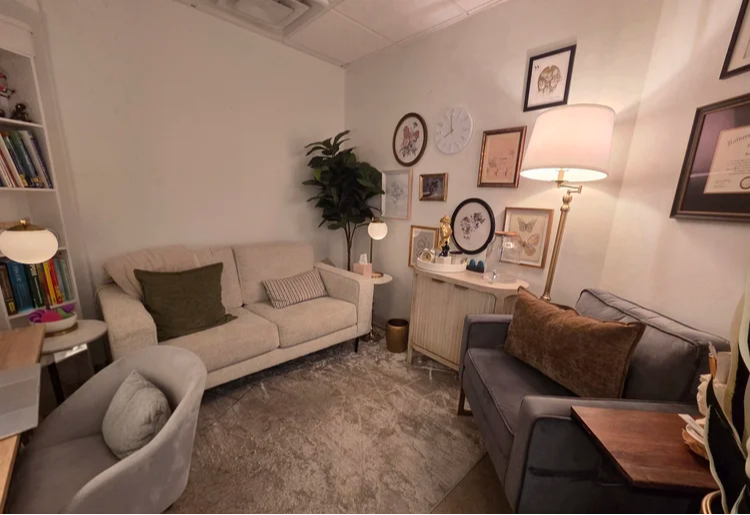
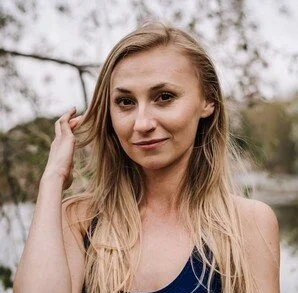
Image Credits
Stephanie Camosee