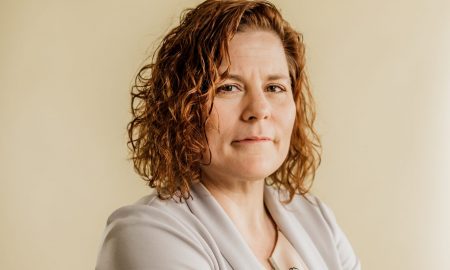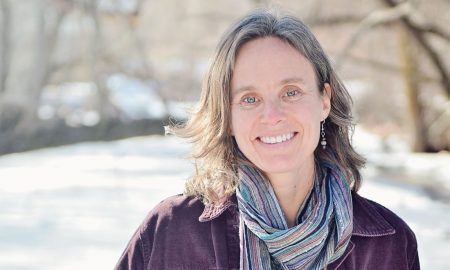


Today we’d like to introduce you to Corie Rosen.
Corie, please share your story with us. How did you get to where you are today?
For most of my life, I kept my desire to write a secret. At first, it was a secret I was holding back even from myself. I actually came to it in the roundabout way a lot of young writers do, through the theater. I started doing professional theater as a young person, and while I absolutely loved acting, I was most passionate about the plays themselves. It was amazing to be able to swim around inside of great works. I learned a huge amount about character, tension, and scene-building from breaking down scripts. During the ten weeks that is often typical of an Equity show, I was able to live inside of the bigger story structure for months at a time. When you are performing a work night after night, you get a feel not just for scene, but also for story arc. To the extent that I have a sense of structure, I think it came from performing the same work day after day. I loved my experiences onstage, but the whole time that I was acting and auditioning, I was also nursing this deep desire to write my own work.
After high school, I attended Berkeley, which has wonderful humanities programs. There, I was lucky to be able to study both English literature and theater. During my sophomore year, I moved from acting into directing. In my junior and senior year, I was the Artistic Director of Barestage, a student-run theater company that is supported by the campus.
You can imagine that doing theater with that level of commitment takes a person a little out of the college mainstream, away from the warm beer and dirty rooftops of fraternity parties, and into a more unusual circle of friends. That was certainly true of my experience. Many of the young artists I met through the theater program—mostly men—were writing and staging their own works when they were still in their late teens. Writing their own works! I so admired their fearlessness and gumption. I knew I wanted to write my own work also, but I lacked self-confidence and had no idea where to begin.
I was astonished and not a little bit jealous of the young men who were facing the challenges, both technical and personal, that come with writing your own stuff. Like a lot of young, would-be, female writers, I think I was biding my time, waiting for someone to grant me permission. I wanted the fairy godmother of the written word to come down from her cloud, perch on the end of my bed, wave her wand and say, “Go ahead! You’re talented! I will make sure that everybody loves what you make!” “Nobody is going to laugh you out of the building!”
One of the big lessons of becoming a writer later in life has been that there is no such fairy godmother, or that if there is one, she is actually a part of your own psyche.
It’s a wildly simple concept, but it took me about fifteen years to figure out that if you are going to get the thing done, you have to get out of your own way and commit to it. Writing is work like any other work. It is impossible to accomplish anything if you write only when you feel the pull of inspiration, and you have to just trust yourself to get it done.
I wanted so badly to write all through college, but I didn’t allow myself to take that impulse seriously. As a sophomore, I took a workshop with the MacArthur genius and cultural icon Ishmael Reed, who is one of the most extraordinary human beings I have known. He encouraged me to pursue writing on a professional level. Even so, I couldn’t find a way to let myself do it. If I’m honest, I was the greatest obstacle to my own achievement. It’s an old and very common story, but when you are facing your own internal struggle, challenges that are actually simple all of a sudden seem very novel and complex. I remember not knowing what I was going to do with myself after college and that a woman I knew, a terrifically talented poet, applied to and was admitted into the writing program at Iowa. She told me this when we were sitting in the creative writing classroom, which is this lovely, book-lined room tucked back on the third floor of a hundred-year-old building. I remember wondering how she’d had the wherewithal to declare herself a writer, so much so that she was moving to a whole new state just to study writing. At the time, that seemed too scary and unconventional for me.
Then, just before the end of my senior year, Professor Reed included a piece of my work in an anthology he was publishing. That piece went on to be featured on NPR, widely taught in schools, and even re-anthologized elsewhere. I remember climbing the steps of the English Department building to go and sign the publication contract. I was so timid! Even though I knew it was being published, I was still shocked when he told me how good the piece was. Eventually, the surprise wore off, and I felt this new and unexpected thrill when I realized that my work was going to be featured in a book with the work of established writers. My work has appeared alongside the writing of people like Mark Twain, Grace Paley, and even Tupac. Being included in such rare company was and still is thrilling.
In Berkeley, I lived in an apartment on the top floor of this creaky old Victorian house. There were these big, light-filled rooms with blurry casement windows. Outside, it was all peeling paint and a long-dried-out front lawn. I did my first ever interview there, over the phone in that apartment. I remember pacing around barefoot on the saddest, brownest carpet anyone has ever seen. There was this wonderful incongruity in being on the phone with this very official sounding reporter and walking back and forth across that shabby carpet. I loved the fact that I was just being myself at home, but at the same time, I was talking about writing with a person who could validate the importance of literature out in the world. I remember looking down at that awful carpet and promising myself that, no matter what, I wasn’t going to let that be the last time I put work out into the world. But I had some detours after that. Like many wordy young people, I attended law school. Then I taught writing in law schools for almost a decade. My first book of poetry is finally coming in January of 2020. It has taken a long time, but I am keeping my old promise!
In 2015, I was admitted into the Lighthouse Writer’s Workshop Book Project, where I was trying to turn a lot of writing that I had done on nights and weekends into something resembling a cohesive novel. I showed the first chapter of what I was working on to a New York agent, she told me that she thought she could sell it, but that it had to be finished. I told her that finishing it was going to take some time—I was teaching legal writing at CU at the time, commuting to Boulder from Denver and spending hours of every week in the car. I had maybe an hour or two a week to write, at most. I remember the way the agent looked at me when I told her about my schedule. “It just has to be finished,” she repeated, “if I am going to sell it. And that may mean you have to make some hard choices about your work, about what you want to do with your time.”
No one had ever been so direct about how much time I was going to have to put in if I was going to arrive at the place where I hoped I was going. Lighthouse is amazing , and through their classes . I had met an amazing number of people who had successfully published their books. I’d also met people were fifty, sixty, seventy years old and just starting to take their creative lives seriously. Life is complicated, and family, professional, and economic responsibilities get in the way of things too often. For me, the conversation with that agent made me realize that I was at a crossroads. Teaching and commuting was subsuming my writing. I am fortunate to have the most amazing husband, and he supported me as I wrestled with the decision about whether to go on as I had been , or whether to turn and take a different road. If it hadn’t been for that meeting, I might not have forced myself to ask those questions, but after that meeting, I felt like I couldn’t unlearn what I knew.
I decided to commit myself to writing full-time as of three years ago this summer. In that time, I’ve had about a dozen shorter works accepted for publication. I’ve also had my first book of poetry accepted, and I currently have another one on submission. On top of that, I have a collection of short stories in draft and am revising that novel.
When I think back on the young woman I once was, I see a person who secretly burned to write but who let fear—the fear of failure, of looking silly, of not being up to the task—keep her quiet. I worry that too many women are in this position. They are afraid to do the risky thing they long to do, and they allow fear to stop them. I was lucky to have been encouraged by a famous poet, a brilliant New York agent, and by many others along the way, but a more self-possessed person wouldn’t have waited around for those things.
If I could give my younger self some advice, it would be that fear—fear that you aren’t good enough, fear that the work won’t be successful, fear that you’ll make an idiot of yourself in front of the people you most want to respect you—that kind of fear isn’t ever going to leave you. But if you are going to get anything accomplished, you have to do in spite of that fear, in spite of all the crazy things it wants to tell you (most of which aren’t even a little bit true). When you are doing the work, when you are making things and letting them go, you start to understand that they aren’t really yours. It’s cliché to say it, but the work has a life of its own. Sometimes my work lands on the radio or is taught in schools. Sometimes it lands in a literary magazine and one or two close friends see it and tell me they were moved by it. Those are all good, important, valuable things, and making any of them happen is nothing short of magic. Saying “no” to fear puts you in a position to bring those things about. I know it’s scary, but I’m convinced that saying “no” to fear is the only way anyone gets anything done.
Great, so let’s dig a little deeper into the story – has it been an easy path overall and if not, what were the challenges you’ve had to overcome?
Being a writer works more or less like this: you sit in a room by yourself trying to make something true and beautiful. Some days it is fun. Some days it is awful. Some days your eyes hurt because you’ve been staring at the same sentence for hours. (Eventually, no matter how well or badly it goes, your glasses prescription changes.) When, finally, you feel like the thing you have made doesn’t need to be modified any more, you send it off to live its life out in the world, either in book form or in the pages of some literary outlet.
Even if your work is accepted fairly quickly, along the way, you are probably still going to hear some amount of, “This wasn’t quite for us, no thank you,” which to the writer’s ear sounds more like, “Are you crazy? Your work is garbage! You are wearing the modern equivalent of Coke-bottle glasses for no reason! ” “Your inner critic was right! You should have just let fear rule.”
The thing is, rejection is very much a part of any creative business. The trick, I believe, is to understand that rejection is a process, that it is often not a comment on the quality of your work, and that you can’t allow it to make you doubt your work’s value. For me, the most heartbreaking rejections are the ones from the editors you’d love to work with, the kinds who work at career-making places and, who will often tell you how much they enjoyed the work, but that they are not taking it for whatever reason.
I once heard an interview with a very famous movie star who told the radio host how devastating she still finds it to be passed over for a part she wants. I remember how stunned I was to hear that. It hadn’t occurred to me that this gorgeous, brilliant, highly-paid person would ever be passed over for anything. But there she was on the radio, telling the whole world about her struggle with rejection. I don’t think we talk about the emotional self-management aspects of art- making enough. It is easy to forget how much wherewithal went into making something when you are sitting in the hushed darkness of a movie theater or when you are immersed in the pages of the summer’s hottest novel. I think it’s important to remember that the people who made those things had to face rejection too.
I have friends in a number of creative fields—, writers, actors, filmmakers. Over the years, I’ve watched some of them succeed while others have given up. It seems to me that the ones who gave up did so because they believed that things were going to be easy, much easier than they actually are. In some ways, temperament seems just as important—possibly more important—than talent. It’s a difficult thing to remember! The capacity to deal with rejection (to perhaps turn those lovely notes from editors into the foundations of professional relationships), that is maybe the most important quality for having a sustained and successful career in any creative field. That temperament is as essential as talent is one of those lessons I find myself having to learn over and over. Sometimes it’s an easy thing to remember and sometimes the remembering is more painful. I like to think that, with every project, I do eventually get there.
Tell us about your work – what should we know?
Primarily, my job is writing. I get up every morning, sit down at my desk, and try not to get up until I’ve met my goals for the day. (Though I do allow myself to get up for a second— and sometimes even a third— cup of coffee.) I also offer editorial services to other writers. I have helped a number of friends revise their work and have been stunned at how positive the responses have been. Editing is part of the writer’s tool kit (some would argue that it’s the entire writer’s tool kit). I find editing to be the most fun and satisfying part of the writing process, and there is a particular joy in helping someone else revise their work.
Is there a characteristic or quality that you feel is essential to success?
Some writers believe that the scenes in a story can only ever go in one particular order. The idea is that the character in the story is on an emotional journey, and as she faces her challenges in order, she changes. In a traditionally structured story, those changes accumulate until, at the end, she realizes the story’s big lesson. One thing happens after another and not the other way around because the character’s emotional development, the movement toward that big realization, wouldn’t allow them to happen any other way. She wasn’t ready to do the thing she does in chapter five in chapter one, and she doesn’t know in chapter five what she will finally know in chapter twenty. According to this view of story, each scene builds on itself in an order that cannot be changed. I like to think that I take a slightly more flexible approach to writing, but that concept pretty much sums up my personal creative journey. There things I wish I’d realized sooner. (It’s okay to speak up! Don’t be afraid of your own fear! You can do all the things the boys can!)., But I learned them in my own time. Ford Maddox Ford said that no one can produce a masterwork until he is over forty, because life experience is critical to good writing. I’m not over forty yet, and I don’t know that I’m producing anything approaching a masterwork, but all of my experiences have made me a better writer and, I hope, a more compassionate human. The things I’ve experienced, even the hard things, have taught me valuable lessons. I think it’s all happened in exactly the right order for me.
Pricing:
- Private editorial services (exact pricing upon request): usually about $1-$5/page
Contact Info:
- Website: corierosen.net
- Email: corielynnrosen@gmail.com
- Other: https://kelsaybooks.com/: Words for Things Unsaid, forthcoming January 2019 from Aldrich Press, an imprint of Kelsay Books


Image Credit:
Image credit: Jeffrey Felder
Getting in touch: VoyageDenver is built on recommendations from the community; it’s how we uncover hidden gems, so if you know someone who deserves recognition please let us know here.