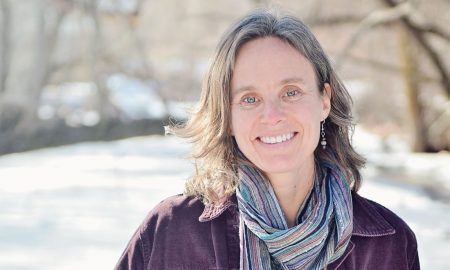


Today we’d like to introduce you to Laura Carson.
Laura, before we jump into specific questions about your work, why don’t you give us some details about you and your story.
I grew up in Atlanta with a great public school system where participation in artistic opportunities was a standard part of my grade school education. During my third grade performance of Templeton the Rat in “Charlotte’s Web,” I really “worked” the tail on my costume and once I got a taste of thunderous applause, what can I say, I was hooked.
I was the yearbook editor for our senior year edition of the Shield and learned how to manage a team on a large scale project that had to include all the stories happening on campus. I taught myself how to use a camera, compose a shot and use images to tell a story. To this day, it’s one of the projects I’m most proud of and I’m glad I didn’t let my class down.
I continued my acting aspirations at the College of William & Mary where I earned a Bachelor of Arts in Theatre and Speech. Our Theatre Department was a full immersion program in all aspects of theatre design and performance. I wrote and directed plays, rigged shows and performed fantastic roles like Reno Sweeney in “Anything Goes,” Lenny in “Crimes of the Heart” and The Duchess of Plaza-Toro in “The Gondoliers” where I was able to use my opera training. I studied with great theatre professors Jerry Bledsoe, Louis E. Catron and Richard Palmer, all of whom taught me how to use my craft and how to respect all the departments that collaborate to bring a show to life.
Next stop was Actors Theatre of Louisville for their highly competitive Acting Apprenticeship where I learned so much from Bob Krakower about the power of emotional risk-taking in my work and bringing my own truth to it. It definitely prepared me for the artistic rigor required for New York City training. In NYC, I studied Meisner technique with Kathryn Gately and Rick Poole where I honed my ability to compartmentalize my emotions in the service of the work. By that I mean, I could be very “upset and emotional” in a scene and also calmly take direction as if two areas of my brain were working simultaneously.
What that training offered was a safe space to have authentic feelings in my performance without it taking too much of an emotional toll. To me, that healthy separation is the gold standard of being an artist no matter what your vocation might be. Whether I’m performing on stage, writing a screenplay or using my camera to capture someone being vulnerable with me, I’m trying to tell a story. More importantly, a story for someone else’s benefit more than my own. I’m there first to bring to life the writer’s vision and move the audience, not prioritize my own needs of self-expression; this concept of service to story is the compass point for me in my work and teaching. And it’s through that service that my creative needs are met.
I’ve written off and on over the years; namely a few short plays produced in New York, children’s theatre for my teaching work at Idyllwild Arts Academy in the summers and a solo show developed with my wonderful writing teacher in LA, Terrie Silverman. As my commitment to storytelling through my acting has evolved, so has my desire to be the author of stories. “Dime Short,” a short film I wrote and acted in was my first filmmaking project as a writer and I was so honored to see our hard-working cast and crew breathe life into what began as a simple image in my mind.
With my latest short film project, “Losing Antonia” (written by Melissa Lucero McCarl), I added producing to my resume and have just completed co-writing with Krista Gano a feature-length comedy screenplay. Writing for the screen and my photography are coming together and I will be directing my first short in the Spring.
I also teach On-Camera Acting here in Denver through Working Artist Group and I’m training actors to be the “professionals in their department” which sometimes means no one on set is going to care about your feelings or your needs as an artist. It’s your job to hit your mark, tell the story and do it 20 times in a row if that’s what the shot needs. You have to be responsible to yourself as an artist by being prepared, doing the work and managing the mindset minefield that a career in the arts presents you.
This attitude got me through 17 fantastic, challenging years in Los Angeles where I added film and television credits to my resume. Learning how to act for the camera taught me so much about letting things “happen” rather than planning a lot of moments. It brought a spontaneity to my craft that took it to a much deeper level and focused my eye more on what is happening behind the camera. A lens has the extraordinary ability to capture the most intimate, nuanced emotions if the subject can let their guard down.
Like any good renaissance woman, I can say the various areas of my creative background informed my work as a photographer when I picked up a camera again five years ago. I’m at that point in my career as an artist where all my training and life experience are coalescing into a point of view and a mastery that is hard-earned.
An acting career is a tough road and to pursue it at the highest levels means being excellent at your job and having the business acumen to navigate it. One of my first survival jobs in LA was working at a litho reproduction shop in the late 90s; before the digital era changed how we market ourselves and essentially put many printing houses out of business. Actors would come in and request extensive retouching or spend literally hours trying to choose a font for their name and it was depressing to watch all this energy, fear and time wasted on what didn’t matter in their headshot.
The number one most important tool in any actors took kit is his or her headshot. It’s how you teach casting directors how to use you. I’ve photographed several Denver actors who’ve had the benefit of taking the Business of Acting class with Krista Gano at Working Artist Group. There, they learn how to navigate a career as a professional actor, and more importantly how to market themselves to the roles that are right for them. As a marketing tool, a headshot is much more effective when an actor knows his or her brand.
“Brand” is a big buzz word these days in our image-saturated world and knowing how to present yourself is more important than ever, whether you are an actor, a small business owner or CEO of a large corporation – image matters.
As an actor myself, I understand how tough selling the right “vision” of yourself is and, more importantly, how to coach you go to get there whether you feel comfortable and confident or self-conscious and awkward. I don’t just take your picture, I direct your performance which takes a lot of the pressure off of you.
We’re always bombarded by how great it is to pursue your passion, etc – but we’ve spoken with enough people to know that it’s not always easy. Overall, would you say things have been easy for you?
The life of an actor is not an easy road to choose. I’ve had my share of odd jobs from waitressing to temping to even driving through California in a van and giving away pool products! I’ve always been grateful for the freedom and flexibility that part-time jobs afforded me even if the stress of paying my bills was a constant.
Actors experience constant rejection which never gets easy. The most helpful attitude is remembering that during an audition, I’m bringing the gift of my talent and my take on the material. Booking the job is a bonus. My desire to have more creative control over my life led me to start writing my own material and open a photography business.
Photographers today are most challenged by the fact that everyone has a relatively high-quality camera in the palm of their hands with their cell phones. And social media has given us filters and editing capabilities formerly only available in pricy, complicated software like Photoshop. So people are less likely to think about hiring a photographer for a promotional shot of themselves or their business.
That’s when hiring a professional photographer is the most important. The opportunities to make a good, lasting first impression are limited and you don’t want to waste a marketing “hit” with the wrong photo. A good photographer is also looking at your background, your wardrobe, the tone, the colors – the story you want to tell with your image. And most importantly, working with you to settle you into presenting your best self.
Another obstacle is the price and profit. Between professional quality equipment, studio space and software needs, a photography business has a pretty hefty overhead. Spending a few hundred dollars for a professional shoot is scary for actors who often have limited financial resources, need a lot of different looks and updates on a regular basis. I price my services reasonably because I want actors to have the tools they need that will actually serve them.
Whether you are an actor or a business professional, you can always earn more money to recover from a “bad shoot” but you’ll never be able to recover the time and traction lost by putting a sub-par image of yourself out there.
We’d love to hear more about your work.
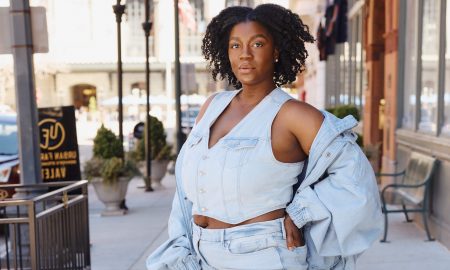
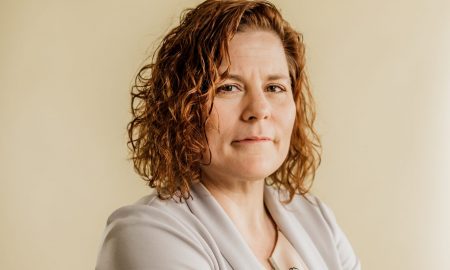
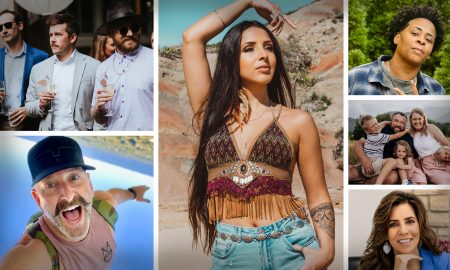
Laura Carson Photography specializes in headshots for creative and business professionals. I’m able to marry the different aspects of my creative training and experience to deliver high-quality images that work for your business marketing needs whether you are an actor, artist, small business owner or in the corporate world.
I am also the Chief Creative Officer at Working Artist Group where I nurture actors in On-Camera Performance.
I’m most proud of the feedback I hear from clients after a shoot. “I was nervous but that was fun!” is my favorite thing to hear. I take the time to relax my subject and shift them away from “posing” and toward relaxation and the presence that allows their natural energy to shine. When you show up with anxiety about how you’re going to look or how much money you’re spending, I want you to feel like your shoot was a victory.
My lens captures everything and I can see when the walls come down and a client opens up and their humanity comes through their eyes. It’s the most beautiful thing I see in my work and am honored people feel comfortable enough to show it. In the words of Brené Brown, “vulnerability is power,” and that’s what you bring to the mix. I’m just the guide getting you there and capturing it.
Also with the desire to put out an “amazing” image of yourself, people are tempted to do a lot of heavy retouching which I don’t do. I retouch photos to make you look your best self. It’s in nobody’s interest to put a picture out there that doesn’t look like you. It’s a fine line that I prioritize getting right in the post process. This is most important for actors. Casting directors want what they see in your picture to walk through the door. Corporate headshots need to show your clients they can trust you with their business so having a photo that isn’t honest is a bad way to start a relationship.
So, what’s next? Any big plans?
The power of putting the “right” image out there is never going to change; certainly not in the next five to ten years. I think the way the image is delivered is where we will see change. Already video is an important piece of the marketing puzzle and social media is constantly evolving in how it’s delivering marketing content.
Corporate style headshots are evolving too. There is still the need for a basic headshot on a simple background and now people are using shots that tell more of the story of you and your business; shots that are grounded “in the world.” And one shot doesn’t suffice anymore. Social media demands a steady stream of images and videos so photographer packages that give you a number of different options with various settings will go further in providing your business the marketing tools you need.
Actors have seen big changes in how their headshots work. In the last twenty years, we’ve gone from hard copy black and whites to hard copy color to digital, online color. I’d say we aren’t far from the day when the hard copy printed headshot is a thing of the past. We’ve also gone from just needing one or two shots to needing a variety that speaks to the range of our brand.
With the advance of self-taped auditions, more and more actors are using technology to get work. Look for this virtual audition technology to grow. This trend will only continue to grow as productions cast more and more actors from all over the world.
I moved to Denver about two years ago so I’m excited to see how I can grow my photography business here to support actors who are getting audition opportunities in Albuquerque for large film and TV projects. Recently I’ve begun to produce videos for small business owners and I’d love to expand my package offerings even more into this important marketing tool.
Contact Info:
- Address: The Highlands Center – The Annex
3401 W. 29th Avenue
Denver, CO 80211 - Website: www.lauracarsonphoto.com
- Phone: 213-200-8132
- Email: laura@lauracarsonphoto.com
- Instagram: https://www.instagram.com/lauracarsonphoto/
- Facebook: https://business.facebook.com/lauracarsonphoto/


 Image Credit:
Laura Carson Photography
RF Scott Imagery
Suggest a story: VoyageDenver is built on recommendations from the community; it’s how we uncover hidden gems, so if you or someone you know deserves recognition please let us know here.