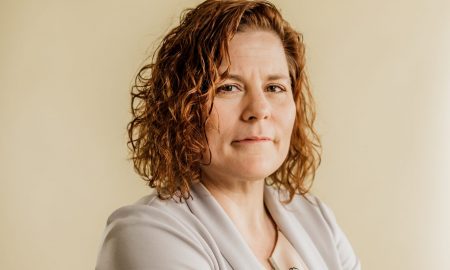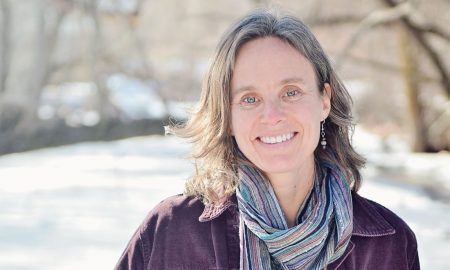


Today we’d like to introduce you to Martha Russo.
Martha, let’s start with your story. We’d love to hear how you got started and how the journey has been so far.
I grew up in Milford, Connecticut, which is on the shoreline of Long Island Sound. I went to Princeton University and I majored in developmental biology and psychology (1985) with my sights set on being a pediatrician or child psychologist. Besides being fascinated with kids and science, my other love was playing sports. I played field hockey and lacrosse at Princeton and was training to be in the 1984 Olympics in Los Angeles for field hockey. However, about six months before the Olympics, I hurt my knee, which dashed all hopes for going to the games. But even worse, this being my second knee injury, my doctors advised me not to play any running sports again as another knee injury could mean severe trouble for the rest of my life. I heeded their advice. I was devastated and heartbroken, to say the least.
After the injury, I moved home to Orange, Connecticut, to have surgery and go through extensive rehab. When I was able to walk without pain, I got a job as a waitress at an Italian Restaurant in New Haven. I became good friends with the owners who were the dearest Italian men, Dominico and Alvaro. Although I enjoyed the job, I was just unhappy and feeling very lost, knowing that the thing I most loved would not be a part of my life anymore.
One day they asked me why I looked so sad all the time. I told them my story and they said with their thick Italian accents, “Marta, the only way you are going to feel better is if you go to the “mother country” and visit the places where your family originated. Might as well try that. So I did. I found a study abroad program through Drake University and went to Florence. For five months, I studied art history, Italian language, and apprenticed with a stone carver, fabric designer, and jewelry maker. I was enchanted. Working with my hands and being drenched in my family heritage breathed new life into me. I was busy and happy, and most of all, distracted from my deep loss.
When I returned to Princeton, in addition to being busy with courses in my major, I started taking ceramics classes and art history. I had taken a ceramics class in my sophomore year and I got kicked out because I had missed two classes in a row because I had been called to play for the Olympic Team. So I begged to get another chance to take the class and it luckily worked. This ended up being the most critical turning point in my life.
Basically, art became my new sport. I needed to move around and get tired. I enjoyed working with a material that was very demanding, steeped in glaze chemistry, and the alchemy of fire. The physicality of working with clay-filled a big hole for me then and it still feeds my addiction of being physically challenged. And my new “coach” was the ceramics teacher, Toshiko Takaezu. To try to tell you what I learned from Toshiko over the years is its own million-page tome. But, here is a glimpse. In a catalog about her studio practice and teaching life, she said, “I think it is important for students to find out who they are and what they want to do rather than focus on making something well to start.” She showed me what it meant to be an artist plus the merits of being a tough teacher and being equally tough on yourself. She instilled in me a work ethic that is the core of my studio and teaching practices and life, in general.
After graduating from Princeton (1985), I was still interested in going into the medical field but was not sure about which direction to take. So to give myself time to figure it out, I taught art, biology and coached all sorts of sports at a private school, Noble and Greenough, outside of Boston for three years (1985-1987). After that, in 1987, Princeton hired me to be the assistant field hockey coach and I also assisted Toshiko in her classes in exchange for studio space. This stint lasted three years. During that time, I was also Toshiko’s apprentice for a summer, which meant living at her home, helping her with her work, making my own work, and, ultimately, getting very little sleep. The four-month apprenticeship taught me even more about life as an artist and my first glimpse into the workings of the art world.
In 1991, luckily and happily, I married a wonderful person, Joe Ryan. I moved to Boston, where he was finishing up his Ph.D. in Environmental Engineering at MIT. I landed a job as a teaching assistant at Massachusetts College of Art and also was the assistant field hockey and lacrosse coach at Boston College. At Mass Art, for the first time, I will surrounded by artists, became more and more addicted to making things, and I decided to apply to graduate programs for art. I applied the following year but did not get accepted anywhere. However, the University of Colorado Boulder said to come out, take classes, make some new work, and re-apply. All of which I did and got into the Masters of Fine Arts program in the fall of 1993, where I studied ceramics and sculpture.
Since getting my MFA in 1995, I have shown my sculptures and installations all over the country, including venues such as the Alan Stone Gallery in New York, The Santa Fe Art Institute, Denver Art Museum, and the Museum of Contemporary Art/Denver. My work was the focus of a 25-year survey at the Boulder Museum of Contemporary Art in 2016. Also, through the socially and politically based art collective, Artnauts, I have shown my two-dimensional works in over 270 exhibitions in 19 countries since joining the group in 1996. In addition to my studio practice, I am an instructor at the University of Colorado Boulder and prior to that taught fine arts at Rocky Mountain College of Art + Design in Lakewood, CO, for eighteen years.
Great, so let’s dig a little deeper into the story – has it been an easy path overall and if not, what were the challenges you’ve had to overcome?
I have been very fortunate to have grown up with two extremely supportive parents – Emily and Tony Russo – and three older siblings – Jane, Walter and Peter – all of whom gave me a grounding in life that has and will continue to sustain me as I make my way. I have also been graced to have very strong, smart, creative mentors starting in college with Toshiko Takaezu and during graduate school with Betty Woodman, Scott Chamberlin in the ceramics area and Antonette Rosato and Garrison Roots in the sculpture area. They all showed me what dedication and commitment it takes to be an artist and staying focused on one’s art and not to be distracted by art world concerns.
I have a tremendous support system at home with an extraordinary partner, Joe Ryan, for the last 29 plus years and we have two wonderful children-Odelia (22 yrs.) and Henry (21 yrs.) who have always supported me in every way possible. Living with an artist who makes big work means helping lift and move things on a constant basis. They are always ready and willing and also have fantastic insights into my work. I could not be luckier. I also have very astute, fearless, and innovative peers who I met in graduate school and a strong community in the Denver/Boulder area and at the University of Colorado Boulder.
The foundation and grounding from of my family, the mentorship from teachers all along the way, and the continued and steadfast support from my family and peers all give me the courage to make art. Basically, I have and continue to be extremely graced on all fronts.
We’d love to hear more about your work.
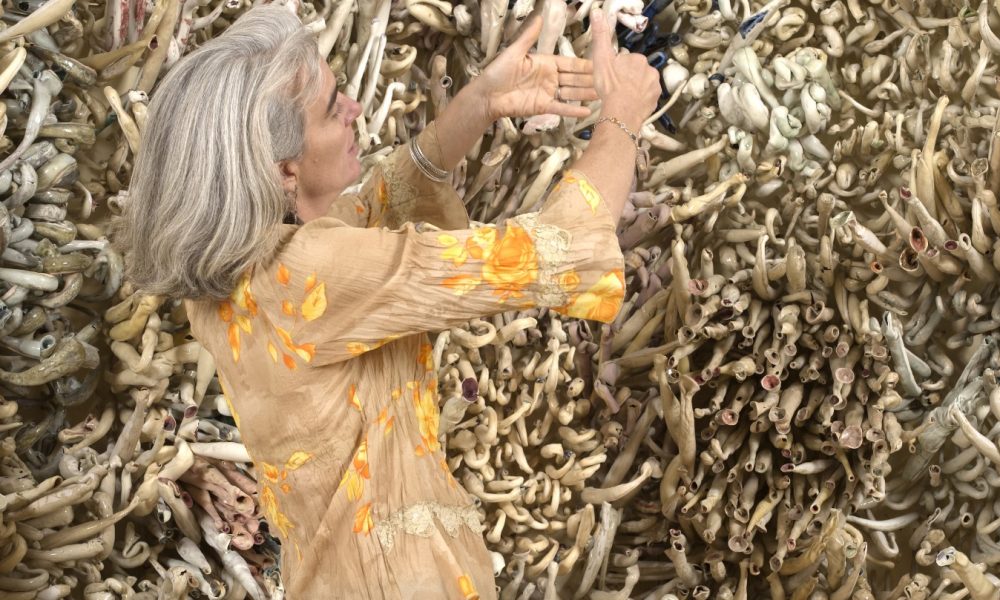
I am a visual artist. My studio practice consists of making sculpture, installation, and public art with these intentions in mind/hand/heart: All of my work is purposefully obscure. It is just out of the grasp of language and, thus, brings us back to our rudimentary way of collecting information, namely, through the senses and the body. Although my work is steeped in the ceramics’ process, it sidesteps the traditions of the earth-bound, fragile, and precious material. Rather, my works embrace the precarious. They extend into space, hover in mid-air, barely hold on, pile up, and are sometimes on the verge of disappearing into dust. The chameleon-like properties of clay and, specifically, its tenuous nature speak to the immediacy and transient nature and the fragility of life. Coupled with this quietness, some of the massive installations have a certain energy and force that further connect us to our roots and our origins.
I want my works to get into your bones and guts, to touch on the raw, the visceral, the nerves, to murmur up through the body to make a time and place for contemplation and reflection about our basic biological humanness. I am known for being very experimental, being steeped and inspired by the worlds of biology and psychology, and having lots of energy to make things happen that might not normally happen, in and out of the studio.
I am most proud of not being afraid of the unknowns. I want to always keep myself off-kilter and find something new to be surprised by it all. The essence of this philosophy is embedded in making a piece called Apoptosis, created in collaboration with Katie Caron, for a show at the Denver Art Museum, Overthrown: Clay Without Limits (2011). From start to finish, Katie and I embraced the unknowns of creating something so new to us that many times we were not sure if it were going to work or not. After fourteen months of furiously making over 10,000 components, the piece came together in a way that we could not even have imagined. I am very proud of the chances we took, ultimately what we created, and the overwhelmingly positive response from our viewers and the museum.
Another piece that I am really proud of is called nomos. For over twenty -five years, I have been investigating the potential of how thousands of porcelain forms in differing configurations can conjure up sensations about all sorts of worlds. The abstraction of form, material, and gravity coupled with a whirlwind of color and texture lures the viewer in closer, inviting prolonged investigations and enticing a flood of interpretations. Hence, the title-nomos, the Greek root for a nomad, meaning ‘to wander’ and ‘to wonder,’ is at the crux of making and experiencing the work.
Over the years, nomos has gone through many iterations. The most recent is called nomos (curved). The installation consists of over 20,000 individual porcelain tube forms that fit into a curved wall that is 58 feet long and 11 feet high. The sheer physicality of the piece is something that continues to fuel me to investigate it more and more.
I am also very proud of my first large-scale public art piece, Coalesce, which is permanently installed at a research facility called Translational Medicine Institute at Colorado State University, Fort Collins, CO. This piece brings together my interests in biology and art, plus, connecting people across many disciplines. I feel very honored to have been awarded this commission in a cutting-edge research institution where researchers, students, visitors, and staff will be able to experience it.
My unfettered joy, hard work, and discipline in my studio practice is what also feeds my teaching practice of over 35 years. After graduating from college, I had three wonderfully informative years teaching art and biology at the high school level. Subsequently, I was an assistant teacher at Princeton University, Massachusetts Institute of Technology, and Massachusetts College of Art. After graduate school, I briefly taught at Red Rocks Community College. I then landed a part-time position at Rocky Mountain College of Art in Lakewood CO, where, from 1995-2013, I started the ceramics program and taught a myriad of classes in the Fine Arts Department.
I reluctantly left RMCAD when the new ownership decided to put the first two years on-line. My course load would have been an introduction to sculpture, installation plus sundry other foundation classes, all on-line. I just could not bear it so I resigned and headed into the unknown.
Many places in the Denver/Boulder area were interested in having me teach but I would be starting at the adjunct level and I just could not afford to work for that amount of pay. Plus, it felt like starting all over. With encouragement and introductions from my husband, who is a Professor at the University of Colorado Boulder in Environmental Engineering, I started a dialogue with the art and engineering departments to create a hybrid class that focused on the engineering of art. The world of art fabricators and working with engineers at museums was something that has become staple in my own art practice and something that I had no idea about when I was studying art. I was eager to give students a glimpse into this world.
Since 2014 at CU Boulder, I have been teaching a class called, Art, Design, Engineering: Thinking and Making. The class examines the aesthetics, design, and engineering of sculpture, installation, and public art. Through research presentations, readings, and field trips, students learn about the complexities of making art. In addition to classroom learning, students engage in internships with artists and art fabricators and create their own artwork. The students are juniors and seniors from the Art, Engineering, and Environmental Design Departments. The vibrant mix of students creates a rich interdisciplinary soup affording the opportunity to learn about the making/thinking skills in each discipline. The internships provide real-life, hands-on experience for the students to develop complex pieces and learn about the business side of the arts. Many times the internships turn into future employment.
In addition to this class, I also teach a class, Practicum Professional Art Practice, which explores strategies to forge a sustainable, productive, and fulfilling life in the arts. Students learn to define, promote, support, and find the most effective systems to have a rewarding life in the arts. A major part of the class is making connections in the art world and the community. I really enjoy giving them introductions to artists, curators, directors of museums and galleries, critics, and much, much more to help them find support and intellectual network as they make their way.
In short, the first thirty years of my teaching practice I helped students bring an idea to life through materials, techniques, and space. The last five years, my focus has shifted to helping students find their path and giving them real-life tools and experiences to forge a sustainable, exciting life in the arts. Both tracks have been really rewarding and give me so much fodder for my own studio practice. Again, I feel grace.
Do you look back particularly fondly on any memories from childhood?
I grew up on the coastline in Milford, Connecticut, with the splendors of Long Island Sound as my backyard. Playing in the saltwater, day in and day out, with my three older siblings and my parents, is at the heart of what I do and why I do it. Going to the beach every day in the summer and going fishing on our boat was all about the anticipation of discovery. What would we find washed up along the beach that day? What would we catch off the boat? The treasures were endless and everywhere. I was and still am enchanted by the big world on a macro and micro scale and the simple anticipation of discovery, whether it be on at the ocean, deep in the mountains, in the vastness of the desert, in the night sky.
The other thing that really influenced me is that my mom and dad were both in the health field: my mom, a medical social worker and my dad, a dentist. Between our 9th and 10th grade year in high school, my siblings and I all had to work for my dad during the summer. My three siblings loved it and all went in the dental profession. I did not love it. However, years later, when I became an artist working primarily with clay, my dad used to like to say that “All my kids went into porcelain!” Yet, what I did discover working with my dad that summer was the miracle of the human body. This experience, coupled with my classes in biology and human anatomy in high school, prompted me to want to be some kind of health professional.
My other interest was playing all kinds of sports. I also took great pride in being super competitive and beating my brothers’ friends in running races and other physical challenges. I went onto playing team sports all through middle school, high school, college and went onto playing on the national level for field hockey.
As the youngest in the family, I was very fortunate to have two years at home with my parents all by myself when my older siblings had all gone off to college. We had a great time but my mom was very strict with me in lots of ways. She only let me go out with my friends one of the two nights on the weekend. The other night I had to stay home and do what she called, “collect myself.” So I usually stayed home on Friday nights because I had games on Saturdays. On those Friday nights, my mom and grandmother, who lived with us our whole lives, and I would make some recipe handed down from our Italian ancestors. We had long luxurious meals talking about all sorts of things.
Then after dinner, I sometimes would help my dad in the woodshop with sundry house projects, read, listen to opera, or write and draw in a journal which, as my mom said, was a perfect activity for “collecting myself.” My mom was so adamant about this time dedicated to being quiet that she would fend off calls from my friends. I would hear her say in her thick Boston accent, “Martha cannot come to the phone. It is her night to collect herself.” I was so embarrassed at first. My friends would endlessly tease me and ask, “How did the collecting go Friday night?” But, after a while, I began to look forward to time with my folks and grandmother or just by myself.
I feel like those precious Friday nights really helped me see the beauty of having an “inner life”, the time to reflect upon what had been going on, soak it all in, and think and feel more deeply. That time in my life was not only really lovely but it gave me a grounding that has and continues to sustain me in my studio and teaching practices.
Contact Info:
- Address: 1209 Rock Lake Road Ward, CO
- Website: www.martharussostudio.com
- Phone: 303 859 9237
- Email: martharusso22@gmail.com


 Image Credit:
Image of self: Oren Eckhaus
Apoptosis Images: Jeff Wells
Nomos Images: Jeff Wells
Coalesce Images: Wes Magyar
Suggest a story: VoyageDenver is built on recommendations from the community; it’s how we uncover hidden gems, so if you or someone you know deserves recognition please let us know here.