

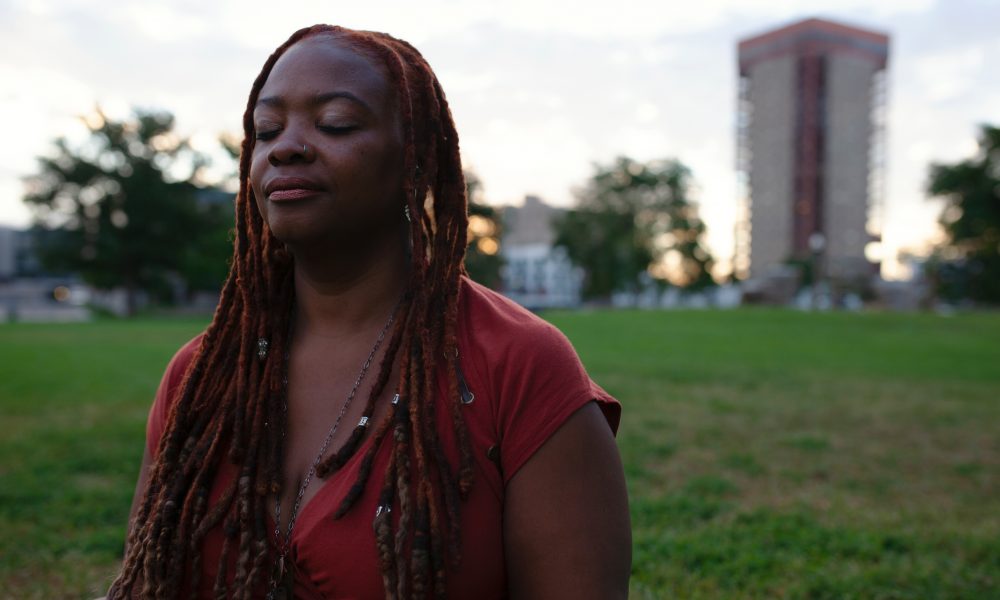
Today we’d like to introduce you to Sherrie Lawson.
Sherrie, let’s start with your story. We’d love to hear how you got started and how the journey has been so far.
I grew up in NC. Did my undergraduate studies at the University of NC at Charlotte. Upon graduation, I moved to Phoenix, AZ, for a few years, then headed back to the east coast, settling in Washington, DC. Although I majored in English, I began my professional career in banking/finance. I was in finance for over ten years when I finally admitted that this was not fulfilling for me. I transitioned to a career in education, working with a small campus that was new to the DC area, Nyack College. Nyack was a 100+-year-old college based in Nyack, NY, that had decided to place a campus in DC.
I directed an accelerated degree completion program for working adults and decided that I really wanted to teach. I received my Masters in Organizational Leadership with this same college and began teaching in the programs I was directing. However, after a ten year run in DC, the campus closed. There was too much competition and not enough name recognition for them to last in DC. During this time, I began working on my PhD in Management. I decided that I enjoyed teaching in higher education and would also like the option to do consulting work. Receiving a PhD would be significant and necessary to continue teaching in higher education.
While working on my PhD I became very strapped for money and decided that I had to find another full-time job. I was hired to work with a small company software engineering company working with several government agencies and the military. I was assigned to support a program at the Washington Navy Yard, a naval base located a mile from the Capitol building. My task was to help with a program redesign, which included building a program intranet and centralizing communication and documentation. I enjoyed this work as it combined my education in Organizational Development and my love of creating systems and processes.
On September 16, 2013, a fellow contractor walked into my building on base at the Washington Navy Yard and opened fire on my coworkers. I ran for my life while 12 of my coworkers lost theirs. This experience greatly impacted me. Within four months, I was diagnosed with PTSD, severe anxiety, and major depression. I was experiencing nightmares and night terrors or having bouts of insomnia. I became hyper-vigilant, constantly expecting danger. All this became debilitating and after a heart attack scare, my doctor pulled me from work and from my PhD program. I was referred to a PTSD-trauma-focused program that felt like. Job. I was in various types of therapy from 9 am-3 pm on almost a daily basis.
While attending the PTSD program, my family began to experience many difficulties. My father was admitted to ICU after a ruptured appendix caused him to become septic. My maternal grandmother died. The day after her funeral my uncle died and that same week my sister was told she needed a kidney transplant. At this point, I made a choice to leave DC and move back to my home state of NC. Right after deciding to move home, my mother was diagnosed with colon cancer. All of this took place within the year of me surviving the mass shooting. I felt like my life was literally falling apart. I became extremely depressed and began to have suicidal thoughts.
Two months after moving back to NC, I suffered a mini-stroke. My right carotid artery spontaneously tore. My doctors believe this was from the level of stress I had been under since the shooting. It took a year for me to heal from this injury. During the time, I could not be physically active and any stress could be detrimental to my health. I was placed on numerous drugs, from anti-anxiety medicines to antidepressants. I don’t remember much about that year. I didn’t feel much. I just felt numb. I was afraid that this would be the rest of my life.
During this time, I came across The Rebels Project (TRP). TRP is a nonprofit, peer-support organization for survivors of mass tragedy. It was started by Columbine alumni after the Aurora Movie theater shooting. They welcomed me into their private FB group, where I was able to share my struggles and learn from those who had a similar experience. This was extremely impactful because until I joined TRP, I didn’t feel very supported. Friends and family struggled to understand why I couldn’t just ‘get over’ the shooting. When I continued struggling months later, some accused me of choosing to wallow in my sadness and cave to my fears. I felt alone and misunderstood. The TRP survivor community embraced me, supported me, and created a space where I could begin to heal.
I made my first trip to Colorado in the summer of 2014. TRP hosted an event that included Columbine, Aurora theater, and a group that had been impacted by the shooting at Sandy Hook elementary. I asked if I could fly out and attend. It seemed important for me to be in a physical space of people who knew what I was going through. After my first visit to Colorado, I began volunteering with TRP. I still wasn’t able to work but decided I could handle volunteering. In January of 2016, I was invited to join the leadership team who were all survivors and volunteers with TRP. In Oct. of of 2016, I moved to Denver, CO to begin a new phase of life surrounded by a supportive community.
I moved to Denver without having a job or a place to live. I packed only what I could fit in my Mini Cooper, which included my rescue and emotional support cat, Jax. For the first three months, I stayed in an Airbnb. After a three-year court battle, I was receiving worker’s compensation and able to somewhat support myself while I looked for work. My doctor had only released me to work part-time as I was still experiencing severe PTSD symptoms. I continued to volunteer with TRP and get to know my new surroundings.
I determined (with guidance from my therapists and doctor) that I could handle teaching. I began applying for adjunct faculty positions at local institutions of higher education. After living in Denver for a year, I was invited to teach two courses at the University of Colorado-Denver! This was so exciting for me and gave my self-esteem a much-needed boost. I had determined that I was too ‘damaged’ to ever handle full-time work as I did before. I decided that if I lived simply, I could survive on my income from teaching and my worker’s compensation. I located an amazing therapist who had experience working with Aurora theater shooting survivors. She convinced me to try EMDR (Eye Movement Desensitization and Reprocessing) therapy. This therapy has shown great success in treating PTSD in military veterans.
After nine months of EMDR therapy, a focus on yoga/meditation, and the amazing support, I felt healthier than I had in years. I still didn’t believe I could handle full-time work. After all, I was teaching at CU Denver and continuing to volunteer with TRP. However, towards the end of 2019, I determined that I had to make more income to sustain myself. I was concerned that more work would mean more stress. I didn’t want to re-trigger my PTSD or cause another stroke. I began seeking another part-time position to add to my teaching income.
I interviewed with Rocky Mountain Microfinance Institute (RMMFI) for a part-time entrepreneur trainer position. I was excited at the prospect of being able to teach in a different capacity and work with working adults again. I began working as the Denver headquarters trainer at RMMFI in January of 2020. As we all know, in March, everyone began shutting down due to the pandemic. My immediate fear was that I would fall into a deep depression. I’ve always been extremely social and had finally established a robust social life here in Denver. I was working two part-time jobs that I loved and was the happiest I had been in years. How could I survive isolation?
RMMFI pivoted their entrepreneur education programs to online and I was able to continue teaching for CU and RMMFI. This helped me stay focused on my passion for education. I had survived a mass shooting. I would survive this. Demand for RMMFI’s entrepreneur program ramped up and worked very busy. In July (although I thought I could never handle full-time employment again), RMMFI offered me a full-time position trainer position. I knew that this organization had a supportive environment and was a perfect fit for me at this time in my life. I accepted the position and, just three months later, was offered a promotion to management. I am now the Site Expansion manager and tasked with establishing new sites to train entrepreneurs and offer micro-financing in various parts of Colorado. I continue to volunteer with TRP and work with fellow survivors.
While the future is uncertain, I am thankful for my current opportunities. I enjoy training and working with entrepreneurs. I receive much fulfillment from teaching my students at CU Denver. I learn so much from students and I’m extremely inspired by the entrepreneurs. I have established a great community here in Denver and know that I’m in the perfect place for me at this time.
Great, so let’s dig a little deeper into the story – has it been an easy path overall and if not, what were the challenges you’ve had to overcome?
I outlined many of my struggles in telling my story. Struggles I’ve had along the way are PTSD, anxiety, depression, and suffering a mini-stroke. I also lost everything that I had worked for. Due to my inability to work and my health issues I had to file for bankruptcy and lost my home in DC. I wiped out all savings and retirement and had to start completely over once I moved to Denver. I also had to do a tremendous amount of therapy to heal from emotional wounds.
Please tell us more about your work, what you are currently focused on and most proud of.
I have an LLC that I named Epiphanie Consulting. I do speaking engagements about my experience as a mass shooting survivor and I’m also a Soul Collage facilitator. Soul Collage is an intuitive collaging process that reveals what’s going on in your subconscious. My LLC doesn’t make much money but I am proud of myself for establishing it. I am proud of the work I do at the Business School of CU Denver. I teach in the First-Year Experience program that provides support for first-generation college students. I am most proud of my work at RMMFI because it offers me the opportunity to make an impact in the community by training entrepreneurs for success.
What moment in your career do you look back most fondly on?
My career has taken a few twists and turns. I would say my proudest moments are when former students contact me years later and tell me of their successes.
Contact Info:
- Website: www.therebelsproject.org, www.rmmfi.org
- Email: sherrie@rebelsproject.org, sherrie@rmmfi.org
- Instagram: @therebelsproject, @rmmfi
- Facebook: https://www.facebook.com/Therebelsproject, https://www.facebook.com/RMMFI


Image Credit:
Lipstick Lobby campaign, Eileen Skahill
Suggest a story: VoyageDenver is built on recommendations from the community; it’s how we uncover hidden gems, so if you or someone you know deserves recognition please let us know here.