


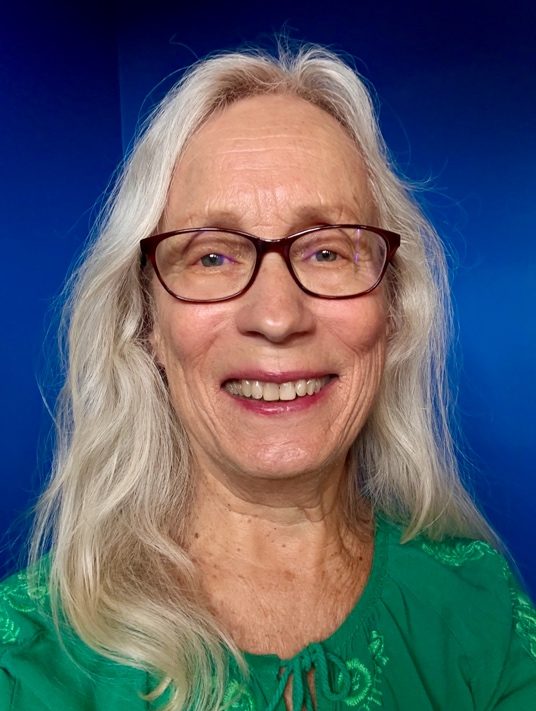
For Kathy Taylor, music became a deeply personal way to document love, growth, and time. What began as a simple song for her granddaughter evolved into a yearly tradition—17 songs capturing different ages, emotions, and milestones, blending genres from lullabies to jazz and rock. Alongside this musical journey, her work translating a culturally rich Curaçaoan novel reflects the same passion for language, nuance, and storytelling, creating a bridge between generations, cultures, and lived experiences.
Hi Kathy, thank you so much for being here. Can you tell us about the CD you created for your granddaughter and how writing a song for her each year became a musical scrapbook of your relationship?
I used to sing to my children when they were little, so it was natural to want to sing for my granddaughter.
I wrote the first song for her (“Greta, Gretita”) when she was about a year old.
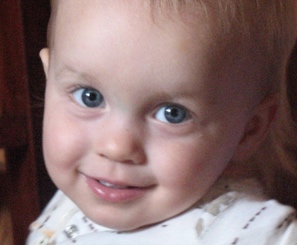
It was in Papiamentu, a Caribbean creole language I was very involved with at that time. It is a simple little song expressing the happiness that she brought to the whole family. The second verse is an English translation of the Papiamentu. “and when you smile, Mr. Sky tells us all that the sun has come out to bring everyone cheer.” She learned to sing it in Papiamentu when she was two. I didn’t know then that it would be the beginning of a tradition. Here is a video of her singing it at age five, trying to remember it. https://youtu.be/R93YlBtHc5I
When I wrote another song for her second birthday, she listened so intently that I felt a special bond. That song was called “For Greta and Me.” The end of the chorus goes “so if I sing this tune to the stars and the moon, you can hear it wherever you are.” She came to visit that next summer when she was about 2½ and the first thing she said was “Sing the Gweta song.” I started to sing and she sat very close to me and watched and listened. By the second chorus of the song, she threw back her head and sang it with me. We kept on singing, as tears ran down my face. And so it went, each year I wrote a new song for her birthday. I would always wonder what kind of song it should be, but then I would just think about her, who she was at the time, and the appropriate style for her age and development. But really, the songs would just come through me. For her third birthday I just added a new verse to this song. “Now you are three, and all that you see, fills the many stories that you can share. And when you sing, such a wonderful thing, it makes happiness echo everywhere.”
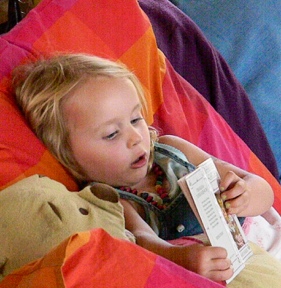
By age four, I wanted to write a ballad, a story that would feature her as a kind of hero. She loved to sing and to swim, so the song became “Greta and the Dolphin”. “Let me sing you a song, now it won’t take long, ‘bout a girl and a dolphin and a sailor. Four years old was she, when they sailed out to sea, her name was Greta Garrettson Taylor.” In the story, she befriends a little dolphin who is all alone out at sea, and they have great adventures together. When I finished singing it to her, she asked me wide eyed: “Is that true?” I asked her if she thought it was, and she nodded solemnly. I’m sure she could see the story in her head as I sang. There’s something very true about that.
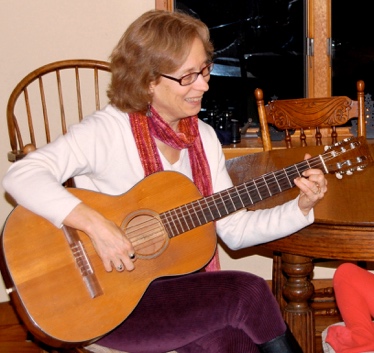
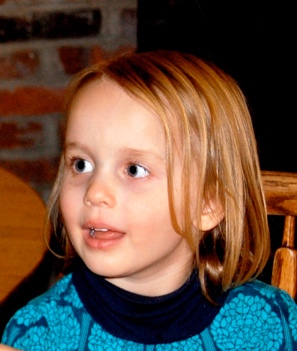
The fifth birthday song was called “Five,” a bouncy, almost Caribbean rhythm. “Five fingers on one hand and on the other one, too. And if you look at each foot, five toes are curled in your shoe. What a wonderful number of years to be alive: one, two, three, four, today the number is five.” That year she became an avid reader and could read almost anything. She also really liked the music of the Irish band, The Chieftains. (She would sing along with them.) So for her sixth birthday, I wrote a kind of Irish jig called “The Stories of Greta G.” “There once was a girl who loved to read, a couple of books was all she’d need and off she’d go to some special place, book in her hands and a smile on her face.” I began to record the birthday songs each year, so she could have her own CD of each one of them.
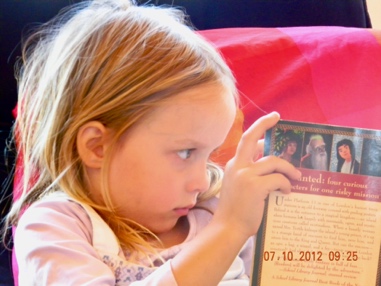
At seven, she loved humor and teasing, and by then we were really connected through the music. She has always called me Madushi, a Papiamentu expression for “Grandma.” So the song “My Madushi and Me” starts out “Greta, Greta, won’t you come and talk to me. Sit beside me, tell a story to your Madushi, birthday’s comin’, how old are you gonna be?” For each verse she teases about turning 3,4,5,6, and then I respond. Later, after I first recorded the song with me singing all of it, I then re-recorded it with her singing her responses. That was our first duet. I made a music video of it later.
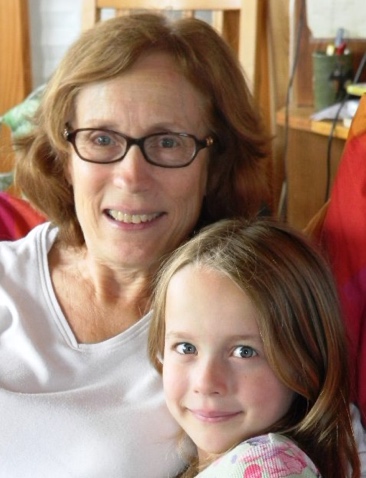
https://www.youtube.com/watch?v=vpBnX__LMtE
Then one day, she suggested that we write a song together. That was a lot of fun and it became “Our Family,” with verses about each member of the family. Greta sings it and I add harmony here and there. The last verse: “Then there is me, and my Madushi, together we made you this song; of our family, that’s special you see, so join us by singing along.”
That year Greta and her parents moved to southside Chicago; a whole new life for her. I wanted to write something that acknowledged that big transition and also the rich musical heritage of that area, including Louis Armstrong, who went there from New Orleans in the early 1920s. It’s called “Isn’t it Great?”, a kind of Dixieland jazz tune. It starts out “Isn’t it great turnin’ eight, though it’s pretty cool being seven, every day you can say, I’m older than yesterday…” And at the end: “It can be pretty in the big city, so many new things to know; isn’t it great turnin’ eight and livin’ in Chicago…” By then it was already a tradition for us to write a song together. Greta had the idea to write a song called “Hummingbird.” “Oh hummingbird, oh how you bring me glee. Oh hummingbird, you’re such a joy to see. Won’t you stay awhile and sing to me?” Again Greta sings the melody and I add harmony. She was already becoming aware of poetry, rhyme and syntactical symmetry, as well as performing. Hummingbirds are still a special symbol for both of us.
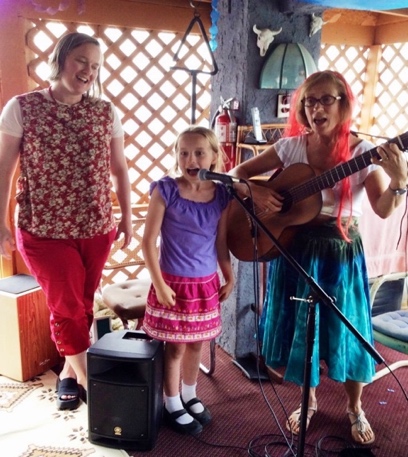
“Fine, Fine, Fine” is another duet, with Greta singing responses to me. I sing the chorus: “Well it’s fine, fine, fine that you’re turnin’ nine and the years keep rollin’ on, but when I see the sun shine on the passage of time, I wonder where has our little girl gone?” She answers that chorus with each verse, telling stories of her year and how she’s growing up. Our co-written song that year was “Colorado,” a poetic ode to the mountains and the state we both love. “Brushed on the horizon, colors gently risin’, fresh morning air, beauty everywhere…” She was excited to learn about metaphor and the use of visual images to evoke a setting. Her voice is lovely, steady and confident. She sings the verses and I harmonize on the chorus.
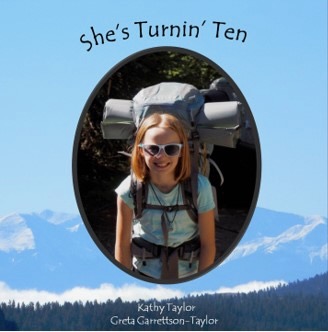
“She’s Turning Ten” is a song about turning ten as a kind of milestone. It’s also about family. With an R&B rhythm, the song adds a new vocal part for each time the chorus comes around, building larger circles of chorus. “She’s turning ten, let’s sing it again, she’s our daughter, our niece, our cousin and our granddaughter. With family all around her, new friends that have found her, circles of love that spread across the water.” It was my daughter’s idea to have the women in Greta’s life sing on this: grandmothers, mother, aunts, cousins…and then her father joins in at the end. Our joint song that year was maybe the most fun of all the songs we have done together. We called it “Chica y Grande” (small and large, but it also means a girl age 10 and her grandmother age 67.) She was into rock music by then and she even wanted some guitar distortion. (I played my electric guitar with fuzz on it.) We each wrote our own verses and then sang the chorus together, identifying things we had in common. Her verse starts out “My friends are acting strange, everything has changed, I’ve stolen someone else’s legs, whose body is this?” Later the chorus together: “We’re growing older, getting bolder, aching shoulders, but we’re pushing through.” Greta: “I’m growing up so fast” Kathy: “Another year has passed” G: “I’m getting taller” K: “And I’m getting smaller.”
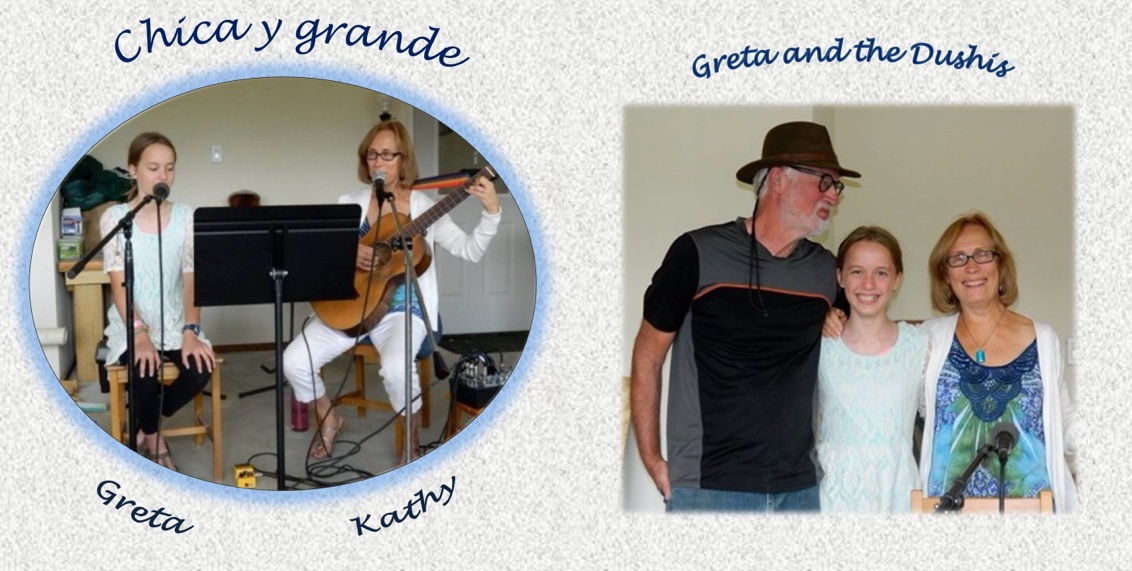
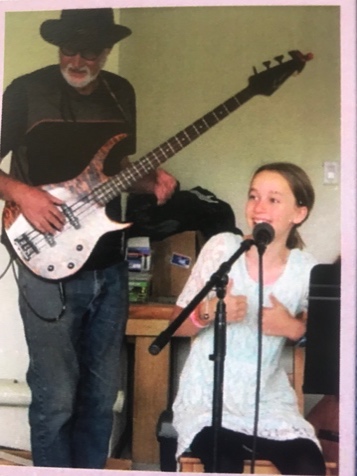
A small concert for friends and family. Greta calls her grandpa “Padushi,” also from Papiamentu, so we are affectionately called “The Dushis.” (“Dushi” means sweet.)
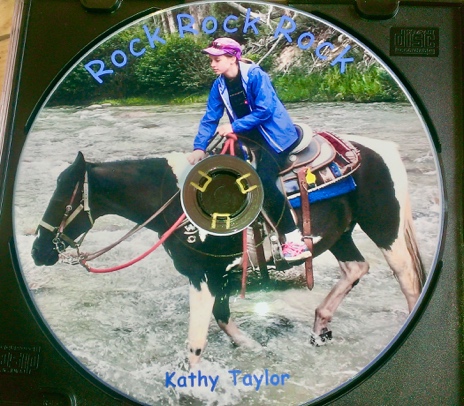
Another rock song for age 11, “Rock, Rock, Rock.” “It’s four plus seven, or two and nine, turning eleven is mighty fine, just one and one, one day at a time, some work some fun, lotta rhythm and rhyme, uh huh.” It has a pretty heavy rock beat and is about being in the middle. “No longer a kid and not quite a teen, everything is mid and in between…” Our joint song that year was a sweet and silly song about another theme of mutual importance: “Chocolate” begins with each of us singing about our trials and frustrations. “The squirrels ate my flowers, been crying for hours, the wind blew my cat away, I need a higher power..” and then together on the chorus. “…like chocolate, just a little bit of chocolate; take a bite or two, it’ll fix it for you, chocolate.” Greta sings harmony on the chorus.
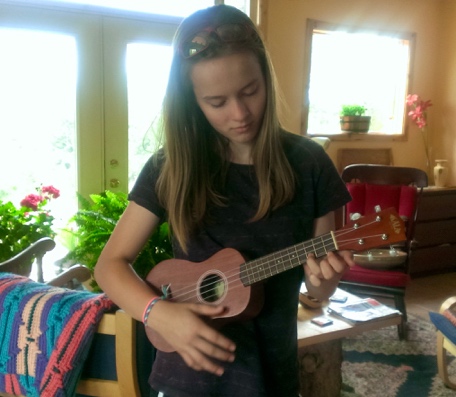
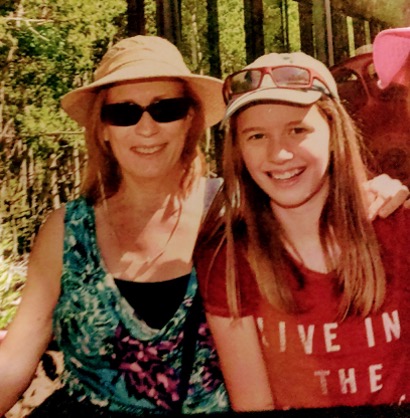
“Twelve” was the last birthday song. I had said to her once long ago that I didn’t know how long I could keep writing songs for her birthday. She looked at me and said “I think to twelve would be good.” This song became an imagined story of the writing of her birthday song. “It was late one night in early February, the moon was bright and the shadows kind of scary. The clock was ticking and I hadn’t got far, just sat there picking on my old guitar…” In the process of trying to write the song I keep finding all kinds of examples of the number twelve around me and in the world, as I try to find words that would rhyme with “twelve.” Pretty tongue-in-cheek but also celebrating the magic of that number. This song also became a music video. https://youtu.be/g74PR0XZJio
By that time, Greta was moving on with her life, and the magic window of our music together was closing. Her saying that “to twelve would be good”, might have been a random answer, but in fact, it was about the time that her life became too complex and not easy to capture in a song. I did make another video of clips from all our songs for her 14th birthday. And then I wrote another song for her when she was 15 (“Love is There”), though it was not a birthday song. That’s the last song on the CD. “Love is all around you. Trust and it will ground you.”
You intentionally chose different genres over the years to reflect her age and interests—what was it like hearing her voice and identity evolve through those 17 songs?
It was indeed a privilege and a joy to travel through time with Greta through music. Now, the recording we have is a special treasure, to hear her voice and experience develop through the years, and to hear us share our mutual love for music and each other. With Greta’s blessing I put them all together on a CD for her 18th birthday. Now we are both grateful to have this musical scrapbook of an important era in her early life and the memories that we created together through music. Every time I listen to it, I can see and remember all of those young Gretas and hear her voice as it grows with her.
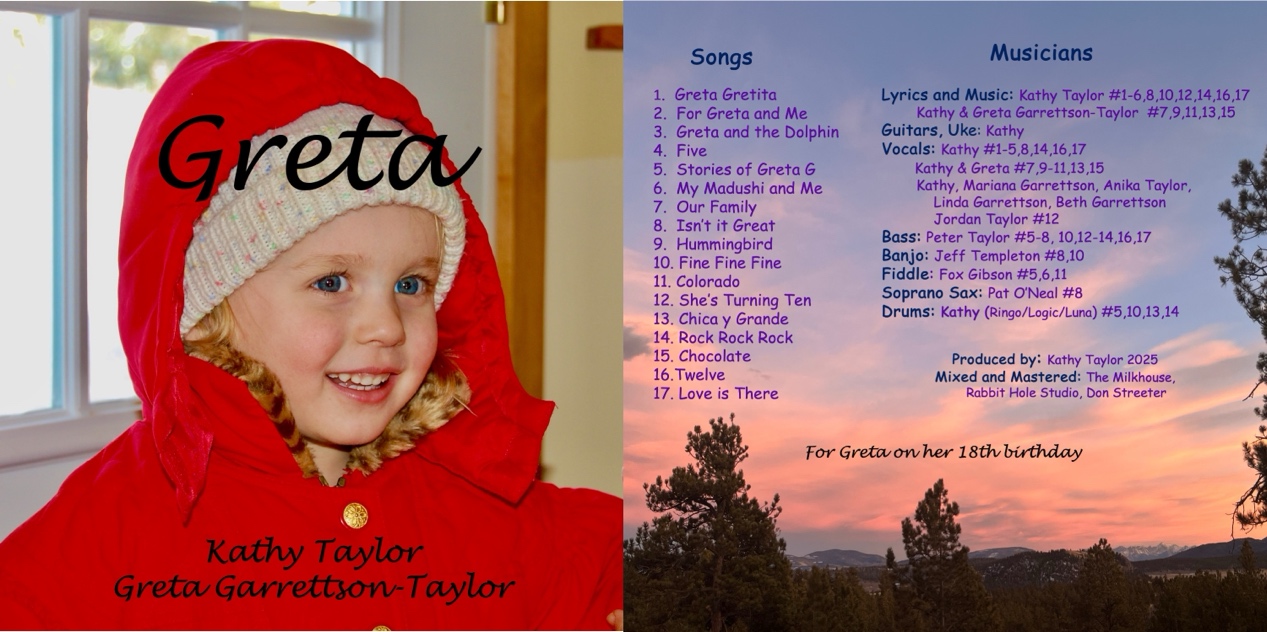
https://open.spotify.com/album/1TCEUmb0fduZaFWpyHYssM
Alongside music, you’re currently translating a historical novel rooted in Curaçaoan culture. What drew you to this project, and why does it feel especially meaningful to you?
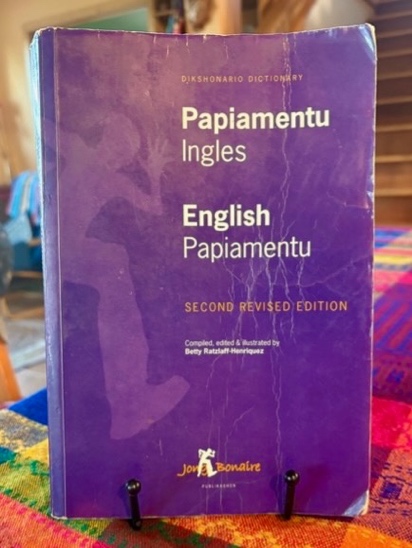
This was a perfect project for me. I have a long relationship with Curaçao and Papiamentu, the creole language spoken there. I fell in love with the language, culture and people of that island the first time I went there in 2002. Before that, I had already developed a special interest in creole languages, especially ones related to Spanish and Portuguese. With time, I became fluent in Papiamentu, created a course and taught it to my students. I took groups of them to Curaçao for an immersion experience.
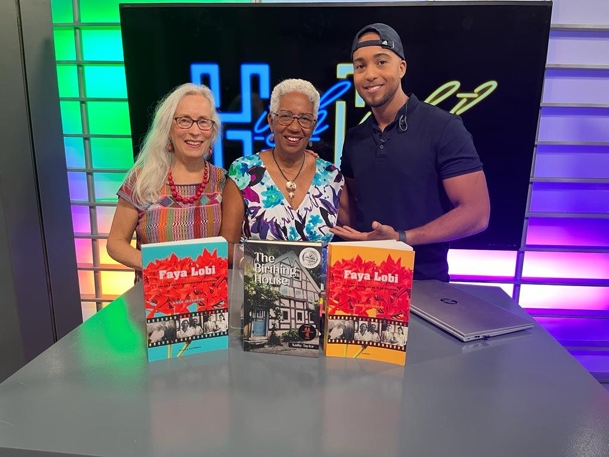
I also have a background in and considerable experience with translation and have found it to be fascinating and challenging work involving many questions and compromises, as well as stylistic and cultural decisions. I am a writer myself, so I pay a lot of attention to words, their nuances and their power to build a story. So when my dear friend Ange Jessurun asked me to translate her novel (written first in Dutch and then in Papiamentu) to English, I was honored and delighted to give it a try.
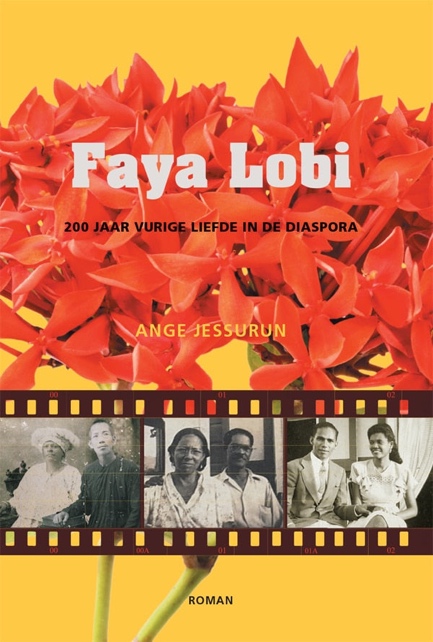
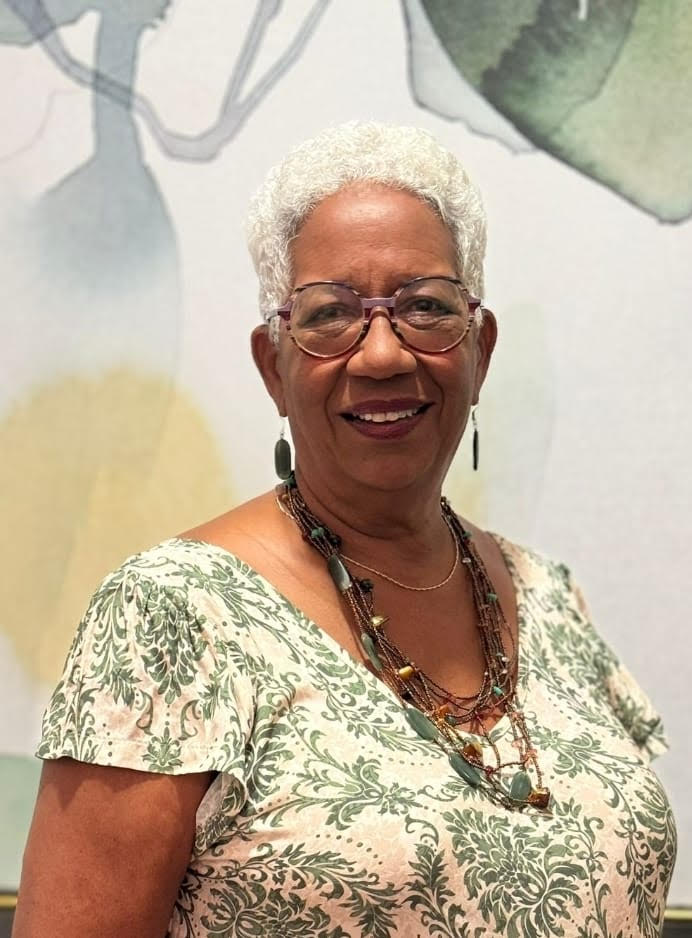
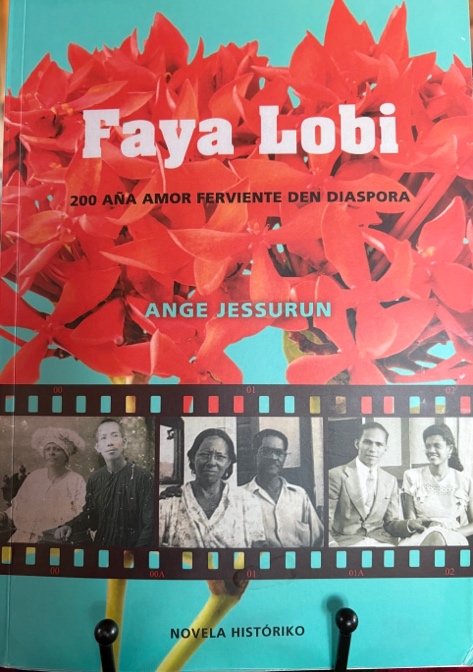
I have already read the novel in Papiamentu, and I believe it is an important work for Caribbean culture and history. It is an historical novel about her family ancestry, based on deep research, family stories and other resources. This novel is special for several reasons: First, Ange’s family history embodies many aspects of the history of the Caribbean, from Hong Kong to Suriname to Curaçao on her father’s side, slave owners slaves, and freed slaves in Curaçao on her mother’s side. With photos and documentation, you feel the authenticity of the story, yet it is also a beautifully written novel, with the author’s talent for bringing characters and settings alive in short vignettes through the generations. Careful attention to detail and lots of dialogue bring the reader into each timeline and the lives of the people in that moment. It’s a chain of love stories that lead, in the end, to Ange and her family. I have known her father, most of her siblings and her two daughters. Over the years I feel very connected to her family. So, how could I not love the novel and be excited to translate it?
How does your fluency in Papiamentu, familiarity with Dutch, and deep connection to Curaçao shape the choices you’re making in translating the book into English?
I lean towards the Papiamentu version for the rhythm, expressions, and the flavor of the dialogue. I leave in some words in Papiamentu, to remind the reader of the original context and well as honor some of the changes that Ange made as she translated from Dutch to Papiamentu. There is a tension in translation studies between literal loyalty to the original text and complete translation into the target language and culture. In other words, you are not just converting each word to its “equivalent” in another language (sometimes there isn’t one), but rather you are creating a new text that somehow honors the many factors of meaning, style, culture, time period, expressions and even the sound of the original while making it accessible and relatable to readers of the translation. In translation studies there is the concept of foreignizing – leaving the flavor of the original language in the translation—which may seem awkward or unusual, but also tells the reader something about that culture and time, while still being somewhat relatable to the reader. We all need to be reminded that other languages and cultures are not just translations of our own.
At times I need to check the Dutch manuscript for clarity or deeper understanding of a word or cultural reference. Dutch was once the colonial language for Curaçao, and was still a foreign language for much of the population in early years. Now it is deeply integrated into the culture and is one of the official languages of Curaçao. There are many Dutch words and terms used in Papiamentu, and if I just translate them to English, I lose that linguistic and cultural aspect of life in Curaçao as its changes over time. There was, and still is controversy over the relative importance of speaking Dutch and Papiamentu. At the end of the novel, there is a helpful glossary of words and expressions from other languages, which a reader can consult. How often should the author and the translator leave that to the reader? Or should there be some translation or indirect explanation of things as you go? Do I bring the story to the reader or do I bring the reader to the story? It’s always a judgement call.
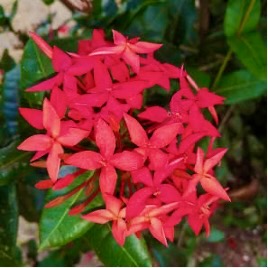
One interesting question is the title of the book. Faya Lobi is the name of a flower found in Latin America and the Caribbean, and it is the national flower of Suriname. It means “Fire Love,” from the English based creole language Sranan Tongo from Suriname. [Faya = fire, Lobi = love.] You can’t translate the name and its symbolic significance in the story. Ange does it indirectly through the subtitle of the book: “200 years of fervent (fiery?) love in the diaspora.”
Translation can be both technical and deeply emotional. What challenges and rewards have stood out to you while navigating language, culture, and history in this work?
Poetic expressions, rhythm, voice, wordplay, humor: all offer challenges for translation. You can’t find it in a dictionary and you can’t save it all in the translation. There are always sacrifices! But then, that is true for all writing. Readers bring to their reading a unique set of associations and experiences, cultural and linguistic skills and assumptions. In a sense, readers always translate what they read into their own understanding. In this novel, issues of slavery and race, language, religious barriers, social and cultural expectations of the time, are all complex and central to identity and status within the stories. Language is a kind of archeological history, yet most of us are not aware of that history as we use it. Words that may be commonplace now, could have been powerfully offensive in the past or vice versa. It’s not up to the writer or the translator to represent all of that, but there are times when we have to step carefully around such underlying subtleties.
There is wonderful onomatopoeia, rhythm and tonality in Papiamentu that doesn’t really translate to English. That is true for all translation. If you have ever tried to translate poetry or songs, you quickly become aware of that. The sounds and rhythms of words are unique to each language, as are many metaphors. For example: “She was the apple of his eye” in English does not mean what it literally says. In Papiamentu “E tabata su pret’i wowo” conveys a similar weight of affection and importance, but literally it says “She was the black/dark/pupil? of his eye,” which is also not meant literally and would not convey the meaning well to an English speaker. In this case, I used the English expression.
Also, pronouns are not gendered in Papiamentu, nor do they reflect grammatical case, so you have to get it from context. For example “e” can mean “he/she/it, him/her/it.” There are many other syntactical differences as well. Machine translation can’t handle all that! A translator has to think like a native speaker (in the appropriate time period) of the first language and then translate as an educated, but also colloquial native speaker of the second language, again while respecting the time period. Although there are similarities, the 19th century in the U.S. is not the same as that time period in Curaçao,
I really enjoyed learning more of the history of some places and names that I was already familiar with in Curaçao. The last name Specht is prominent in Curaçoan history and in this novel. The word happens to mean “woodpecker” in Dutch, but you can’t translate proper names, even if they originally had descriptive meanings. In other words, in this novel there are no woodpeckers, much less generations of them!!
In summary, this project confirms my sense of the richness and complexity of all language and the multilingual heritage of Curaçao. Sometimes I am hearing / seeing a whole symphony as I translate, but most of the time I can really only save a small ensemble in the final translation, and they might be playing in a different key. It’s a fascinating experience.
Links:
Popular
-

The Trailblazers: Rewriting the Narrative
-

From Lullabies to Legacy: Kathy Taylor on Turning Love into a Lifelong Musical Scrapbook
-

Building to Let Go: Chris Seegers on Ownership, Identity, and the Art of the Exit
-

Hidden Gems: Local Businesses & Creatives You Should Know
-

Denver’s Most Inspiring Stories