

Today we’d like to introduce you to Becky Wareing Steele.
Becky, please share your story with us. How did you get to where you are today?
I am a small scale sculptor living and working in Denver, Colorado. I’ve always gravitated towards art as a means of self-expression. Growing up in South Jersey we spent a lot of time at the Philadelphia Museum of Art which introduced me to the work of artists like Marcel Duchamp who was questioning what art is and challenging the traditional ways in which we view their work. The work that resonated with me the most was a diorama based work entitled Étant donnés. This was the final work created by Duchamp and was worked on in secret (the art world believed he had given up art for competitive chess which he’d been playing for almost 25 years, following a prolific art career). The end result are two massive wooden doors that the viewer approaches revealing the diorama based scene as they peer into the small peepholes carved into the door. To this day, this has been one of the most impactful works on my development as an artist.
In 1995 at the age of 12, I moved to Colorado with my mom and older brother and continued to take art classes and explore art in a new setting. The landscape of the west stood out to me, having grown up on the east coast it was a stark contrast to summers at the shore but there was something different and intriguing about this landscape.
I attended Colorado State University from 2001-2006 studying Interior Design at first, then transitioning to Art History. This opened my eyes to the work of Intuit Artists (i.e., Outsider Artists), more specifically Henry Darger an artist who created an incredible body of work in private that was not discovered until he passed away in 1973. Darger’s work taught me that sometimes you need to allow your practice to become a world of its own.
It was while I was in college that I got my first button maker at the age of 18 and my life’s trajectory changed. All of a sudden, it felt like I had a tangible way to create small, wearable works of art. What started as a hobby making gifts for friends evolved into a small business. This business later evolved into my current art practice.
We’re always bombarded by how great it is to pursue your passion, etc – but we’ve spoken with enough people to know that it’s not always easy. Overall, would you say things have been easy for you?
The biggest thing I struggled with was defining myself as an artist. For years I alternated between titles like “crafter” and “maker” too nervous to elevate myself to the level of artist that I held in such high regard. In 2016 I was accepted into the artist in residency program at RedLine Denver and again a major shift occurred. I was in a supportive, creative environment that allowed me to explore my artistic practice along with a group of talented artists which formed a community and support network that I am so fortunate to still be a part of today.
My biggest piece of advice would be to find your community. Who inspires you? Find someone who is on a path that you admire and ask them questions. Most artists I’ve encountered are eager to discuss their practice and how they arrived at where they are today. You might even find that you deal with the same struggles and you can trade coping techniques. It is so important to have these conversations and to feel that you are a part of something larger than yourself.
Also, figure out ways your work can involve your audience. Creating different ways for people to engage with my work has helped in building an audience and support network. In 2016 I created a diorama based society entitled Utopia: A New Society for All that explores what it means to be part of a society by going back to basics and removing the context of our everyday world allowing people a place to escape to while still having important conversations surrounding community with real people. The participants vote and direct the visual work and how it evolves, becoming active participants in the art making process.
My newest artistic collaboration entitled Personal Geographies explores individuals’ memories of place through auditory and visual means. For this project, I’ve collaborated with a local oral historian Shannon Geis who interviews participants about a memory of a place that has significance in their life. Geis asks questions encouraging the interviewee to describe the setting of the place and how it made them feel. I then take this information into the studio and create a diorama based representation of that individuals’ memory of place. In its final installation form you are able to sit in front of a sculptural bust and peer into the “peep hole eyes” to reveal the scene inside that individuals’ mind all while listening to their description of this memory of place allowing for a moment of connection with someone you’ve most likely never met.
If you are in the Denver area you can experience Personal Geographies at the Denver Art Museum as part of the Untitled: Creative Fusions event UnEarthing Place (curated by Libby Barbee and I), Friday April 24th from 6pm-10pm. This exhibition will also be traveling to the Smithsonian’s Hirshhorn Museum and Sculpture Garden June 27th and 28th as part of the DC Listening’s Lounge’s 13th Annual Sound Scene 2020 UnScene.
(Please note in light of the recent events surrounding COVID-19 these events are subject to change. Shannon and Becky are currently working on ways to interact with this project and share your memories of place through online platforms, visit their website personalgeography.org for more information and project updates.)
We’d love to hear more about your work and what you are currently focused on. What else should we know?
My work deals with the commonalities that exist in our shared experiences through the examination of scale and environment. Through my sculptural and photographic work with 1:160 scale figures and 1:12 scale objects I explore the impact of scale and how it affects our perception of the world around us. This impact can also be found in the way we perceive ourselves in our environment.
In more recent series, I’ve developed narrative components to accompany the works, allowing the viewer to connect with the piece on a deeper level. Using settings familiar and accessible to everyone is a key component of my work. Through this process, I am able to alter the way people view everyday situations, seemingly mundane at times, and invite the viewer to think about their place in the environment by altering the scale.
I also have a line of miniature goods that I sell at a few select local boutiques, including FM in Denver and Kansas City Kitty in Fort Collins, that support the creation of larger works in my studio practice. I also run a web store and accept commissions throughout the year through my website beckywareingsteele.com. I am currently running a 50% off sale on my website with the coupon code SAVE50.
Looking back on your childhood, what experiences do you feel played an important role in shaping the person you grew up to be?
I attended a Quaker school for the first three years of my schooling and it instilled a sense of wonder in the world around me that I still hold onto. Growing up in a supportive home gave me the confidence and skill set to take on larger challenges in life. I think knowing that you always have a safety net in the form of a strong support network is crucial to our development as human beings, especially artists. My dad has always said that the most important thing for a child to know is that they are loved unconditionally and I can honestly say I’ve never doubted the love that surrounds me. Moving cross country at the age of 12 with my mom and older brother taught me to be adaptable and open to new experiences. Everything that has happened in my life has brought me to the place where I am today.
Are there any apps, books, podcasts, blogs or other resources that help you do your best in life (at work or otherwise)?
The book that has been a real game changer for me as a woman and an artist is Miranda Gray’s The Optimized Woman. I have told countless people about this book over the years (I’ve even given a public talk on the topic) as it has become one of the best tools in my creative practice. In this book Gray explores our hormonal fluctuations that occur throughout our menstral cycle and how they effect our day to day energy levels and skills sets.
In the book she lays out these optimized abilities that we excel at within specific time frames during the month. For example the week that you menstruate is your “reflective” phase this is when your body and mind need the most rest, it’s time to take it slow and not be too demanding on yourself. The following week is known as the “dynamic” phase, this is when we have the energy to take on everything and is great time to work on a big project or things requiring action. This week is followed by the “expressive” phase, this is when we are the best at communicating so it’s the optimal time to have a meeting or answer interview questions. Next up is the “creative” phase this is when we have those light bulb moments if we allow our brains creative breaks through out the day. Through following this guide it’s helped me to understand the fluctuations in my productivity and I’ve been able to schedule most tasks into their “optimal” times which leads to less frustration and self judgment.
Another favorite book is Your Inner Critic is a Big Jerk by Danielle Krysa. This book is about stifling that inner critic we all have in our brains introducing the reader to 10 truths they must face in order to defeat self-doubt.
I also listen to podcasts constantly, alternating between comedy and podcasts that explore human nature. I highly recommend Nice Try Utopia that explores the utopian impulse in relation to societies and places throughout history.
In light of recent events please consider supporting your local arts community. Many artists are losing income due to the cancellation of events and exhibits. Visit https://www.redlineart.org/resources-for-artists for more information on ways to support the arts in this time of need as well as helpful resources for artists.
Contact Info:
- Website: beckywareingsteele.com
- Email: bwareingsteele@gmail.com
- Instagram: @beckywareingsteele
- Facebook: @beckywareingsteeleart
- Twitter: @bwareingsteele
- Other: @beckywareingsteel on Tik Tok


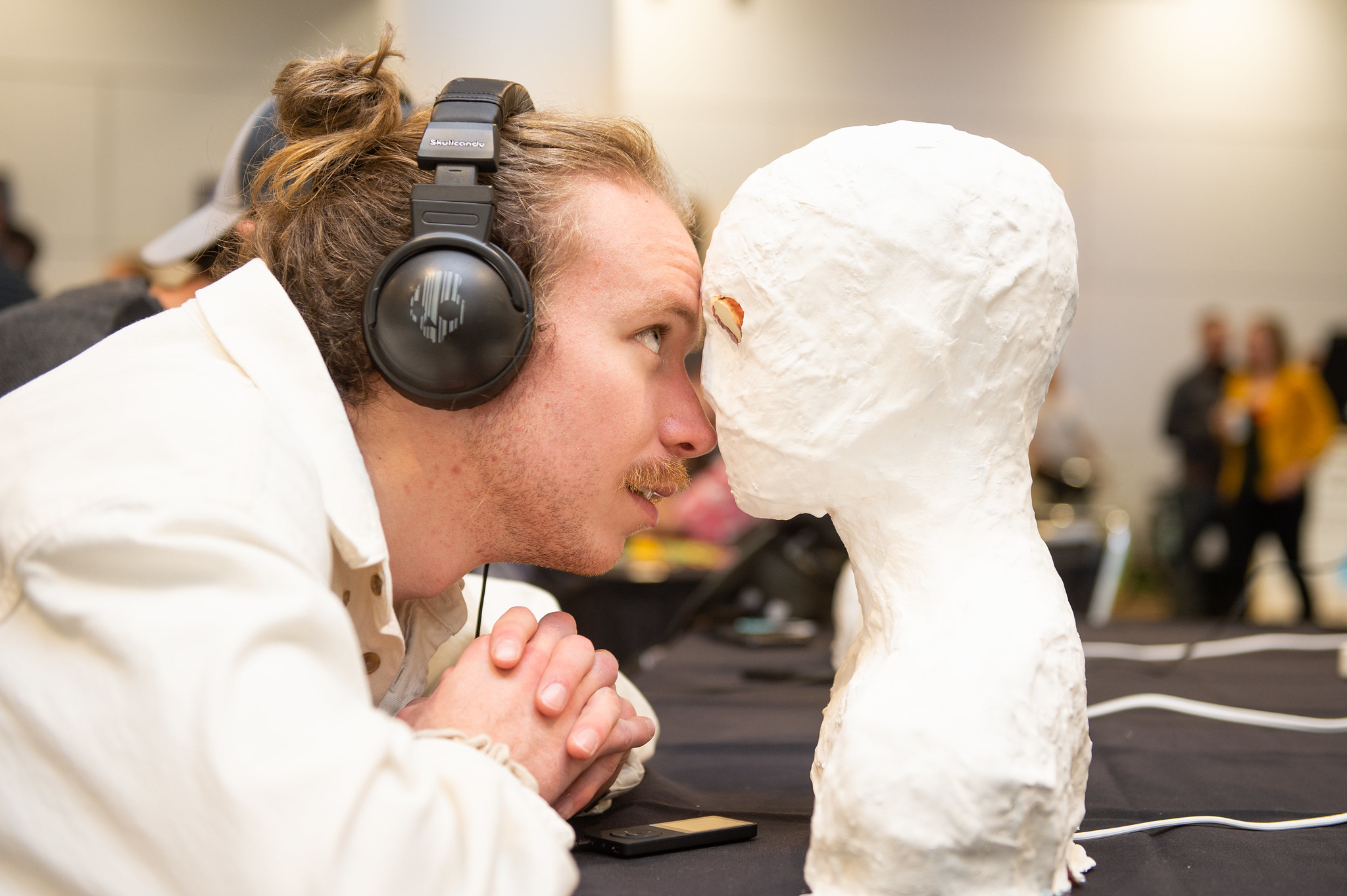
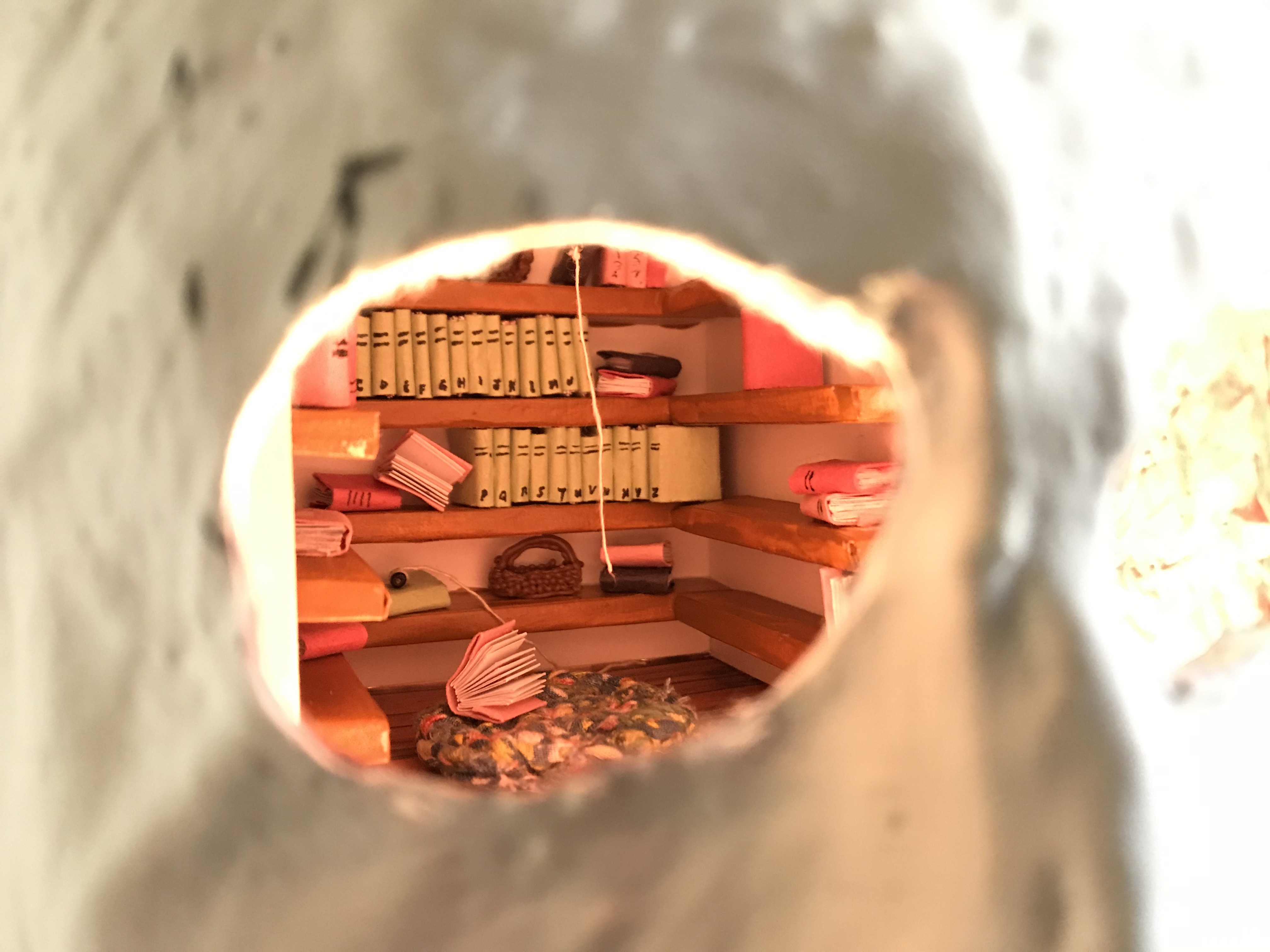
 Image Credit:
The two images showing people peering into the Personal Geographies dioramas are courtesy of TedXMileHigh and the two installation images of Utopia are courtesy of the Fine Arts Center at Colorado College in Colorado Springs. The rest of the images are courtesy of the artist (me).
Suggest a story: VoyageDenver is built on recommendations from the community; it’s how we uncover hidden gems, so if you or someone you know deserves recognition please let us know here.
Popular
-

The Trailblazers: Rewriting the Narrative
-

Celebrating the Spotlight: Kaytee Shashore Turns Milestones Into Momentum
-

Humanity in the Machine: Alexander Raye Pimentel’s Cyborg Recall Questions the Cost of a Data‑Driven World
-

Raemi Anderson on Courage, Caution, and Answering the Call of the Landscape
-

Hidden Gems: Local Businesses & Creatives You Should Know