


Today we’d like to introduce you to Cynthia Settje.
So, before we jump into specific questions about the business, why don’t you give us some details about you and your story.
I learned to sew when I was very young and have always enjoyed making things. Add in an interest in history, and costume-making was a natural progression. But when I graduated with a degree in costume technology in the midst of the recession, the entertainment industry was in rough shape and jobs were scarce. I began to list my personal costume work on Etsy out of desperation, and to my surprise it sold well–especially historical corsets. I basically stumbled upon a wide open niche in 2009. Almost immediately, I had enough work to take the place of the job I couldn’t find, and I’ve been building this business ever since.
Fast forward ten years and I have a studio space with several employees in Louisville, CO. I realized quickly that I could run the online-based business from anywhere in the US, so we moved out to Colorado in 2012. Folks ask why I don’t live in NYC, and I just gesture to the mountains. However, a lot of my classmates and friends did move to NYC, and they bring a lot of work our way.
Redthreaded has two focuses. Our retail side focuses on reproduction historical corsetry for the reenactment, cosplay, and interpretive communities. We also take large theatrical contracts from time to time and have forked for several Broadway shows including Something Rotten! (designed by Gregg Barnes) and Anastasia (designed by Linda Cho). Both of those tours came through Denver, so if you saw those shows you saw some of our work on the ensemble cast. I also worked at the Colorado Shakespeare Festival for five summers, though the business keeps me too busy to do so anymore.
We also sell patterns and kits for those who want to sew their own historical corsets. The cosplay and craft hobbies are on an upswing, and it’s been delightful to see a renewed interest in sewing, historical dress, and slow fashion.
Great, so let’s dig a little deeper into the story – has it been an easy path overall and if not, what were the challenges you’ve had to overcome?
I don’t think business is ever a smooth road. For me, the steepest learning curve was probably the financial and legal stuff. My university gave me an excellent technical skillset, as well as a lot of management experience, but the “business of business” was a scary new world. I learned a lot of that on the fly, for better or worse.
The other tricky thing about my business is that it’s based on *making* things in the United States. We’ve all but lost our manufacturing abilities in this country, so making clothing is expensive and difficult. We’ve managed to make that part of its work, but supply costs are always rising. But this also means that business revenue and growth is directly tied to how much product we can make, and how fast we can make it. The garment manufacturing industry and the theatrical costume fields are both chronically underpaid. They’re “women’s work,” and women’s work has been undervalued for centuries. Quite frequently, costume depts. are paid less than other depts. at theatres. This bleeds over into the budgets for contract work like ours. We’re working to change this, but it’s a long road, and the fight for wage equity is ongoing.
It’s easy to get wrapped up in the idea of starting a handmade business. Every day there’s a new article about the “gig economy” or “side hustle.” So let’s talk a bit about how to make that actually work because it’s not as easy as throwing some crocheted items up on Etsy.
The most important thing is to make something that people *want*. That sounds basic, but I see a lot of people get frustrated because they can’t find buyers for the thing they happen to like to make. For a business–even a small handmade one–to succeed, you must choose a product that people need or want.
Then you also need to make sure that product is viable. Figure out how much money you need to net per month (so after all expenses) to live well. You should be making more than minimum wage! Then, determine if it’s even possible for you to make enough of the products in standard workdays to hit that number. Make sure to take time out for all the business admin too! If you can’t make enough of the things in the time you have, your pricing either needs to go up so you can make fewer things, or you need to reassess the product and the way that you make it.
Ultimately, it’s up to you to make sure you don’t sell yourself short. I think women tend to struggle in this area. Studies show we’re less likely to ask for raises. It’s the same in business. Please don’t be afraid to charge what you’re worth. There’s a saying that a rising tide lifts all boats. If you ask for what you’re worth, that will make it easier for the next woman to do so as well.
What should we know about Redthreaded? What do you do best? What sets you apart from the competition?
We’re one of the only companies in the world making in-stock, standardized historical repro corsets. I’m particularly proud of our size range–we extend into plus sizing and do custom work for nearly any body type.
I’m also proud that I’m able to create jobs in an industry that didn’t have one for me ten years ago. Being an employer is a big responsibility, but it’s also really rewarding. I really believe in wage equity in theatre, and I am doing my best to walk the walk. Our pay scale is among the highest in area.
A note about corsets, because they’re often described as torture devices by the media. While that may make for a good interview soundbite, it’s really not the general case. A majority of women did NOT tightlace to the point of agony historically, and a well fit corset doesn’t hurt. The corset provided a buffer between the body and the heavy skirts and gowns. Interestingly, a lot of the anti-corset articles from the 19th century were written by men. Our great great grandmothers could remove their corsets at the end of the day. Today, the “corset” is internalized in macro tracking and calorie counting and gym memberships. I love what I call the “mirror moments” when our clients try on historical corsets for the first time. Lots of “ooohs!” and “wow this is comfortable!” Today, a corset can be an empowering thing.
That old myth about women having ribs removed? A quick consideration of the state of Victorian medical practice renders the idea of elective invasive thoracic surgery completely absurd. Not to mention there’s no evidence for it.
Do you have any advice for finding a mentor or networking in general? What has worked well for you?
I’m a big introvert and not “good” at networking, and yet, every single Broadway costume contract we’ve ever taken has come from someone I know. The main thing is to focus on doing good work, delivering on time, and being pleasant to work with. I think those qualities apply to almost any business or service. Do good work and people will remember you, recommend you, and bring you work.
I’ve forged relationships over the years with a number of mentors and experts in my field. These relationships have mostly formed organically through our shared interests. However, don’t be afraid to send an email or walk up and introduce yourself. The worst thing that can happen is nothing, the best thing is a new connection.
Contact Info:
- Website: redthreaded.com
- Phone: 972-832-3459
- Email: info@redthreaded.com
- Instagram: @redthreaded
- Facebook: facebook.com/redthreaded
- Other: patreon.com/redthreaded


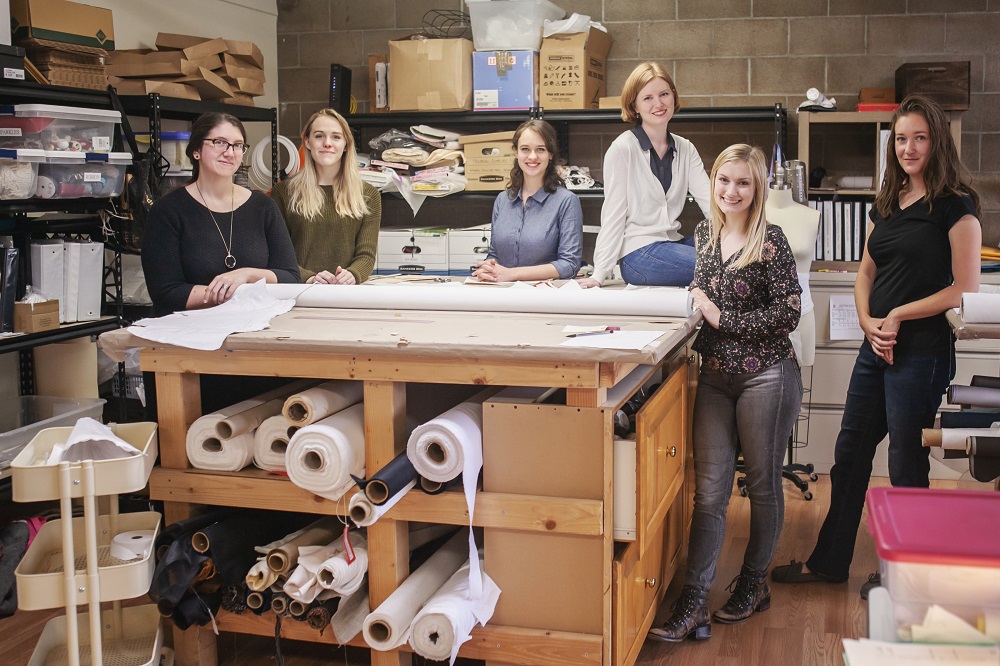
Image Credit:
Amanda Tipton, Merritt Portrait Studio
Suggest a story: VoyageDenver is built on recommendations from the community; it’s how we uncover hidden gems, so if you or someone you know deserves recognition please let us know here.
Popular
-

The Trailblazers: Rewriting the Narrative
-

Celebrating the Spotlight: Kaytee Shashore Turns Milestones Into Momentum
-

Humanity in the Machine: Alexander Raye Pimentel’s Cyborg Recall Questions the Cost of a Data‑Driven World
-

Raemi Anderson on Courage, Caution, and Answering the Call of the Landscape
-

Hidden Gems: Local Businesses & Creatives You Should Know