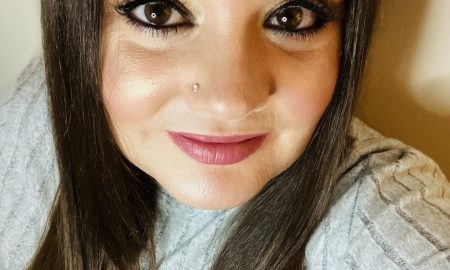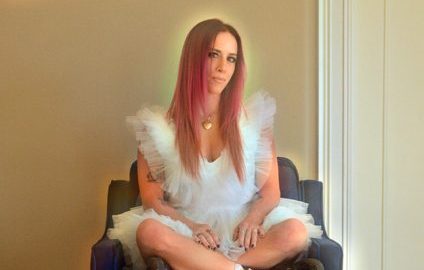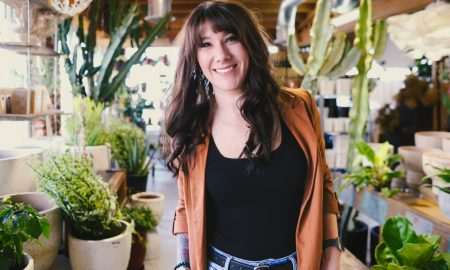


Today we’d like to introduce you to Kebrina Josefina DeJesus.
Born into Puerto Rican ancestry, Kebrina Josefina grew up with the heartbeat and rhythms of Salsa music and as a thespian studying musical theatre and drama. She has performed as an actor, dancer and choreographer: in musicals, plays and independent films. Kebrina has a B.S. in Speech Communications and Theater from Millersville University and received her MFA in Contemporary Performance from Naropa University. She founded Samba Colorado in 2013 in Boulder, Colorado. Her mission is to share somatic healing arts through Afro-Brazilian culture, traditions, movement and music. Providing a contemplative positive and safe space for everyone to self-express, connect, inspire and grow spiritually. Kebrina wishes to express gratitude to all her master teachers, mentors and elders for believing in her and sharing their light, Rosangela Silvestre, Jorge Alabe, Alvaro Reys, Julie Simon Nildinha Fonseca and Jose Ricardo Santos.
SAMBA COLORADO is a Brazilian dance school and company directed by Kebrina Josefina De Jesus established in 2013 in Boulder, CO. We are devoted to bringing together people from all walks of life in an artistic, educational, positive community by sharing and preserving the roots of African Brazilian culture and dance. We offer weekly classes in Boulder and Denver, monthly workshops, and bi-monthly dance artist in residencies. Classes are open to all levels including the beginner student. We welcome all LGBTQIA. We believe in community outreach development and offer education programs for K-12 and the collegiate level. Our dance ensemble offers energetically rooted dance-theatre performances for both community and private events. Visit our website at www.sambacolorado.com for more information. To book a workshop, dance performance or to learn more about our volunteer opportunities, send us a message: info@SambaColorado.com.
Has it been a smooth road?
Some ups and downs yes. I have definitely been through oppression being a strong woman from NY who is Latina advice to keep going, surround yourself with other like-minded people, never give up
So let’s switch gears a bit and go into Samba Colorado story. Tell us more about it.
Teaching Philosophy
“A teacher is never a giver of truth – he is a guide, a pointer to the truth that each student must find for himself.” –Bruce Lee
My teaching philosophy is deeply tied to my identity as a queer Puerto Rican female artist. I grew up in a tradition of dance that was simultaneously familial, cultural, and streetwise. Queens in the 1980s was a haven for Latin dance traditions, and my understanding of movement as a means of addressing trauma and injustice stems from the dances of my familia. As a teaching artist and somatic practitioner, I believe deeply in creating a bridge for learners to find a path between movement and self-discovery, confidence, and inner truth. In my teaching practice, I rely heavily on the cultural histories and ancestral and sacred traditions of dance that have the potential to disrupt gender normativity and position dancers as powerful figures–warriors, leaders, and nurturers–who embody new worlds and possibilities.
My career as an educator has included: founding and leading my own professional dance company, Samba Colorado (http://www.sambacolorado.com/); creating a community dance school to support more than 150 novice and intermediate dancers connect to their bodies; leading dance and movement classes focused on Brazilian, African diaspora, Latin and Caribbean dance traditions; supporting the work of emerging artists in collaboration with Cleo Parker Robinson and the Colorado Ballet; developing courses for universities in Latin Dance, Brazilian sacred traditions, and traditional samba; creating community outreach programs for queer dancers and dancers from historically marginalized communities; and leading youth workshops to support young people in using dance and theatre as a means of increasing cultural awareness and agency. Across each of these experiences, I have positioned myself as both a teacher and a learner, working to develop deep understandings of my students’ backgrounds and histories in order to empower them to make somatic connections that will lead to deeper understandings of movement and choreography. I believe that justice-centered approaches to education require students to be positioned as knowledgeable about their own bodies and experiences in the world.
My teaching practice follows that of my Maestra, Rosangela Silvestre (www.silvestretraining.com), whose training continues to be central to my ongoing education, and Brazilian educational theorist Paulo Freire (1979), each of whom suggests that learning is a process of challenging oppression by recognizing lived experience as a valid form of knowledge. I believe that deep learning requires historicizing one’s self within the systems and structures of the society and then using this history to first question systems of oppression and then move toward new futures that draw on non-dominant ways of knowing. In my current role as an Adjunct Assistant Professor of Dance for Colorado College, I leverage my knowledge of Orixa dance and somatic therapies to support my students in building understandings of what it means to embody alternative ways of knowing. In this tradition, each movement carries spiritual significance; we draw upon this history to explore secular artistic ways that our bodies can process past experiences to create new meaning. Additionally, I infuse each of my classes with the somatic and contemplative practices that were part of my training at Naropa. These practices allow my students to connect deeply with their own bodies while building continuity in ensemble-based upon the ways we each experience the movements and stories we are telling through dance.
For me, teaching dance is a way to disrupt the systemic injustices that have been perpetrated by capitalism, colonization, and white supremacy. Supporting people of all backgrounds to connect with their bodies means disrupting the consumer mindset that bodies and individuals should look and act in certain ways. I see dance as a means to disrupt binaries, deal with discomfort, and communicate our needs on a visceral and somatic level. Specific examples of this exist in my teaching at Colorado College and my mentorship of masters and doctoral candidates at the University of Colorado Boulder. The Samba Colorado community consists of at least five graduate students from CU Boulder, each of whom voiced joining my classes as a way to work through the trauma the has historically been associated with the academy. One student, in particular, is a woman of color who was deeply impacted by the hurricane and subsequent flooding in Puerto Rico. Alina is a scientist working on a Ph.D. in molecular biology. While she danced as a child, her studies had taken her into the lab and out of her body. Four years ago when she began dancing with me, she expressed frustration with her male colleagues and felt somewhat disenfranchised in her role as a graduate student. Together, we have used movement to support her in finding ways to advocate for herself. With my support, Alina went from an amateur dancer to winning third place in an international samba competition. She has expressed the ways that this training not only supported her in embracing her body, but also in finding her voice in the lab and at conferences. Set to graduate shortly, she has leveraged dance as a way to find the confidence she needs to fight for herself and her ideas across domains. Alina’s experience is not unique, a number of my students have expressed recognizing ways that they can fight systems of oppression when they feel as though they own their bodies and the movements they make in space.
In my teaching, I provide a safe and positive atmosphere for the students to fully express who they are, to fully embody the work, to be comfortable in the unknown and take risks in the space. This journey can be an exciting challenge at times in the process, however in the end; my goal is for each student to undergo a transformation in their self, art and life. I teach from a somatic experience, sensing the classroom as a whole, and feeling when it is the appropriate time to move on to the next activity or subject matter.
Teaching to me is more than explaining or demonstrating, it is about personal growth, human connection, support, and a desire to keep learning no matter what age or job title. At the university level, I have worked to craft courses that are academically rigorous and require students to complete research in order to connect the movements we create with the histories within which they were developed. I draw from my experiences with Bonnie Bainbridge Cohen and Roy Hart’s works to create courses that support shifting from the memorization of movement to improvisation based on feeling. These courses utilize teaching methods I developed while creating my thesis at Naropa University. My students begin each class with short contemplative practices meant to support them in bringing awareness into their bodies. We then improvise movements in order to develop understandings of not only our own bodies but of our ensemble as a collective. Finally, I teach choreography and movement while contextualizing each movement as part of the stories and histories from which the dances originate. This has been true across my classes, whether teaching Latin, African Brazilian, Caribbean, modern or classical dance forms. In this way, I work to support my students in making deep mind-body connections that will stay with them long after they have left my course.
My professional work with my dance company, Samba Colorado (http://www.sambacolorado.com/) has also influenced the ways that I teach. Across my courses, whether for the dance company, my community classes, or my university students, I infuse the themes that I am currently researching into the choreography that I teach. Currently, these themes include disrupting the binary gender norms Latin dance, drawing upon sacred and ancestral histories to disrupt oppression, and creating safe spaces through movement for queer people. In all of these classes, I integrate somatic practices, mindfulness, and performance techniques into these dance courses in order to support students in developing deeper self-awareness, connections to cultural histories, embodied poetics, and symbology. As someone with Indigenous, Latin, and African roots, I have made the dances of the diaspora a central part of my practice. I believe that calling upon these traditions in education settings allows for both resistance and healing. While I am qualified to teach a number of dance techniques, I am currently most excited about developing courses centered on dances of the diaspora in which my students will explore song and movement from Africa, Latin America, and the Caribbean. In these courses, students would examine the histories, symbologies, and traditions from Nigeria, Brazil, Puerto Rico and the Dominican Republic in order to explore dance and movement as tools for disrupting and healing oppression. In addition to courses focused on dances of the diaspora, I am interested in creating a program aimed at supporting students to develop Silvestre Technique as part of their modern dance repertoire. “Silvestre technique is a continuously evolving contemporary/modern dance technique with the objective of conditioning the dancer through physical and expressive training regardless of level or prior training” (Silvestre, 2019). In addition to supporting university students to develop the somatic practices embedded in this technique, I would also focus this course on supporting understandings of the ways that music and drumming has potential to shift our understandings of dance.
Finally, I am working to develop a pedagogy called the Somatic Voice, which brings a contemplative approach to Roy Hart’s Extended Range Vocal techniques and Annie Brook’s skeletal awareness patterns as a means to develop performance expertise. In dance, these techniques support students in tapping into their bodies as sources of knowledge. Students learn that it is possible to create entire works based on bodily sensations and work to vocalize these experiences in order to transform their performances by repatterning their bodies towards the most natural movements. Finally, my teaching has always included partnerships with students and colleagues. At CU Boulder, I look forward to creating courses that bridge expertise across the department and allow students to really tap into their own histories to learn their body’s unique capabilities.
Who do you look up to? How have they inspired you?
Rosangela Silvestre for her teaching and consciousness through movement.
My mom for raising me with values and always supporting my career as an artist.
Dr. Naomi from Colorado College, for believing in me and giving me opportunities to share my work on the collegiate level.
Contact Info:
- Website: www.sambacolorado.com
- Phone: 7205834327
- Email: info@sambacolorado.com
- Instagram: https://www.instagram.com/SambaColorado/
- Facebook: https://www.facebook.com/SambaColorado/
- Twitter: https://twitter.com/SambaColorado/
 Image Credit:
Chris Nelson
Suggest a story: VoyageDenver is built on recommendations from the community; it’s how we uncover hidden gems, so if you or someone you know deserves recognition please let us know here.
Popular
-

The Trailblazers: Rewriting the Narrative
-

Celebrating the Spotlight: Kaytee Shashore Turns Milestones Into Momentum
-

Humanity in the Machine: Alexander Raye Pimentel’s Cyborg Recall Questions the Cost of a Data‑Driven World
-

Raemi Anderson on Courage, Caution, and Answering the Call of the Landscape
-

Hidden Gems: Local Businesses & Creatives You Should Know