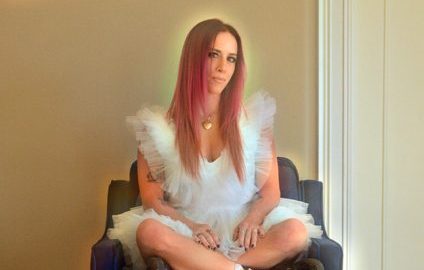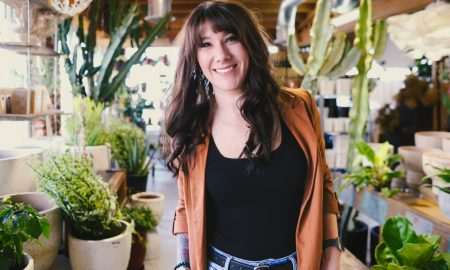


Today we’d like to introduce you to Melissa Saliba.
Melissa, can you briefly walk us through your story – how you started and how you got to where you are today.
I didn’t grow up an athletic person, nor would I have ever used that word to describe myself. As an adult, I started to find self-expression in movement and started running in 2008 and started teaching yoga in 2010. What I enjoyed most about these two activities were that they were something that I found accessible, no matter what my ability was at the time. I was able to adapt both running and yoga to meet my body where it was. One day, I remember thinking that I really wanted to try running. I also had just adopted a border collie (Chica) and had to figure out something to do with her energy. I had run a little in the past, but no more than 2 miles without stopping, and only on the road. I decided that my goal would be to complete the Pikes Peak Ascent and to do this, it would involve trail running. I only had hiking boots, and I remember my first run in them was so painful! I couldn’t make it one entire mile without stopping to walk, and then I realized I needed trail running shoes. I slowly began to train up my miles, with Chica accompanying me the entire time, and using appropriate gear/shoes. As my running evolved and I started teaching yoga, I began to view my body as capable. I became more involved in the fitness community in Colorado Springs, and that was where I connected with Achilles Pikes Peak and started guide running and teaching adaptive yoga classes.
Overall, has it been relatively smooth? If not, what were some of the struggles along the way?
Learning to guide run or to teach adaptive yoga hasn’t always been a smooth road, and it’s not supposed to be – you are working with human beings and everyone is uniquely different in their ability, communication, and preferences. As a guide runner, you are there to assist an athlete with a disability and serve them to compete to their full potential. This can look a variety of ways depending on the abilities and needs of the athlete, and what requests they have. For an athlete with a visual impairment, this can include utilizing a tether along with verbal cues. Or for someone with cognitive impairments, this can be creating situational awareness. There are infinite possibilities for what support a person needs. As a guide, you have to be conditioned enough to run at the athlete’s level and comfortable enough to stay in constant communication with them. Teaching adaptive yoga is similar in that you may provide physical assistance to those with variance in weight-bearing or balance, and you also provide a variety of verbal cues that can adapt to everybody. With this, there is constant feedback and the main struggle is finding the balance between showing appropriate support and also empowering an individual without being too overbearing. My biggest piece of advice is to not take anything personally – it is not personal. There’s an opportunity to stay in constant communication about what is needed, our abilities, and what empowers us. This isn’t always common conversation and you can’t assume that as a guide you know what will work the best. Always solicit feedback!
What should we know about Achilles Pikes Peak? What do you do best? What sets you apart from the competition?
Achilles Pikes Peak is one of three Colorado chapters of a non-profit international organization: Achilles International. The mission of Achilles International is to empower people with all types of disabilities to participate in mainstream running events in order to promote personal achievement. Achilles Pikes Peak is 100% volunteer run. I think what makes our chapter unique is the variety of athletes and volunteers that we have, and the number of activities that we participate in. Our athletes and guides vary in ability and age, and this provides a very diverse chapter. When we first started, the chapter focused on our weekly workouts of walking, cycling, and running. While these still remain a focus, we have expanded with monthly adaptive yoga and rock climbing, an annual backpacking trip halfway up Pikes Peak, and even curling. All of the activities that Achilles hosts are free of charge to our athletes and guides, which makes it even more accessible.
For good reason, society often focuses more on the problems rather than the opportunities that exist, because the problems need to be solved. However, we’d probably also benefit from looking for and recognizing the opportunities that women are better positioned to capitalize on. Have you discovered such opportunities?
My personal and professional life are centered around inclusion and creating community. When that is the focus, there are equal opportunities for men and women to both be involved and contribute.
Contact Info:
- Instagram: @melissasaliba
- Facebook: Achilles Pikes Peak


 Image Credit:
Denise Walker, Samantha Wood
Suggest a story: VoyageDenver is built on recommendations from the community; it’s how we uncover hidden gems, so if you or someone you know deserves recognition please let us know here.
Popular
-

The Trailblazers: Rewriting the Narrative
-

Celebrating the Spotlight: Kaytee Shashore Turns Milestones Into Momentum
-
Humanity in the Machine: Alexander Raye Pimentel’s Cyborg Recall Questions the Cost of a Data‑Driven World
-
Raemi Anderson on Courage, Caution, and Answering the Call of the Landscape
-

Hidden Gems: Local Businesses & Creatives You Should Know