


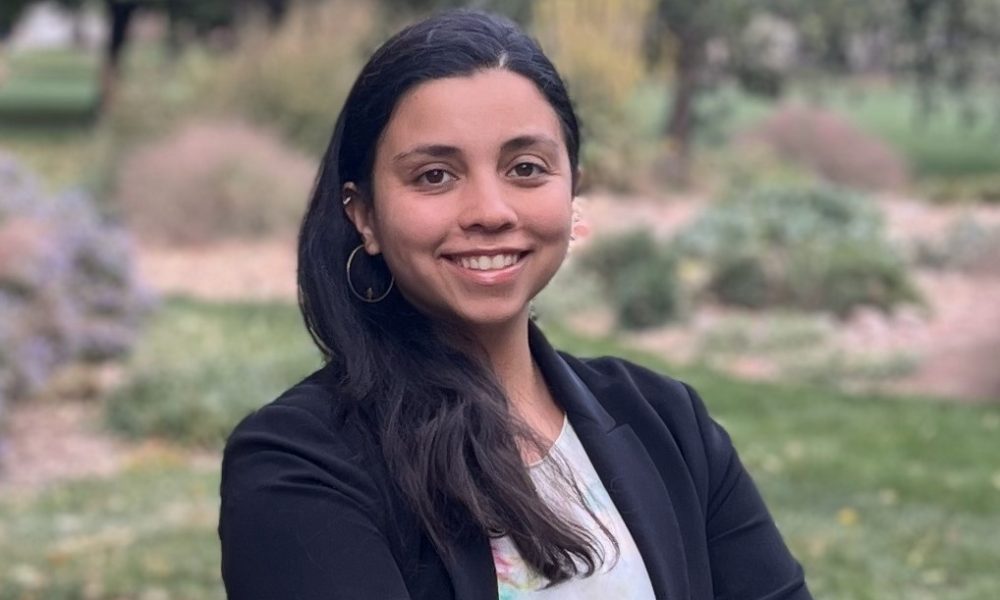
Today we’d like to introduce you to Isabel Cruz.
Hi Isabel, we’re thrilled to have a chance to learn your story today. So, before we get into specifics, maybe you can briefly walk us through how you got to where you are today.
My origins as an advocate and activist date back to third grade, when I waged my first playground protest in response to an unfair recess policy that I noticed became a self-fulfilling prophecy. When our recess would get cut due to disciplinary challenges, my classmates and I had more energy and were more likely to disturb class or not be able to focus and sit still, leading the cycle to continue. After tying ourselves to the jungle gym with jump ropes and delivering a colored pencil petition to our vice principal, our voices were heard. We reclaimed our precious recess time and were able to perform better in class.
This was one moment in my life that helped shape my belief that those who are most impacted by policies must be at the heart of efforts to change systems and decision-making structures. I may not have had the language as an eight-year-old, but I instinctively knew that policies that are not well-designed to achieve the desired outcomes can have detrimental effects, particularly on the least powerful. This spark grew in me as I learned more about the world and sought to find my place in the ecosystem of building toward our collective liberation.
From helping to organize a citywide protest against gender-based violence as a high school student in New York City to advocating for survivor-driven Title IX policy changes in college at Yale University, I learned more about the joys and steep challenges of social justice work. The highs of bringing people together to effect change and build collective resilience in times of pain to envision a better future. The lows of failing to change policies and systems that you know cause real pain and trying not to give up hope that change is possible.
I moved to Denver in 2018 when I was in a deep moment of burnout and needed an opportunity to reconnect with myself and my role in social justice work in a new place. Working as an educator–first facilitating workshops for youth on college readiness and sex education, then coordinating leadership and civic engagement programming for career-seeking families–reignited my passion for systems change advocacy. In supporting the educational journeys of folks who were at the nexus of racial and economic inequality in our state, I found that I wanted to play a part in making sure their needs and voices were front and center in breaking cycles of oppression and changing the status quo through policy.
This led me to my current professional role working as the Policy Director for the Colorado Consumer Health Initiative, a nonpartisan, membership-based nonprofit that seeks to ensure all Coloradans have equitable access to high-quality, affordable health care. Through my work amplifying consumer voices to advance health equity at the state capitol, I have seen the transformative potential of community-driven power to effect positive change. And I have also seen how much harder fighting for needed change is when decision-makers fear standing up to powerful interests and fail to put the needs of everyday people first.
Seeing firsthand how much of a difference the values and motivations of our elected leaders can make in the quality of policies that get passed inspired me to run for office. Lakewood, particularly Ward 2 where I have lived for almost 5 years, is at a critical juncture. Many opportunities on the horizon make our city an exciting place to build a future, including our growing arts scene and improvements to our main business and transportation corridors like West Colfax.
However, economic and safety challenges exacerbated by the pandemic and climate change are making it increasingly difficult for people and small businesses to afford to stay here and thrive. I am running to co-create policies with neighbors, community partners, and regional leaders that tackle the root causes of these issues to make Lakewood more inclusive, sustainable, and full of opportunity for all.
Alright, so let’s dig a little deeper into the story – has it been an easy path overall, and if not, what were the challenges you’ve had to overcome?
Being a woman of color with strong opinions, a big heart, and unwavering dedication to advancing social justice from a young age has come with its fair share of challenges. As a mixed-race, queer Latina from a multicultural, upwardly mobile family, I have seen how different aspects of my identity, from those that afforded or denied me privilege, have shaped the opportunities I have had and how my voice has and has not been respected in different places.
Growing up, it was hard to navigate my different identities at a time when intersectionality was not part of our mainstream narrative and “color-blindness” was seen as the gold standard. Although I have often struggled with my mental health while finding my way in a world that wasn’t built for me, I have learned to not only accept but love that I don’t fit neatly into any boxes. My experience has strengthened my commitment to changing the status quo and helped me develop deep empathy, respect for nuance, and an ability to find common threads across seemingly disparate ideas that make me a stronger policy practitioner.
In my professional work in nonprofits, I have also faced setbacks in response to challenging unfair working conditions and racism in the workplace. Social justice work is far from immune from issues of racism, classism, and other forms of oppression; an important part of doing this work is recognizing our failures and working to repair and prevent future harm. Yet it is still far too common in our industry to encounter resistance and suffer professional consequences as a result of calling people in on these issues and challenging problematic power dynamics.
I am immensely grateful to my family, friends, and mentors who have helped me navigate these challenges and believed in my leadership from the beginning. I am committed to leveraging my privilege to support the leadership of other young women of color and other underrepresented constituencies because, as Representative Ayanna Pressley said, “the people closest to the pain should be the closest to the power, driving and informing the policymaking.”
Appreciate you sharing that. What else should we know about what you do?
I often get asked what being a policy advocate looks like in practice. In my professional role, my job is to promote policies that address community concerns with our healthcare system and advance health equity and consumer perspectives in state legislative and regulatory decisions.
One way to advance policy change is through legislation. Starting with identifying a problem through community stories and our member organizations’ experiences, my team works with legislators, technical experts, and coalition members to find policy solutions and then organizes a campaign to pass a bill. Leveraging tactics from policy research to media to storytelling and more, we work with allies and negotiate with opponents to support the bill’s passage through the legislature and to the Governor’s desk. But the journey does not end there! When bills become law, we have to participate in implementing them and raising awareness of the changes so policies have the impact that we intended. Oftentimes, policies need to be adjusted as unexpected hurdles or impacts come up in implementation–it’s all part of the policymaking process.
I am immensely proud to have been a part of coalitions that have challenged monied industry interests, like Big Pharma, and won. It’s undeniable that we still have a long way to go to put patients over profits and eliminate health disparities, but it’s important to celebrate wins big and small that show how consumer power can build towards much-needed transformation in health care.
In my job and work in the community, I am committed to not only making policies that better serve our community’s needs but also ensuring the process of making those policies more accessible and responsive to community members. I define success in my endeavors a bit differently than some advocates. To me, a successful advocacy campaign is measured by how well we work with, not just for, diverse community members to effect the change people want to see in their lives.
Creating people-centered decision-making processes that are accessible to people, regardless of income, education, primary language, and other factors, is far from easy. However accepting the status quo of how we make policy and who is at the table is not an option if we want to see Lakewood, Colorado, and a world where everyone has the resources and opportunities to thrive.
Are there any important lessons you’ve learned that you can share with us?
“Not letting the chain break at your link.” When visionary activist and thinker Loretta Ross described this fundamental objective for people committed to advancing social justice in a workshop, I had a eureka moment. Rather than assuming the full weight of the world on our shoulders, or throwing in the towel because even hard-fought wins don’t fully solve the issues our communities face, we must recognize that the fight for liberation started before us and must continue after us.
Ensuring the “chain of freedom” does not break means practicing self-care and community care to build resiliency and mutual trust to be able to both support others and allow yourself to be nurtured in tough moments throughout the journey forward. It means embracing conflict to promote accountability, improve our relationships, and generate better ideas, rather than tear each other down.
It also means finding joy in the work to entice others to come on the journey with you! I continue to oscillate between hope and cynicism for the future in my personal and professional life (and likely always will)–but this advice has helped me stay grounded in my values and move forward through the ups and downs.
Contact Info:
- Website: isabelforlakewood.com
- Instagram: www.instagram.com/isabelforlakewood
- Facebook: www.facebook.com/isabelforlakewood