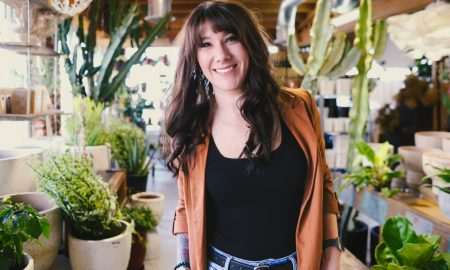


Today we’d like to introduce you to Sashi Gerzon-Rose.
Hi Sashi, we’re thrilled to have a chance to learn your story today. So, before we get into specifics, maybe you can briefly walk us through how you got to where you are today?
Like so many of us in the healing arts, I was born into life circumstances that presented me with both significant challenges as well as enough support to struggle through those challenges into deeper resilience.
I learned at a very young age to care-take, to become exquisitely sensitive to the subtle communications and emotions of others far before I learned anything concrete like math or spelling. I believe my early circumstances, combined with my naturally sensitive disposition, largely shaped me for the role of a therapist, coach, mentor, soul friend.
As a highly sensitive child, I was incredibly creative, and also prone to very big emotional reactions, especially as I felt the frustration of so little control in an often dysfunctional home culture. I also grew up in Los Angeles, and the combination of the Hollywood ethos with my emotionality and creativity led to a passion for acting. I studied in a conservatory high school for the arts which led me to N.Y.U for a B.F.A in Theatre. There, I got to explore the pathos of being human alongside my friends in the safety of the container of play and acting. Because it was make-believe, I could be as emotional as I wanted, and it was applauded, approved of. In this way, emotions were encouraged rather than dismissed, and I carry a trust and orientation towards the wisdom of emotion into my work with clients currently. And even though I am no longer acting, those eight years of training in the arts instilled in me an artistry that is not reliant on any form; therapy can be an art, as can be carpentry, or accounting. I believe the artistry is found in how we approach something; it is the way one listens, the way one responds to what is right in front of them. It is spontaneous, attuned, and life-giving.
In my early 20’s, I found meditation and yoga. I had actually been raised by a mother who meditated regularly, so it wasn’t entirely foreign to me. In these spiritual practices, I was able to remember my embodied sense of connecting to what I called God when I was younger, but without the fear I felt growing up in organized religion. God, or the divine, felt accessible within me, as opposed to something out there. I could practice with my sensitivity to subtle energy in a way that felt both magical and also practical. I could relate to my body as a vessel for life-force, rather than a problematic object I needed to control. As my love for spiritual philosophy and practice deepened, I found my way to Naropa, a Buddhist inspired university in Boulder, CO.
I experienced a kind of flow and ease that had been missing from my previous vocations. Psychology was easy for me to grasp for the most part, and I felt a natural confidence in sitting with people in the full spectrum of their experiences. It felt energizing to cry and laugh with people and everything in between, and I found myself reliably good at what I was doing for the first time in my life. With therapy, I found a reliability in a presence that would naturally arise when I was in the role of therapist. I still had much to learn, of course, and still do, but the basics were there. Within the first couple of months of moving to Boulder in 2011, I met my teacher, Diane Musho Hamilton, Roshi. The way she taught was extraordinary, and I felt my mind open to nuanced understandings of reality that. I’ve been studying with her ever since; primarily in Zen Buddhism, with a highly relational lens. She also is an internationally renowned conflict resolution teacher and mediator, so I’ve been able to sharpen my skills in the interpersonal realm of navigating conflict, both personally and professionally. I ordained as a monk in the summer of 2019. Currently, I weave all those various threads into what I do; the artistry of approaching whatever or whoever is in front of me with a fresh, curious mind, the solid psychological foundation in attachment and brain science, trust in diving into conflict to get to greater intimacy, and the Eastern wisdom of sitting with life’s most profound questions, such as, “who am I really?”
Alright, so let’s dig a little deeper into the story – has it been an easy path overall and if not, what were the challenges you’ve had to overcome?
My struggles have included very young heartbreak at experiencing trauma at an early age as well as the injustices in the world that I felt so empathetically. And then, of course, the usual erosion of self-esteem in childhood; the cruelty of adolescence and the establishment of social hierarchy in which I was never top dog, the internalization of very diseased cultural priorities such as one’s value being rooted in appearance, the belief that the pursuit of wealth and material objects equaled success, etc. Now, firmly rooted in adulthood, I can look back at all those experiences with a blend of compassion and a little bit of a cringe for how entrenched in it I was. But it couldn’t have been any different, and the cliché is true; I wouldn’t be where I am now or who I am now without all of it. So for that, I am grateful.
As you know, we’re big fans of Whole Heart Way Psychotherapy. For our readers who might not be as familiar what can you tell them about the brand?
What I offer professionally is diverse and eclectic, ranging from individual and couples counseling/coaching to online meditation courses, in-person weekend intensives, and psychedelic therapy. My intention is to approach just about everything from a perspective of mindfulness- a curious, non-judgmental way of relating to whatever is arising in the present moment. I believe knowledge is power, so I offer my clients a wide array of options, from cutting edge neuroscience to classic psychological theory, to embodied exploration of their experience, to breath practices. I work with depression, anxiety, relationships, intimacy/sexuality, spirituality, personal growth, loss and grief, and trauma. For trauma, I offer EMDR and Ketamine- Assisted- Psychotherapy, both of which have been incredibly powerful tools in the transformation and resolution of trauma. Most recently, I’ve been offering weekend intensives using Ketamine Assisted Psychotherapy (KAP) for those appropriate for this work, which I’m really excited about. At the end of the day, I believe the single most powerful thing a person can do is intentionally practice. Whether that is practicing noticing their internal dialogue and shifting it to a more kind, integral one, or practice showing up with more compassion and a clearer yes or no in relationship, change occurs in repeated moments of practice. There’s a saying, “where your attention goes, energy flows”. So I help my clients become aware of what they are unconsciously repeating, clarify what they’d like to practice, and then trust them to go do the work in their lives.
Do you any memories from childhood that you can share with us?
It’s so hard to pick just one! There are many that come to mind, but I’ll go with laughing uncontrollably with my childhood best friend. We were in class and already known for our uncontrollable laughter, and the naughtiness of it just made it that much more irresistible. I remember the heat rising in my body, the almost painful quality of being unable to contain myself. And the joy of feeling the security of our friendship- how we belonged to one another.
Contact Info:
- Email: sashi.gerzonrose@gmail.com
- Website: www.wholeheartway.com
 Suggest a Story: VoyageDenver is built on recommendations from the community; it’s how we uncover hidden gems, so if you or someone you know deserves recognition please let us know here.
Popular
-

The Trailblazers: Rewriting the Narrative
-

Celebrating the Spotlight: Kaytee Shashore Turns Milestones Into Momentum
-
Humanity in the Machine: Alexander Raye Pimentel’s Cyborg Recall Questions the Cost of a Data‑Driven World
-
Raemi Anderson on Courage, Caution, and Answering the Call of the Landscape
-

Hidden Gems: Local Businesses & Creatives You Should Know