


Kevin Cady shared their story and experiences with us recently and you can find our conversation below.
Hi Kevin, thank you so much for taking time out of your busy day to share your story, experiences and insights with our readers. Let’s jump right in with an interesting one: What makes you lose track of time—and find yourself again?
Exploring the mountains helps me lose track of time. I’ve spent a lot of my Colorado life wandering around, looking for rocks to climb. It’s a process that might seem ridiculous to many and frivolous even to many climbers, as I might spend an entire day looking for a new climb, only to realize I can’t do it. Or it doesn’t go at all. Or I might not find anything worthwhile to begin with. And because of this potential eventuality, I really focus on just being out there. Any day out there is a great day. The process of searching without being held to an expectation in the end. I can’t do that in many aspects of life, so I appreciate it when I can.
Can you briefly introduce yourself and share what makes you or your brand unique?
My name is Kevin Cady and I’ve been developing my brand of Dark Mystery for over ten years. My Dark Mysteries take murder mystery and add some elements of horror and some elements which are found in more psychological narratives. My goal is for someone to pick up one of my books and immediately know it’s Kevin Cady Dark Mystery. That’s what I’ve been building and working on most diligently. I want for a reader to finish one of my novels and immediately know they can pick up another. The stories are different, but the quality and the vibes should be on point and reminiscent of the books which came before. Each is a new adventure, but it’s all Dark Mystery.
Appreciate your sharing that. Let’s talk about your life, growing up and some of topics and learnings around that. What breaks the bonds between people—and what restores them?
I believe bonds between people are often broken through a lack of communication competence and empathy. How often are problems so cut and dry that the answer is also such? I’d argue not often. We need these skills to manage complex scenarios. When people view the world in binary terms, it creates breaks or further problems. Understanding gradients and grey areas creates a more complete picture of the world, and it informs us on how we can interact to maintain positive relationships.
I believe building our communication competence and empathy allows us to interact with the world more effectively and avoid many potential broken bonds between people. Can we avoid all those conflicts? Certainly not. But our ability to communicate competently and with empathy creates pathways to restore them if they do happen to break.
Was there ever a time you almost gave up?
This answer is a bit antagonistic, but after the release of every book I kinda think about giving up.
Is this my last one?
Even if I’m overwhelmingly proud of the work and the writing and the ideas, I know I haven’t reached the number of readers I’d like, and I wonder if I should stop creating and send out a million query letters or proposals to agents. But I could do that the rest of my life and never hear back. So I’d rather focus on what I control–writing great Dark Mystery. ‘Cause it’s all the stuff I don’t control which creates those feelings of doubt or inadequacy.
To clarify, I am endlessly appreciative for the readers I have reached. Those who have given feedback, written reviews, come to book launches, or just generally asked about my writing. Those are the brights spots. The moments of pride. The moments where this feels very real and worth it. When people have opinions or questions and share ideas about the books. Those are the moments which keep me motivated. I write for those moments.
The fact is my goal is to take this endeavor as far as I can, so giving up just isn’t an option. Who knows where it ends up?
I think our readers would appreciate hearing more about your values and what you think matters in life and career, etc. So our next question is along those lines. Whose ideas do you rely on most that aren’t your own?
There are easy human answers here (which are true) like my wife, my family, my friends. But other voices I have always relied on (even before I understood I was doing so) would be the voices of artists. From the time I was a kid I found solace in things like music, movies, games (not so much books at that time). For there were problems and worlds altogether different from those in my own life. Distractions sure. But there was understanding there too. I think living in those worlds helped me manage the actual problems in my life.
Lyrics and concepts and the general vision of artists I’ve continued to find very intriguing. I’ve become especially intrigued by the idea of an artist being true to their vision. Ignoring distractions and comparison and outside influence. Trying to create something novel and true to yourself. I think that’s when the idea can be most actualized. Those are the voices I’m most intrigued by. And those are the books I want to write and the worlds I want to create.
I think there are some pretty cool possibilities there.
Thank you so much for all of your openness so far. Maybe we can close with a future oriented question. Are you doing what you were born to do—or what you were told to do?
This is an interesting question.
I don’t believe in being born to do something, and I have worked my whole life to ask the question, “Am I doing this because society expects it or because I think it’s best?” It’s still a consideration, and I talk to my students about it often.
My overall goal as a human is to be happy and to live in ways I’m proud of. So therefore, this consideration is often more intrapersonal for me. If I’m doing something I have been told to do, my rationale is: I’ve considered this thoroughly and believe it to be the best decision possible for that moment.
I find far more stimulation in the ideas of absurdism (where everything matters because nothing matters) than I do considering being born or meant or told to do something. I believe this emphasizes thinking for one’s self as opposed to prescribed thought. Novel thinking vs. common thinking. In summation, I believe I am doing what I find joy in and what I’m proud of—regardless of what someone might think I was born to do or what I’ve been told to do.
Contact Info:
- Website: https://www.kevincadyauthor.com/
- Instagram: https://www.instagram.com/kevincadytheauthor/?hl=en
- Facebook: https://www.facebook.com/people/Kevin-Cady-Author/100009350129305/?_rdr
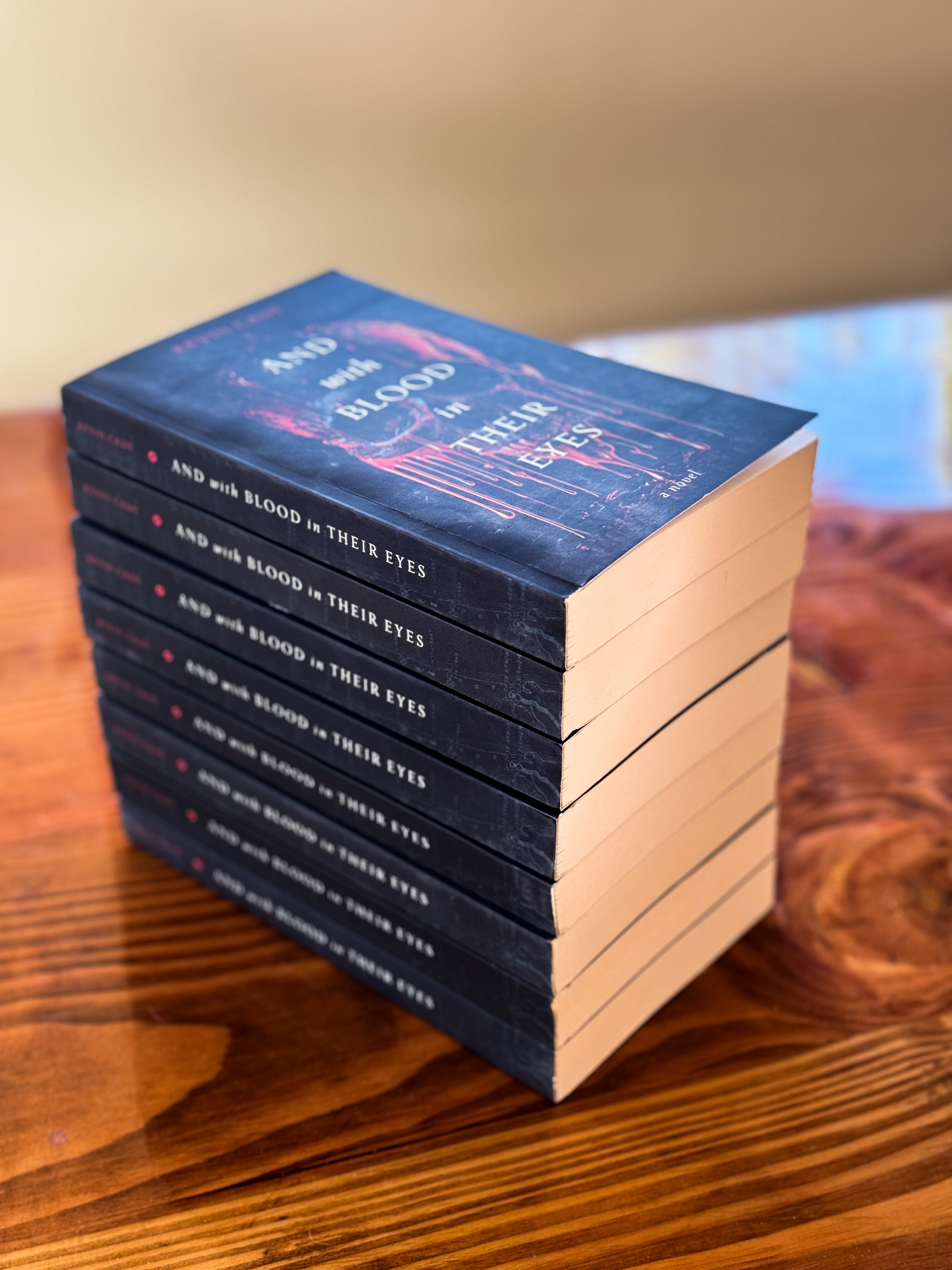
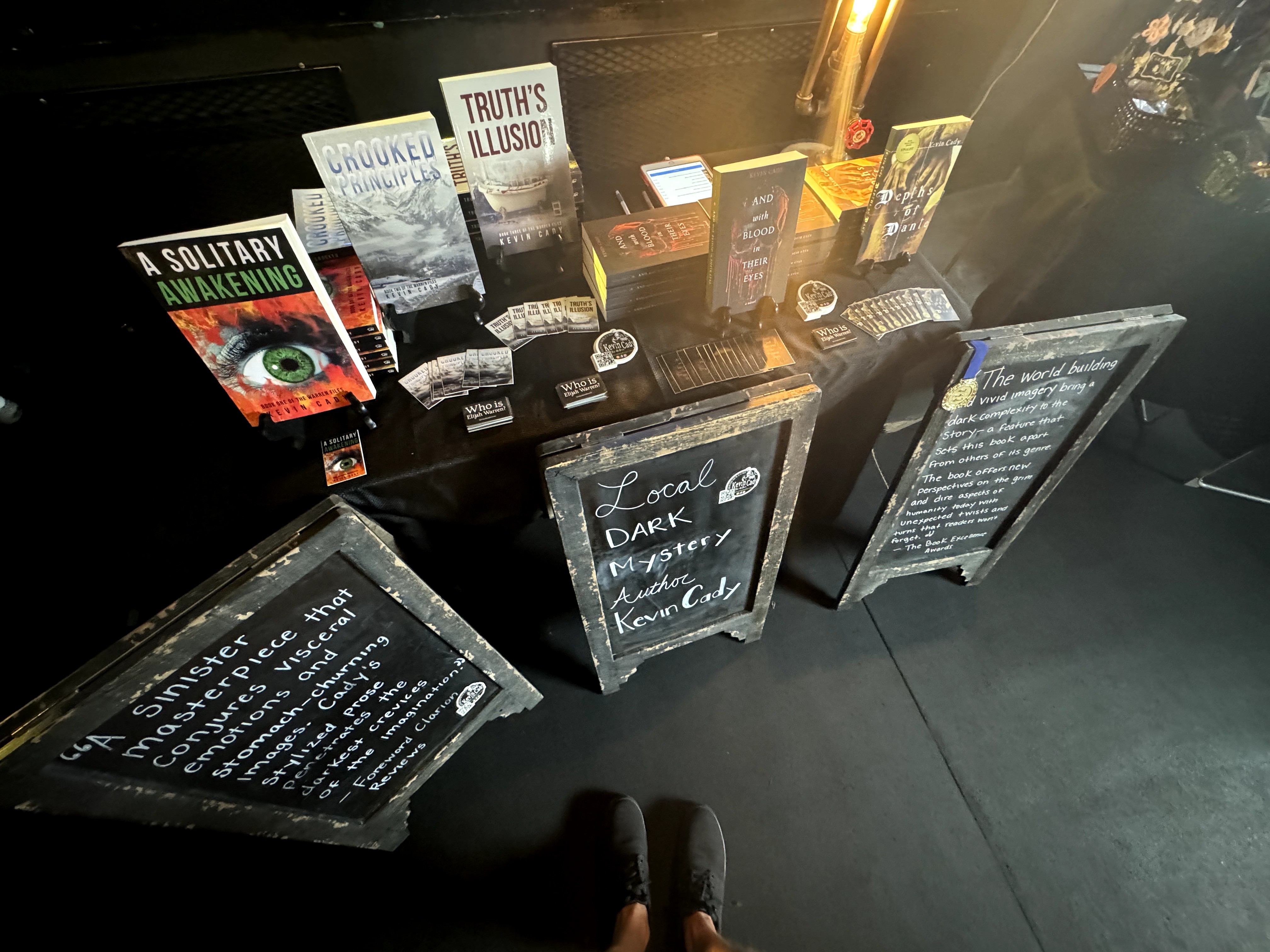

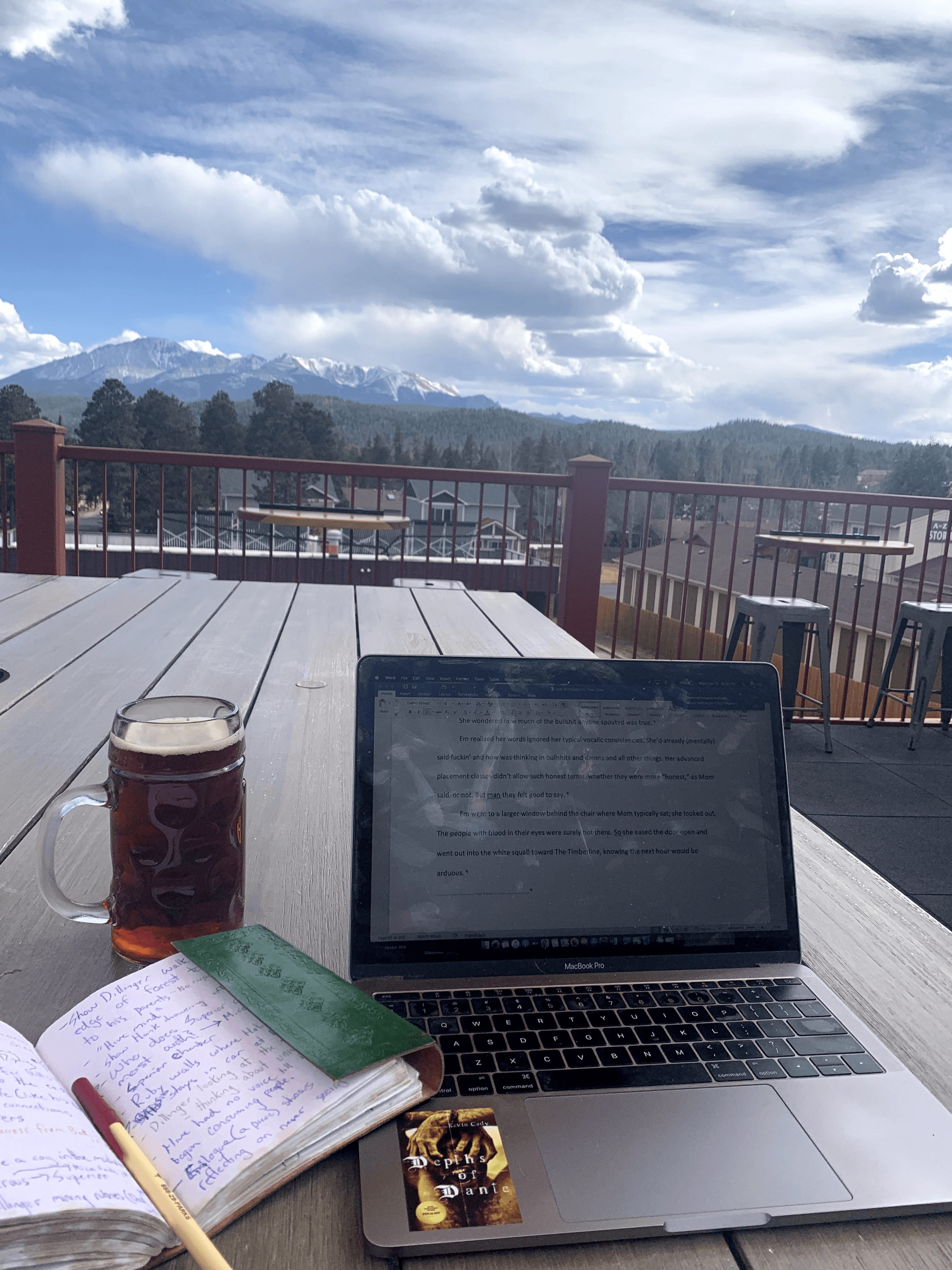


Image Credits
Select Photos by Caitlin Scully Cady