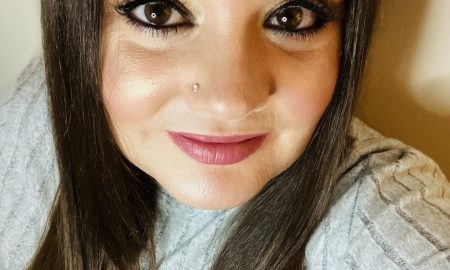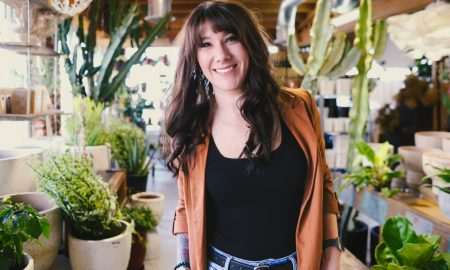


Today we’d like to introduce you to Cristal Cisneros.
Cristal, can you briefly walk us through your story – how you started and how you got to where you are today.
After growing up in Gary Indiana, I went to Indiana University to study biology because of the love I have for plants and gardening. My siblings along with my dad and I would plant every type of vegetable in his garden every summer when I was little for as long as I can remember. Well, after finishing my undergrad and not knowing what to do with my biology degree yet I decided to sell my stuff and pack two bags and headed to Colorado to live with one of my sisters and her family. Not long after moving here eight years ago, I immediately fell in love with the outdoors. It was a different outdoors compared to what I grew up with planting in my dad’s garden. There was hiking, skiing, mountain biking, so many new sports I’ve never experienced. Well, after two years of living a very active outdoor lifestyle, I realized something. There wasn’t much diversity out in the mountains or in the outdoor scene in general. I mean go to REI on a Saturday and its all the same Chad’s with their flannel, chacos and beards. So, after spending some time in the San Juans in 2015, I decided to google “Latinos outdoors” and sure enough I found the organization. After reading up a bit about them, I contacted the director and he invited me to a luncheon during winter Outdoor retailer that focused on diversifying the outdoors. I always say that is where Pandora’s box opened up for me. From there I was intentional about looking for spaces that was both diverse and outdoorsy. I stumbled upon the Trailblazers program through Women’s Wilderness from a facebook post. Trailblazers grew out of a desire to increase the presence of BIPOC (Black Indigenous People of Color, women or non-binary folks who identify with a women’s community) in the outdoors while also providing training to support positive, safe, and successful hiking, backpacking, and camping experiences in outdoor environments. My experience in trailblazers was both affirming and impactful, so much so, that I became a co-instructor for the program this year. The program allowed a place for BIPOC to gain competence in the outdoors through supported and facilitated outdoor activities and specific skill-building classes, practice taking on leadership roles within each program to apply to future scenarios, create a cohort of other developing outdoors-women, from which to share experience throughout the program and beyond and have access to post-program mentorship for people wanting to pursue employment within the outdoor industry. Therefore, I am here today as a co-instructor for this beautiful program.
Has it been a smooth road?
Not at all. My biggest advice is to take up space. Especially BIWOC, take up space and let folxs know you mean business. It is not going to be easy, there are going to be times you question if this is the right path for you. Find groups that support your mission. I have found solidarity in other BIWOC who are always by my side encouraging me. The empowerment and community I have found from the Trailblazers program through Women’s Wilderness has been a huge support. Also find programs likes Trailblazers that are dedicated to supporting you as an individual however you identify. Additionally, the empowerment of girls, women and non-binary individuals plays a critical role in the long-term health of our society. After all, by 2050, the majority of people in the United States will be people of color. Barriers to participation in the outdoors threatens both the long-term sustainability of the outdoor industry and the planet as a whole so we must take action and try our best to be change agents for the future. As far as advice for white women, it would be how are you using your privilege and platform to make a change?
So, as you know, we’re impressed with Womens Wilderness – tell our readers more, for example, what you’re most proud of and what sets you apart from others.
Women and non-binary individuals deserve role models who look like them — in terms of gender expression, ethnicity, shared narrative, and history. Communities also deserve women and non-binary leaders who are fully empowered change agents. Through Trailblazers, I have the privilege of not only reshaping the outdoor narrative, but also working toward building a more equitable, resilient society.
I also am currently getting my doctorate studying environmental racism and its affect on students of color. Many students attending schools in Denver that serve predominantly students of color are exposed to poor air quality on a daily basis. This has serious health implications for students at these schools. This issue is connected to histories of racism and segregation, through practices such as redlining, my question is how do we address the achievement gap when we are not addressing the environmental gap.
Often it feels as if the media, by and large, is only focused on the obstacles faced by women, but we feel it’s important to also look for the opportunities. In your view, are there opportunities that you see that women are particularly well-positioned for?
Yes, all the opportunities.
Contact Info:
- Email: cccisner@gmail.com
- Instagram: xicanaafuera and womenswilderness
- Facebook: Womens Wilderness


 Image Credit:
Janelle Paciencia
Suggest a story: VoyageDenver is built on recommendations from the community; it’s how we uncover hidden gems, so if you or someone you know deserves recognition please let us know here.
Popular
-

The Trailblazers: Rewriting the Narrative
-

Celebrating the Spotlight: Kaytee Shashore Turns Milestones Into Momentum
-

Humanity in the Machine: Alexander Raye Pimentel’s Cyborg Recall Questions the Cost of a Data‑Driven World
-
Raemi Anderson on Courage, Caution, and Answering the Call of the Landscape
-

Hidden Gems: Local Businesses & Creatives You Should Know