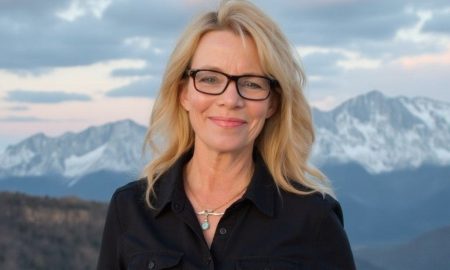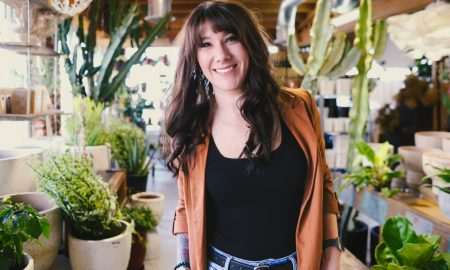


Today we’d like to introduce you to Dr. Arielle Schwartz.
So, before we jump into specific questions about what you do, why don’t you give us some details about you and your story.
The motivation for my work comes from both personal and professional experiences. As a psychologist, I specialize in helping people recover from the pain of traumatic events. I have also walked my own healing path. These two roads have converged into a passion for resilience and post-traumatic growth. In truth, most of us who work as healers have also had to walk through our own darkness.
When I was in my early twenties, I felt lost to myself and in the world. I was anxious and depressed. I struggled with my health and sometimes felt as though I was living in a fog. Initially, I tried to ignore my pain, but I finally admitted to myself and others that I was struggling with. This is when I stepped onto the healing path by entering into therapy. I began to confront experiences of fear that I had as a child, which were fueling the anxiety that dominated my young life. Through my own healing process, I discovered an inner compass that helped me come back to my true north.
Over the past 25 years, my journey has involved integrating the body into therapy, as this was instrumental in my own healing process. In 1996, I completed a yoga teacher training at the Kripalu Center. This experience taught me the importance of slowing down and becoming mindful. My quest for embodiment then continued to Naropa University, where I pursued a Master’s degree in somatic, or body-centered, psychology. Here, I learned that having a history of trauma requires a slow, gentle approach to befriending the body.
Shortly after graduation, I was in a car accident that totaled my vehicle. I stepped out of my vehicle stunned and shaken but grateful to be alive. As a somatic therapist, I knew the value of releasing the shock from my body and allowed my body to shake and tremble. However, in the months following the accident, my anxiety spiked. Upon recommendation from a colleague, I sought out Eye Movement Desensitization and Reprocessing (EMDR) therapy. I was so impressed with the power of this therapy that I entered a doctoral program in clinical psychology in order to integrate my professional interests and research the use of mind-body therapies.
Overall, has it been relatively smooth? If not, what were some of the struggles along the way?
One of the biggest obstacles that I faced early on in career as a therapist was burnout and compassion fatigue. As a highly sensitive and empathic person, I had to learn to take excellent care of myself to ensure that I could continue in the field as a therapist. It is one of the reasons that I focus my work on Resilience Informed Therapy which is a strength-based and collaborative approach to client care. Resilience is also about personal wellbeing. My own daily yoga practice, spending time in nature, and enjoying nourishing time with my husband and two children keeps me grounded and balanced.
Another obstacle that I have faced on my journey as a woman and business owner is undervaluing myself and my worth. In the past, this led me to not stand up for myself regarding asking for financial compensation that I deserved. It also led me to give my work and my time away without recognizing the “cost” to me. I’ve had to learn to challenge the voice of self-doubt inside of myself that tries to tell me to play small. Once I started to value my unique gifts, everything changed. I became willing to take greater risks. Sometimes, it has been scary to ask for what I deserve and to step onto a larger platform of visibility; however, the benefits have outweighed the costs by far. At this point, I have written three books and am an internationally sought-out teacher and public speaker.
Almost every woman I know wrestles with an inner critic that tries to tell us that we are not good enough. It is important to do the inner investigation, often in therapy, to get at the root of this part of yourself. This can free you to become the best version of yourself possible.
Please tell us about the Center for Resilience Informed Therapy.
I am dedicated to offering informational mental health and wellness updates through my books, public speaking, social media presence, webinars, and blog. I produce ease to understand information about post-traumatic stress, trauma recovery, and resilience and make this widely available through hundreds of free articles. In addition, I offer webinars that are packed with trauma recovery tips and tools. I am a licensed clinical psychologist and certified yoga instructor who offers therapeutic yoga classes for trauma recovery. I am also the author of three books, The Complex PTSD Workbook: A Mind-Body Approach to Emotional Control and Becoming Whole (Althea Press, 2016), EMDR Therapy and Somatic Psychology: Interventions to Enhance Embodiment in Trauma Treatment (W. W. Norton, 2018), and The Post-Traumatic Growth Guidebook: Practical Mind-Body Tools to Heal Trauma, Foster Resilience, and Awaken Your Potential (PESI media, In press).
I believe that we all have the capacity to overcome adversity. However, this requires that we have compassionate support and intelligent guidance. I am passionate about helping our world become trauma-informed and relationally available. Moreover, I believe that our personal growth is meant to serve a larger purpose. Healing from trauma is not only possible, but it can also help us respond to each other’s pain with compassion, find resilience, and grow into our potential.
Are there any apps, books, podcasts or other resources that you’ve benefited from using?
It was the people who took the time to pay attention, listen compassionately, and really want to understand me that made the biggest difference in my success. One of those people was a teacher in junior high school who noticed that I was good at math and helped me feel greater confidence in myself as a learner. Another was a teacher in high school who noticed I had lost too much weight and spoke to me about his concern that I was developing an eating disorder. Being seen in our struggles helps us realize that we are important and part of our community. His comment helped me change my eating habits before it became a bigger problem. This is a complicated world and parenting is often imperfect; however, my parents provided me with enough love, understanding, compassion, an introduction to yoga, and time in nature. For these gifts, I am deeply grateful. My mother always told me that I could be anything I wanted to be. This statement has been the “wind beneath my wings.”
Pricing:
- Live and Recorded Webinars $45.00
- The Complex PTSD Workbook on Amazon $10.00
- The EMDR Therapy and Somatic Psychology book on Amazon $32.00
Contact Info:
- Address: 5350 Manhattan Circle, Suite 210B
Boulder, CO 80303 - Website: https://drarielleschwartz.com
- Phone: 303-819-0623
- Email: info@drarielleschwartz.com
- Instagram: https://www.instagram.com/arielleschwartzboulder/
- Facebook: https://www.facebook.com/drarielleschwartz/
- Twitter: https://twitter.com/DrAschwartz
- Other: https://www.linkedin.com/in/arielle-schwartz-0756b62a/


 Image Credit:
Richard Fleming & Creative Coop, Joel Woltjen
Getting in touch: VoyageDenver is built on recommendations from the community; it’s how we uncover hidden gems, so if you know someone who deserves recognition please let us know here.
Popular
-

The Trailblazers: Rewriting the Narrative
-

Celebrating the Spotlight: Kaytee Shashore Turns Milestones Into Momentum
-
Humanity in the Machine: Alexander Raye Pimentel’s Cyborg Recall Questions the Cost of a Data‑Driven World
-

Raemi Anderson on Courage, Caution, and Answering the Call of the Landscape
-

Hidden Gems: Local Businesses & Creatives You Should Know