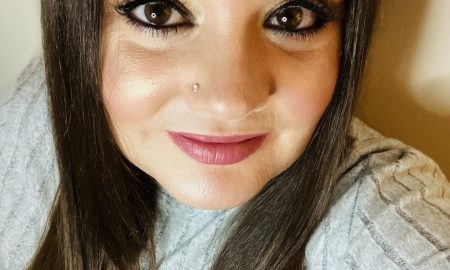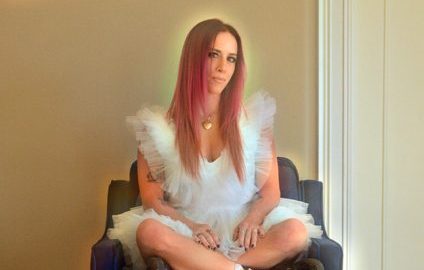


Today we’d like to introduce you to Fanny Havel.
So, before we jump into specific questions about the business, why don’t you give us some details about you and your story.
If you asked me when I was eight years old what I wanted to do for a living, I would have said: “teach French in England.” I think deep down I’ve always known that I’d travel and that foreign languages would be in my life. Back then I was living in France (where I was born) and I had been studying English for a few years. By age 11, I could speak three languages (French, English, and Spanish). In my teenage years, I would beg my parents to send me abroad on vacation. Luckily, my parents always supported my foreign endeavors (they were real supporters of “traveling to widen one’s horizons” – it did help that traveling within the European Union is both easy and cheap).
When it came time for me to actually decide on what to do with my life, I decided to study translation. I just loved helping people understand each other and I found languages to be a window into cultures, which I found fascinating. Of course, I used every trick I could get to study abroad and managed to go to Spain and England like that. I got my last internship in Canada and fell in love with the country and its people. After working as a translator for some time, I was a little disillusioned by the job: all I was asked to do was to translate almost literally what was said, with no regard to the culture of the target audience (the meaning of the words mattered very little), so I decided to launch my own business, Nuance Fidelis, to remedy that. Now, years later, it’s evolved into a beautiful business helping people understand each other and navigate cultural differences.
Years after I started my business, I met my husband, who was living in the US. After a few years of living long distance and going back and forth between our countries, we got married and decided to close the distance. I moved to Colorado almost three years ago (a few months before the infamous 2016 election) and started rebuilding my life here. It wasn’t easy. I faced a lot of discrimination at the start. For example, I had to go through 6 banks before one would agree to open a bank account for my business (one even refused it saying “it’s because of the country that you’re from” while proudly standing in front of a sign that said “we do not discriminate based on places of origin”). But one by one, I manage to get hurdles sorted out. They’re not over, but I’m getting there. Thankfully, when I arrived, I found a really good community in the city of women lifting each other up. They were so helpful and supportive; I don’t think they even realize how much they helped me.
I think that sums up my journey in a nutshell. How a little French girl started learning languages and understanding cultures and went on to spend a great deal of time in other countries, to end up moving to the US, to help others communicate with people from other cultures. Where will I go from here? Who knows? The only constant I know is that I am meant to help the world be a smaller place and a more peaceful place by helping cultures understand each other. But I also know traveling is in my DNA.
Great, so let’s dig a little deeper into the story – has it been an easy path overall and if not, what were the challenges you’ve had to overcome?
Oh boy. I don’t think anyone achieves anything on a smooth road.
First, people didn’t think I would actually move abroad and thought I would come back because I couldn’t possibly succeed abroad. When I proved them wrong, they didn’t think my business would be successful. Some still think it isn’t successful (even though my business is celebrating eight years this month, and eight years of profits!). When I proved some wrong, and I moved to the US, they wouldn’t believe that I faced discrimination. At some point, people stopped helping altogether. And I was left alone facing all those issues. My health took a turn for the worst because of all the chronic stress I was under.
I don’t think obstacles are something anyone can avoid. Accept that.
My advice is: focus on the helpers. In any situation, no matter how bad it is, there will always be at least one person who is here for you. These people are the helpers. Don’t worry about those who put you down, focus on those that lift you up. People who help you get out of that hole. It’s a really tough thing to do, but once you realize that you do have people on your side, things improve for you. These helpers can be family members, friends, or complete strangers. I remember once a library staff member who just listened to me while looking for a book I wanted to read. That person was my helper, for a while, at a time I needed it. (And if you can’t see a helper, look me up, I’ll be yours).
Please tell us more about what you do, what you are currently focused on and most proud of.
I’m a Cross-Cultural Communication Strategist. With my team, I help businesses communicate across cultures and languages. I help them communicate with their customers/prospects and social media audiences who don’t speak their language or who have a different culture (that includes anything from determining the communication strategy to actually translating their material so that it’s adapted to the target culture). I also help multicultural teams function optimally.
We adopt a holistic approach. We take the whole context of where the business is, where it wants to be, what it wants to achieve, and help them get there.
Sometimes, when people hear I can speak 6 languages, they’ll ask me to say “Hello” in French for example. But I can’t do that. Because depending on the context, “Hello” can be multiple things in French. I know that’s not what they’re expecting, but I can’t go against my nature and my job 😉
One of the biggest issues I see in multicultural teams is how feedback is given and received. One thing we don’t think too much about is that feedback is given differently in different cultures. Most often, when I come in, the team leader is at his/her wits’ ends trying to get a team member to work well. They don’t get it and are frustrated because they feel they communicate well with the team member. But the team member is from a different culture and most often isn’t even aware that there is a problem. It’s usually a very easy fix in how feedback is given, and the team’s productivity and satisfaction level start going up.
I guess the best way to know more about who I am and what I do is to read my website: nuancefidelis.com
Often it feels as if the media, by and large, is only focused on the obstacles faced by women, but we feel it’s important to also look for the opportunities. In your view, are there opportunities that you see that women are particularly well positioned for?
I think there is a movement that has started by women and for women to lift each other up, and I think it would be a waste not to grab this opportunity to be a part of the movement and help each other out to realize our full potential. We’ve proven we can change things. We should use that to our advantage.
Contact Info:
- Website: www.nuancefidelis.com
- Twitter: https://twitter.com/NuanceFidelis
- Other: https://www.linkedin.com/in/fannyhavel/


Image Credit:
Salty Spruce Studio
Getting in touch: VoyageDenver is built on recommendations from the community; it’s how we uncover hidden gems, so if you know someone who deserves recognition please let us know here.
Popular
-

The Trailblazers: Rewriting the Narrative
-

Celebrating the Spotlight: Kaytee Shashore Turns Milestones Into Momentum
-

Humanity in the Machine: Alexander Raye Pimentel’s Cyborg Recall Questions the Cost of a Data‑Driven World
-

Raemi Anderson on Courage, Caution, and Answering the Call of the Landscape
-

Hidden Gems: Local Businesses & Creatives You Should Know