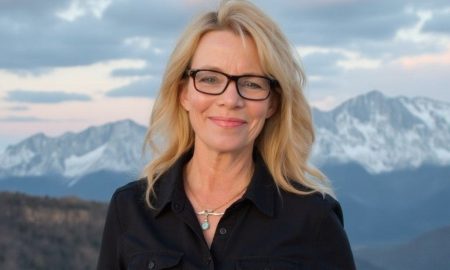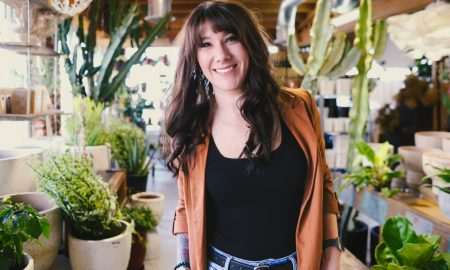


Today we’d like to introduce you to Gelsomina Malferrari.
So, before we jump into specific questions about what you do, why don’t you give us some details about you and your story.
I was born into an international family, growing up in Boulder, but also spending summers in northern Italy. My parents were back-to-the-landers, so I was raised amid in communities with gardens and chickens. Food was a powerful theme in my upbringing, as well as my parent’s work as artisans, supporting the family as potters.
I attended Warren Wilson College in North Carolina, a small liberal arts school, where I continued to develop my work ethic in their garden crew, and also began to explore teaching local youth environmental education. For my senior project, I began to make my own art supplies from local natural materials, without realizing that this process of creating from the earth would inform my future career. My first steps into what I would call “ancestral living skills” was making pigments, brushes, paper and clay from my surroundings.
When I met my future husband, we traveled throughout Central and South America, and along our journey, began to imagine a powerful new form of education that removed the classroom and integrated students directly into the landscape. Upon our return, we founded the Laughing Coyote Project, and since 2007 have been working with local youth and adults through home school programs, summer camps and workshops.
I teach a variety of skills that were essential to the daily lives of our ancestors as potent tools of nature connection, personal growth and reflection. I learned to make fire rubbing sticks together, make cordage from natural fibers and shoot a bow, but my passion is weaving baskets from wild willow I have harvested.
Along the way, I never lost the importance of connection to food, so slowly we began to homestead, growing more and more of our calories from the land. I now milk cows, raise pigs, chickens, and have an extensive garden. We can and preserve our harvest, and process all of our meat from animals we raise. We have two young children that run joyously in the midst of all of this vibrant life, planting their own garden, playing with the new barn kittens, and exploring our land.
I am homeschooling my children, which for now means immersing them in life, as well as traveling to Italy to see family.
Overall, has it been relatively smooth? If not, what were some of the struggles along the way?
It has not always been easy. There have been many times where our finances were grim, when there was too much to do in a day, way waking up at night with babies was followed by sheep escaping and goats running down the busy highway in a snowstorm. There has been joy, frustration, loss and fulfillment. I love to work, surround myself with other passionate people, and move towards a greater vision and purpose.
Please tell us about Laughing Coyote Project.
I live to create and share. I have worked hard on my skill as a teacher, and believe that at Laughing Coyote we share the skills we teach with enthusiasm in a tangible way that makes learning exciting. My family eats the best food in the world, from the creamy milk and yogurt from our Jersey cow to vegetables bursting with vitality, to the homemade pasta my Nonna in Italy taught me to make. I am proud that we eat three meals a day with our children, sitting down at the table and sharing our experiences of the day.
While the impact of Laughing Coyote has been significant in the community, we are happily a “mom and pop” sized non-profit organization. My husband and I run all of the programs, and that personal touch sets us apart.
There’s a wealth of academic research that suggests that a lack of mentors and networking opportunities for women has materially affected the number of women in leadership roles. Smart organizations and industry leaders are working to change this, but in the meantime, do you have any advice for finding a mentor and building a network?
One of my favorite ways to connect to other people is through barter and trade. We help farmer friends and other locals, and in return, they help us. We work together to find materials that are wasted that can be utilized on the homestead, such as firewood from fire mitigation programs, local food stands that need their waste picked up so we can feed our pigs, and farmers with hay waste that goes into our compost pile and garden. We are always networking, and striving to find connections between other people. We never hesitate to reach out and ask, and with our often strange requests have made many friends and allies.
Contact Info:
- Website: www.laughingcoyoteproject.org
- Email: programs@laughingcoyoteproject.org
- Instagram: https://www.instagram.com/laughingcoyoteproject/
- Facebook: https://www.facebook.com/Laughing-Coyote-Project-342450079273657/?ref=aymt_homepage_panel&eid=ARAak_VqixY1aeQQJrdSYWro6oeG7CCDDIk7IMYO8h85IWn99I-qBvCSgNWjjgHSWxZGKFXvJbhAewAR


Image Credit:
Neal Ritter, all others, Richard Smith (headshots, BW Gelsomina with children)
Suggest a story: VoyageDenver is built on recommendations from the community; it’s how we uncover hidden gems, so if you or someone you know deserves recognition please let us know here.
Popular
-

The Trailblazers: Rewriting the Narrative
-

Celebrating the Spotlight: Kaytee Shashore Turns Milestones Into Momentum
-

Humanity in the Machine: Alexander Raye Pimentel’s Cyborg Recall Questions the Cost of a Data‑Driven World
-

Raemi Anderson on Courage, Caution, and Answering the Call of the Landscape
-

Hidden Gems: Local Businesses & Creatives You Should Know