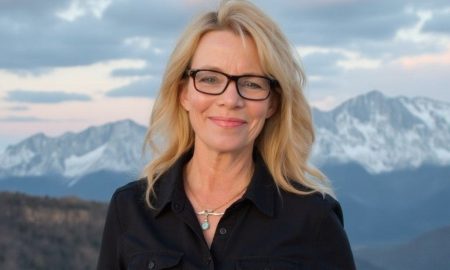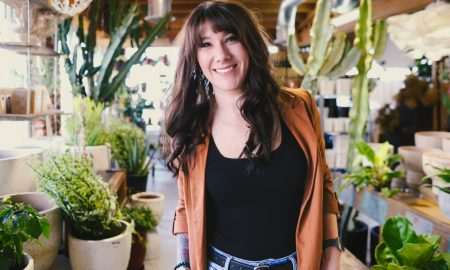


Today we’d like to introduce you to Michele Koons.
Thanks for sharing your story with us Michele. So, let’s start at the beginning and we can move on from there.
When I was a kid, I really wanted to be an archaeologist. I spent my summers on the beach in New Jersey searching for unique shells and digging for interesting things the beach-goers left behind. I had a crazy uncle from England who would tell me tales of finding Roman chariots and coins in his neighborhood, and I dreamed that one day I would find something cool like that among the jetties and dunes. Unfortunately, as a kid, I didn’t know any archaeologists, and no one I knew did either, so the dream eventually faded away for a more “practical” career path as a physical therapist.
When I entered college and was deep in the trenches of biology and chemistry classes, I had the opportunity to go to Bolivia on a service-learning trip. Growing up in Philadelphia, my history classes were completely focused on Europe and the Revolution—I didn’t even know where Bolivia was (I am embarrassed to admit!) Latin America wasn’t even a footnote in my early education. While in Bolivia, my entire world was turned upside down. I was faced with the most amazing people and cultures and I couldn’t get enough. As soon as I came home, I changed my major to Anthropology and Latin American Studies. Since Archaeology is a sub-discipline of Anthropology, I quickly found myself drawn back to the passion I had as a kid, and learned that you really could do this for a living. My passion grew for the ancient cultures of South America and I was fortunate to study in Chile in my senior year and conduct my MA research at the University of Denver in Bolivia. I went on to do my Ph.D. at Harvard University studying the Moche, a pre-Inca civilization from the North Coast of Peru. Alongside my archaeological work, I was always volunteering and working in museums. The day before I defended my dissertation, I had a Skype interview for a post-doctoral fellow position at the Denver Museum of Nature & Science (DMNS). That was a big week! I was lucky to get the position and move back to Denver. Shortly after I started at the Museum, a curator position opened up and I was so fortunate to be hired on full time. I have now been at DMNS for just over seven years.
Has it been a smooth road?
As a woman running my own projects in Latin America, I have faced a variety of challenges. To be taken seriously I have often had to be more outgoing, steadfast, resilient, and persistent than many of my male colleagues. Through this, I learned that you have to be your number one fan and biggest cheerleader. No one else will do that for you. You will have support from various people in your life, but to truly succeed in whatever that looks like to you (and only you… we all define our own success) it has to come from within. On the journey, there are always ups and downs. Just last week, I had a journal article rejected that I worked on for many years. It hurt. You have to pick yourself up, dust off the bruised ego, and jump back in the deep end. I think being able to accept and reflect on criticism makes us better at what we do. Mistakes are not bad; they are opportunities for growth. Sometimes life can get overwhelming as a mother of a toddler, wife, and scholar that is expected to constantly conduct and produce original research on top of my other daily responsibilities. The most important thing is to be kind to yourself. Know your limits and respect them. You can’t be 100% (or even 50%) at everything all the time and that is more than okay. Take time for yourself and have fun along the way!
So, as you know, we’re impressed with Denver Museum of Nature & Science – tell our readers more, for example, what you’re most proud of and what sets you apart from others.
I am an Associate Curator of Archaeology at the Denver Museum of Nature & Science (DMNS). I study ancient social and political systems, cultural (including monumental) landscapes, and how people of the past interacted with their environment. I use geophysical and remote sensing tools alongside traditional archaeological techniques like excavation and pedestrian survey (walking around to look for sites) in my fieldwork. I currently co-direct three archaeological field projects. The first is a community-based project at the hunter-gatherer site Magic Mountain in Golden, CO. Over the course of two field seasons (five weeks total) over 3,000 people from the greater Denver region have participated through public tours, youth programming and volunteer opportunities. We were honored to receive the Society for American Archaeology Award for Excellence in Public Education and the Colorado State Archaeologists Award for this project. I co-direct the Reserve (NM) Area Archaeological Project, where we most recently excavated a great kiva (Ancestral Puebloan ceremonial structure) in the Gila National Forest of New Mexico in collaboration with the Zuni tribe’s Cultural Resources Assessment Team. Finally, I am co-director of a project examining the human impact on the environment through time around the Moche civilization monumental site of Pañamarca in the Nepeña Valley, Peru. Alongside my research programs, I co-curator DMNS’s archaeology collection, which contains upwards of 200,000 objects. In my role at the museum, I have had the opportunity to do research on Egyptian Mummies, work on exhibits on topics such as the Ancient Maya and The Dead Sea Scrolls, help move our world-class collections into a state-of-the-art new facility, and participate in numerous public outreach opportunities. It truly is a dream job and I really am excited to go to work every day.
Were there people and/or experiences you had in your childhood that you feel laid the foundation for your success?
Growing up, I was incredibly lucky to be surrounded by strong females. I watched my mom and aunts work tremendously hard at their respective jobs and provide the best lives they could for us kids. The sky was always the limit. I think this combination of nurturing and leading by example had a profound impact on how I got to where I am today. I was never the smartest kid in the class– in fact, I was far from it– but I learned that hard work, passion and grit can really take you places.
Contact Info:
- Website: https://www.dmns.org/science/anthropology/staff/michele-koons/
- Email: Michele.Koons@dmns.org


 Image Credit:
Rick Wicker, Denver Museum of Nature & Science
Suggest a story: VoyageDenver is built on recommendations from the community; it’s how we uncover hidden gems, so if you or someone you know deserves recognition please let us know here.
Popular
-

The Trailblazers: Rewriting the Narrative
-

Celebrating the Spotlight: Kaytee Shashore Turns Milestones Into Momentum
-

Humanity in the Machine: Alexander Raye Pimentel’s Cyborg Recall Questions the Cost of a Data‑Driven World
-
Raemi Anderson on Courage, Caution, and Answering the Call of the Landscape
-

Hidden Gems: Local Businesses & Creatives You Should Know