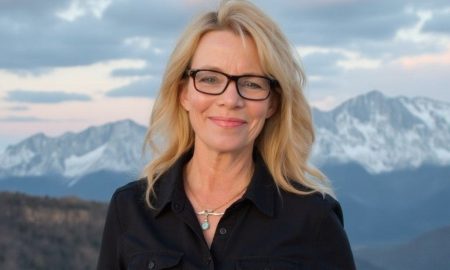


Today we’d like to introduce you to Shari Repinski.
Shari, please share your story with us. How did you get to where you are today?
In my youth, if I had seen my future through a crystal ball, it would have terrified me. I was often frozen by the idea of speaking up in class and uncomfortable with introducing myself to someone new. Like most stories, it is a series of seemingly random choices that caused me to land where I am today. I don’t recall the detail of those choices as much as the key attributes behind them, primarily the drive to be a continuous learner and the deep commitment to relationships.
Twenty years ago, I went through a leadership class that required an assessment of my current abilities. I scored well in things like analytics and problem-solving, but I was disappointed to find a very low score in strategic thinking. That harsh feedback caused me to immerse myself in the topic of strategy, and as a result, I developed a new appreciation for its importance. I am now pursuing my MBA in strategic management to leverage my experiences in strategic foresight and strategy development. I am finding much professional growth in applying true strategy to the nonprofit sector-not only in seeking ways to improve but to conquer barriers and seek opportunities to advance us in the industry. Looking back, if I hadn’t received that feedback 20 years ago, I’m sure I wouldn’t have gained that perspective and experience.
The value of working with and through others has also been behind some of the decisions I’ve made. I’ve always tried to maintain strong friendships, but early on in my career, I realized how important other relationships are in my own development. For example, I began working overnight shifts in a group home for children who had just moved from the state institution into the community. I was very timid when I walked into that group home for the first time but immediately connected with those kids and eventually spent more time at that group home than anywhere else. I fell in love with my work and haven’t left this industry since. Today, I don’t spend as much time as I would like with those who receive services, but I make it a priority to be available to discuss both good and bad with them. It’s important so that I can understand all perspectives when making decisions.
I can think of the choices that I’ve made throughout my story that lead me to today. Some successes and some failures, but each one has helped me to discern the best path for me. Now, I’m living the life that was once not even on my radar.
Overall, has it been relatively smooth? If not, what were some of the struggles along the way?
I’ve been on a journey that rarely has been smooth, but in reflection, I prefer it that way. It seems that I’ve been placed in situations over the years that have been overwhelming or complex. Whether taking on a failing residential program, implementing massive cuts to services through the recession, or being asked to step into an interim CEO role during a financial crisis, I’ve found comfort in sharp learning curves. I made it through those times by being a steady and deliberate leader and by surrounding myself with others who could mentor me and challenge me.
At one point recently, I had to struggle with the choice to be an executive-level leader. To be honest, I wasn’t sure that I wanted to do it. At first, I thought being a CEO or executive director meant I would need to change who I was in order to be effective. I was very confident in an advisory role and seriously questioned whether I had what it would take to be the strong decision-maker that the job required. I began to rely on the experts around me to give me the information that I needed to make a solid decision. I also decided that I would be accepting of the mistakes I would make along the way ̶ not dwell on them, but learn from them. Eventually, I found the balance between being myself and also performing in an executive leadership role.
The advice I’d give new women leaders is to know and be comfortable with yourself and build a network of other leaders who will help you. Knowing and having confidence in your strengths allows you to trust your gut instincts and to stand strong even when others may question you.
Please tell us about Rocky Mountain Human Services.
I am the executive director of Rocky Mountain Human Services, a nonprofit organization that was recently ranked as the sixth-largest human services organization in the Denver area. We provide case management and direct services, such as therapies, to over 6,000 individuals who have intellectual and developmental disabilities or delays, individuals with mental health and substance use disorders, and veterans who are experiencing homelessness. That may sound like a broad variety but our purpose is the same for each program. We believe that communities themselves can support individuals and families to create their future. We simplify access to services, celebrate each person as an individual, and bridge communities so that individuals and families get the support they need.
I am fortunate to work with 300 staff who come to work every day to do their very best for the individuals and families who receive support. My daily conversations with these staff tell me that they are committed to listening to an individual’s experience so that we can partner with him or her in determining the best path forward. It’s not easy though. Individuals and families often have a lot on their plate – working full-time, providing a safe, affordable home, and scheduling and attending weekly medical appointments and other therapies.
Our work is mostly supported through government contracts, which means that we have a lot of red tape that we can’t control. As a result, staff spends a lot of time navigating rules and complexity. Our staff are driven to find ways to make it as simple as possible and help with as much as we can.
Are there any apps, books, podcasts or other resources that you’ve benefited from using?
I do daily devotion and prayer.
I also follow and listen to the podcasts of authors Amy Cuddy, Max Mckeown, Patrick Lencioni, and Gretchen Rubin, as well as NPR’s “Marketplace,” Harvard Business Review’s “The Big Ideas,” and “TED Talks Daily.”
Contact Info:
- Address: 9900 East Iliff Avenue
Denver, CO 80231 - Website: https://www.rmhumanservices.org/
- Phone: 303-636-5600
- Email: srepinski@rmhumanservices.org
- Facebook: https://www.facebook.com/RMHumanServices
- Other: https://www.linkedin.com/company/rocky-mountain-human-services
 Image Credit:
Chris Schneider Photography, Courtesy of Rocky Mountain Human Services
Suggest a story: VoyageDenver is built on recommendations from the community; it’s how we uncover hidden gems, so if you or someone you know deserves recognition please let us know here.
Popular
-

The Trailblazers: Rewriting the Narrative
-

Celebrating the Spotlight: Kaytee Shashore Turns Milestones Into Momentum
-

Humanity in the Machine: Alexander Raye Pimentel’s Cyborg Recall Questions the Cost of a Data‑Driven World
-

Raemi Anderson on Courage, Caution, and Answering the Call of the Landscape
-

Hidden Gems: Local Businesses & Creatives You Should Know