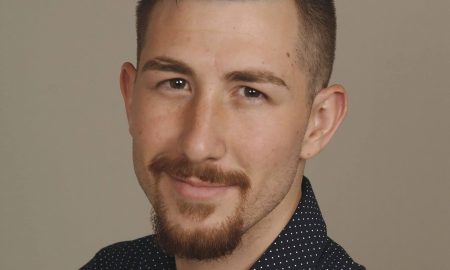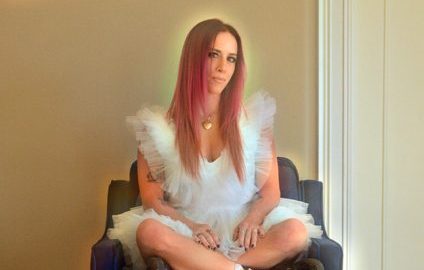


Today we’d like to introduce you to Adisa Banjoko.
Adisa, please share your story with us. How did you get to where you are today?
About 20 years ago, I was giving a talk in SF juvenile hall about being an author. I was failing miserably. To make up for the horrible presentation I was giving, I offered to teach them chess. To my surprise, more than 80% of the class knew how to play. We had a tournament. For that hour, all racial and cultural and physical clashing stopped. There was only mutual respect and kindness. It was very moving.
I asked myself if how was it that the kids knew chess but made bad choices in life. I decided I was going to teach them how to make better choices in life via chess. But how do I entice them? The answer was Hip-Hop. Rap music talks about chess more than any other form of music on the planet. Sadly the mainstream critics of rap downplay much of the innate intelligence within the music. So, I used those quotes to get kids to play and from there gave them a set of short, medium and long term planning methods. I put in a book called Bobby, Bruce & the Bronx: The Secrets of Hip-Hop Chess. It is available on my blog for free at hiphopchess.blogspot.com.
After that, I connected with RZA from Wu Tang Clan and we started doing events to share with teens and young adults that if they can slow their emotions and think critically they can go farther than they ever thought. Plus, I teach Jiu-Jitsu. For us, chess is Jiu-Jitsu for the mind. Jiu-jitsu is chess for the body. It works to keep them balanced.
Great, so let’s dig a little deeper into the story – has it been an easy path overall and if not, what were the challenges you’ve had to overcome?
Very hard. Few people understand the subtle ways in which we as humans are connected. My methodology was forged by Dr. Joseph Campbell and Dr. John Henrik Clarke. They are the scholars who influenced me the most.
When I started this in 2006, most people laughed at me honestly. By 2012 I was on the cover of Chess Life. Two years later, I was a history consultant and creator of Living Like Kings exhibit in St. Louis at the World Chess Hall of Fame. It broke attendance records never seen by even Bobby Fischer’s exhibit.
In 2018, I teamed up with video remix king Mike Relm and Susan Barrett to create Respect: Hip-Hop Style and Wisdom at the Oakland Museum of CA. More than 100,000 people came out to see it over about six months. I have lectured at Harvard, Stanford and Oberlin on these ideas and they are met with enthusiasm.
It has been a beautiful journey so far. But has never been easy. For me, I define faith as going forward irrespective of the odds. More so, I call it faith when it seems more than likely that you will fail but you step into the situation with complete conviction. In an uncertain world like the one we are in today, you must move deeply rooted in faith. In who? In what? How? All the rest is up to you.
Please tell us about Hip-Hop Chess Federation.
We teach people the connections between music, chess and life so they can go be whoever they want to be. We do not specialize in making people rappers, chess champs or fighters. We use music, chess and martial arts to promote unity, strategy, and nonviolence.
We want them to be able to think for themselves, choose what they want and venture into that truth. Some kids come and wanna be sheetrock dudes. Another girl wants to be a coder. Another kid wants to be a comic book author. We don’t judge who they want to be. We just support them in their vision and hold them accountable for being a good student and a solid peaceful human being.
I actually am proud of nothing I have done. I am grateful for all of it. I could tell you about acknowledgments from top tier rappers. I could tell you about interviews in Forbes or magazine features. Really, I’m mostly grateful for the times when I helped a kid navigate something she didn’t think she could achieve. Or, maybe something I told a kid kept him from going back to juve or being on drugs. I talk about some of this on a podcast I run called Bishop Chronicles. It is on YouTube, Spotify and iTunes.
What sets me apart from others? Nothing. I’m just like anyone reading this now. It is what makes me very happy.
Do you look back particularly fondly on any memories from childhood?
I have many. I was raised with two loving parents. I have too many to name. That is a rare gift now that I think about it.
When I was 17, I interviewed Eazy-E before NWA blew. I was still in high school. It was arguably the first story ever written on NWA and Eazy-E. Two years later, I met Tupac through a friend and he and I hit it off well. I spent my high school years backstage running with the 2 Live Crew, meeting EPMD and having the best time. I was so small, like, I was not even 100 lbs when I left high school. I could have gotten beat up, stabbed or shot (this was the late 80’s and early 90’s). But nothing ever bad happened to me or the people I was with. Never caught up with drugs or gun problems. Just amazing shows and recording sessions I got to see.
I have often wondered how that was possible. The only thing I came up with so far is that I have really good intentions. This does not mean I don’t make mistakes. It just means my goals were pure. I just wanted to experience and celebrate the beauty, power, and joy of Hip-Hop. My life has had a lot of pain here and there. But I like to think of my life as one big beautiful house party.
Contact Info:
- Website: www.hiphopchess.blogspot.com
- Phone: 4087224280
- Email: abanjoko@gmail.com
- Instagram: https://www.instagram.com/realhiphopchess/?hl=en
- Facebook: https://www.facebook.com/bishopchroniclesshow/
- Twitter: @hiphopchess


Image Credit:
First Pic @mikerelm second pick Second pic (with RZA of Wu Tang) Adrian Octavious Walker
Suggest a story: VoyageDenver is built on recommendations from the community; it’s how we uncover hidden gems, so if you or someone you know deserves recognition please let us know here.
Popular
-

The Trailblazers: Rewriting the Narrative
-

Celebrating the Spotlight: Kaytee Shashore Turns Milestones Into Momentum
-

Humanity in the Machine: Alexander Raye Pimentel’s Cyborg Recall Questions the Cost of a Data‑Driven World
-

Raemi Anderson on Courage, Caution, and Answering the Call of the Landscape
-

Hidden Gems: Local Businesses & Creatives You Should Know