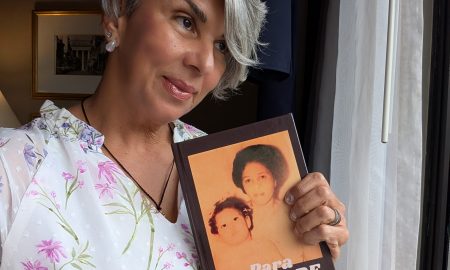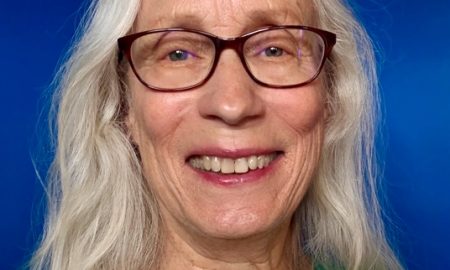


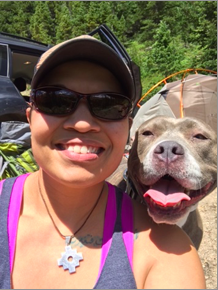
Today we’d like to introduce you to Andrea Murdoch.
So, before we jump into specific questions about the business, why don’t you give us some details about you and your story.
I am a native from Venezuela. I was born in Caracas but my indigeneity lies in San Cristobal. I’ve always enjoyed food and thought that taking raw ingredients and turning them into a complete dish was fascinating and I wanted to learn that craft.
I studied baking and pastry arts and business management at The Culinary Institute of America but I always had a connection to the culinary world. I always asked questions, watched what the other chefs were doing, took side gigs on my day off or clocked extra hours helping the culinary chefs. I even learned some skills from my ex-husband. It wasn’t until we were facing divorce that I pivoted from my business plan for a South American themed food business to an Indigenous one; that’s when the flood gates opened for me.
I met or chatted with anyone in the Indigenous community willing to offer me their knowledge. As an adopted individual, I do not have the opportunity of tribal family knowledge being passed down to me like my other Indigenous friends and colleagues. In addition to verbal knowledge from elders, I keep some agriculture, anthropology and indigenous spirituality publications on my bookshelves. The various aspects of indigenous culture culminate to inform the food aspect of our culture. One of the most fascinating characteristics about Indigenous cuisine is how expansive it is. From North America to Central, South and Mezo-America, the figurative landscape of the cuisine changes because the literal landscape changes from region to region. It’s beautifully gratifying to mesh Andean food culture with the food culture of the rest of the Indigenous Americas.
I have always loved cooking and baking but they became significant coping tools after my PTSD diagnosis. My first marriage was great until it wasn’t and then making food became more therapeutic, specifically indigenous foods. My research deepened, my kitchen testing more frequent and I loved it. I wasn’t dating, I wasn’t married and I had lost numerous friends through the divorce. I was working and business planning which were both growing experiences. After fifteen months in business and the end date on my apartment lease closing in I decided both my career and personal self needed to hit the reset button, and that’s when I arrived in Denver.
I craved the mountains and a city that knew more about the indigenous culture than fry bread and pow wows. Colorado instantly felt like home even though I didn’t know a single soul. I have had the complete pleasure of meeting incredible entrepreneurs, growers, breeders and guests since 2017. I was never truly sure about putting down roots anywhere, I apparently have a nomadic spirit, but Colorado is home. If I can’t be in the Andes, I surely want to be in the Rockies. I need to be able to hike and forage and interact with the plant and animal relatives. I need to be able to connect with Pachamama and consult my gods and ancestors.
Has it been a smooth road?
Entrepreneurship is seldom a smooth process. I started the first version of this business in Milwaukee, Wisconsin with $800-$1000 of my own money, shut it down and relaunched it in Denver. While 4DC has grown significantly each year, the journey has been reminiscent of a one lane dirt mountain road.
There is a specific learning curve with the type of food I present. Most guests would never think to categorize Indigenous foods as a cuisine because of the systemic oppression and genocide that has plagued our communities since the onset of colonialism. The knowledge and exposure simply isn’t as prominent as American Thai, Italian, Mexican, etc… cuisines. As a student of global cuisine, I don’t completely renounce European foods, I challenge myself to “indignenize” them! I love Italian food and the country is beautiful. Gnocchi is one of my favorite dishes but to give it an indigenous twist, I prepare a gluten-free version using purple potatoes and quinoa flour that I mill by hand. Most people recognize gnocchi on a menu so when I prepare it using ingredients originally from the Andes it starts a conversation about indigenous food origins. Getting people to the table to try indigenous foods is a task but once people are there, they are pleasantly surprised and want to know more and eat more!
So, as you know, we’re impressed with Four Directions Cuisine – tell our readers more, for example what you’re most proud of and what sets you apart from others.
Four Directions Cuisine is an indigenous woman-owned. I structured this business on four pillars: Sourcing indigenously, sourcing locally, education and community work. As someone thriving with PTSD, I have the honor of running a business that generates money through an annual benefit dinner and limited merchandise sales to donate to NIWRC (National Indigenous Women’s Resource Center). They are specifically trained to handle issues specific to indigenous women and their families. I have the pleasure of honoring my ancestors and culture through food which is my interpretation melding ancient with modern. I get the unique experience of telling stories on a plate that are either culturally significant or deeply personal that I would not be able to effectively communicate through any other medium.
I blend Andean flavors with those of other indigenous civilizations. I have yet to walk into a restaurant serving an Andean version of BBQ using rabbit, annatto and coconut among other beautiful ingredients.
Let’s touch on your thoughts about our city – what do you like the most and least?
I enjoy the diversity of the people in our city. The number of languages I hear on a regular basis is beautiful to me. Even noticing the different personal styles, hobbies, neighborhood loyalties (just ask a dozen people where the best pizza shop is and enjoy the debate!) is enjoyable to observe.
What I dislike is the sameness that largely blankets the food scene. For a city rich in human diversity it is disappointing to find the food scene lacking in diversity at times. I don’t speak to a lack of varying cuisines, the ability to find a good quality Ethiopian restaurant makes me downright giddy (I’m looking at you Axum)! I speak to the lack of bold creativity and ingenuity. I don’t see many restaurants pushing the envelope. Young chefs flock to New York City, Chicago, Los Angeles and more to learn from incredible chefs. I rarely, if ever, heard colleagues or instructors discussing the Denver food scene. We have supremely talented chefs in this city worth learning from but their talents aren’t as readily high lighted as chefs in other major cities.
Contact Info:
- Website: www.fourdirectionscuisine.com
- Phone: 720-432-4082
- Email: andrea.4dcuisine@gmail.com
- Instagram: https://www.instagram.com/fourdirectionscuisine/
- Facebook: https://www.facebook.com/fourdirectionscuisine


Image Credit:
Alice Stern
Suggest a story: VoyageDenver is built on recommendations from the community; it’s how we uncover hidden gems, so if you or someone you know deserves recognition please let us know here.