


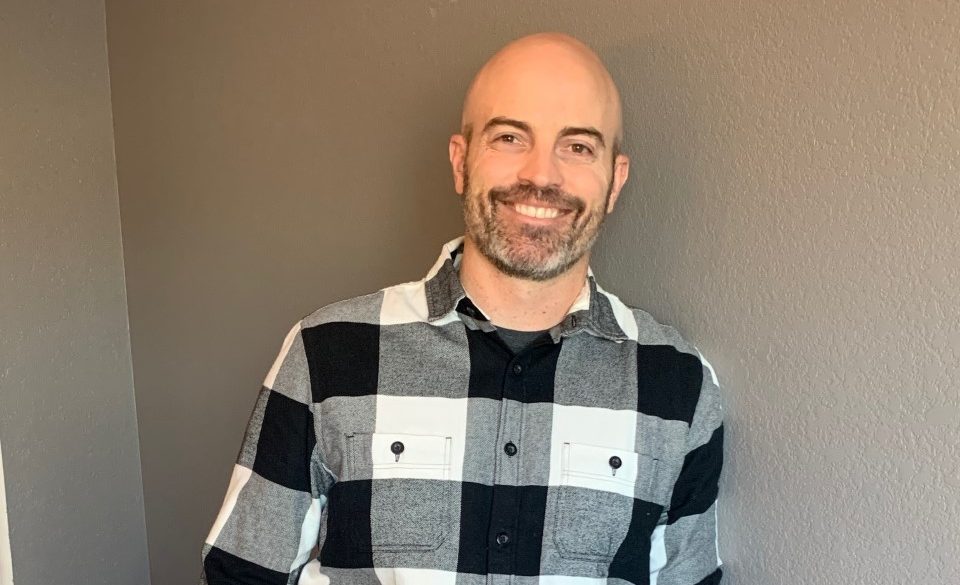
Today we’d like to introduce you to Caleb Stephens.
Hi Caleb, so excited to have you with us today. What can you tell us about your story?
For as long as I can remember, reading has been a passion of mine. It’s something that struck a chord in me at a young age, right after I read The Hobbit. After that, I was hooked. I read everything I could get my hands on. I became the kid who stayed up way too late at night finishing books, only to fall asleep in class the next day.
Eventually, somewhere around my college years, I began kicking around the idea of writing a few stories of my own. Could I be an author? Did what I have to say matter? Was writing something that might land me a regular paycheck? I didn’t know the answers, so I dabbled. I wrote a couple short stories and started a novel, but eventually decided to be more practical in my pursuits. I had bills to pay, after all.
My twenties were largely spent cutting my teeth in Corporate America. I earned my CPA license and met with a decent amount of success along the way, but parts of it felt empty. There was always this voice gnawing in the back of my head, this clarion call that kept ringing louder over the years until I could no longer ignore it.
I answered that call somewhere around age twenty-six, I started approaching the craft more seriously, working first on a novel, and then later, in my thirties, focusing on both novels and short stories. I didn’t know what I was doing; I felt a bit lost, but the universe scattered enough breadcrumbs along the way to let me know I was on the right path: my first short was accepted for publication. Another was turned into a podcast. I received an honorable mention in a national writing contest. A director living in Los Angeles reached out about turning one of my stories into a short film. After a while, I realized I’d become semi-decent at this writing thing. It felt right.
We all face challenges, but looking back would you describe it as a relatively smooth road?
Ask anyone who has been at the writing game long enough, and they’ll tell you it’s anything but smooth. In fact, writing is the single most difficult pursuit I have ever undertaken. The amount of rejection you face in this industry is staggering.
Imagine it this way—one day you’re out on a walk and you stumble across a rock that somewhat resembles a heart. It’s beautiful in a way, so you pick it up and take it home and begin chipping at it day-in and day-out, every morning, for a year. You don’t tell anyone about it, though, because they wouldn’t understand why you’d spend all your time doing something crazy like that. It’s a stupid rock, right? But not to you. To you, it’s more important than that. Waiting inside that dumb rock is something only you can reveal, and if you don’t do it, no one will ever get to experience its hidden beauty.
So, you chisel and grind and polish, and you think, wow, this thing is coming together. People are really going to love this. Some days you think the opposite. You decide it’s a mess and you want to dump it in the trash. But you don’t, because it’s come to mean so much to you, this little heart you’ve uncovered.
And then the day comes when you decide it’s ready. It’s perfect. At least to you, it is. But you didn’t do all this work to keep it to yourself, so you place your heart into a glass case and run it down to the local art gallery, which just so happens to be hosting an open call for stone hearts to feature in an upcoming exhibit.
You’re nervous but excited as well. It took so much work, and today is the day it will pay off. Except that, when you show up, there’s this massive line stretching all the way around the block with people just like you, carrying their stone hearts. And worse, the guy at the front, the one making the decisions on what to showcase, is rolling his eyes and shouting, “Next!” to most of them. Only a few folks are getting through the door with their hearts, and you notice they’re all dressed in rags because they’ve been standing in the line the longest. They’ve been polishing their hearts for years.
That’s writing for you. To learn, to really grow in the craft, you have to put in the work. You have to walk across the coals. There are no shortcuts, no easy wins. And therein lies the beauty. Only those who truly love it will spend the time watering that seed until it blooms, if it blooms at all. And even if it doesn’t, that’s okay. You’ve fed your soul. You’ve created something only you can create. Something in the world exists because you put it there. If that’s not magic, I don’t know what is.
As to my story, my first novel took five long years to write. I was at it, on and off, in between getting married and starting a family. I remember the day I finished, and how proud I was that I had finished. But then I read the manuscript and thought, oh no, this isn’t great at all. This isn’t what I thought it was. I had a few peers read it and they confirmed my fears. It had a lot of problems. I shelved the thing. It never saw the light of day. I remember tearing up in the car, thinking, did I just waste half a decade of my life? What came to me much, later on, was that the experience of drafting that book taught me so much about writing. It challenged me to get better, to focus on the nuts and bolts of the craft. I spent an entire year reading every writing book I could get my hands on. I was hungry to improve.
Eventually, I started another novel which took two years to complete. When I finished, I queried literary agents in hopes I might secure one to represent and sell my book. For those who don’t know how traditional publishing works, a literary agent acts as a sort of gatekeeper. They’re the folks who have existing relationships with the editors at publishing firms, and they only submit what they consider to be of high quality work.
I read somewhere that less than one percent of authors who try to secure an agent’s services are able to do so. When I landed mine, I thought I’d made it. Wrong. Long story short—after a year on submission, my novel didn’t sell. It was devastating. I felt like I was back at ground zero, wondering if I’d ever realize my dream of publishing a book. I’d always promised myself I’d land a book deal before I turned forty. I’m now forty-two now, so that obviously didn’t happen.
Still, the love of writing wouldn’t let me quit. I wrote more shorts. I published more of my work in fiction magazines and podcasts. I connected with other like-minded writers online and attended writing conferences. One day, because I’m a glutton for punishment, I decided to take another stab at the novel thing, and this time it took a little over a year to finish. I can’t tell you how proud I am of this book. It’s the best thing I’ve written. It’s the story I envisioned all those years ago when I first began pounding out words on my laptop. The book just went out on submission, and I’m praying the third time’s a charm, that this novel will sell.
But even if it doesn’t, I’ll keep writing…
Appreciate you sharing that. What else should we know about what you do?
I’m an author who specializes in dark fiction. My short stories have appeared in over twenty publications and podcasts, and one was recently turned into a short film. I’m really excited to see where that project goes.
Do you have any advice for those just starting out?
Yes. So many things. Here are a few:
• You actually have to start writing. Put down the phone. Limit the video games and the time you spend on social media. Our culture is one of consumption. Quit consuming and start creating. Trust yourself and write.
• You’ll be terrible at first. You just will, and that’s okay.
• Find a tribe—there are a lot of writing groups out there, both in-person and online, who will gladly welcome you into the fold. I waited WAY too long to do this. You need other writers speaking into your life, other folks who’ve traveled this path before you who are willing to help you do the same. People who will read your work and give you constructive feedback. Writing can be a lonely pursuit if you let it.
• Start with short stories before you dive into novels. You can experiment and see what genres click. What do you want to write? Literary fiction? Upmarket? How about thrillers and horror? What interests you? What stokes your internal flames? Once you figure that out, you can loop in your writing partners and get immediate feedback on a piece. You grow much faster that way. Locking yourself in an empty office and writing in a vacuum like I did for five years is a terrible way to go. Don’t make that mistake, it’s far too painful.
• This one is obvious, but it’s worth repeating. You have to read, and you have to read a lot. I have yet to meet a good writer who’s not also an avid reader.
• And the most important tip of all—don’t give up. One of my favorite quotes comes from Mark Twain. He writes, “The two most important days in your life are the day you are born and the day you find out why.” It took me a long time to reach that second day, but when I did, I knew my purpose was to write. I’m a writer and damn proud of it. So don’t give up. Ever. Once you decide writing isn’t something you do, but rather who you are, never stop. Remember, you were put on this earth for a reason. Life is too short not to leave your mark.
Contact Info:
- Email: [email protected]
- Website: https://www.calebstephensauthor.com/
- Twitter: @cstephensauthor