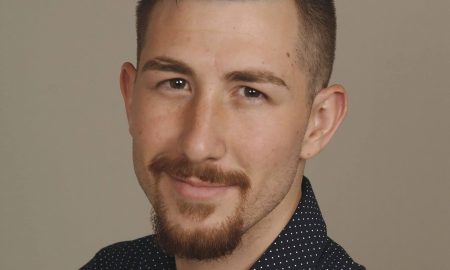


Today we’d like to introduce you to Dylan Rivard.
Dylan, let’s start with your story. We’d love to hear how you got started and how the journey has been so far.
As a kid, I was obsessed with questions about consciousness, spirituality, and the human experience. I would spend lots of time mulling over things like, “Does God exist?”, “What happens when we die?” and “Can you ever really truly know somebody?”
This naturally led to an interest in psychology and philosophy, and a tendency to overthink things. As I pursued an undergraduate degree in psychology, I also found myself struggling with social anxiety, existential crises, and an overall confusion about life that led to isolation, alcohol, and marijuana abuse. During my time in undergrad, I also started working at a summer camp in Vermont. Though not specifically therapeutic, the camp was focused on primitive living skills which meant that there was no electricity in camp, we cooked everything over a fire, and we pumped all of our own water. It also incorporated elements of ceremony that drew on my eclectic religious upbringing (with family members practicing Catholicism, paganism, and Buddhism).
I was blown away by the change I saw in myself, other staff members, and the kids we worked with when put into an environment of simple living, spiritual practice, and immersion in nature. This led me to complete an intensive outdoor leadership semester before graduating with my Bachelor’s in Psychology, and along the way, I discovered Naropa University in Boulder, CO. Naropa has one of the only Wilderness Therapy programs in the country, and it was a perfect fit for what I was looking for. Throughout the program, I took a deep dive into my own personal therapy and was able to find connection and healing through my relationship to nature and spirituality. I completed my degree in 2013 receiving a Master’s in Transpersonal Psychology.
From there, I worked at a couple different of agencies in town, primarily focused on young adults and life transitions. During this time, I was able to earn my license as a Professional Counselor, and I also pursued a certification in the Hakomi method of psychotherapy. Hakomi is a modality that combines mindful and somatic experience to create a truly experiential form of psychotherapy. Combined with my background facilitating wilderness experiences, it’s my belief that truly effective therapy gives you a genuinely new experience of what it feels like to be you, not just talking about the possibility of change.
I started my own private practice in 2017, and have recently joined a collective in Boulder offering ketamine assisted psychotherapy. Ketamine has been shown to be a powerful tool assisting people with treatment-resistant depression and PTSD and continues to build upon my experiential skill set. By giving people genuinely new experiences of themselves and an enhanced capacity to process trauma through the psychedelic experience of ketamine, I can help my clients integrate whole new ways of being and regular practices that can help them achieve a whole new sense of self.
Great, so let’s dig a little deeper into the story – has it been an easy path overall and if not, what were the challenges you’ve had to overcome?
The first struggle in my own process was learning how to connect to my body and not just rely on the thinking capacity of my mind. As I said before, I was a massive over thinker and daydreamer. I had a tendency to get lost in my head, ruminate on thoughts, and this had a tendency to get me into mental places that felt disconnected, uninspired, and hopeless.
My first experience of therapy was working with a somatic psychotherapist, and she taught me what it means to be truly connected to my body. By connecting with myself in this way, I was able to build a capacity to genuinely feel deep emotion, which allowed me to better connect to others as well as my own wisdom. It continues to be an ongoing practice of connecting to myself and the earth, and recognizing when I get away from myself and can begin to feel overwhelmed, anxious, and stressed.
The other big challenge came when stepping out on my own into private practice. Being my own boss is wonderful, and yet I have always been someone whose response really well to structure. Having to create my own structure put me in a place of feeling really lost and overwhelmed much of the time. It took about a year and a half of floundering, getting help, learning some tools, backsliding, and learning the same things all over again before I finally gained some traction and was able to organize myself in a better way.
Please tell us more about your work, what you are currently focused on and most proud of.
My work has really been focused on the experiential components of therapy. Between my experiences guiding and leading wilderness activities, the hands-on methods of the wilderness therapy program, and becoming a certified Hakomi therapist; I’ve really dived deeply into what it means to help people have a different experience of themselves.
These skills really come together in a beautiful way when I help facilitate a person’s experience with ketamine assisted psychotherapy. We go through a process of intention setting, identifying and embracing their own spiritual values, and using these intentions and values as guides through the psychedelic experience provided by ketamine. Through this work people are able to process through past experiences in an immediate and profound way that talk therapy can take years to even begin to touch. They also get to experience whole new possibilities of who they are and how they interpret the world that can become lifelong projects of integration and learning.
My history of facilitating and participating in big experiences for people, whether through wilderness or the Hakomi method, gives me a very personal understanding of integration and how to support people in that process. By helping a person embrace their own natural creative processes, helping them foster a deeper connection to the things that give them meaning, and serving as a steady reminder of the things they have experienced; I work to help people step into the life they know is out there but have never been able to reach.
Another thing that makes me stand out is my unique position as a gay male. A lot of people have been really hurt by masculinity and the ways it has become distorted in our culture, both men and women. I have had many clients reflect to me that the gentle masculine energy I embody has been invaluable for their healing and that for some, it can be the first time they have ever felt really safe in the presence of a man.
What moment in your career do you look back most fondly on?
This is a good question. A moment that comes to mind is one that actually happened fairly recently. I started working with a client sometime last year and they were feeling really fed up with therapy. They had seen a few different therapists over the past couple of years, and they were feeling really frustrated with the process of talk therapy. They felt like they had talked over and rehashed all the different parts of their life one hundred times, and yet nothing was changing and they were beginning to feel really hopeless.
They reached out to me because of how I talk about my experiential focus, and they were really hoping something different would work. We’ve worked together for a few months now, and we were able to really identify just how difficult it is for this person to sit in a room with another person. Our therapy has been focused, not on talking about this struggle but helping this person really get to map and understand what happens for them on a moment by moment basis when sitting in a room with me. As they’ve mapped their experience, we’ve both gotten a better understanding of the things that make this person really uncomfortable in connection and the things that can help them settle.
A couple of weeks ago, we were reviewing what they feel like they have gained from therapy so far. They were frustrated with feelings of hopelessness that can still arise at times, but they also noted, “I laugh in front of people now. I’ve never been able to laugh in front of people before. My voice tends to be more natural with others, and I feel like I can be myself in a way that I haven’t ever been able to before.”
These shifts are subtle, but they can also change the whole direction of a life. This is just one example of many times people have shared about feeling like they can be more themselves in the world, and every time that happens, it takes my breath away.
Pricing:
- $95/hour for Individual Counseling
- $120/hour for Couples or Family Therapy
- $400 for 4 hours of Ketamine Assisted Psychotherapy & Integration
Contact Info:
- Address: 6666 Gunpark Drive, Suite 200
Boulder, CO 80301 - Website: www.dylanrivard.com
- Phone: 720-633-4311
- Email: me@dylanrivard.com
- Facebook: @dylanrivardcounseling
- Twitter: @dylanrivardlpc


Suggest a story: VoyageDenver is built on recommendations from the community; it’s how we uncover hidden gems, so if you or someone you know deserves recognition please let us know here.
Popular
-

The Trailblazers: Rewriting the Narrative
-

Celebrating the Spotlight: Kaytee Shashore Turns Milestones Into Momentum
-

Humanity in the Machine: Alexander Raye Pimentel’s Cyborg Recall Questions the Cost of a Data‑Driven World
-

Raemi Anderson on Courage, Caution, and Answering the Call of the Landscape
-

Hidden Gems: Local Businesses & Creatives You Should Know