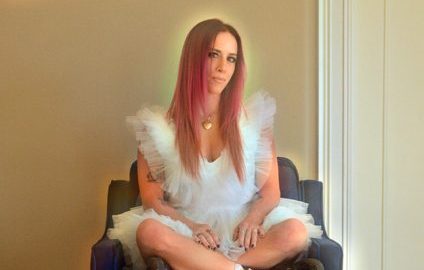


Today we’d like to introduce you to Jen GaNun.
Jen, can you briefly walk us through your story – how you started and how you got to where you are today.
I was recently helping my mom clean out the house my family lived in New Jersey and found an old school project of mine from when I was about eight years old. It read “When I grow up…I want to be a dansier and have a mountain of animals. Someday I want to be a vet, singer and dansier.” While I have not totally fulfilled this destiny, I have arrived to carry out some version of this dream. I have also learned how to spell dancer.
My experience with movement began as a young child in NJ. I studied dance forms such as ballet, jazz, tap and contemporary at a small competition studio in my town. I loved to dance and spent a lot of time focused on it. I also grew up loving music. I come from a very musical family. My Dad is a classical singer and my first concert was in an old stone church that echoed like something out of an epic medieval tale. Although I had lots of love for the big and haunting sounds of a well-rehearsed choir, I also had a desire to be wild. I wanted some chaos and disorder in my musical experience and I started to listen to bands that would meet that need. Me and my three little girlfriends would bounce around to the different venues in NJ and NYC to get packed into pits, get close to the sound of a loud band and come home with the occasional black eye or missing boot to prove it. My childhood continued this way, splitting my time between dance and music, while also trying to feed or take home every stray cat that lived in my neighborhood.
I later received my undergrad in Rehabilitation and Disability Studies and also Dance. It was at that time I began to discover new forms of movement like Afro-Haitian and modern dance. I also started to become more aware of social and animal rights movements. One of my best childhood friends experiences Down Syndrome and my relationship with him sparked my interest in allyship and advocacy at a young age and it was around this time that I had plans to use my art form in dance to be a pathway to a career in the disability field. I thought of becoming a dance therapist or something similar, and my scope continued to widen as I found more and more interests.
It was also around this time that I started noticing even more of a difference between my body and others that I danced with. I had a lot of injuries as a kid and I thought that was what happened to dancers. For as long as I can remember, I had fractures, sprains and tears. In college, I had more pain that came along with recovering from these injuries. When I was 26, I started to experience symptoms that were beyond the norm for me. Scans were proving that I had tears in all of my major joints. Then came the vertigo, chronic migraines, nerve pain, passing out and losing my vision at random times. I found that I have a connective tissue disorder called Ehlers Danlos Syndrome. It took five years to diagnose and I am one of the lucky ones who got some answers sooner than later.
At the time I was dancing with Cleo Parker Robinson’s 2nd company, Parallax Performing Arts and was performing as a lion dancer with another local project. I was also in the midst of creating my own company and classes, based on inclusive dance practices. I was told by countless doctors that I should quit most of my activities because of EDS and my body was telling me the same. I, like many others, collect diagnosis and comorbidities. The treatments, if there are any, are usually scary and invasive, but the alternatives can be worse. I have daily nauseating pain, dislocations, subluxations and fatigue. EDS can present in different ways for people, but my story is not a rare one for folks with the disorder. I am, however, quite stubborn and didn’t necessarily listen to the doctor’s orders.
While still working on dance projects, I did start to have a clearer interest in gaining back my voice and creating music, rather than movement, for my own body at least. I was given the chance to sing more, created by husband’s want for a backup singer. I started to sing in his band, Dust Heart, and teach myself how to play the accordion. It felt like I could dance using an instrument with how it breathes through its bellows and I loved the feeling. My body continued to do it’s thing, while I started to play and sing more. I hold the record of being the only person to play Levitt Pavilion Denver during a stroke. At the time, I had a year’s worth of TIAs and I got used to not feeling well, and although it was hard to play my accordion while my right arm was not totally functioning, I still made it work.
In 2014, my husband and I started writing a record and put together a band that eventually became Lost Walks. While a rock band at its core, Lost Walks features several elements that allow our project to offer educational programming and workshops outside of our multifaceted show that includes a blend of music, dance, activism, art and storytelling. Lost Walks’ album, “Wolf, Woman, Man,” tells the story of a couple that moves into a desolate mountain region and ultimately faces challenges from the elements, each other and alone, injured wolf. I focussed on this project more than anything that was going on with my body at the time. I had a lot to learn from the amazing musicians I got to play with and had to readjust how I would work with creating dance for a project when my body didn’t want to move that way any longer. While creating the choreography with a team of willing friends and dancers, I ended up in the hospital for a few weeks. I had open-heart surgery on August 29th and held dance auditions for Lost Walks on September 3rd. I was still in the ICU, but the team surrounding me made it happen. A lot of how Lost Walks operates is due to the many people involved and everyone’s willingness to support each other.
On and off the stage, Lost Walks hopes to raise awareness for organizations that advocate for wolves. Our recent tour was presented by Rocky Mountain Wolf Project, who was hoping to use Lost Walks’ art and music to help spread the message of wolf reintroduction in Colorado and use our narrative tale to shed more light on the reality of this misunderstood creature.
Lost Walks is becoming the project that is somehow including all of my favorite things. I get to engage with people about an animal that has been mistreated and misunderstood for decades and be a voice for them. I get to create music and movement with friends that I feel so lucky to be working with and teach through our workshops and education sets. Performing with this crew gives me a sense of power that I never knew I wanted or needed.
Great, so let’s dig a little deeper into the story – has it been an easy path overall and if not, what were the challenges you’ve had to overcome?
Although having EDS doesn’t define me, it does have a lot to do with my story and how I engage in many things in my life. While I wait for the doctors and medicine to catch up with my complicated body, I will do my best still do what I love. In fact, this has taught me many lessons in what really does matter to me and how to keep moving forward. Although I couldn’t create my own inclusive dance studio and keep up with the schedule of being a teacher and owner, I still teach with the Be Beautiful Be Yourself program, a partnership between the Colorado Ballet and Global Down Syndrome Foundation. Although I couldn’t perform with a variety of different dance companies any longer, I still create choreography for a project that has become very important to me throughout the past few years.
I’m super lucky to be in a place where I get to have a career that I love with The Wayfaring Band, a non-profit that creates road trips for adults who experience cognitive and developmental disabilities. The Wayfaring Band also runs a fellowship program and an artist-in-residence program for primarily neurotypical adults who are interested in social impact. We pair all groups together and explore the world as peers, focusing on facilitating social experiences for our members to explore, connect, and engage with their communities through the lens of travel and adventure. By addressing socialization, leadership, and creativity, we hope to create dynamic experiences that enrich the lives of all our participants while fundamentally altering the way people experience difference. I’m lucky that the people I work with value my gifts and honor my needs. I have a flexible position with them and am able to not only get my needs met with my health but also focus on my art at the same time. I’m lucky to have a partner, family, friends, co-workers and bandmates who are so incredible.
Contact Info:
- Website: https://www.lostwalksband.com/
- Email: lostwalksband@gmail.com
- Instagram: https://www.instagram.com/lostwalksband/
- Facebook: https://www.facebook.com/LostWalks/


 Image Credit:
George L. Blosser
Hali Webb-Shafer
Giulio D’Amore
Scott McCormick
Suggest a story: VoyageDenver is built on recommendations from the community; it’s how we uncover hidden gems, so if you or someone you know deserves recognition please let us know here.
Popular
-

The Trailblazers: Rewriting the Narrative
-

Celebrating the Spotlight: Kaytee Shashore Turns Milestones Into Momentum
-

Humanity in the Machine: Alexander Raye Pimentel’s Cyborg Recall Questions the Cost of a Data‑Driven World
-
Raemi Anderson on Courage, Caution, and Answering the Call of the Landscape
-

Hidden Gems: Local Businesses & Creatives You Should Know