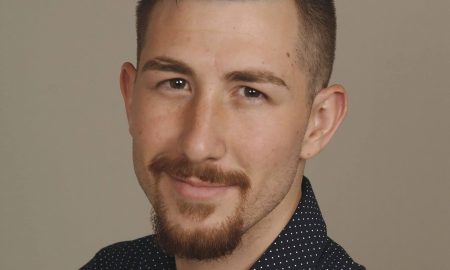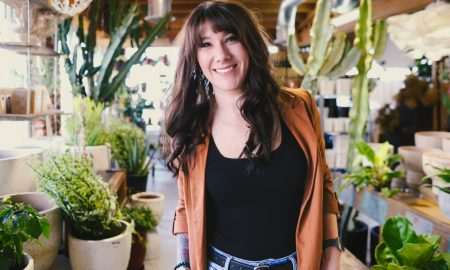


Today we’d like to introduce you to Jon Gauer.
Jon, let’s start with your story. We’d love to hear how you got started and how the journey has been so far.
I am currently a full-time working musician (trombone) in the Denver area, splitting my time between education and performance.
I grew up in Billings, MT, and became excited about music as a teenager because of the positive experiences I had with my early teachers. After high school, I pursued degrees in trombone performance at the University of North Texas (BM ’13/MM ’15). My instructors were highly encouraging of classical-jazz crossover; although I was a classical trombone major on paper, I was able to study a great deal of jazz, including improvisation, arranging, and performing with the award-winning One O’Clock Lab Band. I also had the opportunity to be a graduate teaching fellow for trombone lessons and brass chamber music.
The broad musical education I received at UNT prepared me for a variety of professional opportunities, and I began a career as a working musician in the Dallas-Fort Worth metro area almost immediately after completing my studies. I taught around 40 private lessons per week in addition to subbing with three regional orchestras and periodically playing musicals, weddings, parties, church services, and more. I quickly found that I enjoy this sort of freelancing/independent-contracting lifestyle, as it allows me to be a part of numerous different musical projects and mostly be my own boss.
Dallas will always hold a special place in my heart, but after eight years of living there, I felt it wasn’t the right long-term fit for me. I considered several possible other places to live, and after a good deal of research, I settled on Denver, as it seemed like a good balance between the outdoorsy mountain-west culture I grew up within Montana and the big-city excitement I’d been a part of in Texas.
Since moving here a year and a half ago I’ve been making every possible effort to develop professional connections, find what work already exists for my skill set, and create my own work when possible. Over the course of eight years in Texas I built a network and found work in the music scene almost without trying; starting over in a new city has meant a lot of cold-calling, going to jam sessions, figuring out how to build a positive web presence and other means of making contacts and building social capital. It’s a work in progress. I’m still putting a lot of work into networking and finding opportunities to build up my numbers and gigging schedule, but I’ve managed to find enough work teaching and performing to make a reasonable living, and I’m thankful for that.
We’re always bombarded by how great it is to pursue your passion, etc – but we’ve spoken with enough people to know that it’s not always easy. Overall, would you say things have been easy for you?
I’ve been through some struggles and obstacles – some typical for millennials and young artists, and some not so typical. As a teenager, I developed some serious physical problems associated with playing trombone. I was putting in long hours of playing with inefficient technique, which caused significant, ongoing pain and discomfort: muscle and joint pain in my arms and upper back, shortness of breath, hyperventilation, and occasional passing out. These issues severely interfered with my playing – it didn’t matter how much I practiced if my body wasn’t in a condition to cooperate with musical demands.
Through some divine luck, I ended up with a teacher at North Texas whose expertise in psychology and physiology of brass playing enabled me to rewire my technique and play with a level of physical efficiency I’d never thought would be possible for me. This was a years-long, often-tedious, often-frustrating process, but I believe having gone through it has made me a better teacher. I’m determined to spare my own students from going through the same struggles as I did; I’ve done a lot of work to incorporate the study of natural learning processes and motor skill acquisition into my musical pedagogy so that my students can learn how to play without risking pain or injury.
Besides this, I’ve had to put a lot of work into managing my own social anxiety and general feelings of awkwardness in order to advance in my professional life – and I think this is a common issue for musicians. Left to my own devices, I’d happily lock myself in a practice room with my instruments and never talk to strangers or make any new friends. That works reasonably well in music school since the culture is so centered around the idea of meritocracy – if you practice the hardest and become the best player, you’ll become The Cat Who Gets All The Gigs and live happily ever after. But the more-complicated reality is that nobody can give you gigs if they don’t know you exist; artistry doesn’t go very far if you don’t have the audacity to network and self-promote.
For a socially anxious person, this is a major obstacle – and for a working musician, the fear of being judged as a person is often compounded by the fear of being judged as an artist. Putting these particular fears to rest has required me to address my overall mental health more proactively. I feel fortunate to live in a time where so many resources are available and so many conversations are being had on this subject, as it’s not usually a problem any one person can fix alone. I’ve never felt like social skills have come easy to me, but I’ve found that it’s a skill you can build with time and effort like anything else.
We’d love to hear more about your work.
I offer individual lessons on trombone, trumpet, and tuba to students of all ages (and I do mean all ages; it’s never too late to pick up or revisit an instrument). I teach these out of my home office, which doubles as a DIY recording studio; several of my students have put this to use for audition recordings. I also give weekly brass classes with several high school band programs in Jefferson County (Golden, Bear Creek, and Arvada West).
In this role I teach musical subskills such as jazz improvisation, chamber music, advanced ensemble skills, and physiology and technique of brass playing; because I am a brass specialist working with individuals and/or small class sizes, I’m able to cover these subjects in more detail than is possible in a full-band setting alone. The public school teachers I work with show incredible levels of dedication to their students and are very gracious to have me as a part of their teaching teams. You might say it takes a village to raise a band kid.
As a performer, I am a regular member of two professional jazz ensembles: the Mile High Wildflowers (New Orleans-style 1920’s jazz) and the Colorado Jazz Repertory Orchestra (big band music, both classic and modern). I’m also a recurring guest with local bands DeDe & the Shakers and Honeycomb Dance Band, and I’m on the sub lists for the Denver Jazz Orchestra and Denver Municipal Band. Because of my origins and connections in Montana, I also periodically travel to perform and record with two Bozeman-based rock bands, The Dusty Pockets and The Hawthorne Roots (both of which can be heard on YouTube, Spotify, and/or Apple Music). I am thankful that my diverse musical training at UNT prepared me to play in such a wide variety of styles and settings.
What were you like growing up?
Music and jokes were always how I found my friends as a kid and actually that hasn’t changed much!
My natural temperament as a young kid was to be quiet and bookish – a “nerd,” if you will. I’m amazed at how mainstream nerd culture has become in the past decade, but even as recently as when I was a kid in the early 90’s, it was hard to find other quiet, bookish kids to make friends with, and I often felt like a misfit at school. Getting involved with music in middle school and high school was transformational for me because it was the first place where I felt I could be part of a team and make friends with a lot of like-minded people. To this day, the overwhelming majority of my friends are musicians – I think it’s because music is by nature a cooperative activity and tends to attract people who are personable and good team players (in addition to being giant nerds).
Equally important for me, though not always met with grownups’ approval, was discovering I had a knack for being a class clown. I was a huge fan of South Park and comedians like George Carlin and Robin Williams, and this had a big influence on my early sense of humor. I went through a phase in adolescence where I would read and memorize not-school-appropriate jokes and then recite them to all my friends. I’m still close with many people from my upbringing, and many of them will tell the same story about how we met: “I overheard this kid telling R-rated jokes at lunch and decided I wanted to be his friend.”
As an adult I often have to keep the off-color humor on a leash in professional settings, so to adapt to my new role as a boring grownup (teacher) I’ve started to delve into the art of clean humor as well. Life takes you to funny places that way.
Contact Info:
- Website: https://jongauer.com
- Email: gauer@jongauer.com
- Instagram: https://www.instagram.com/jongauertrombone/
- Facebook: https://www.facebook.com/jongauertrombone
- Twitter: https://twitter.com/gauertrombone


Suggest a story: VoyageDenver is built on recommendations from the community; it’s how we uncover hidden gems, so if you or someone you know deserves recognition please let us know here.
Popular
-

The Trailblazers: Rewriting the Narrative
-

Celebrating the Spotlight: Kaytee Shashore Turns Milestones Into Momentum
-

Humanity in the Machine: Alexander Raye Pimentel’s Cyborg Recall Questions the Cost of a Data‑Driven World
-

Raemi Anderson on Courage, Caution, and Answering the Call of the Landscape
-

Hidden Gems: Local Businesses & Creatives You Should Know